
Introduction
Tired of French onion soup that tastes flat or lacks depth? You’ve likely experienced the disappointment of watery broth, undercooked onions, or a cheese topping that refuses to melt into that signature golden crust. The truth is, creating authentic French onion soup requires patience, technique, and understanding what makes this bistro classic truly exceptional.
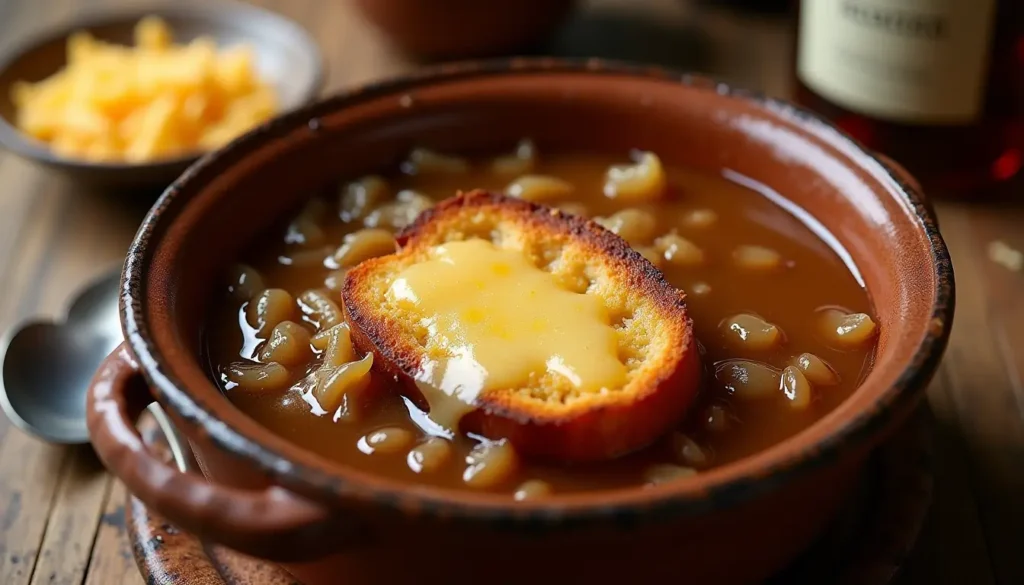
This French onion soup recipe delivers rich caramelized onions, savory broth, and a perfectly melted cheese topping. Every spoonful brings together the sweet complexity of slowly cooked onions, the deep umami of quality beef stock, and the indulgent richness of bubbling Gruyère cheese over crispy bread. This isn’t just soup—it’s a complete sensory experience that transports you to a cozy Parisian bistro.
As a home cook passionate about French classics, I’ve perfected this soup for deep, authentic flavor. Through years of testing different caramelization techniques, experimenting with various cheese combinations, and learning from both successes and failures, I’ve developed a foolproof approach that consistently delivers restaurant-quality results. This French onion soup recipe honors traditional methods while remaining accessible for home cooks at any skill level.
Table of Contents
Why This French Onion Soup Recipe Works
Creating exceptional French onion soup isn’t about complexity—it’s about respecting a few fundamental principles and allowing time to work its magic. This French onion soup recipe has been refined to deliver consistent, deeply satisfying results every single time. Here’s what makes it truly special:
- Uses simple, high-quality ingredients for classic French flavor: You won’t need a long list of obscure items or expensive specialty ingredients. This French onion soup recipe relies on humble components—onions, butter, stock, cheese, and bread—that transform into something extraordinary through proper technique. The key is selecting quality versions of these basics rather than searching for exotic additions. Fresh yellow onions, good butter, flavorful stock, and authentic Gruyère cheese are all you need.
- Caramelizes onions slowly for deep, rich sweetness: The heart and soul of any French onion soup recipe lies in properly caramelized onions. This isn’t a rushed process—it takes 40 to 50 minutes of patient stirring and watching as the onions slowly transform from crisp and pungent to soft, jammy, and deeply sweet. During this time, the onions’ natural sugars caramelize, creating complex flavors that no shortcut can replicate. This extended cooking develops the signature sweet-savory balance that defines authentic French onion soup.
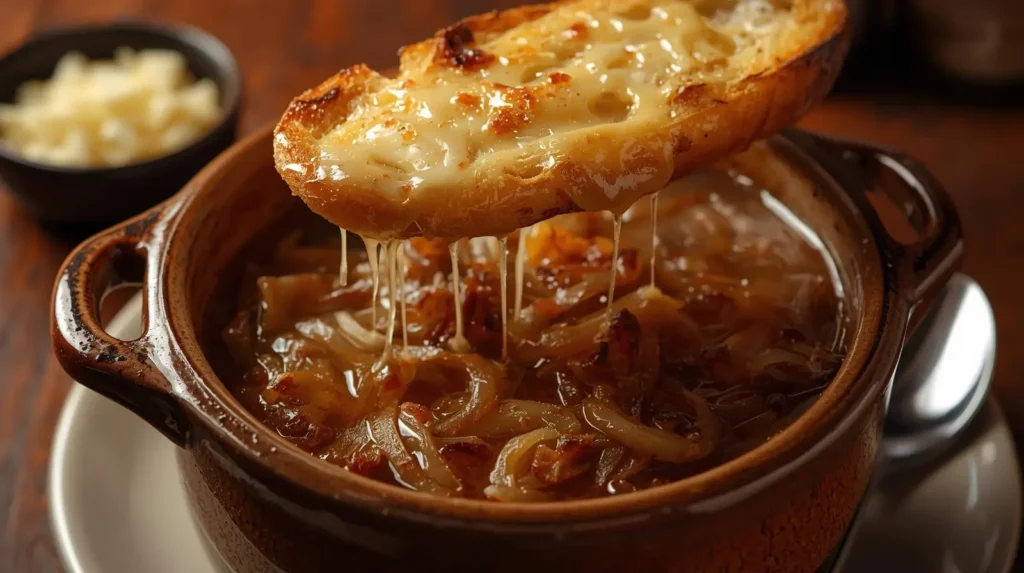
- Topped with crispy baguette slices and melted Gruyère cheese: The finishing touch elevates this from simple onion soup to the iconic dish we all recognize. Toasted baguette slices provide textural contrast and a vehicle for the crowning glory—nutty Gruyère cheese that melts into golden, bubbly perfection under the broiler. This cheese crust seals in the aromatic steam while adding richness and visual appeal that makes French onion soup unforgettable.
- Perfect for cozy dinners or elegant entertaining: The versatility of this French onion soup recipe means it works beautifully in various settings. Serve it on a chilly weeknight when you want something warming and substantial, or present it at a dinner party where it never fails to impress. French onion soup can be made ahead, assembled at the last minute, and always feels special—whether you’re cooking for two or hosting a gathering.
The beauty of this French onion soup recipe lies in how simple ingredients combine through time-honored technique to create something greater than the sum of its parts. There’s an alchemy that happens when you respect the process, use quality ingredients, and don’t rush the crucial caramelization stage.
Choosing the Right Ingredients for French Onion Soup Recipe
Success with any French onion soup recipe begins at the market. While the ingredient list is refreshingly short, the quality and type of each component significantly impact your final result. Let’s explore what you need and why each ingredient matters.
Best Ingredients for This French Onion Soup Recipe
Yellow onions for sweetness, Gruyère or Emmental for richness, and beef stock for depth form the foundation of authentic French onion soup. Yellow onions are non-negotiable—they contain the perfect balance of sulfur compounds and natural sugars that caramelize beautifully. Unlike red onions (too mild) or white onions (too sharp), yellow onions develop that signature jammy sweetness when slowly cooked.
Gruyère cheese is the traditional choice for a reason. This Swiss cheese melts smoothly, browns beautifully, and brings a nutty, slightly sweet flavor that complements the onions perfectly. Emmental (Swiss cheese) makes an acceptable substitute with a milder flavor and larger holes, though it lacks Gruyère’s complexity. Whatever cheese you choose, buy it in a block and grate it yourself—pre-shredded cheese contains anti-caking agents that prevent smooth melting.
High-quality beef stock provides the savory backbone that balances the onions’ sweetness. Look for stock with a deep brown color and rich, meaty aroma. Homemade stock is ideal, but excellent store-bought options exist. Read ingredient labels—the best stocks list bones, meat, vegetables, and herbs first, with minimal additives. Avoid bouillon cubes if possible, as they tend to be overly salty and lack the depth this French onion soup recipe deserves.
Fresh thyme, bay leaves, and good butter round out your essential ingredients. Fresh thyme provides herbal notes that brighten the rich soup, while bay leaves add subtle complexity. Unsalted butter gives you control over seasoning and provides the fat needed for proper onion caramelization without burning.
Buying Tips for Your French Onion Soup Recipe
Use unsalted butter and high-quality broth for best results. Unsalted butter allows you to season the soup precisely, while salted butter can make your French onion soup recipe too salty, especially after the long reduction process. Look for European-style butter with higher fat content if you want extra richness—the flavor difference is noticeable.
When selecting beef stock, choose organic or low-sodium versions when possible. Low-sodium stock lets you control salt levels as the soup reduces. If you have time, consider making your own stock by roasting beef bones with vegetables and simmering them with herbs for several hours. The depth of flavor from homemade stock elevates your French onion soup recipe to another level entirely.
For the baguette, visit a bakery rather than grabbing pre-sliced sandwich bread. A proper French baguette has a crispy crust and airy interior that toasts beautifully and holds up to the soup’s liquid without becoming instantly soggy. Day-old baguette actually works better than fresh—it’s drier and crisps more effectively under the broiler.
Your wine should be dry and something you’d drink. Don’t use “cooking wine” from the grocery store, which often contains added salt and preservatives. A dry white wine like Sauvignon Blanc or Pinot Grigio works perfectly for deglazing. If you prefer, dry sherry or even dry vermouth creates wonderful results in this French onion soup recipe.
Substitutions for Your French Onion Soup Recipe
Vegetarian version: substitute with mushroom or vegetable broth. For those avoiding meat, mushroom broth provides substantial umami and depth that closely mimics beef stock’s savoriness. Look for dark mushroom broth or make your own by simmering dried porcini and shiitake mushrooms with vegetables and herbs. Some vegetarians use a combination of vegetable broth fortified with soy sauce or miso paste for additional depth.
If you cannot find Gruyère or find it too expensive, Swiss cheese (Emmental) is the closest substitute. Aged white cheddar provides sharpness and melts well, though the flavor profile differs from traditional French onion soup. In a pinch, mozzarella melts beautifully but lacks the nutty flavor, while Comté cheese—another French alpine cheese—works wonderfully if you can locate it.
Can’t use wine or prefer to avoid alcohol? Substitute with additional beef stock plus a tablespoon of wine vinegar or apple cider vinegar for acidity. The wine’s purpose is to deglaze the pan and add brightness, so you need something acidic to balance the soup’s richness. A squeeze of lemon juice works as well, though add it at the end rather than during deglazing.
For a gluten-free French onion soup recipe, simply use gluten-free bread for the topping. Many bakeries now offer excellent gluten-free baguettes that crisp up nicely. Ensure your beef stock is certified gluten-free, as some commercial stocks contain gluten-based thickeners.
| Ingredient | Quantity | Purpose | Substitution Options |
|---|---|---|---|
| Yellow Onions | 5–6 large (about 3 lbs) | Sweetness & depth through caramelization | Vidalia onions (sweeter), combination of yellow and sweet onions |
| Unsalted Butter | 4 tablespoons | Fat for caramelization without burning | Olive oil (less traditional but works), combination butter and oil |
| Beef Stock | 6 cups | Base flavor and body | Mushroom broth (vegetarian), chicken stock (lighter) |
| Dry White Wine | ½ cup | Deglazing & acidity balance | Dry sherry, vermouth, or stock plus vinegar |
| Gruyère Cheese | 1½ cups, grated | Melting topping with nutty flavor | Emmental, aged Swiss, Comté, white cheddar |
| Baguette | 8–10 slices | Crunchy topping base | Sourdough, French bread, gluten-free bread |
| Fresh Thyme | 4–5 sprigs | Herbal brightness | 1 teaspoon dried thyme |
| Bay Leaves | 2 | Subtle background complexity | Can omit if unavailable |
Ingredients & Prep
Proper preparation makes the actual cooking process smooth and enjoyable. French onion soup requires minimal prep work, but what you do beforehand significantly impacts your results. Here’s everything you need and how to prepare it efficiently.
French Onion Soup Recipe Prep Essentials
For the Onions:
- 5–6 large yellow onions (approximately 3 pounds)
Slicing onions properly ensures even cooking and the best texture in your French onion soup recipe. Peel the onions, cut them in half from root to tip, then slice each half into ¼-inch thick half-moons. Consistent thickness matters—thicker pieces take longer to caramelize and may remain crunchy, while too-thin slices can burn before developing proper color.
A sharp knife makes this task easier and reduces the tears. Some cooks refrigerate onions for 30 minutes before cutting, which minimizes crying. You’ll have a massive pile of raw onions—don’t worry, they’ll cook down to about one-third of their original volume.
For the Base:
- 4 tablespoons unsalted butter
- 2 tablespoons all-purpose flour (for optional thickening)
- ½ cup dry white wine
- 6 cups beef stock (or mushroom/vegetable stock for vegetarian)
- 4–5 sprigs fresh thyme
- 2 bay leaves
- 1 teaspoon salt (adjust to taste)
- ½ teaspoon black pepper
- 1 tablespoon Worcestershire sauce (optional, for depth)
Have your butter at room temperature for easier melting. Measure out the flour if you want a slightly thicker soup—traditional French onion soup recipes vary on this point, with some using flour and others relying entirely on onion reduction for body. Your wine should be at room temperature, ready to deglaze the pan.
For the Topping:
- 1 baguette, cut into ¾-inch slices
- 1½ cups Gruyère cheese, freshly grated
- 2 tablespoons butter, melted (for brushing bread)
- Fresh parsley, chopped (optional garnish)
Slice your baguette on a slight diagonal to create larger pieces that cover more of the bowl’s surface. Grate the cheese just before using—freshly grated cheese melts more smoothly than pre-shredded varieties. If you’re making this French onion soup recipe for guests, you can prep all components ahead and simply assemble when ready to serve.
Broth Flavor Base for Your French Onion Soup Recipe
Simmer broth with bay leaves, thyme, and garlic for added depth. While not absolutely necessary, infusing your stock before adding it to the caramelized onions creates an extra layer of flavor complexity. About 30 minutes before you finish caramelizing the onions, warm your beef stock in a separate pot with the bay leaves, thyme sprigs, and 2–3 crushed garlic cloves.
Let this mixture gently simmer—not boil—for 20 to 30 minutes. The aromatics will perfume the stock, creating a more integrated flavor when combined with the onions. This technique is optional, but it’s what separates good French onion soup from truly exceptional versions. Strain out the herbs and garlic before adding the stock to your onions.
If you’re short on time or pots, you can skip this step and simply add the herbs directly to the soup after combining onions and stock. The flavors will still develop during the final simmer, though they won’t be quite as integrated.
Pantry Staples for Your French Onion Soup Recipe
Every well-equipped kitchen should have the basics needed for this French onion soup recipe: onions, butter, flour, quality stock, wine, bread, cheese, salt, and pepper. These staples aren’t exotic or expensive, yet they combine to create something remarkable.
Keep good beef stock in your pantry or freezer—it’s useful for so many recipes beyond French onion soup. Many cooks prepare large batches of homemade stock when beef bones go on sale, then freeze it in 2-cup portions for easy use. Stock keeps for 4 to 6 months in the freezer without losing quality.
Quality cheese makes a tremendous difference. If Gruyère is difficult to find or budget-prohibitive, establish a relationship with your grocery store’s cheese counter staff. They can often order specialty cheeses or recommend similar options at lower price points. Aged cheese develops better flavor and melts more smoothly than young cheese—remember this when selecting alternatives.
Step-by-Step Cooking Instructions
Creating authentic French onion soup requires patience more than skill. Follow these detailed steps, resist the temptation to rush, and you’ll achieve restaurant-quality results that showcase why this soup has remained a classic for centuries.
Step 1 – Caramelize the Onions
Slowly cook onions until golden brown and jammy. This is the most critical step in any French onion soup recipe and where most home cooks either succeed brilliantly or encounter problems. Melt the butter in a large, heavy-bottomed pot or Dutch oven over medium heat. Add all your sliced onions—yes, the pot will be overflowing initially.
Stir to coat the onions with butter, then let them cook, stirring every 3 to 4 minutes. The onions will release moisture and begin softening within 10 minutes, reducing in volume significantly. After 15 minutes, they’ll be translucent and greatly reduced. This is just the beginning.
Continue cooking, stirring more frequently as the onions begin to brown—every 2 to 3 minutes now. You’ll notice them starting to stick slightly to the bottom of the pot. This fond (the browned bits) is flavor gold—scrape it up with your spoon and stir it back into the onions. If the onions are browning too quickly or sticking excessively, reduce heat to medium-low.
The entire caramelization process takes 40 to 50 minutes. Your onions should transform from white to pale gold to deep amber brown. They’ll become jammy, sweet, and reduced to about one-third of their original volume. The final texture should be silky and almost melting, with a deep caramel color throughout. This patience is what separates mediocre French onion soup from the extraordinary version you’re creating.
Step 2 – Deglaze
Use wine to scrape the flavorful bits from the pan. Once your onions reach that perfect deep golden-brown color, increase heat to medium-high and pour in the wine. The liquid will immediately bubble and steam—this is exactly what you want. As it boils, use your wooden spoon to scrape up all the caramelized bits stuck to the bottom of the pot.
This deglazing process accomplishes two things: it captures all that concentrated flavor stuck to the pot, and the wine’s acidity balances the onions’ sweetness. Let the wine simmer for 3 to 4 minutes until it reduces by about half and the sharp alcohol smell dissipates. You’ll notice the color darkening as the wine concentrates and the fond dissolves into the liquid.
If you’re not using wine, add a splash of stock plus a tablespoon of vinegar and accomplish the same deglazing effect. The key is using liquid and heat to lift those flavorful browned bits—they’re too precious to waste.
Step 3 – Add Broth
Stir in stock, herbs, and seasonings; simmer for 30–40 minutes. Pour the beef stock into the pot with the caramelized onions, stirring to combine everything thoroughly. Add your fresh thyme sprigs, bay leaves, salt, pepper, and Worcestershire sauce if using. Bring the mixture to a boil, then immediately reduce heat to maintain a gentle simmer.
If you’re using flour to thicken slightly, sprinkle it over the caramelized onions before adding the stock, stirring constantly for 1 to 2 minutes until the raw flour smell disappears. Then add the stock gradually, stirring to prevent lumps—similar to making gravy.
Let the soup simmer uncovered for 30 to 40 minutes. This extended cooking allows flavors to meld, the stock to reduce slightly, and the herbs to infuse throughout. Stir occasionally and adjust heat if it’s boiling too vigorously. The soup should bubble gently, not aggressively.
Taste after 30 minutes and adjust seasonings. Every batch is slightly different depending on your stock’s saltiness and the onions’ natural sweetness. Add more salt, pepper, or even a pinch of sugar if needed to balance flavors. Remove the bay leaves and thyme sprigs before serving—they’ve done their job flavoring the broth.
Step 4 – Toast the Bread
Crisp baguette slices under the broiler. While your soup simmers, prepare the bread topping that makes French onion soup iconic. Preheat your broiler to high. Arrange baguette slices on a baking sheet and brush the tops lightly with melted butter.
Broil for 2 to 3 minutes, watching carefully, until the tops turn golden brown. Flip the slices, brush the other side with butter, and broil for another 1 to 2 minutes. The bread should be crispy and dried out—this prevents it from becoming soggy when placed on top of the soup.
You can toast the bread in a 375°F oven for about 10 minutes if you prefer, though the broiler works faster and creates slightly crispier results. Some cooks rub the toasted bread with a cut garlic clove for extra flavor—this is traditional and highly recommended if you love garlic.
Step 5 – Assemble & Bake
Ladle soup into bowls, top with bread and cheese, and broil until bubbly and golden. This final assembly is where your French onion soup recipe becomes that Instagram-worthy, bistro-perfect dish everyone recognizes.
Use oven-safe bowls or crocks—ceramic, stoneware, or enameled cast iron work perfectly. Avoid standard ceramic bowls not rated for high heat, as they can crack. Place the bowls on a sturdy baking sheet for easy handling. Ladle hot soup into each bowl, filling to about ¾ inch from the rim.
Place 1 or 2 toasted baguette slices on top of each bowl, depending on size. The bread should float on the surface, covering most of the soup. Generously pile grated Gruyère cheese over the bread and around the edges, allowing some to touch the bowl’s rim—this creates that appealing cheese crust that drapes over the bowl’s side.
Position the baking sheet with the filled bowls under your preheated broiler, about 4 to 6 inches from the heat source. Broil for 3 to 5 minutes, watching constantly. The cheese should melt, bubble vigorously, and develop golden-brown spots. Don’t walk away during this step—the line between perfectly browned and burnt is thin.
Remove from the oven using oven mitts and warn diners that the bowls are extremely hot. Let the soup rest for 2 to 3 minutes before serving—this allows the cheese to set slightly while still remaining molten and stretchy.
| Cooking Step | Time Required | Temperature | Key Visual Cues |
|---|---|---|---|
| Caramelize Onions | 40–50 minutes | Medium to medium-low | Deep amber color, jammy texture, reduced to ⅓ volume |
| Deglaze with Wine | 3–4 minutes | Medium-high | Wine reduced by half, no alcohol smell |
| Simmer Soup | 30–40 minutes | Gentle simmer | Slightly reduced, flavors melded, aromatic |
| Toast Bread | 4–5 minutes total | Broiler (high) | Golden brown both sides, crispy and dry |
| Broil Cheese Topping | 3–5 minutes | Broiler (high) | Bubbly, melted, golden-brown spots on cheese |
Pro Tips for Perfect French Onion Soup Recipe
Even with detailed instructions, certain techniques and insider knowledge elevate your French onion soup recipe from good to extraordinary. These pro tips come from experience and troubleshooting common issues.
Avoiding Burnt Onions
Keep the heat low and stir often during caramelization. The most common mistake when making French onion soup is attempting to rush the onion caramelization by using high heat. This creates onions that are burnt on the outside but raw inside—bitter and unpleasant rather than sweet and complex.
If you notice your onions browning too quickly or sticking excessively to the pot bottom, immediately reduce heat. Add a splash of water or stock to deglaze the fond and prevent burning. This temporarily slows caramelization but saves your batch from disaster. You can always continue cooking to achieve the proper color, but you cannot fix burnt onions.
Stirring frequency matters as well. Early in the process (first 15 to 20 minutes), stirring every 3 to 4 minutes suffices. As onions release moisture and begin browning, increase to every 2 to 3 minutes. During the final 10 minutes when they’re deeply colored, stir almost constantly to prevent burning while encouraging even caramelization.
A heavy-bottomed pot distributes heat evenly, preventing hot spots that cause burning. If you only have a thin pot, reduce heat even more and extend cooking time—better to take an extra 15 minutes than ruin your French onion soup recipe with burnt onions.
Wine & Cheese Selection
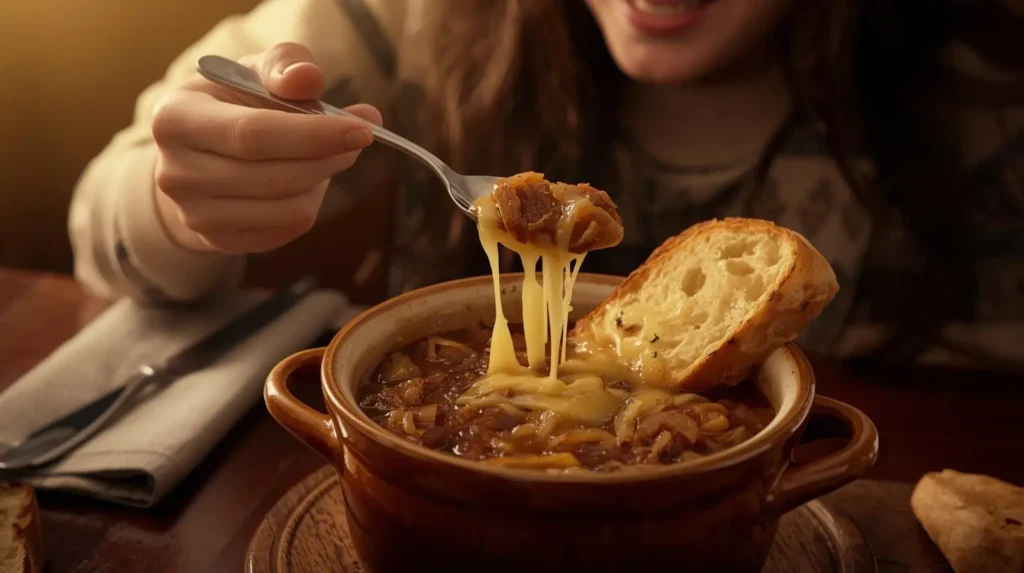
Use dry white wine and Gruyère or Swiss for classic results. The wine you choose significantly impacts your soup’s flavor profile. Dry white wines like Sauvignon Blanc, Pinot Grigio, or unoaked Chardonnay provide bright acidity without adding sweetness. Some French onion soup recipes call for sherry—dry sherry works wonderfully and adds subtle nutty notes that complement the Gruyère.
Avoid sweet wines, as they make the soup cloying when combined with caramelized onions’ natural sweetness. If you’re unsure whether a wine is appropriate, taste it—if you wouldn’t enjoy drinking it, don’t cook with it.
Gruyère remains the gold standard for cheese topping because it melts smoothly, browns beautifully, and provides nutty complexity. Buy it in a block and grate it yourself right before using. Pre-shredded cheese contains cellulose (anti-caking agent) that prevents proper melting and creates a grainy texture.
If Gruyère exceeds your budget, aged Swiss cheese (Emmental) is the best substitute. Aged white cheddar melts well and provides sharpness, though the flavor differs from traditional French onion soup. Some cooks combine cheeses—half Gruyère and half Swiss or mozzarella—to balance flavor and cost.
Make-Ahead Tips for Your French Onion Soup Recipe
Prepare soup base in advance and add cheese topping just before serving. French onion soup actually improves when made ahead—the flavors continue developing and mellowing in the refrigerator. Cook the soup completely through step 3 (simmering the broth), then cool and refrigerate in covered containers for up to 4 days.
When ready to serve, reheat the soup base gently on the stovetop until hot and steaming. Ladle into oven-safe bowls, add toasted bread and cheese, then broil as directed. This approach allows you to do the time-consuming work ahead while still serving freshly broiled, bubbling soup with that impressive cheese crust.
You can also caramelize onions days in advance and refrigerate them until ready to make soup. This breaks the recipe into manageable steps—spend one evening slowly caramelizing onions, then finish the soup another day when you have less time. Caramelized onions keep refrigerated for up to a week or frozen for several months.
For entertaining, set up an assembly line: soup in a pot on the stove, toasted bread on a platter, grated cheese in a bowl, and empty oven-safe bowls on a baking sheet. This makes it easy to assemble multiple servings quickly when guests arrive.
Storage for Your French Onion Soup Recipe
Refrigerate leftovers for 3 days or freeze without cheese for up to 2 months. Store leftover soup (without bread and cheese topping) in airtight containers in the refrigerator. It keeps well for 3 to 4 days and, like many soups and stews, tastes even better reheated as flavors continue melding.
To freeze, cool the soup base completely, then transfer to freezer-safe containers or heavy-duty freezer bags. Leave 1 to 2 inches of headspace for expansion. Freeze flat in bags for easy stacking and faster thawing. Frozen French onion soup maintains quality for 2 to 3 months.
Thaw frozen soup in the refrigerator overnight, then reheat gently on the stovetop. Add a splash of stock if it’s thickened too much during freezing. Never freeze soup that already has bread and cheese added—these toppings become soggy and unappetizing when thawed.
Leftover soup with cheese and bread topping doesn’t store as well—the bread becomes waterlogged and the cheese separates. If you must refrigerate assembled bowls, cover loosely and consume within 24 hours. Reheat in the oven rather than microwave for best results.
Flavor Variations
While traditional French onion soup is perfection in itself, variations allow you to customize this recipe for different tastes, dietary needs, or creative inspiration. Here are the most popular and successful adaptations.
Classic French Onion Soup Recipe
Beef broth, Gruyère cheese, and sherry wine for deep flavor. This is the traditional bistro version that established French onion soup’s iconic status. Use rich beef stock—ideally homemade from roasted bones. Deglaze with dry sherry instead of white wine for subtle nutty complexity that complements both the caramelized onions and Gruyère.
Some classic recipes include a bay leaf and fresh thyme, while others add a splash of cognac or brandy after the soup simmers. This small addition of spirits adds aromatic depth without overwhelming the fundamental onion and beef flavors. Pour in 2 tablespoons of cognac during the final 5 minutes of simmering—the alcohol cooks off, leaving sophisticated flavor notes.
For the most authentic experience, serve in traditional French onion soup crocks—those distinctive brown stoneware bowls with handles. The presentation matters as much as the taste when you’re aiming for classic bistro authenticity.
Vegetarian French Onion Soup Recipe
Use mushroom broth and Swiss cheese. Creating a vegetarian version that doesn’t sacrifice depth requires choosing the right stock replacement. Mushroom broth provides substantial umami and earthy flavor that closely mimics beef stock’s savoriness. Look for dark mushroom stock or make your own by simmering dried porcini, shiitake, and cremini mushrooms with aromatics.
Some vegetarian cooks fortify vegetable broth with soy sauce, miso paste, or nutritional yeast for additional umami complexity. Start with 1 tablespoon of dark soy sauce or red miso paste, taste, and adjust as needed. The goal is creating depth without obvious mushroom or soy flavor taking over.
Swiss cheese or a vegetarian-friendly Gruyère substitute (check labels, as traditional Gruyère uses animal rennet) works beautifully for the topping. The remainder of the technique stays the same—focus on perfectly caramelized onions, and the vegetarian version rivals the classic.
Richer French Onion Soup Recipe
Add a splash of cognac or brandy before serving. For special occasions or when you want to elevate this French onion soup recipe to extraordinary status, introduce cognac, brandy, or Armagnac. These grape-based spirits add aromatic complexity and subtle sweetness that enhances the caramelized onions without overpowering them.
Add 2 to 3 tablespoons of your chosen spirit during the final 5 minutes of simmering. The alcohol cooks off while the flavor concentrates. Alternatively, add a small splash (½ tablespoon per bowl) directly to each serving just before adding the cheese topping—this creates a more pronounced spirit presence.
You can also enrich the soup by stirring in a tablespoon of butter at the end (finishing butter) or adding a drizzle of truffle oil for luxury. Some upscale restaurants top each bowl with a poached egg under the cheese—when you break the egg, the rich yolk mingles with the broth for incredible indulgence.
Gluten-Free French Onion Soup Recipe
Swap baguette for gluten-free bread slices. Making this French onion soup recipe gluten-free is remarkably simple—the soup itself is naturally gluten-free (unless you use the optional flour for thickening). Replace the traditional baguette with quality gluten-free bread that crisps well.
Look for gluten-free sourdough or French-style loaves from specialty bakeries—these maintain structure better than standard gluten-free sandwich bread. Toast the slices thoroughly until very crispy before topping the soup. Slightly stale gluten-free bread actually works better than fresh, as it’s drier and crisps more effectively.
Ensure your beef stock is certified gluten-free, as some commercial stocks contain gluten-based thickeners or flavorings. Most pure stocks made from bones, vegetables, and herbs are naturally gluten-free, but always verify labels.
| Style | Key Ingredients | Flavor Profile | Best For |
|---|---|---|---|
| Classic French | Beef broth, Gruyère, Sherry | Savory, rich, deeply umami | Traditional bistro experience |
| Vegetarian | Mushroom broth, Swiss cheese | Earthy, balanced, lighter | Plant-based diets, Meatless Monday |
| Brandy-Infused | Cognac, Beef broth | Deep, aromatic, sophisticated | Special occasions, dinner parties |
| Gluten-Free | GF bread, Beef broth, Gruyère | Classic flavor, safe texture | Celiac disease, gluten sensitivity |
Serving Suggestions
How you present and accompany your French onion soup affects the complete dining experience. Traditional pairings enhance the soup’s richness while providing balance and variety.
Perfect Side Dishes for Your French Onion Soup Recipe
Serve with light green salad or roasted vegetables. French onion soup is rich and filling, so pair it with lighter sides that provide textural contrast and freshness. A simple green salad with crisp lettuce, fresh herbs, and a bright vinaigrette cuts through the soup’s richness beautifully.
Classic French frisée salad with lardons (bacon), a poached egg, and Dijon vinaigrette is traditional bistro fare that complements French onion soup perfectly. The bitter frisée, rich egg yolk, and tangy dressing balance the soup’s sweetness and cheese. If you’re serving vegetarian soup, omit the bacon and add toasted walnuts or pecans for crunch.
Roasted vegetables—especially Brussels sprouts, carrots, or green beans—provide earthiness and substance without overwhelming. Roast them with olive oil, salt, and pepper until caramelized and serve alongside the soup. The caramelized flavors echo the soup’s onions while adding different vegetables to round out the meal.
For a more substantial meal, serve crusty bread on the side for dipping into any remaining broth after you’ve finished the cheese-topped portions. Garlic bread, though not French, is beloved by many who serve this soup casually.
FAQs – French Onion Soup Recipe
1. Can I use red onions instead of yellow onions?
Yes, but yellow onions are preferred for their natural sweetness and classic flavor. Red onions will give a slightly sharper taste and a darker color, but the soup will still be delicious.
2. Why did my onions burn during caramelization?
Burning usually happens when the heat is too high or they are not stirred often. Cook onions slowly over medium-low heat, and stir frequently for deep, even caramelization.
3. Can I use chicken or vegetable stock instead of beef stock?
Absolutely! While beef stock gives a richer, more traditional flavor, chicken or vegetable stock works well for a lighter or vegetarian version of French onion soup.
4. How do I prevent my soup from being too watery?
Ensure onions are properly caramelized to develop concentrated flavor. Also, simmer the soup uncovered so excess liquid evaporates and the broth thickens naturally.
5. Can I make this recipe ahead of time?
Yes! Prepare the soup base in advance and refrigerate for up to 3 days. Add the toasted bread and cheese topping just before serving to maintain crispiness.
6. What cheese works best for French onion soup?
Gruyère is traditional for its meltability and nutty flavor. Swiss or Emmental are good alternatives. Avoid cheeses that don’t melt well, like cheddar or mozzarella alone.
7. Can I make this recipe gluten-free?
Yes! Simply replace the baguette slices with gluten-free bread. Ensure your flour (if used in the roux) is also gluten-free.
8. How do I reheat French onion soup without losing flavor or texture?
Reheat gently on the stovetop over low heat. If your soup has bread and cheese already added, it’s best to reheat soup separately and broil the bread and cheese fresh before serving.
9. Can I make French onion soup without wine?
Yes. Wine adds depth and acidity, but you can substitute with extra broth, a splash of balsamic vinegar, or apple cider vinegar for balance.
10. How long should I simmer the soup for maximum flavor?
Simmering for 30–40 minutes allows flavors to meld and the broth to deepen. Longer simmering is fine, but avoid boiling to prevent bitterness.
How did you find results our recipes
There are no reviews yet. Be the first one to write one.
How did you find results our recipes
There are no reviews yet. Be the first one to write one.

