
Introduction
Tired of dry, flavorless scalloped potatoes that taste more like cardboard than comfort food? You’ve tried recipes that promise creamy layers but deliver watery disappointment or potatoes that are crunchy instead of tender.
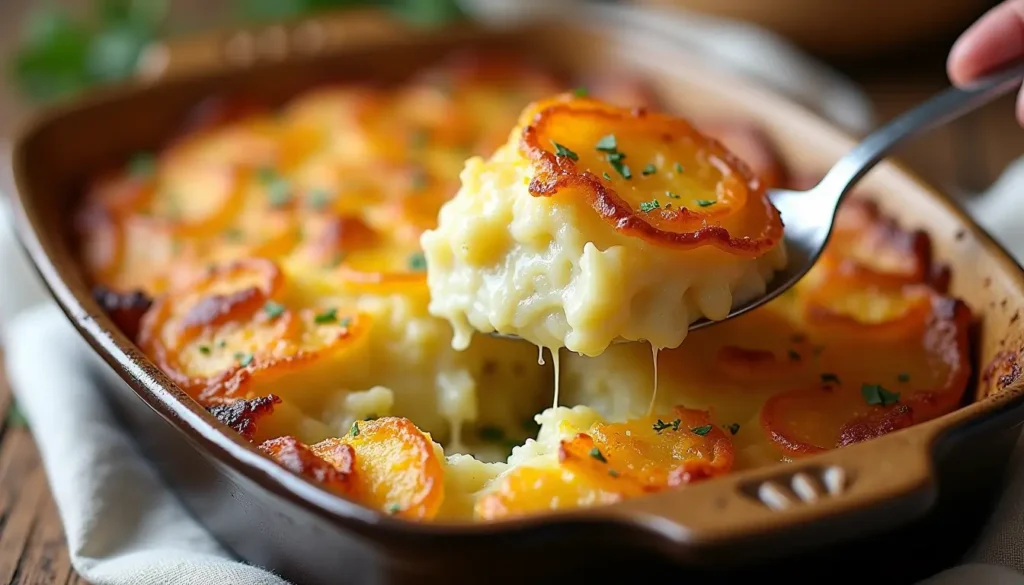
This scalloped potatoes recipe delivers perfectly creamy, cheesy layers with tender potato slices bathed in rich sauce and topped with golden, bubbling cheese. Every forkful offers pure comfort—the ideal balance of indulgent richness and satisfying texture.
As a home cook who’s spent 10 years perfecting classic comfort dishes through countless family dinners and holiday gatherings, I’ve tested every technique to create this foolproof recipe. This isn’t just potatoes in cream—it’s a carefully developed method that guarantees restaurant-quality results every time.
In this guide, you’ll discover the exact slicing thickness for perfect texture, learn the secret to creamy sauce that never separates, master layering techniques for even cooking, and get pro tips for make-ahead convenience. Let’s create scalloped potatoes worthy of your finest meals.
Table of Contents
Why This Scalloped Potatoes Recipe Works
This recipe combines traditional French gratin techniques with practical adaptations that deliver consistently excellent results without complicated steps.
- Uses simple, pantry-friendly ingredients: Potatoes, cream, cheese, butter, and garlic create elegant side dish without exotic or expensive items
- Ready in 90 minutes total: Prep time is just 20 minutes, then the oven does the work while you prepare other dishes
- Reliably creamy every time: Proper potato selection, slicing technique, and sauce method prevent common failures like watery layers or crunchy potatoes
- Feeds a crowd beautifully: One 9×13 dish serves 8-10 people, making it perfect for holidays, potlucks, or family gatherings
- Elegant yet comforting: Sophisticated enough for Thanksgiving or Christmas, comforting enough for weeknight dinners
- Reheats exceptionally well: Leftovers taste almost as good as fresh, making it ideal for meal prep or planned leftovers
Choosing the Right Ingredients for Scalloped Potatoes Recipe
The quality and type of ingredients you select directly impact texture, flavor, and whether your layers turn out creamy or watery.
Best Potatoes for Scalloped Potatoes Recipe
Russet potatoes (Idaho potatoes): The optimal choice for scalloped potatoes recipe. High starch content creates fluffy texture and absorbs cream beautifully. They break down slightly during baking, helping sauce thicken naturally. The neutral flavor allows cheese and seasonings to shine.
Yukon Gold potatoes: Excellent alternative with buttery flavor and golden color. Medium starch content means they hold their shape better than Russets—results in slightly firmer texture with distinct layers. Many cooks prefer the flavor over Russets.
Combination approach: Use 50/50 mix of Russets and Yukon Golds for best of both worlds—creamy sauce from Russets, distinct layers from Yukons.
What to avoid: Red potatoes and new potatoes are too waxy and low-starch. They don’t absorb cream well and create wet, separated layers. Fingerlings are too small and expensive for this application.
Peeling decision: Traditional scalloped potatoes are peeled for elegant presentation and smooth texture. Leaving skins on (particularly with Yukon Golds) adds rustic charm and nutrients but creates different aesthetic.
Dairy Selection: Cream, Milk, or Combination
Heavy cream (36-40% fat): Creates richest, most indulgent scalloped potatoes with velvety texture. Higher fat content prevents curdling and separation during long baking. Traditional French gratin uses all cream.
Half-and-half (10-18% fat): Balanced option that’s creamy without being overly rich. Slightly lighter on calories while maintaining good texture. Most home cooks find this perfect middle ground.
Whole milk: Creates lighter dish with less richness. Needs flour or cornstarch to thicken properly or sauce will be too thin. Good choice if you want to reduce calories significantly.
Combination approach: Use 1 cup heavy cream + 1 cup whole milk for 2 cups total liquid. Provides richness without being overwhelming. This is my recommended ratio for best results.
What doesn’t work: Skim milk or low-fat milk create watery, separated layers. The lack of fat means sauce won’t bind to potatoes properly.
Cheese Options for Maximum Flavor
Sharp cheddar: Classic choice that provides bold, tangy flavor. Use aged cheddar for more complex taste. White cheddar creates more elegant appearance than orange.
Gruyère: Traditional French choice with nutty, slightly sweet flavor. Melts beautifully and creates sophisticated taste. More expensive but worth it for special occasions.
Parmesan: Adds salty, umami depth. Usually combined with other cheeses rather than used alone. Freshly grated Parmigiano-Reggiano far superior to pre-grated.
Swiss or Emmental: Mild, nutty flavor that melts smoothly. Less assertive than cheddar but creates beautiful strings when served.
Combination approach: Use 1 cup sharp cheddar + ½ cup Gruyère or Parmesan for complex, layered flavor profile.
Amount matters: This recipe uses 2 cups shredded cheese total. Don’t skimp—generous cheese is essential for proper scalloped potatoes.
Aromatics and Seasonings
Fresh garlic: Provides aromatic depth that defines great scalloped potatoes. Slice thin or mince finely. Use 3-4 cloves minimum.
Onions: Thinly sliced onions layered between potatoes add sweetness and complexity. Yellow onions preferred; shallots work for more refined flavor.
Fresh thyme: Classic herb pairing with potatoes and cream. Leaves stripped from stems and sprinkled between layers.
Nutmeg: Just a pinch (⅛ teaspoon) adds warmth and complexity without being identifiable. Traditional in French gratins.
Salt and pepper: Season each layer individually—starchy potatoes need more salt than you think. White pepper preferred for appearance but black pepper works fine.
Ingredient Substitutions
Heavy cream → Half-and-half or milk: Reduce richness but maintain creaminess. Add 1-2 tablespoons flour to milk for proper thickening.
Butter → Olive oil or vegan butter: Works for dairy-free versions. Flavor changes but structure remains.
Cheese → Dairy-free cheese: Many vegan cheese brands melt reasonably well now. Results differ from dairy cheese but can be satisfying.
Russet potatoes → Yukon Gold: Direct substitution with slightly different texture—more distinct layers, less creamy sauce.
Fresh garlic → Garlic powder: Use 1 teaspoon garlic powder if fresh isn’t available. Not as flavorful but acceptable.
Ingredients & Prep for Scalloped Potatoes Recipe
Essential Ingredients
| Ingredient | Amount | Purpose | Notes |
|---|---|---|---|
| Russet or Yukon Gold potatoes | 3 lbs (about 6-7 medium) | Forms base layers | Slice ⅛-inch thick |
| Heavy cream | 1 cup (8 oz) | Creates rich, creamy sauce | Can substitute half-and-half |
| Whole milk | 1 cup (8 oz) | Balances richness | Thins cream to proper consistency |
| Sharp cheddar cheese (shredded) | 2 cups (8 oz) | Main flavor component | Shred from block yourself |
| Butter | 4 tablespoons (½ stick) | Adds richness, greases dish | Unsalted or salted works |
| All-purpose flour | 3 tablespoons | Thickens sauce, prevents separation | Creates light roux |
| Garlic cloves (minced) | 4 cloves | Provides aromatic depth | Fresh strongly preferred |
| Fresh thyme leaves | 1 tablespoon | Adds herbal complexity | Or 1 tsp dried thyme |
| Salt | 1½ teaspoons | Enhances all flavors | Season each layer |
| Black pepper | ½ teaspoon | Adds subtle heat | White pepper for appearance |
| Nutmeg (optional) | Pinch | Adds warmth | Traditional French touch |
Recipe yield: Serves 8-10 as side dish (9×13 inch baking dish)
Scalloped Potatoes Recipe Prep Essentials
Equipment needed:
- 9×13 inch baking dish (ceramic, glass, or metal)
- Mandoline slicer or sharp knife
- Large cutting board
- Medium saucepan for sauce
- Whisk
- Measuring cups and spoons
- Box grater for cheese
- Aluminum foil
Workspace preparation:
- Clear counter space for slicing potatoes
- Fill large bowl with cold water for storing sliced potatoes
- Butter baking dish generously to prevent sticking
- Preheat oven to 375°F before starting prep
Timing breakdown:
| Stage | Time Required | What Happens |
|---|---|---|
| Prep (slicing, grating) | 15-20 minutes | Prepare all ingredients |
| Making sauce | 8-10 minutes | Create creamy base |
| Layering | 10 minutes | Build potato layers |
| Baking covered | 45 minutes | Potatoes begin tenderizing |
| Baking uncovered | 25-30 minutes | Top browns, sauce bubbles |
| Resting | 10-15 minutes | Layers set, safe to serve |
| Total time | 2 hours | From start to eating |
Pantry Staples for Scalloped Potatoes
Keep these basics stocked for spontaneous side dish preparation:
- Russet or Yukon Gold potatoes
- Heavy cream or half-and-half (refrigerated)
- Whole milk
- Sharp cheddar cheese (freezes well)
- Butter (unsalted or salted)
- All-purpose flour
- Garlic cloves
- Dried thyme (when fresh isn’t available)
- Salt and black pepper
- Nutmeg (lasts years in spice cabinet)
Step-by-Step Instructions for Scalloped Potatoes Recipe
Pre-Cooking Prep (20 Minutes)
Step 1: Preheat oven to 375°F. Position rack in center of oven.
Step 2: Generously butter 9×13 inch baking dish, coating bottom and sides completely. This prevents sticking and adds flavor.
Step 3: Peel potatoes using vegetable peeler, removing all skin. Rinse under cold water.
Step 4: Slice potatoes into uniform ⅛-inch thick rounds. Consistency is crucial—uneven slices cook at different rates.
Mandoline method (recommended): Set mandoline to ⅛-inch setting. Use hand guard for safety. Slice directly into bowl of cold water to prevent browning.
Knife method: Use sharp chef’s knife, cutting as uniformly as possible. Take your time—consistent slicing is worth the effort.
Step 5: As potatoes are sliced, place immediately in large bowl of cold water. This prevents oxidation (browning) and removes excess starch for better texture.
Step 6: Mince garlic finely. Strip thyme leaves from stems. Shred cheese using box grater. Set all ingredients within easy reach.
Making the Cream Sauce (10 Minutes)
Step 1: In medium saucepan over medium heat, melt butter until foaming.
Step 2: Add minced garlic and sauté for 1 minute until fragrant but not browned. Garlic burns easily—watch carefully.
Step 3: Sprinkle flour over melted butter and garlic. Whisk constantly for 2 minutes to cook out raw flour taste. This creates a roux that will thicken the cream.
Visual cue: Mixture should be pale golden and paste-like. This is correct.
Step 4: Slowly pour in milk while whisking constantly. Then add heavy cream, continuing to whisk. The mixture will be lumpy at first—keep whisking and it will smooth out.
Step 5: Add thyme, salt, pepper, and nutmeg (if using). Continue whisking until sauce is smooth and beginning to thicken, about 3-4 minutes.
Step 6: Reduce heat to low and simmer gently for 2-3 minutes, stirring occasionally, until sauce coats the back of a spoon. Don’t let it boil vigorously.
Consistency check: Sauce should be thick but still pourable—like heavy pancake batter. If too thick, add splash more milk. If too thin, simmer 2-3 minutes longer.
Layering the Scalloped Potatoes (10 Minutes)
Step 1: Drain potatoes from water and pat dry with clean kitchen towel. Excess water dilutes sauce and creates watery layers.
Step 2: Create first potato layer: Arrange one-third of potato slices in buttered baking dish, overlapping slightly in neat rows. Shingling them (overlapping like roof shingles) creates most elegant presentation.
Step 3: Season this layer with pinch of salt and pepper.
Step 4: Sprinkle one-third of shredded cheese (about ⅔ cup) evenly over potatoes.
Step 5: Pour one-third of cream sauce (about ¾ cup) over potatoes and cheese, using spatula to spread evenly.
Step 6: Repeat layering process two more times: potatoes, seasoning, cheese, sauce. You should have three complete layers.
Step 7: For final layer, reserve some extra cheese (about ½ cup) to sprinkle on top during last 15 minutes of baking for golden, bubbly finish.
Layering tip: Press down gently on each layer before adding the next. This helps eliminate air pockets and ensures sauce penetrates between potato slices.
Baking to Golden Perfection (70-75 Minutes)
Step 1: Cover baking dish tightly with aluminum foil. This traps steam and helps potatoes cook through without top browning too quickly.
Step 2: Place covered dish on center oven rack. Bake for 45 minutes covered.
Step 3: After 45 minutes, carefully remove foil (steam will escape—watch your hands). Potatoes should be partially tender when pierced with knife but not fully cooked.
Step 4: Return uncovered dish to oven. Bake additional 20-25 minutes until potatoes are completely tender, sauce is bubbling around edges, and top is beginning to brown.
Step 5: If reserved cheese for topping, sprinkle it over top during last 15 minutes of baking. This creates golden, cheesy crust.
Step 6: For extra-golden top (optional), turn on broiler for last 2-3 minutes. Watch constantly—broilers burn quickly. Top should have dark golden spots.
Doneness Check for Scalloped Potatoes
Potato tenderness: Insert knife or fork into center of dish. It should slide through all layers easily with no resistance. If potatoes still feel firm, bake 10 more minutes.
Sauce consistency: Edges should be bubbling vigorously. When you pull dish back slightly, sauce should be thick and creamy, not watery or separated.
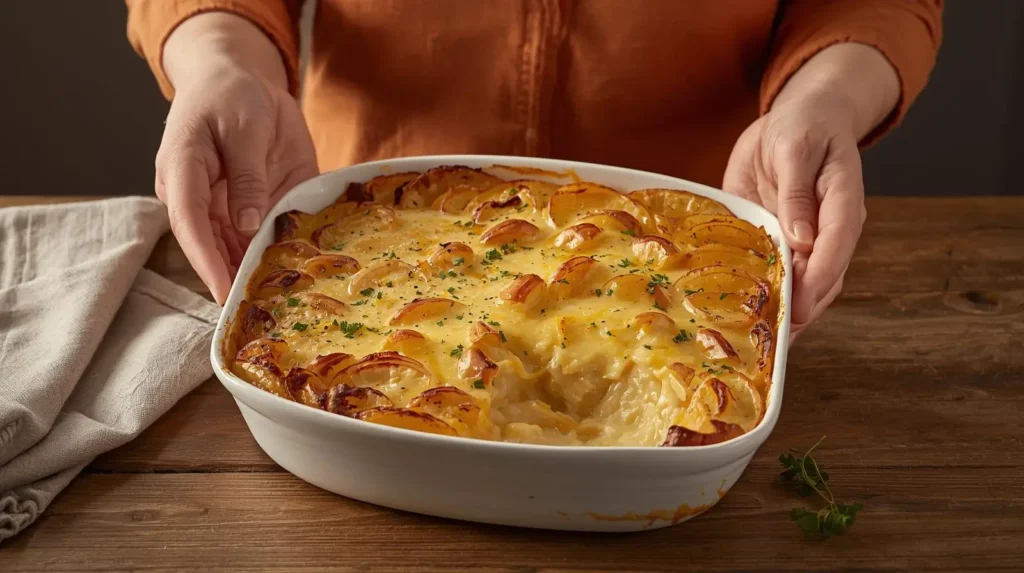
Visual cues: Top should be golden brown with darker brown spots. Cheese should be melted, bubbling, and slightly crispy at edges. You should see sauce bubbling up around sides.
Jiggle test: Give dish gentle shake. Center should jiggle slightly but hold together—not slosh like liquid.
Internal temperature: While not commonly measured, fully cooked scalloped potatoes reach about 200°F internally.
Resting Before Serving (10-15 Minutes)
Step 1: Remove dish from oven and place on heat-safe surface or cooling rack.
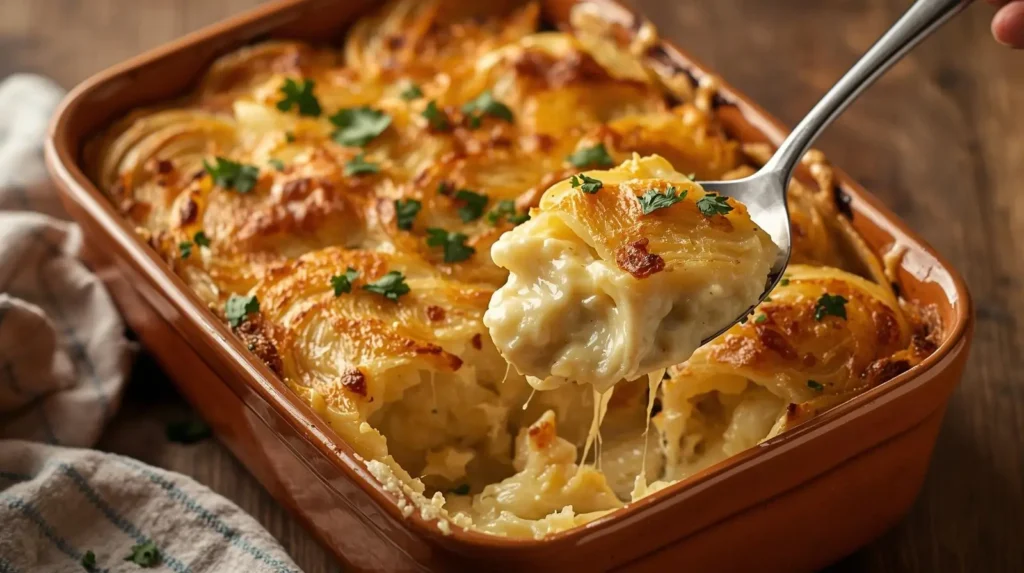
Step 2: Let rest uncovered for 10-15 minutes. This crucial step allows sauce to thicken and layers to set. Cutting immediately results in runny, sloppy servings.
Step 3: During resting, sauce will thicken considerably and potatoes will firm up slightly, making clean serving possible.
Step 4: Use large serving spoon or spatula to scoop out portions, ensuring you get all layers in each serving.
Presentation tip: First serving is always messiest. After that, layers maintain better structure.
Pro Tips for Perfect Scalloped Potatoes Recipe
Avoiding Soggy or Watery Scalloped Potatoes
Slice potatoes uniformly: Inconsistent thickness means some pieces finish before others, creating mushy spots and crunchy spots.
Soak and dry potatoes: Cold water soak removes excess surface starch that can create gummy texture. Drying thoroughly prevents diluting cream sauce.
Thicken sauce properly: The flour roux is essential. Don’t skip it or sauce will be too thin and potatoes will swim in liquid.
Don’t add too much liquid: Stick to recipe proportions. Extra cream “just to be safe” creates swimming potatoes, not creamy layers.
Proper baking temperature: Too low (below 350°F) and potatoes steam rather than bake, creating wet texture. Too high (above 400°F) and top burns before potatoes cook through.
Rest before serving: Skipping resting time means sauce hasn’t thickened. Those 10-15 minutes transform texture dramatically.
Choose right potatoes: High-starch Russets or Yukon Golds absorb cream properly. Waxy red potatoes repel liquid, creating separated, watery layers.
Essential Tool Recommendations
Mandoline slicer: Single best investment for perfect scalloped potatoes. Creates uniform slices in fraction of time knife-slicing takes. Adjustable models cost $30-50. Always use hand guard—mandolines are dangerously sharp.
9×13 inch baking dish: Ceramic or glass distribute heat evenly and look beautiful for serving. Avoid thin metal pans that create hot spots. Le Creuset, Emile Henry, or Pyrex all excellent.
Quality whisk: Necessary for smooth sauce without lumps. Balloon whisk with flexible wires works best.
Sharp chef’s knife: If not using mandoline, sharp 8-inch chef’s knife essential for consistent slicing.
Box grater: For shredding cheese from blocks. Pre-shredded cheese contains cellulose that affects melting and texture.
Aluminum foil: Heavy-duty foil less likely to tear when covering dish. Creates better steam seal.
Storage and Reheating Strategy
Refrigerator storage:
- Cool scalloped potatoes completely before storing (leave uncovered at room temperature up to 2 hours)
- Transfer to airtight container or cover baking dish tightly with plastic wrap and foil
- Refrigerate up to 4 days
- Potatoes thicken considerably when cold—this is normal
Freezer storage:
- Scalloped potatoes freeze reasonably well but texture changes slightly
- Cool completely, wrap dish tightly in plastic wrap then foil, or transfer to freezer-safe container
- Freeze up to 2 months
- Thaw overnight in refrigerator before reheating
- Dairy may separate slightly—stir gently when reheating
Reheating methods:
- Oven (best method): Cover with foil, reheat at 350°F for 20-30 minutes until hot throughout. Remove foil last 10 minutes to re-crisp top.
- Microwave: Heat individual portions on medium power in 2-minute intervals, stirring gently between. Not ideal for whole dish—creates uneven heating.
- Stovetop: Not recommended—difficult to heat evenly without scorching bottom.
Make-ahead strategy: Assemble scalloped potatoes completely, cover, and refrigerate up to 24 hours before baking. Add 10-15 minutes to covered baking time since starting cold. This is perfect for holiday meal planning.
Flavor Variations for Scalloped Potatoes Recipe
Ultimate Cheesy Scalloped Potatoes
Take cheese to the next level:
Three-cheese blend: Use 1 cup sharp cheddar + ½ cup Gruyère + ½ cup Parmesan for complex, sophisticated flavor
Four-cheese decadence: Add fontina or mozzarella to above blend for ultra-creamy, stretchy texture
Blue cheese version: Add ½ cup crumbled blue cheese between layers for pungent, assertive flavor. Not for everyone but loved by blue cheese fans.
Smoked cheese: Use smoked cheddar or smoked Gouda for campfire-like depth
Loaded Scalloped Potatoes
Add mix-ins for heartier dish:
Bacon scalloped potatoes: Cook 8 strips bacon until crispy, crumble, and layer between potato layers. Reserve bacon fat and use instead of some butter in sauce.
Caramelized onion: Slowly cook 2 thinly sliced onions in butter until golden brown and sweet (20-30 minutes). Layer between potatoes.
Ham and cheese: Add diced ham (2 cups) between layers for complete meal. Traditional with Gruyère cheese.
Mushroom: Sauté 8 ounces sliced mushrooms until golden, layer between potatoes for earthy depth.
Spinach and artichoke: Add thawed, squeezed-dry frozen spinach and chopped artichoke hearts for vegetable-forward version.
Herb-Infused Variations
Elevate with additional herbs:
Rosemary and garlic: Add 1 tablespoon fresh minced rosemary to cream sauce for bold, aromatic flavor
Sage brown butter: Brown butter with fresh sage leaves before making roux for nutty, herbaceous notes
Parsley and chive: Sprinkle chopped fresh parsley and chives between layers for bright, oniony flavor
Italian herb: Add 1 tablespoon Italian seasoning to cream sauce and use mozzarella and Parmesan cheeses
Lighter Variations
Reduce richness without sacrificing too much flavor:
Lower-fat version: Use all milk instead of cream, reduce cheese to 1 cup, use cooking spray instead of butter in pan
Cauliflower scalloped potatoes: Replace half the potatoes with thinly sliced cauliflower to reduce carbs and calories
Greek yogurt: Replace half the heavy cream with full-fat Greek yogurt (add after sauce thickens, don’t boil)
Global-Inspired Variations
French-style Gratin Dauphinois: Use all heavy cream, no cheese, nutmeg prominent. Very traditional.
Swedish Janssons Frestelse: Add anchovies and onions between layers. Surprisingly delicious if you like anchovies.
German Kartoffelgratin: Use sour cream, caraway seeds, and smoked cheese for Central European twist.
Irish colcannon gratin: Add layers of cabbage or kale, use Irish cheddar.
Serving Suggestions for Scalloped Potatoes Recipe
Perfect Main Dish Pairings
Holiday roasts: Prime rib, roast turkey, glazed ham, or leg of lamb. Scalloped potatoes absorb meat juices beautifully.
Grilled meats: Steaks, pork chops, chicken breast, or sausages. The creamy potatoes balance charred, smoky flavors.
Fish: Salmon, halibut, or cod. Rich potatoes complement delicate fish without overwhelming.
Vegetarian mains: Portobello steaks, vegetable Wellington, or stuffed acorn squash when scalloped potatoes become primary starch.
Brunch dishes: Serve alongside quiche, frittata, or eggs Benedict for elegant breakfast.
Complete Meal Composition
Protein + Scalloped Potatoes + Vegetable: Classic three-component plate. Choose vegetables that provide color and textural contrast.
Vegetable pairings: Roasted Brussels sprouts, steamed green beans, glazed carrots, sautéed spinach, or roasted asparagus.
Salads: Fresh garden salad, Caesar salad, or arugula with lemon vinaigrette cuts through richness.
Bread: Dinner rolls, garlic bread, or crusty baguette (though potatoes provide starch).
Sauces: If serving roast, use pan drippings or gravy. Scalloped potatoes complement, don’t require additional sauce.
Holiday and Special Occasion Service
Thanksgiving: Serve alongside turkey, stuffing, cranberry sauce, and green bean casserole. Make ahead the night before.
Christmas dinner: Perfect with prime rib or ham. The elegant presentation matches formal holiday setting.
Easter: Pairs beautifully with glazed ham or leg of lamb.
Potlucks: Transport in original baking dish covered with foil. Reheat on-site or serve at room temperature (still good).
Buffet setup: Keep warm in slow cooker on low setting if serving over extended time period.
Beverage Pairings
Wine: Oaked Chardonnay (richness matches creamy dish), Pinot Noir (lighter red for lighter mains), or dry Riesling (acidity cuts fat).
Beer: Belgian ales, wheat beers, or light lagers. Avoid heavy stouts that compete with richness.
Non-alcoholic: Apple cider (hot or cold), iced tea, sparkling water with lemon, or lemonade.
Holiday appropriate: Champagne or sparkling wine for celebrations, red wine for winter holidays.
FAQs About Scalloped Potatoes Recipe
Can I use Yukon Gold potatoes instead of Russet?
Yes! Yukon Gold potatoes work beautifully in scalloped potatoes. They have medium starch content, buttery flavor, and natural yellow color. They hold their shape better than Russets, creating more distinct layers with slightly firmer texture. Many cooks prefer Yukons for this reason. The sauce won’t be quite as thick since Yukons don’t break down as much, but results are delicious. You can also use 50/50 combination of Russets and Yukons for best of both worlds.
How do I prevent watery layers in my scalloped potatoes?
Watery layers result from several factors: skipping the flour roux (essential for thickening), using too much liquid, using waxy potatoes that don’t absorb cream, not drying potatoes after soaking, underbaking (potatoes need time to absorb liquid), or skipping resting time. The most common culprit is inadequate thickening of the cream sauce before layering. Make sure sauce coats the back of spoon before assembling. Also, resist urge to add extra cream “just in case”—stick to recipe proportions.
Is this scalloped potatoes recipe freezer-friendly?
Partially. Scalloped potatoes can be frozen for up to 2 months, but dairy-based dishes sometimes separate or become grainy upon thawing and reheating. For best freezer results: undercook potatoes slightly, cool completely, wrap tightly in plastic then foil, and freeze. Thaw overnight in refrigerator and reheat covered at 350°F for 30-40 minutes. The texture won’t be quite as good as fresh but remains satisfactory. Alternatively, freeze unbaked assembled dish and bake from frozen (add 20-30 minutes to covered baking time).
What’s the difference between scalloped potatoes and au gratin potatoes?
The terms are often used interchangeably, but traditionally scalloped potatoes are made with cream sauce and minimal cheese, while potatoes au gratin (French for “with grating”) feature cheese prominently, often including breadcrumb topping. This recipe is technically a hybrid—it has cream sauce (scalloped) and generous cheese (au gratin). Realistically, most American recipes called “scalloped” include cheese, so the distinction has blurred significantly.
Can I make scalloped potatoes ahead of time?
Yes, and they’re perfect for make-ahead! Assemble completely, cover tightly with foil, and refrigerate up to 24 hours before baking. When ready to cook, add 10-15 minutes to covered baking time since starting cold. This advance prep is why scalloped potatoes are holiday favorites—one less thing to worry about on big meal day. You can also bake completely ahead, refrigerate, and reheat (though texture is best freshly baked).
Why did my scalloped potatoes curdle or separate?
Curdling occurs when dairy is heated too quickly or at too high temperature. Other causes: using low-fat milk without proper thickening, boiling sauce after adding cream, or using pre-shredded cheese (contains anti-caking agents). Prevention: make proper roux with flour, add liquids gradually while whisking, keep temperature moderate (375°F), and use full-fat dairy. If separation does occur, sometimes gentle stirring while still hot can reincorporate, but prevention is key.
How thick should I slice potatoes for scalloped potatoes?
The ideal thickness is ⅛ inch (about 3mm). This allows potatoes to cook through evenly and absorb cream properly. Thicker slices (¼ inch) take much longer to cook and may remain firm while sauce over-thickens. Thinner slices (less than ⅛ inch) can become mushy and fall apart. A mandoline slicer set to ⅛ inch produces perfect results. If slicing by hand, aim for thin but sturdy—you should be able to see faint light through slice when held up.
Can I make scalloped potatoes without cheese?
Yes, traditional French Gratin Dauphinois contains no cheese at all—just potatoes, cream, garlic, and seasonings. The result is more delicate and lets potato flavor shine. Follow this recipe but omit cheese, increase cream by ½ cup, and add extra garlic and nutmeg. Some cooks add splash of white wine for acidity. The texture will be softer without cheese binding layers, but it’s elegantly simple and delicious.
Conclusion
You now have everything you need to create perfectly creamy, indulgent scalloped potatoes with tender layers and golden, bubbling cheese. No more settling for dry, flavorless versions or watery disappointments that embarrass you at holiday dinners.
Stop buying expensive store-made versions or serving mediocre potatoes at important meals. This homemade scalloped potatoes recipe costs a fraction of pre-made options and tastes infinitely better.
Join thousands of home cooks who’ve mastered this classic comfort dish and made it their signature side for every special occasion. Once you nail this technique, you’ll be asked to bring scalloped potatoes to every gathering.
Ready to complete your comfort food repertoire? Try our Classic Mac and Cheese Recipe for another creamy favorite, or check out our Loaded Baked Potato Casserole for a deconstructed twist on potato perfection!
How did you find results our recipes
There are no reviews yet. Be the first one to write one.

