
Introduction
Tired of heavy or bland crab pasta salad recipe attempts that leave you disappointed? You’re not alone. Many home cooks struggle with soggy pasta, watery dressing, or lackluster flavors that fail to showcase the delicate sweetness of crab meat—resulting in forgettable dishes that don’t live up to their potential.
This creamy, refreshing crab pasta salad is light, flavorful, and perfect for any occasion—from elegant summer gatherings to casual weekday lunches. As a food blogger who’s tested dozens of pasta salads over the years, this version is my go-to for achieving the perfect balance of freshness, creaminess, and satisfying texture without the heavy, mayonnaise-laden quality that weighs down so many pasta salads.
In this comprehensive guide, you’ll discover essential crab pasta salad recipe prep tips, dressing secrets that elevate ordinary ingredients, ingredient selection strategies, and answers to your most common questions. Whether you’re preparing for a potluck, planning a beachside picnic, or simply want a light lunch option, you’ll have everything needed to create a stunning crab pasta salad that guests will request again and again.
Why This Crab Pasta Salad Recipe Works
This crab pasta salad recipe delivers on three essential qualities: bright flavor, refreshing lightness, and effortless ease that makes it accessible to cooks of all skill levels.
- Uses simple, affordable ingredients for crab pasta salad recipe – Everything you need is available at standard grocery stores, with no hunting for obscure specialty items or expensive gourmet ingredients
- Takes just 20 minutes to make — no complicated steps! – With straightforward techniques and minimal cooking, you’ll have an impressive dish ready in less time than it takes to order delivery
- Perfect for potlucks, BBQs, or light weekday lunches – This versatile dish travels well, feeds a crowd, and satisfies without leaving anyone feeling overly full
What makes this recipe exceptional is its balanced approach to flavor and texture. The dressing is creamy without being heavy, bright citrus notes complement the sweet crab meat perfectly, and crisp vegetables add refreshing crunch that keeps each bite interesting. Unlike mayonnaise-heavy versions that feel rich and cloying, this crab pasta salad remains light and refreshing even on the hottest summer days.
Table of Contents
Choosing the Right Crab Pasta Salad Recipe Ingredients
Success with any crab pasta salad recipe begins with selecting quality ingredients that work harmoniously together.
Best Ingredients for crab pasta salad recipe
The foundation of exceptional crab pasta salad recipe starts with real crab or imitation crab for texture, and understanding the difference helps you make the best choice for your needs. Real lump crab meat (backfin or jumbo lump) offers sweet, delicate flavor and tender texture that makes this dish feel luxurious. Imitation crab (surimi) provides a budget-friendly alternative with mild flavor and firmer texture that many people genuinely prefer in cold salads.
Fresh herbs for brightness transform this from ordinary to extraordinary. Chopped fresh dill, parsley, or chives add aromatic complexity and visual appeal that dried herbs simply cannot match. The bright green color signals freshness while the herbaceous notes complement the seafood beautifully.
High-quality pasta forms the backbone of the dish. Choose small to medium shapes like rotini, shells, or bow ties that capture dressing in their crevices and provide satisfying texture without overwhelming the delicate crab. The pasta should have good structure that holds up to dressing without becoming mushy.
Crisp vegetables add essential textural contrast and nutrition. Celery provides satisfying crunch, bell peppers contribute sweetness and color, and red onion offers sharp bite that balances the creamy dressing.
Buying Tips
Choose high-quality crab meat and al dente pasta for the perfect bite. When selecting crab meat, look for these quality indicators:
Fresh Crab Meat:
- Should smell fresh and oceanic, never fishy or ammonia-like
- Meat should be moist but not wet or slimy
- Color should be white to off-white with no discoloration
- Check the sell-by date and choose the freshest available
- Lump or backfin crab works beautifully for this recipe
Imitation Crab (Surimi):
- Select products with crab or fish as the first ingredient
- Avoid brands with excessive fillers or artificial colors
- Choose vacuum-sealed packages for better freshness
- Look for chunks rather than shredded for better texture
Pasta Selection:
- Choose quality brands made from 100% durum wheat semolina
- Small shapes (rotini, shells, farfalle, cavatappi) work best
- Avoid angel hair or spaghetti which don’t hold dressing well
For the freshest vegetables, shop at farmers markets or choose locally grown produce when possible. Organic celery and bell peppers offer superior crunch and flavor compared to older conventional options.
Substitutions
Swap mayo for Greek yogurt or use gluten-free pasta if needed—this recipe adapts beautifully to various dietary preferences and restrictions:
Crab Alternatives:
- Cooked shrimp (chopped into bite-sized pieces)
- Canned tuna (drained well)
- Chopped cooked lobster for luxury occasions
- Diced cooked chicken for non-seafood versions
Dressing Modifications:
- Replace half the mayonnaise with Greek yogurt for tanginess and protein
- Use vegan mayo for plant-based versions
- Substitute sour cream for part of the mayo for extra tang
- Add avocado-based mayo for different flavor profile
Pasta Variations:
- Gluten-free pasta (chickpea, brown rice, or corn-based)
- Whole wheat pasta for extra fiber
- Orzo for elegant presentation
- Cauliflower pasta for low-carb option
Vegetable Swaps:
- Cucumber instead of celery for different crunch
- Green onions instead of red onion for milder flavor
- Chopped fennel for subtle anise notes
- Diced avocado for creaminess (add just before serving)
Ingredients & Prep crab pasta salad recipe
Proper preparation streamlines the assembly process and ensures your crab pasta salad recipe turns out perfectly every time.
Crab Pasta Salad Recipe Prep Essentials
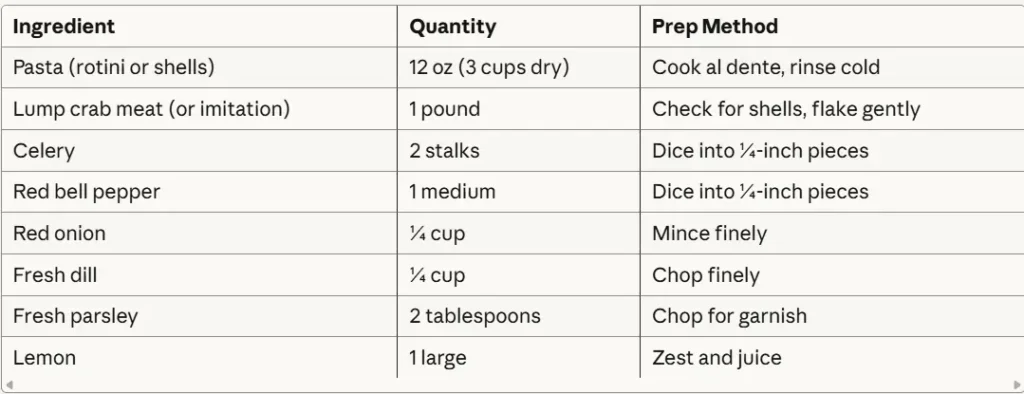
Cooking the pasta correctly prevents the mushiness that ruins crab pasta salad recipe. Boil in heavily salted water (it should taste like the ocean) until al dente—usually 1-2 minutes less than package directions suggest. The pasta will soften slightly as it absorbs dressing, so starting with firmer texture ensures the final product has proper bite.
Immediately drain and rinse pasta under cold running water to stop the cooking process completely. This crucial step removes excess starch that would otherwise make the salad gummy and prevents pasta from continuing to soften.
Chopping vegetables uniformly creates visual appeal and ensures each bite contains balanced flavors. Aim for consistent ¼-inch dice so vegetables distribute evenly throughout the salad rather than clumping together.
Preparing crab properly makes a significant difference. If using fresh lump crab, carefully pick through to remove any shell fragments or cartilage—even tiny pieces ruin the eating experience. Flake the meat gently with your fingers to separate chunks without shredding into mush. If using imitation crab, chop into bite-sized pieces for easier eating.
Dressing & Marinade
The dressing makes or breaks crab pasta salad recipe This balanced recipe provides creaminess without heaviness and brightness without overwhelming the delicate crab flavor.
Creamy Lemon Dill Dressing:
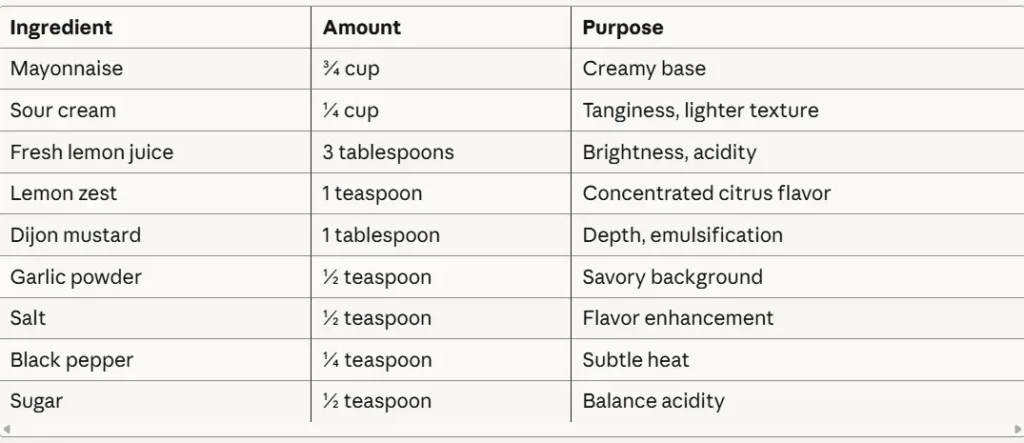
Whisk dressing ingredients for 2 minutes until creamy and completely smooth with no lumps remaining. The mixture should be thick enough to coat the back of a spoon but still pourable. If too thick, thin with a tablespoon of water or additional lemon juice.
Making dressing ahead allows flavors to meld beautifully. Prepare up to 24 hours in advance and refrigerate in an airtight container. The flavor actually improves as the garlic powder hydrates and the lemon notes mellow slightly.
Pantry Staples
Keep these essential ingredients stocked for spontaneous crab pasta salad preparation:
Essential Components:
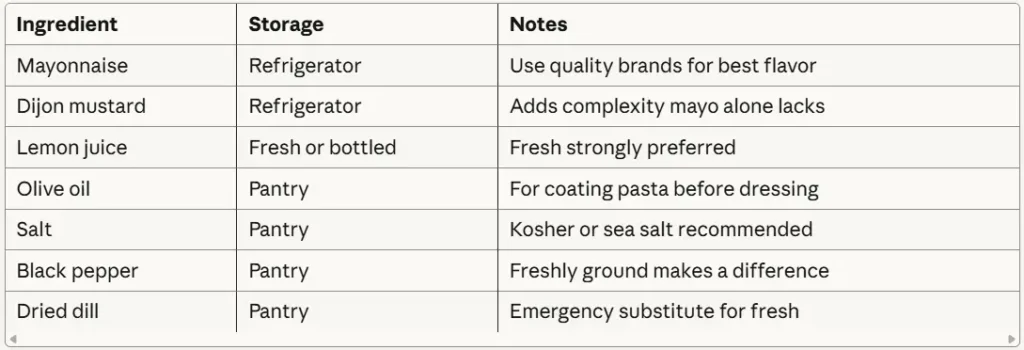
Having these basics on hand means you’re always one grocery run away from impressive crab pasta salad recipe, even when unexpected guests arrive.
Step-by-Step Cooking Instructions
Follow these detailed instructions for perfect crab pasta salad recipe results that look and taste professional.
Pre-Cooking Prep crab pasta salad recipe
Before you begin cooking, complete these preparatory steps that set you up for success:
- Fill a large pot with water: Add 4-6 quarts of water and 2 tablespoons salt; bring to a rolling boil
- Prepare your workspace: Set out a large colander in the sink, a large mixing bowl for final assembly, and a medium bowl for the dressing
- Gather all ingredients: Having everything measured and ready prevents scrambling mid-recipe
- Make the dressing first: Whisking the dressing while pasta cooks saves time and allows flavors to meld
Boil Pasta:
- Add pasta to rapidly boiling salted water
- Stir immediately to prevent sticking
- Set timer for 1-2 minutes less than package instructions (typically 7-9 minutes for most shapes)
- Taste a piece—it should be tender but still have slight firmness in the center
- Drain immediately in colander
Prepare Crab:
- If using fresh crab, pick through carefully for shells
- Flake gently into bite-sized pieces
- Pat dry with paper towels if excess moisture present
- If using imitation crab, chop into ½-inch pieces
- Refrigerate until needed
Chop Vegetables:
- Dice celery, bell pepper, and onion uniformly
- Chop fresh herbs just before adding (prevents browning)
- Keep vegetables refrigerated until assembly
Mixing Method crab pasta salad recipe
The key to well-coated, evenly distributed crab pasta salad lies in proper mixing technique and timing.
Step 1: Cool the Pasta (5 minutes)
- Drain cooked pasta in colander
- Immediately rinse under cold running water for 1-2 minutes, tossing with hands to ensure even cooling
- Shake colander vigorously to remove excess water
- Let pasta sit in colander for 2-3 minutes to drain completely—wet pasta dilutes dressing
- Transfer pasta to a large mixing bowl
- Toss with 1 tablespoon olive oil to prevent sticking (optional but recommended)
Step 2: Combine Core Ingredients (2 minutes)
- Add cooled pasta to your largest mixing bowl
- Add flaked crab meat
- Add diced celery, bell pepper, and red onion
- Add chopped fresh dill
- Toss gently with a large spoon or rubber spatula to distribute ingredients evenly
Step 3: Add Dressing (3 minutes)
- Pour dressing over pasta mixture
- Using a gentle folding motion, mix thoroughly to coat every piece
- Scrape down sides of bowl to incorporate all dressing
- Continue folding until no dry spots remain and everything glistens with dressing
- Be gentle to avoid breaking up crab meat or bruising vegetables
Step 4: Taste and Adjust (1 minute)
- Taste the salad and adjust seasoning as needed
- Add additional salt if flavors seem flat
- Add more lemon juice for brightness
- Add a pinch of sugar if too tart
- Stir in additional fresh herbs if desired
The mixing should be thorough but gentle—aggressive stirring breaks crab chunks into shreds and can make pasta mushy.
Chilling Time
Refrigerate for 30 minutes to let flavors blend beautifully. This resting period is not optional—it’s crucial for developing the best flavor and texture. During chilling:
- Flavors meld together as dressing penetrates pasta
- Vegetables release subtle flavors into the dressing
- The salad firms up slightly for better texture
- Herbs infuse their aromatic oils throughout
Cover the bowl tightly with plastic wrap or transfer to an airtight container before refrigerating. This prevents the salad from absorbing refrigerator odors and stops the surface from drying out.
For best results, chill for 30 minutes to 2 hours. Beyond 2 hours, the pasta may absorb too much dressing and require a refresh (add a tablespoon of mayo or sour cream and toss before serving).
Serving Tip
Garnish with parsley or paprika before serving chilled for visual appeal and final flavor enhancement. The bright green parsley signals freshness while paprika adds subtle color contrast against the creamy white salad.
Presentation Ideas:
- Serve in a large shallow bowl or on a platter for easy self-service
- Garnish with lemon wedges for guests who want extra brightness
- Sprinkle with additional fresh dill just before serving
- Top with extra crab meat for elegant presentation
- Serve on a bed of butter lettuce for individual portions
- Use hollowed-out bell peppers as serving vessels for fun presentation
Always serve crab pasta salad chilled or at cool room temperature—never warm. Remove from refrigerator 5-10 minutes before serving if it’s been chilled longer than 2 hours, as extremely cold pasta can taste muted.
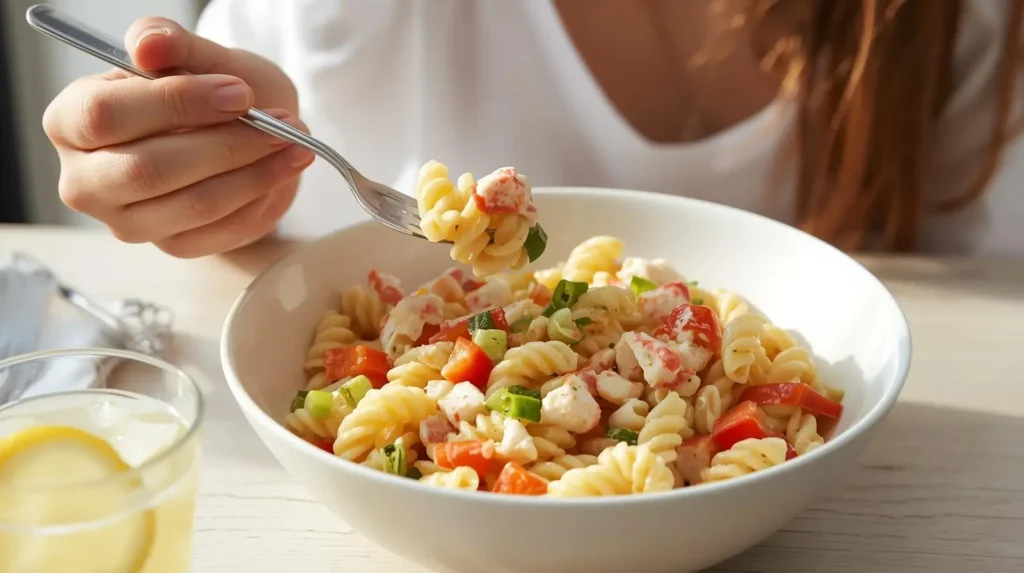
Pro Tips for Perfect Crab Pasta Salad Recipe
These expert techniques ensure your crab pasta salad turns out exceptional every time.
Avoiding Soggy Pasta
The number one complaint about pasta salad is soggy, mushy texture that resembles baby food rather than fresh, appealing salad. Rinse pasta under cold water to stop cooking immediately—this single step makes the biggest difference.
Additional Soggy-Prevention Strategies:
Cook pasta exactly al dente: Set your timer for 1-2 minutes less than package directions. Pasta continues softening as it absorbs dressing, so starting slightly underdone ensures proper final texture.
Drain thoroughly: After rinsing, shake the colander vigorously and let pasta sit for 2-3 minutes. Excess water dilutes dressing and makes salad watery rather than creamy.
Don’t overdress initially: Start with ¾ of the dressing, mix well, and add remaining dressing only if needed. You can always add more, but you can’t remove excess.
Choose the right pasta shape: Small shapes with texture (rotini, shells, cavatappi) hold up better than smooth shapes (penne) or long noodles (spaghetti).
Add dressing to room-temperature pasta: Don’t dress steaming hot pasta—let it cool completely first. Hot pasta absorbs too much dressing too quickly.
Store dressing separately for advance prep: If making more than 4 hours ahead, store undressed pasta and vegetables separately from dressing. Combine 1-2 hours before serving.
Tool Recommendations
The right equipment makes preparation easier and results more consistent:
Large Mixing Bowl (4-6 quart capacity): Essential for tossing salad without ingredients flying everywhere. Glass or stainless steel works best—plastic can retain odors.
Fine-Mesh Colander: Properly drains pasta and rinses it evenly. Small holes prevent pasta from slipping through.
Wire Whisk: Creates smooth, lump-free dressing faster than a spoon. A small 8-inch whisk works perfectly for this quantity.
Rubber Spatula: The flexible edge scrapes every bit of dressing from the bowl and folds ingredients gently without breaking up crab.
Sharp Chef’s Knife: Makes vegetable prep quick and produces clean cuts that look professional.
Large Spoon or Tongs: For serving, tongs allow guests to grab generous portions without making a mess.
What to Avoid: Tiny bowls (impossible to mix properly), slotted spoons (don’t incorporate dressing well), food processors (will destroy texture).
Storage & Reheating
Keep crab pasta salad recipe refrigerated for up to 3 days in an airtight container. Proper storage maintains quality and prevents foodborne illness (crab and mayo are both perishable).
Storage Best Practices:
Container choice: Use airtight containers with tight-fitting lids. Glass containers don’t absorb odors and allow you to see contents easily.
Temperature: Store in the coldest part of your refrigerator (usually the back of a lower shelf), ideally at 38-40°F.
Shelf life: Consume within 3 days for best quality and food safety. After 3 days, the pasta becomes overly soft and vegetables lose their crunch.
Freezing: Do NOT freeze crab pasta salad. Mayonnaise-based dressings separate and become grainy when frozen, and pasta texture turns mushy upon thawing.
Refreshing leftovers: If the salad seems dry after storage, stir in 1-2 tablespoons of mayonnaise, sour cream, or a squeeze of lemon juice to revive creaminess.
Food safety note: Never leave crab pasta salad at room temperature for more than 2 hours (1 hour if temperature exceeds 90°F). The combination of seafood and dairy makes this dish particularly susceptible to bacterial growth.
Note on reheating: Crab pasta salad should NEVER be reheated—it’s designed to be served cold. Heating it would ruin the texture and could make the seafood rubbery.
Flavor Variations
Customize this versatile crab pasta salad recipe to match different taste preferences and occasions.
Spicy Twist
Add cayenne or diced jalapeños for a kick that transforms this mild, creamy dish into something exciting with heat and complexity. The spiciness contrasts beautifully with the sweet crab and cuts through the rich dressing.
Spicy Enhancement Options:
- Stir ¼-½ teaspoon cayenne pepper into the dressing for distributed heat
- Add 1-2 tablespoons diced pickled jalapeños for tangy heat and crunch
- Mix in 1 tablespoon sriracha or your favorite hot sauce
- Include diced fresh jalapeño or serrano pepper (seeds removed for less heat)
- Add a pinch of red pepper flakes for subtle warmth
- Use pepper jack cheese (diced small) instead of or alongside crab for extra spice
Start with less heat than you think you need—you can always add more, but you can’t remove it once added. Spicy versions pair excellently with crisp white wine or cold beer.
Mediterranean Style
Mix in olives, feta, and cherry tomatoes for a Greek-inspired variation that brings bright, briny flavors and beautiful color contrast to the dish.
Mediterranean Transformation:
- Add ½ cup halved Kalamata or green olives
- Crumble ½ cup feta cheese over the salad
- Include 1 cup halved cherry tomatoes
- Replace dill with fresh oregano or basil
- Add ¼ cup diced cucumber for extra freshness
- Include 2 tablespoons capers for briny pop
- Reduce mayonnaise to ½ cup and add 2 tablespoons olive oil for lighter dressing
- Add ¼ cup diced roasted red peppers
This version has slightly less creamy dressing and more emphasis on bright, acidic flavors. It’s perfect for those who find traditional pasta salad too heavy.
Tropical Option
Add pineapple chunks or mango for a sweet touch that creates unexpected flavor harmony with crab and transforms the salad into something special for summer gatherings.
Tropical Variations:
- Add 1 cup fresh pineapple chunks (drained well if using canned)
- Include 1 cup diced fresh mango for sweet, fruity notes
- Add ¼ cup shredded coconut (toasted for deeper flavor)
- Replace dill with fresh cilantro for tropical brightness
- Add diced avocado just before serving
- Include ¼ cup diced red onion or green onion
- Mix in ½ cup diced cucumber for crunch
- Add a pinch of curry powder to the dressing for complexity
- Squeeze lime juice instead of lemon for different citrus profile
Tropical Dressing Modification:
- Add 2 tablespoons coconut milk to dressing
- Include 1 teaspoon honey for subtle sweetness
- Use lime instead of lemon
- Add ¼ teaspoon ground ginger
The sweet fruit complements the sweet crab beautifully while providing textural contrast and visual appeal with bright colors.
Additional Creative Variations
Asian-Inspired:
- Replace mayo with sesame-ginger dressing
- Add edamame and shredded carrots
- Include sliced water chestnuts for crunch
- Top with sesame seeds and sliced green onions
Cajun Style:
- Add Cajun seasoning to dressing
- Include diced andouille sausage
- Add corn kernels and black beans
- Use green onions instead of red onion
Italian-American:
- Add diced salami or pepperoni
- Include sun-dried tomatoes
- Mix in diced mozzarella
- Replace dill with fresh basil
- Add Italian dressing alongside mayo
Serving Suggestions
Complete your meal with complementary sides and beverages that enhance the crab pasta salad recipe experience.
Perfect Side Dishes:
Pair with sides that provide different textures and temperatures while complementing the cold, creamy salad. Garlic bread offers warm, crispy contrast with buttery richness that balances the light, refreshing pasta salad. The toasted bread also serves as a vehicle for scooping up any dressing left in the bowl.
Grilled corn (on the cob or cut into kernels) adds smoky sweetness and satisfying crunch that pairs naturally with crab. The char from grilling creates flavor complexity while the corn’s natural sugars complement the sweetness in the crab meat.
Fruit salad provides a refreshing, palate-cleansing counterpoint with natural sweetness and bright acidity. Choose fruits like watermelon, berries, citrus segments, and grapes that offer high water content and vibrant flavors.
Additional Side Options:
- Coleslaw (vinegar-based rather than creamy to avoid redundancy)
- Sliced tomatoes with fresh basil and balsamic drizzle
- Grilled vegetables (zucchini, bell peppers, asparagus)
- Chips and salsa or guacamole
- Caprese skewers (mozzarella, tomato, basil)
- Deviled eggs
- Cucumber and dill salad
- Crispy fried pickles
Presentation Suggestions:
- Serve on a bed of butter lettuce or mixed greens
- Pack into hollowed-out tomatoes for individual servings
- Use as filling for croissants or rolls
- Arrange on a platter surrounded by crackers
- Serve in individual cups or mason jars for picnics
Drink Pairings:
Crisp white wine, iced tea, or sparkling water complements crab pasta salad recipe beautifully. The cold, refreshing beverage mirrors the temperature and lightness of the dish while cleansing your palate between bites.
Ideal Wine Choices:
- Sauvignon Blanc (bright acidity cuts through creamy dressing)
- Pinot Grigio (light, crisp, neutral profile)
- Albariño (Spanish white with citrus and stone fruit notes)
- Dry Riesling (balanced sweetness complements crab)
- Champagne or Prosecco (bubbles lighten the meal)
Non-Alcoholic Options:
- Unsweetened iced tea with lemon
- Sparkling water with fresh herbs (mint, basil) and citrus
- Fresh lemonade or limeade
- Arnold Palmer (half lemonade, half iced tea)
- Cucumber water
- Ginger ale for subtle spice
- Iced green tea for antioxidants
Avoid heavy red wines or overly sweet drinks that compete with or overwhelm the delicate crab flavor.
FAQs
Can I make it ahead of time?
Yes, crab pasta salad actually improves when made ahead, allowing flavors to meld beautifully. Prepare the salad 2-24 hours before serving for optimal results. The dressing penetrates the pasta, vegetables release their flavors, and everything harmonizes into a cohesive dish.
Best make-ahead strategy:
- Prepare pasta, vegetables, and dressing separately up to 24 hours ahead
- Store each component in separate airtight containers in the refrigerator
- Combine 1-4 hours before serving for best texture
- If combining more than 4 hours ahead, reserve about ¼ of the dressing and add it 30 minutes before serving to refresh
The salad remains good for 3 days refrigerated, though texture is best within the first 48 hours. After that, pasta softens considerably and vegetables lose some crunch.
Can I use canned crab meat?
Absolutely! Canned crab meat works perfectly for this crab pasta salad recipe and offers convenience and affordability. Look for high-quality canned lump crab meat (usually found near canned tuna) or pasteurized crab meat in the refrigerated seafood section.
Canned crab tips:
- Drain thoroughly and gently squeeze out excess liquid
- Pick through carefully for shell fragments (cartilage pieces sometimes remain)
- Pat dry with paper towels before adding to salad
- Use within 1-2 days of opening
- Quality brands include Bumble Bee, Chicken of the Sea, and Crown Prince
Canned crab typically has slightly firmer texture and less delicate flavor than fresh, but it works excellently in pasta salad where dressing and other ingredients balance everything. Most people cannot tell the difference in the finished dish.
Budget consideration: Canned crab costs approximately $3-5 per can compared to $15-25 per pound for fresh lump crab, making it an economical choice for feeding crowds.
How do I keep it from drying out?
Pasta salad naturally absorbs dressing as it sits, potentially leading to dry, sticky texture. Prevent this with several strategies:
Reserve extra dressing: Make 25% more dressing than needed and store it separately. Before serving, stir in reserved dressing to refresh the salad.
Use adequate dressing initially: Don’t skimp on dressing trying to make it “healthier”—under-dressed salad becomes dry and unpalatable quickly.
Add moisture-rich vegetables: Tomatoes, cucumbers, and bell peppers release juice that helps keep salad moist.
Store properly: Keep salad in an airtight container pressed directly against the surface with plastic wrap to prevent air exposure and moisture loss.
Add fresh ingredients before serving: Stir in extra herbs, a squeeze of lemon juice, or a spoonful of sour cream just before serving to revive the dish.
Don’t over-chill: Extremely cold pasta tastes drier. Remove from refrigerator 10 minutes before serving.
If the salad has dried out, revive it by stirring in 2-3 tablespoons of mayonnaise, sour cream, or a combination with a splash of lemon juice.
What pasta shape works best?
Small to medium shapes with texture work best for crab pasta salad recipe. The ideal shape captures dressing in crevices while maintaining structure and providing satisfying bite.
Top choices (in order of preference):
- Rotini (spiral pasta): The grooves catch dressing perfectly and the spiral shape looks attractive
- Medium shells: Cups hold dressing and small pieces of crab/vegetables beautifully
- Farfalle (bow ties): Elegant appearance with good surface area for dressing adhesion
- Cavatappi (corkscrew): Similar to rotini but with more dramatic spiral
- Penne rigate: Ridged exterior holds dressing, though smooth interior is less ideal
Avoid these shapes:
- Spaghetti or long noodles (don’t mix well, awkward to eat)
- Very small pasta like orzo (can become mushy)
- Large shapes like rigatoni (overwhelm other ingredients)
- Smooth penne (dressing slides off)
Cook any chosen shape to al dente for best texture—typically 1-2 minutes less than package directions recommend.
Can I add other seafood besides crab?
Yes! This recipe adapts beautifully to other seafood options, alone or in combination with crab.
Excellent seafood additions:
- Cooked shrimp: Chopped into bite-sized pieces, adds sweet flavor similar to crab
- Lobster: Luxurious option for special occasions (use cooked, chopped meat)
- Canned tuna: Budget-friendly alternative (use oil-packed for better flavor)
- Smoked salmon: Adds sophisticated flavor (dice and use sparingly as it’s strong)
- Cocktail shrimp: Pre-cooked and convenient (chop if large)
Combination ideas:
- Half crab, half shrimp for “seafood pasta salad”
- Crab plus diced lobster for ultimate luxury version
- Mix of crab and bay scallops
When combining seafood, aim for roughly 1 pound total seafood per 12 ounces pasta. Too much seafood makes the salad expensive and overwhelming; too little makes it sparse.
Is this recipe gluten-free friendly?
Yes, with one simple substitution! Replace regular pasta with your favorite gluten-free pasta variety to make this recipe completely gluten-free (all other ingredients are naturally gluten-free).
Best gluten-free pasta options:
- Chickpea pasta (high protein, holds up well)
- Brown rice pasta (neutral flavor, good texture)
- Corn pasta (slightly sweet, sturdy)
- Quinoa pasta (nutritious, slightly nutty)
- Lentil pasta (protein-rich, earthy flavor)
Gluten-free cooking tips:
- Follow package directions carefully—gluten-free pasta often has specific timing
- Don’t overcook—gluten-free pasta becomes mushy more quickly than wheat pasta
- Rinse thoroughly under cold water to remove excess starch
- Some gluten-free pastas absorb more dressing, so you may need slightly more
Also verify that your mayonnaise and mustard are certified gluten-free if serving someone with celiac disease or severe gluten sensitivity.
Conclusion
Mastering this crab pasta salad recipe gives you a versatile, crowd-pleasing dish perfect for everything from elegant summer entertaining to casual weeknight dinners. With simple techniques—proper pasta cooking, balanced creamy dressing, quality ingredients, and adequate chilling time—you’ll consistently create restaurant-quality pasta salad that disappears quickly at every gathering.
The beauty of this recipe lies in its adaptability. Once you’ve mastered the foundational method, endless variations await: add tropical fruits for sweetness, Mediterranean ingredients for brightness, or spicy elements for heat. Each version can be customized based on your preferences, dietary needs, and what’s fresh at your market.
Grab your ingredients and whip up this crab pasta salad recipe today! You’ll be amazed at how something so simple creates such impressive results. The entire process takes just 20 minutes of active work, making it perfect for busy schedules when you want something special without spending hours in the kitchen.
Join thousands who love this light, refreshing pasta dish! Share your creations, variations, and personal tips in the comments below. Did you try the tropical version with mango? Experiment with the Mediterranean variation? We’d love to hear how you customized this recipe to make it your own
How did you find results our recipes
There are no reviews yet. Be the first one to write one.