Introduction
Tired of bland or sticky shrimp fried rice recipe attempts that leave you disappointed? You’re not alone. Many home cooks struggle with mushy rice, rubbery shrimp, or lackluster flavors when trying to recreate their favorite takeout dish at home.
This simple shrimp fried rice is fluffy, flavorful, and easy to make at home—no expensive equipment or hard-to-find ingredients required. As a home cook for 10 years, I’ve perfected this recipe through countless iterations, learning exactly what makes restaurant-quality fried rice achievable in any kitchen.
In this comprehensive guide, I’ll walk you through essential shrimp fried rice recipe cooking tips, ingredient selection strategies, flavor-boosting hacks, and answers to your most common questions. By the end, you’ll have a foolproof method for creating delicious shrimp fried rice that rivals your favorite Chinese restaurant.
Table of Contents
Why This Shrimp Fried Rice Recipe Works
This shrimp fried rice recipe delivers on three essential qualities: incredible flavor, convenient preparation, and remarkable versatility. Here’s why it stands out:
- Uses affordable, easy-to-find ingredients for shrimp fried rice recipe – Everything you need is available at your local grocery store, with no specialty Asian markets required
- Prep in 15 minutes for maximum flavor and ease – Minimal chopping and simple techniques mean you can have dinner ready in under 30 minutes total
- Perfect for weeknights, meal prep, or quick family dinners – This one-pan wonder feeds a family of four and reheats beautifully for next-day lunches
The beauty of this recipe lies in its simplicity. Unlike complicated restaurant techniques, this straightforward method uses high heat and proper ingredient sequencing to achieve that signature “wok hei” flavor—the slightly smoky, savory essence that makes fried rice irresistible.
Choosing the Right Shrimp Fried Rice Recipe Ingredients
Success with any shrimp fried rice recipe starts with selecting quality ingredients that work together harmoniously.
Best Ingredients for This Recipe
The foundation of exceptional shrimp fried rice begins with day-old rice for perfect texture. Freshly cooked rice contains too much moisture and will turn gummy when stir-fried. Day-old refrigerated rice has dried out slightly, allowing each grain to stay separate and develop that coveted slightly crispy exterior.
Fresh shrimp and vegetables for flavor make an enormous difference in the final dish. Choose medium to large shrimp (31-40 count per pound works perfectly) that are already peeled and deveined to save preparation time. For vegetables, crisp bell peppers, sweet peas, and crunchy carrots provide color, nutrition, and textural contrast.
High-quality soy sauce and sesame oil are non-negotiable for authentic flavor. These two ingredients carry much of the dish’s savory depth, so choosing naturally brewed soy sauce and toasted sesame oil pays dividends.
Buying Tips
Look for high-quality shrimp and soy sauce when shopping for your shrimp fried rice recipe. For shrimp, seek out wild-caught varieties when possible—they offer superior flavor and firmer texture compared to some farmed options. The shrimp should smell fresh and oceanic, never fishy or ammonia-like.
Use fresh vegetables for best taste rather than frozen options. While frozen vegetables can work in a pinch, fresh produce maintains better texture during high-heat cooking and won’t release excess water that can make your rice soggy.
For soy sauce, brands like Kikkoman or San-J offer excellent quality at reasonable prices. Avoid “lite” soy sauce for this recipe—you’ll need the full-bodied flavor of regular soy sauce to properly season the dish.
Substitutions
Swap shrimp for chicken, tofu, or extra vegetables if desired. This recipe framework adapts beautifully to various proteins and dietary preferences:
- Chicken: Use diced chicken breast or thigh, cooking until golden before setting aside
- Tofu: Firm or extra-firm tofu, pressed and cubed, creates a satisfying vegetarian version
- Pork: Leftover roast pork or bacon adds rich, smoky notes
- Vegetables only: Double the vegetables for a lighter, plant-based meal
You can also substitute brown rice for white rice, though cooking times will differ. Cauliflower rice works for low-carb diets, though the texture will be noticeably different from traditional fried rice.
Ingredients & Prep
Proper preparation makes the cooking process smooth and ensures your shrimp fried rice recipe turns out perfectly every time.
Shrimp Fried Rice Recipe Prep Essentials
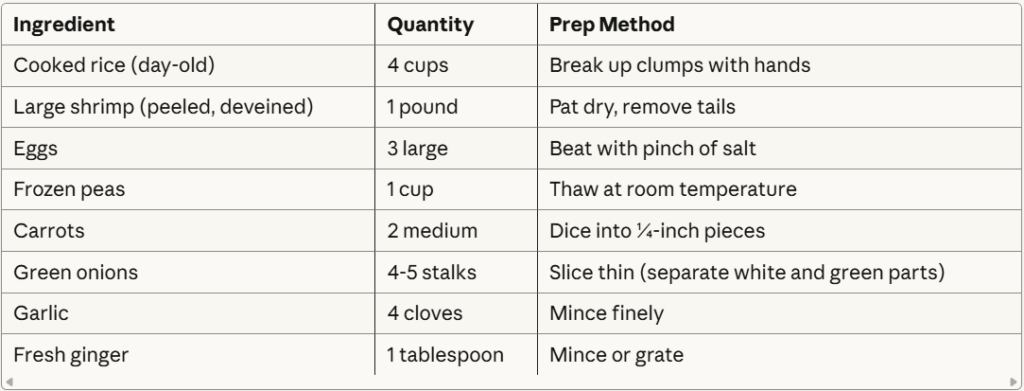
Prepping rice correctly is crucial. If using freshly cooked rice, spread it on a baking sheet and refrigerate for at least 2 hours (ideally overnight) to remove excess moisture. Before cooking, break up any clumps with your hands so each grain separates easily.
Cleaning shrimp properly ensures the best texture and flavor. Pat the shrimp completely dry with paper towels—excess moisture creates steam rather than the sear you want. If tails are still attached, remove them for easier eating.
Chopping vegetables uniformly guarantees even cooking. Aim for consistent sizes so everything finishes cooking simultaneously.
Marinades & Seasonings
While shrimp doesn’t require lengthy marinating, a quick 10-minute marinade enhances flavor significantly.
Simple Shrimp Marinade:
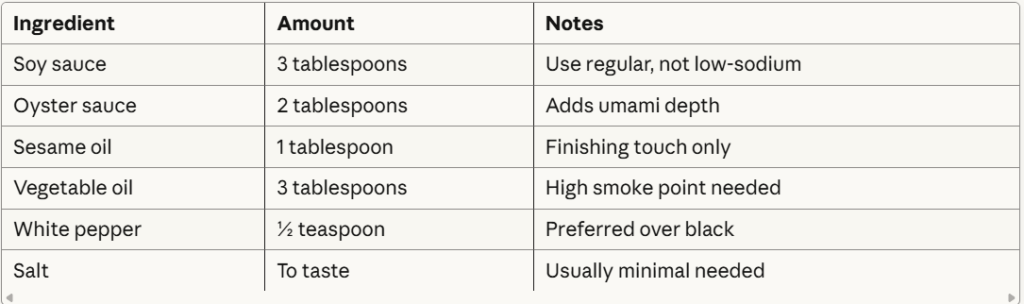
Combine marinade ingredients in a bowl, add shrimp, and let sit for 10-15 minutes while preparing other ingredients. This brief marination period prevents the shrimp from becoming mushy while still imparting flavor.
Pantry Staples
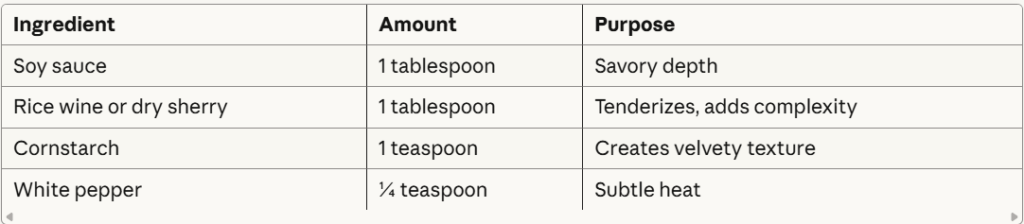
Essential Sauce Components:
Keep these ingredients measured and ready beside your stove. Fried rice cooks quickly, leaving no time to hunt for ingredients mid-cooking.
Step-by-Step Cooking Instructions
Follow these detailed instructions to create perfect shrimp fried rice recipe results every time.
Pre-Cooking Prep
Before you turn on any heat, complete these essential preparation steps:
- Organize your workspace: Arrange all prepped ingredients in small bowls near your stove in the order you’ll use them
- Mix your sauce: Combine soy sauce, oyster sauce, and a splash of water in a small bowl
- Have your tools ready: Keep a large spatula or wooden spoon, clean plate for cooked shrimp, and serving platter nearby
- Ensure proper heat: Place your wok or largest skillet over high heat for 2-3 minutes before adding any oil
This mise en place approach prevents scrambling mid-recipe and ensures smooth execution.
Cooking Method
The key to restaurant-quality shrimp fried rice recipe lies in cooking ingredients in the proper sequence over high heat.
Step 1: Cook the Shrimp (2-3 minutes)
- Heat 1 tablespoon vegetable oil in your wok or large skillet over high heat until shimmering
- Add marinated shrimp in a single layer
- Cook without moving for 1 minute until bottoms turn pink and slightly golden
- Flip and cook another 1-2 minutes until just cooked through
- Transfer shrimp to a clean plate and set aside
Step 2: Scramble the Eggs (1 minute)
- Add another ½ tablespoon oil to the same pan
- Pour in beaten eggs and let them set for 10 seconds
- Scramble gently into large, soft curds
- Remove to the plate with shrimp before eggs are fully cooked (they’ll finish cooking later)
Step 3: Stir-Fry Aromatics and Vegetables (2-3 minutes)
- Add remaining oil to the wok
- Toss in minced garlic, ginger, and white parts of green onions
- Stir constantly for 30 seconds until fragrant
- Add diced carrots and stir-fry for 2 minutes until slightly tender
- Add peas and cook for another minute
Step 4: Add Rice and Season (3-4 minutes)
- Add day-old rice to the wok, breaking up any remaining clumps
- Spread rice across the pan and let it sit undisturbed for 1 minute to develop slight crispiness
- Toss and spread again, repeating this process 2-3 times
- Pour sauce mixture over rice and toss vigorously to coat every grain
- Continue stir-frying until rice is heated through and slightly golden in spots
Step 5: Combine Everything (1 minute)
- Return cooked shrimp and eggs to the wok
- Add green parts of sliced green onions
- Toss everything together for 1 minute until evenly combined and heated through
- Drizzle sesame oil over the top and give one final toss
Doneness Check
Perfectly cooked shrimp fried rice recipe shows several telltale signs:
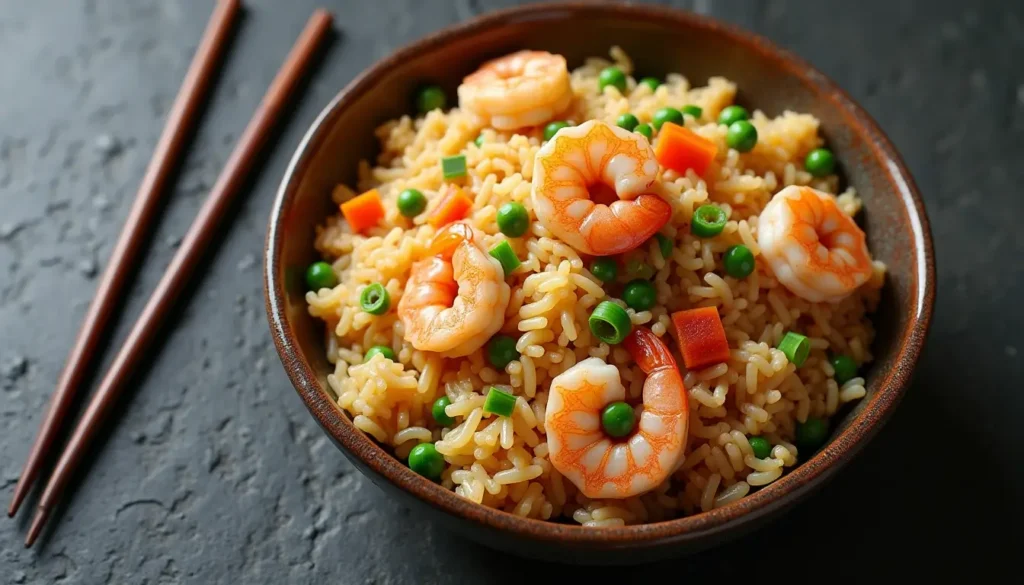
- Shrimp should be tender with an opaque pink color throughout—no translucent gray areas remain
- Rice lightly crisp with individual grains that don’t clump together, with some golden-brown spots on the surface
- All ingredients evenly coated in the savory sauce with no wet or soupy areas in the pan
- Aromatic fragrance of sesame oil, soy sauce, and toasted rice fills your kitchen
If your rice seems wet or sticky, increase heat and continue stir-frying for another 1-2 minutes. The goal is each grain staying separate and having a slightly firm, toothsome texture.
Resting
Let shrimp fried rice recipe sit for 2 minutes before serving for best texture. This brief resting period allows the rice to finish absorbing any residual moisture and lets flavors meld together. The rice will also firm up slightly, making it easier to serve and eat.
During this time, prepare your serving bowls or plates and any accompanying side dishes.
Pro Tips for Perfect Shrimp Fried Rice Recipe
These expert techniques elevate your shrimp fried rice from good to exceptional.
Avoiding Mushy Rice
The number one complaint about homemade fried rice is mushy, clumpy texture. Use day-old rice as your primary defense against this problem. When rice cools and sits in the refrigerator overnight, the starches retrograde—a process that firms up the grains and reduces surface moisture.
Cook on high heat for best texture throughout the entire process. Many home cooks make the mistake of using medium heat, which steams the rice rather than frying it. Your pan should be hot enough that ingredients sizzle immediately when added.
Additional texture-protecting tips:
- Don’t overcrowd the pan—cook in batches if necessary
- Use a wok or the largest skillet you own for maximum surface area
- Keep ingredients moving frequently but allow brief moments of contact with the hot pan
- Add sauce gradually, not all at once, to prevent sogginess
Tool Recommendations
The right equipment makes a significant difference in your shrimp fried rice recipe results:
Wok (14-inch carbon steel): The gold standard for fried rice, offering sloped sides for easy tossing and superior heat distribution. If you cook Asian cuisine frequently, this investment pays for itself quickly.
Large cast iron skillet (12-inch or larger): The best alternative if you don’t own a wok. Cast iron retains heat excellently and can achieve similar results to a wok.
Nonstick skillet (12-inch): Works in a pinch but doesn’t get quite as hot as carbon steel or cast iron. Ensure it’s rated for high-heat cooking.
Wide spatula or wok spatula: A wide, flat spatula helps you toss and turn ingredients efficiently without them flying out of the pan.
Avoid: Small pans (causes overcrowding), nonstick pans with plastic handles (heat damage risk), and glass or ceramic cookware (poor heat retention).
Storage & Reheating
Store cooked shrimp fried rice recipe in the fridge for up to 3 days in an airtight container. Let the rice cool to room temperature before refrigerating, but don’t leave it out for more than 2 hours to prevent bacterial growth.
Best Reheating Methods:
- Stovetop (preferred): Heat a skillet over medium-high heat with a splash of oil. Add fried rice and stir-fry for 3-4 minutes until heated through. This method restores the texture best.
- Microwave (quick): Place rice in a microwave-safe bowl, sprinkle with a tablespoon of water, cover with a damp paper towel, and heat for 2-3 minutes, stirring halfway through.
- Oven: Spread rice in a baking dish, cover with foil, and heat at 350°F for 15-20 minutes. This works well for larger quantities.
Freezing: While possible, frozen shrimp fried rice loses some texture quality. If freezing, use within 1 month and reheat directly from frozen using the stovetop method.
Flavor Variations
Customize this versatile shrimp fried rice recipe to match your taste preferences and dietary needs.
Spicy Twist
Add chili sauce or Sriracha for heat that transforms this mild dish into something exciting. Start conservatively—you can always add more heat, but you can’t take it away.
Spicy Variation Options:
- Stir in 1-2 tablespoons Sriracha or sambal oelek with the soy sauce mixture
- Add sliced fresh Thai chilies or jalapeños with the aromatics
- Sprinkle red pepper flakes over the finished dish
- Create a spicy mayo drizzle (mix mayo with Sriracha) to serve on the side
- Include a tablespoon of chili crisp oil for complex heat and texture
The capsaicin in hot peppers pairs beautifully with the sweet shrimp and savory sauce, creating a more dynamic flavor profile.
Vegetarian Option
Replace shrimp with tofu or mixed vegetables for a satisfying plant-based version. Press extra-firm tofu for at least 30 minutes, cube it into ¾-inch pieces, and pan-fry in oil until golden and crispy on all sides before proceeding with the recipe.
Excellent Vegetable Additions:
- Broccoli florets (blanched first)
- Baby corn (adds crunch)
- Snap peas (for sweetness)
- Mushrooms (shiitake or button, for umami)
- Bell peppers (multiple colors for visual appeal)
- Bean sprouts (added at the very end)
For a protein boost without meat or seafood, add scrambled eggs (doubling the egg quantity) or edamame.
Global Flavors
Adapt this shrimp fried rice recipe with international flavor profiles that showcase how versatile the basic technique is.
Teriyaki-Style Shrimp Fried Rice:
- Replace oyster sauce with teriyaki sauce
- Add pineapple chunks and cashews
- Garnish with sesame seeds
Thai-Style with Lime and Cilantro:
- Add fish sauce alongside soy sauce
- Include Thai basil leaves
- Squeeze fresh lime juice over the finished dish
- Top with chopped cilantro and crushed peanuts
Korean-Inspired Kimchi Fried Rice:
- Add chopped kimchi with the vegetables
- Include a tablespoon of gochujang (Korean chili paste)
- Top with a fried egg
- Sprinkle with toasted sesame seeds and nori strips
Indonesian Nasi Goreng Style:
- Use kecap manis (sweet soy sauce) instead of regular soy sauce
- Add a fried egg on top of each serving
- Include shrimp paste for authentic flavor
- Garnish with cucumber slices and prawn crackers
Serving Suggestions
Complete your meal with complementary sides and beverages that enhance the shrimp fried rice recipe experience.
Perfect Side Dishes:
Pair with sides that provide textural and flavor contrast to the fried rice. Steamed dumplings offer delicate wrapping around savory fillings, creating a textural counterpoint to the crispy rice. Egg rolls add extra crunch and can be dipped in sweet and sour sauce for additional flavor dimensions.
Miso soup provides a light, warming element that cleanses the palate between bites of rich fried rice. The umami depth of miso complements the similar savory notes in the rice while adding liquid to balance the meal.
Additional Side Options:
- Spring rolls (fresh or fried)
- Cucumber salad with rice vinegar dressing
- Pickled vegetables for acidity
- Steamed edamame with sea salt
- Asian-style coleslaw with sesame dressing
- Pot stickers or gyoza
Drink Pairings:
Green tea, lemonade, or light beer pairs well with shrimp fried rice recipe. Hot green tea cuts through the richness of fried rice and aids digestion—it’s the traditional accompaniment for good reason. The slight astringency cleanses your palate effectively.
Fresh lemonade provides sweet-tart refreshment that balances the savory, salty flavors in the dish. The acidity brightens each bite and prevents flavor fatigue.
Light beer (particularly Asian lagers like Tsingtao, Sapporo, or Singha) offers carbonation that lightens the meal and subtle malt sweetness that complements the shrimp.
Other Beverage Options:
- Iced jasmine tea
- Sake (served chilled)
- Ginger ale
- Coconut water
- Sparkling water with lime
FAQs
Can I use frozen shrimp?
Yes, frozen shrimp works perfectly for this shrimp fried rice recipe. In fact, most “fresh” shrimp at grocery stores were previously frozen anyway. Thaw frozen shrimp by placing them in a colander under cold running water for 5-10 minutes. Pat them completely dry with paper towels before marinating—this step is crucial for achieving proper browning rather than steaming.
Choose frozen shrimp that are already peeled and deveined to save preparation time. Look for IQF (individually quick frozen) varieties that allow you to use exactly the amount you need without thawing an entire block.
How do I prevent the rice from sticking?
Preventing sticky rice requires several key techniques working together. First, always use day-old rice that has been refrigerated—this single step makes the biggest difference. Second, ensure your cooking surface is extremely hot before adding ingredients. Third, use adequate oil (don’t skimp to save calories). Fourth, keep the rice moving frequently during cooking but allow brief moments of contact with the pan surface.
If rice still sticks despite these measures, your pan might not be hot enough, or you might be overcrowding. Try cooking in smaller batches and confirming that oil shimmers and immediately sizzles when ingredients are added.
Is this recipe freezer-friendly?
While you can freeze shrimp fried rice for up to 1 month, the texture suffers somewhat compared to freshly made or refrigerated versions. Rice tends to become slightly mushy upon thawing and reheating, and shrimp can become tougher.
If you do freeze portions, spread the rice in a thin layer in freezer bags to allow faster, more even freezing and thawing. Reheat frozen fried rice directly in a hot skillet without thawing—this helps restore some texture. Add a splash of water or soy sauce while reheating to prevent excessive dryness.
For best results, make fresh batches or store in the refrigerator for up to 3 days rather than freezing.
What type of rice works best?
Long-grain white rice (jasmine or basmati) produces the best results for shrimp fried rice recipe. These varieties have less starch than short-grain rice, helping grains stay separate and fluffy rather than clumpy. Jasmine rice adds a subtle floral aroma that complements the other ingredients beautifully.
Medium-grain rice works acceptably but will be slightly stickier. Avoid short-grain sushi rice or arborio rice, as these are intentionally sticky varieties that won’t achieve the proper texture.
Leftover takeout rice works excellently—it’s already properly dried and separated.
Can I make this ahead for meal prep?
Absolutely! Shrimp fried rice recipe makes excellent meal prep. Cook a large batch following the recipe, let it cool completely, then portion into individual containers for easy grab-and-go lunches or dinners.
Stored properly in airtight containers, the fried rice remains delicious for 3-4 days. Keep protein (shrimp) and rice together rather than separating them—they’re already cooked together and reheating them together maintains better flavor integration.
For variety throughout the week, prepare the base fried rice and add different toppings each day: fried egg, sriracha mayo, sliced avocado, or extra green onions.
How can I make this recipe healthier?
Several simple modifications create a lighter version without sacrificing too much flavor. Use brown rice instead of white rice for added fiber and nutrients (though texture will be slightly different). Reduce oil by using a nonstick pan and minimizing the amount needed. Increase the vegetable proportion and reduce shrimp slightly to lower cholesterol and calories.
Replace regular soy sauce with low-sodium versions to reduce sodium content significantly. You can cut sodium by up to 40% this way. Skip the oyster sauce or use a vegetarian mushroom-based oyster sauce substitute.
Add extra vegetables like broccoli, cauliflower, bell peppers, or zucchini to increase volume without many additional calories.
What can I do with leftover rice that’s not day-old?
If you’re working with freshly cooked rice and can’t wait overnight, spread it in a thin layer on a baking sheet and refrigerate uncovered for 2-3 hours minimum. A fan pointed at the rice speeds up drying. You can also spread rice on a baking sheet and place it in a 300°F oven for 5-10 minutes, stirring occasionally, to remove excess moisture quickly.
Alternatively, cook the rice with slightly less water than usual if you know you’ll be making fried rice the same day—this produces drier rice that works better immediately.
Conclusion
Mastering this shrimp fried rice recipe opens up a world of quick, satisfying meals that rival any restaurant version. With the right techniques—day-old rice, high heat, proper ingredient sequencing, and quality seasonings—you can consistently create fluffy, flavorful fried rice that impresses family and friends.
The beauty of this recipe lies in its versatility. Once you’ve mastered the basic method, endless variations await: swap proteins, adjust spice levels, experiment with vegetables, or explore international flavor profiles. Each batch can be customized to your preferences and what’s available in your kitchen.
Grab your wok and try this shrimp fried rice recipe tonight! You’ll be amazed at how simple it is to achieve restaurant-quality results in your own kitchen. The total time from start to finish is under 30 minutes—perfect for busy weeknights when you want something more exciting than another boring dinner.
Join 5,000+ home cooks who’ve loved this recipe! Share your creations, variations, and tips in the comments below. Did you add a spicy twist? Try the Thai-style version? We’d love to hear how you made this recipe your own.
Ready to expand your fried rice repertoire? Try our Easy Chicken Fried Rice Guide next for another family-friendly variation, or explore our complete collection of quick Asian-inspired recipes that bring takeout flavors home.