Introduction
Tired of bland or soggy chicken fried rice recipe attempts that never quite match your favorite takeout? You’re far from alone. Countless home cooks struggle with mushy rice, flavorless chicken, or vegetables that are either undercooked or overdone—resulting in disappointing meals that end up in the trash.
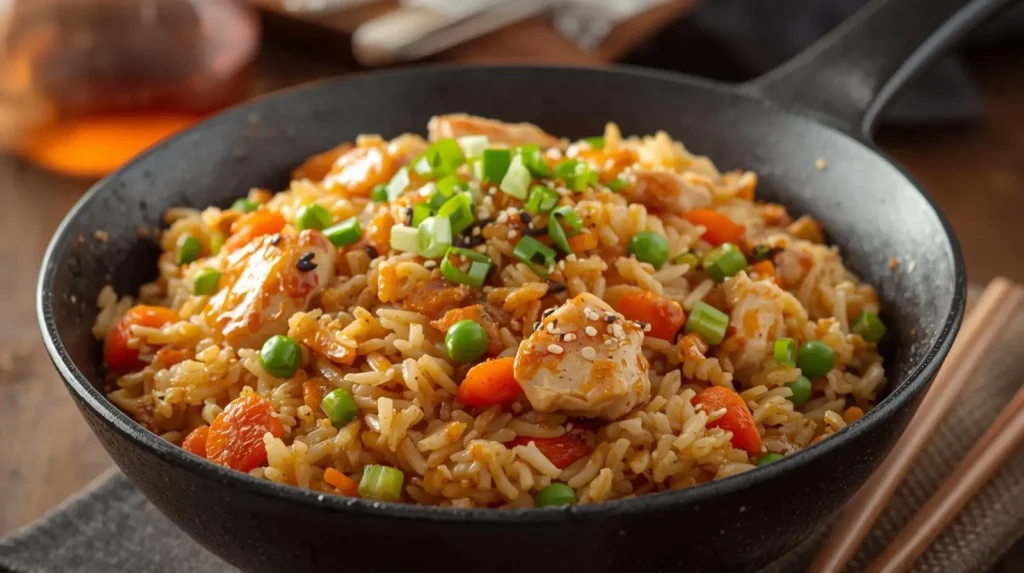
This flavorful chicken fried rice is fluffy, perfectly seasoned, and easy to make at home—no culinary degree or expensive equipment required. As a home cook for 10 years, I’ve perfected this recipe through trial and error, discovering the exact techniques that transform simple ingredients into restaurant-quality fried rice every single time.
In this comprehensive guide, you’ll discover essential chicken fried rice recipe cooking tips, powerful flavor-enhancing hacks, ingredient selection strategies, and answers to the most frequently asked questions. Whether you’re a complete beginner or an experienced cook looking to refine your technique, you’ll find everything you need to create outstanding chicken fried rice that rivals any restaurant version.
Table of Contents
Why This Chicken Fried Rice Recipe Works
This chicken fried rice recipe delivers on three crucial fronts: bold flavor, effortless convenience, and remarkable versatility that adapts to your needs.
- Uses affordable, easy-to-find ingredients for chicken fried rice recipe – Every ingredient is readily available at standard grocery stores, with no hunting through specialty markets or ordering obscure items online
- Prep in 15 minutes for maximum flavor and ease – With efficient techniques and smart shortcuts, you’ll have dinner on the table in under 30 minutes from start to finish
- Perfect for weeknights, meal prep, or quick family dinners – This adaptable one-pan meal satisfies picky eaters, health-conscious diners, and everyone in between while reheating beautifully for next-day lunches
What sets this recipe apart is its foolproof approach to the common pitfalls that plague homemade fried rice. By using high heat, proper timing, and the right rice preparation, you’ll achieve that coveted restaurant texture—fluffy grains with slight crispiness and no mushiness whatsoever. The chicken stays tender and juicy rather than dry or rubbery, and every bite delivers balanced, savory flavor without overwhelming saltiness.
Choosing the Right Chicken Fried Rice Recipe Ingredients
Success with any chicken fried rice recipe begins with selecting ingredients that complement each other and contribute to the ideal texture and flavor profile.
Best Ingredients for This Recipe
The foundation of exceptional chicken fried rice starts with day-old rice for perfect texture. Freshly cooked rice contains excessive moisture that creates gummy, sticky fried rice instead of the separated, slightly crispy grains you want. Day-old refrigerated rice has lost enough moisture to fry properly, with each grain maintaining its integrity during high-heat cooking.
Fresh chicken and vegetables for balance make the difference between mediocre and outstanding fried rice. Choose chicken that’s uniformly sized for even cooking, and select vegetables with complementary textures—crunchy carrots, sweet peas, and crisp bell peppers create visual appeal and textural variety that keeps each bite interesting.
Quality seasonings elevate the entire dish. Naturally brewed soy sauce provides complex umami depth that cheap alternatives can’t match, while pure toasted sesame oil adds that distinctive nutty aroma that signals authenticity.
Buying Tips
Choose boneless chicken breast or thighs for juicy results, but understand the difference between these cuts. Chicken breast offers lean protein with mild flavor and works well for health-conscious diners. Chicken thighs contain more fat, which translates to richer flavor and more forgiving cooking—they stay tender even if slightly overcooked.
For the best results, look for chicken pieces of similar thickness so they cook evenly. If purchasing whole breasts, consider butterflying thick pieces to create uniform thickness throughout.
Rice Selection: Long-grain white rice (jasmine or basmati) produces superior results compared to short-grain varieties. The lower starch content means less clumping and better separation of individual grains.
Vegetable Quality: Fresh vegetables maintain better texture during high-heat stir-frying. Frozen vegetables can work in a pinch but often release excess water that makes rice soggy. If using frozen, thaw completely and pat dry before cooking.
Substitutions
Swap chicken for shrimp, beef, or tofu if desired—this recipe framework adapts beautifully to various proteins and dietary requirements:
- Shrimp: Use medium to large shrimp, cooking for 2-3 minutes until pink and opaque
- Beef: Thin-sliced flank steak or sirloin works perfectly; cook quickly over high heat
- Pork: Diced pork tenderloin or leftover roast pork adds rich, savory flavor
- Tofu: Extra-firm tofu, pressed and cubed, creates a satisfying vegetarian version
- Mixed proteins: Combine chicken with shrimp or add Chinese sausage for complexity
You can also substitute brown rice for white rice, though you’ll need to adjust cooking times and expect slightly different texture. Cauliflower rice works for low-carb diets but creates a distinctly different dish that shouldn’t be directly compared to traditional fried rice.
Ingredients & Prep Chicken Fried Rice
Proper preparation streamlines the cooking process and guarantees your chicken fried rice recipe succeeds every time.
Chicken Fried Rice Recipe Prep Essentials
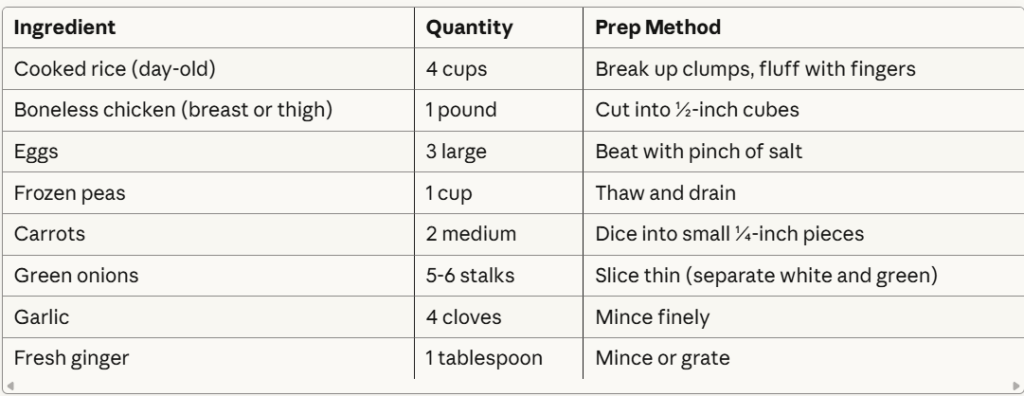
Prepping rice correctly prevents the soggy texture that ruins homemade fried rice. If using freshly cooked rice, spread it in a thin layer on a baking sheet and refrigerate uncovered for at least 3-4 hours, preferably overnight. The cold, dry air removes excess moisture while the starches retrograde, creating the ideal texture for frying.
Before cooking, break up rice clumps thoroughly with your hands. Each grain should separate easily—this ensures even seasoning and proper texture in the finished dish.
Marinating chicken enhances flavor and tenderness significantly. Even a brief 15-minute marinade makes noticeable improvement in the final result.
Chopping vegetables uniformly is more than aesthetic—consistent sizes ensure everything finishes cooking simultaneously. Aim for pieces roughly the same size as the rice grains for optimal integration.
Marinades & Seasonings
A quick chicken marinade transforms ordinary poultry into flavorful, tender pieces that stand out in the fried rice.
Simple Chicken Marinade:
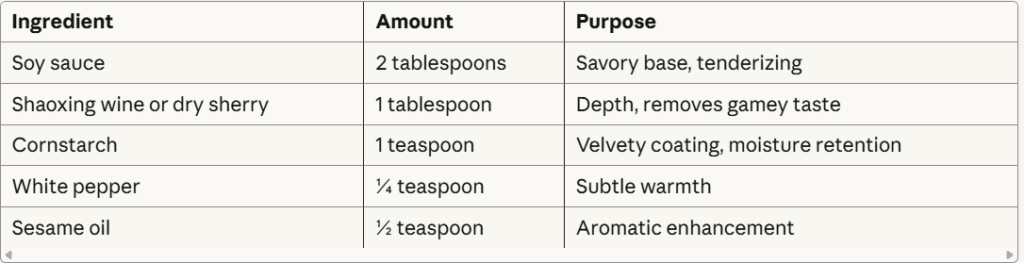
Combine marinade ingredients in a bowl, add cubed chicken, and toss to coat evenly. Let sit at room temperature for 15-20 minutes while preparing other ingredients, or refrigerate for up to 2 hours for deeper flavor penetration. The cornstarch creates a protective coating that seals in juices and prevents dryness during high-heat cooking.
Pantry Staples
Essential Sauce Components:

Measure and organize these ingredients before you begin cooking. Fried rice happens fast, leaving no time to search through cabinets mid-preparation. Having everything within arm’s reach ensures smooth execution and prevents burning or overcooking.
Step-by-Step Cooking Instructions
Follow these detailed instructions for perfect chicken fried rice recipe results with restaurant-quality texture and flavor.
Pre-Cooking Prep Chicken Fried Rice
Before turning on any burners, complete these essential preparation steps that separate success from failure:
- Complete mise en place: Arrange all prepped ingredients in separate small bowls near your stove in cooking order
- Mix your sauce: Combine soy sauce, oyster sauce, a splash of water, and sugar in a small bowl or measuring cup
- Prepare your workspace: Have a clean plate for cooked chicken, a large serving platter, and your spatula ready
- Preheat properly: Place your wok or largest skillet over high heat for 3-4 minutes until a drop of water evaporates within 1-2 seconds
This organized approach prevents panic during cooking and ensures you can focus on technique rather than hunting for ingredients.
Cooking Method Chicken Fried Rice
The secret to restaurant-quality chicken fried rice recipe lies in cooking components separately over high heat, then combining them at the end.
Step 1: Cook the Chicken (4-5 minutes)
- Heat 1 tablespoon oil in your wok or large skillet over high heat until it shimmers
- Add marinated chicken in a single layer without overcrowding
- Let chicken sear undisturbed for 2 minutes until bottoms turn golden brown
- Flip pieces and cook another 2-3 minutes until cooked through with no pink remaining
- Transfer chicken to a clean plate and set aside
Step 2: Scramble the Eggs (1 minute)
- Add another ½ tablespoon oil to the same pan
- Pour in beaten eggs and let them sit for 10-15 seconds until edges begin setting
- Scramble into large, soft curds using your spatula
- Remove to the plate with chicken before eggs fully cook (residual heat will finish them)
Step 3: Stir-Fry Aromatics and Vegetables (3-4 minutes)
- Add 1 tablespoon oil to the wok
- Toss in minced garlic, ginger, and white parts of green onions
- Stir constantly for 30-45 seconds until gloriously fragrant but not browned
- Add diced carrots and stir-fry for 2-3 minutes until crisp-tender
- Add peas and cook for another minute until heated through
Step 4: Fry the Rice (4-5 minutes)
- Add remaining oil to the wok
- Add day-old rice, breaking up any remaining clumps as you add it
- Spread rice across the pan surface and let it sit undisturbed for 45-60 seconds to develop slight crispiness on the bottom
- Toss and spread again, repeating this sear-and-toss process 3-4 times
- Pour sauce mixture over rice and toss vigorously to coat every single grain
- Continue stir-frying until rice heats through completely and shows golden-brown spots
Step 5: Combine Everything (1-2 minutes)
- Return cooked chicken and eggs to the wok
- Add green parts of sliced green onions (reserving some for garnish)
- Toss everything together vigorously for 1-2 minutes until evenly combined and piping hot
- Drizzle sesame oil over the top and give one final toss
- Taste and adjust seasoning with additional soy sauce or white pepper if needed
Doneness Check
Perfectly executed chicken fried rice recipe displays several unmistakable characteristics:
- Chicken should be tender with opaque white or light brown color throughout—no translucent or raw-looking areas remain, and pieces stay moist rather than dry
- Rice lightly crisp with individual grains that remain distinct rather than clumping together, featuring golden-brown spots that indicate proper caramelization
- Even seasoning throughout with no pockets of bland rice or over-salted areas—every bite should deliver consistent flavor
- Aromatic fragrance of toasted sesame oil, caramelized soy sauce, and garlic fills your kitchen
If rice appears wet or sticky, increase heat and continue stir-frying for 1-2 more minutes. The goal is individual grains with slight firmness and chew, not soft or mushy texture.
Resting
Let chicken fried rice recipe sit for 2 minutes before serving to absorb flavors properly. This brief resting period allows the rice to finish absorbing any residual moisture from the sauce, and flavors continue melding together during this time. The rice also firms up slightly, making it easier to serve and creating better mouthfeel.
Use this time to garnish with reserved green onion slices, prepare serving bowls, and set the table.
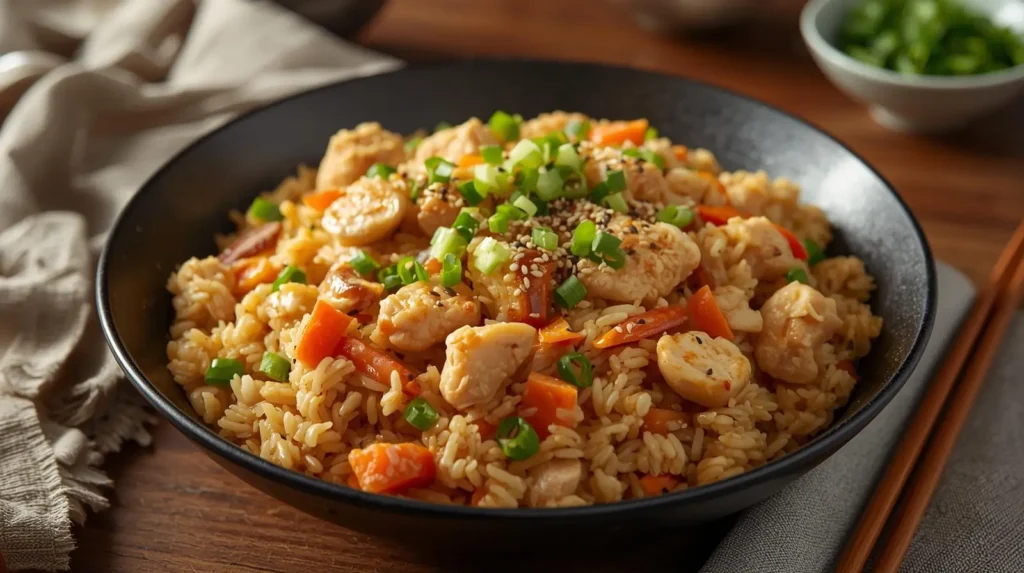
Pro Tips for Perfect Chicken Fried Rice Recipe
These expert techniques elevate your chicken fried rice from acceptable to exceptional.
Avoiding Mushy Rice
The most common complaint about homemade fried rice centers on mushy, clumpy texture that bears no resemblance to restaurant versions. Use day-old rice or refrigerate cooked rice before frying as your primary defense against this problem.
The science behind this: when rice cools and sits refrigerated, the starches undergo retrogradation—a process where starch molecules reorganize and form tighter structures. This creates firmer grains with less surface moisture, preventing the mushiness that plagues freshly cooked rice.
Additional Texture-Protecting Strategies:
- Cook rice with slightly less water than usual if you know you’ll make fried rice later
- Spread cooked rice on a baking sheet in a thin layer to cool faster
- Use long-grain rice varieties (jasmine or basmati) rather than short-grain sticky rice
- Don’t overcrowd your pan—work in batches if necessary to maintain high heat
- Add sauce gradually rather than dumping it all at once
- Keep rice moving frequently but allow brief contact with the hot pan surface
If you absolutely must use same-day rice, spread it on a baking sheet and refrigerate uncovered for at least 2-3 hours. A fan pointed at the rice accelerates drying.
Tool Recommendations
The right equipment dramatically impacts your chicken fried rice recipe results:
Carbon Steel Wok (14-inch): The traditional choice for a reason—sloped sides facilitate tossing ingredients, and carbon steel heats quickly and distributes heat evenly. If you cook stir-fries regularly, this investment pays dividends immediately.
Large Cast Iron Skillet (12-inch or larger): The best alternative if you don’t own a wok. Cast iron retains heat exceptionally well and can achieve similar high-heat results. Ensure it’s well-seasoned to prevent sticking.
Nonstick Skillet (12-inch minimum): Acceptable but not ideal—most nonstick coatings can’t handle the extreme heat that creates the best fried rice. If using nonstick, ensure it’s rated for high-heat cooking and has a metal handle.
Wide Metal Spatula or Wok Spatula: A large, flat spatula with thin edges helps you flip and toss ingredients efficiently without them escaping the pan.
What to Avoid: Small pans (causes overcrowding and steaming), thin aluminum pans (poor heat retention), glass or ceramic cookware (can’t handle high heat), plastic utensils (will melt).
Storage & Reheating
Store chicken fried rice recipe in the fridge for up to 3 days in airtight containers. Allow the rice to cool to room temperature before refrigerating, but don’t leave it at room temperature for more than 2 hours to prevent bacterial growth (rice is particularly susceptible to Bacillus cereus bacteria).
Optimal Reheating Methods:
- Stovetop (best texture): Heat a skillet or wok over medium-high heat with a small amount of oil. Add fried rice and stir-fry for 3-5 minutes until heated through and slightly crispy. This method restores the original texture most effectively.
- Microwave (quickest): Place rice in a microwave-safe bowl, sprinkle with 1-2 tablespoons of water or chicken broth, cover with a damp paper towel, and heat for 2-3 minutes, stirring halfway through. The added moisture prevents excessive dryness.
- Oven (for large quantities): Spread rice in a baking dish, add a few tablespoons of water or broth, cover tightly with aluminum foil, and heat at 350°F for 15-20 minutes, stirring once midway.
Freezing Considerations: While freezing is possible, chicken fried rice loses some texture quality after freezing and thawing. If you must freeze, use within 1 month, store in freezer-safe containers or bags with excess air removed, and reheat directly from frozen using the stovetop method for best results.
Flavor Variations Chicken Fried Rice
Customize this versatile chicken fried rice recipe to match your preferences, dietary needs, or available ingredients.
Spicy Twist
Add chili oil or red pepper flakes for extra kick that transforms this mild comfort food into something exciting and vibrant. Start conservatively—you can always add more heat at the table, but you can’t remove it once added.
Spicy Enhancement Options:
- Stir in 1-2 tablespoons chili crisp oil (like Lao Gan Ma) for complex heat with crunchy texture
- Add 1 teaspoon red pepper flakes with the aromatics for distributed heat throughout
- Include sliced fresh jalapeños or Thai bird chilies for bright, fresh spiciness
- Drizzle Sriracha or sambal oelek over individual servings for customizable heat
- Mix in a tablespoon of gochujang (Korean chili paste) with the sauce for sweet-spicy depth
The capsaicin in hot peppers awakens your palate and pairs beautifully with the savory, umami-rich elements in the fried rice.
Vegetarian Option
Replace chicken with tofu or extra veggies for a satisfying plant-based version that maintains protein and substance. Press extra-firm tofu for at least 30 minutes wrapped in paper towels with a heavy object on top, cube it into ¾-inch pieces, and pan-fry in oil until golden and crispy on all sides before proceeding with the recipe.
Excellent Vegetable Combinations:
- Broccoli florets (blanch briefly first for proper texture)
- Mushrooms (shiitake, oyster, or button varieties for umami)
- Bell peppers (multiple colors for visual appeal)
- Baby corn and water chestnuts (for crunch)
- Snap peas or snow peas (sweet crispness)
- Edamame (protein boost)
- Bean sprouts (add at the very end to maintain crunch)
- Zucchini or summer squash (diced small)
For additional protein without meat, double the egg quantity or add scrambled tofu alongside the vegetables.
Global Flavors
Adapt this chicken fried rice recipe with international flavor profiles that showcase the technique’s incredible versatility.
Teriyaki-Style Chicken Fried Rice:
- Replace oyster sauce with teriyaki sauce
- Add pineapple chunks and cashews for sweet-savory contrast
- Garnish with toasted sesame seeds
- Include diced red bell pepper for color
Thai-Style with Basil and Lime:
- Add fish sauce alongside soy sauce for authentic Thai flavor
- Include Thai basil leaves (add at the end)
- Squeeze fresh lime juice over the finished dish
- Top with chopped cilantro, crushed peanuts, and lime wedges
- Add a tablespoon of palm sugar for subtle sweetness
Korean-Inspired Kimchi Fried Rice:
- Add ½ cup chopped kimchi with the vegetables
- Include 1-2 tablespoons gochujang (Korean chili paste)
- Top each serving with a fried egg
- Sprinkle with toasted sesame seeds and crumbled nori
- Serve with additional kimchi on the side
Chinese Takeout Style:
- Add Chinese five-spice powder (¼ teaspoon)
- Include diced Chinese BBQ pork (char siu) instead of plain chicken
- Use dark soy sauce for deeper color
- Add a splash of hoisin sauce for sweetness
Japanese Hibachi Style:
- Use butter instead of some of the oil for richness
- Add soy sauce and teriyaki sauce equally
- Include corn kernels and diced zucchini
- Finish with yum yum sauce drizzle
Serving Suggestions
Complete your meal with complementary sides and beverages that enhance the chicken fried rice recipe experience.
Perfect Side Dishes:
Pair with sides that provide textural contrast and additional flavors without overwhelming the main dish. Spring rolls offer crispy exterior with fresh vegetables inside—an ideal counterpoint to the warm, savory fried rice. Dumplings (steamed or pan-fried) provide delicate wrappers around flavorful fillings that complement without competing.
Miso soup adds a light, warming element that cleanses the palate between bites while contributing additional umami depth. The liquid component balances the meal and aids digestion.
Additional Side Options:
- Egg rolls (pork or vegetable)
- Edamame with sea salt
- Cucumber salad with rice vinegar and sesame
- Asian-style coleslaw
- Pot stickers or gyoza
- Crispy spring onion pancakes
- Pickled vegetables for acidity and crunch
- Seaweed salad for freshness
Presentation Ideas:
- Serve in individual bowls topped with sliced green onions and sesame seeds
- Pack into meal prep containers with separate compartments for sides
- Present family-style on a large platter garnished with lime wedges
- Top with a fried egg for each diner for added richness
Drink Pairings:
Green tea, ginger ale, or light beer pairs well with chicken fried rice recipe. Hot green tea (particularly jasmine or sencha varieties) cuts through the richness of fried rice while providing antioxidants and aiding digestion—it’s the traditional accompaniment in many Asian cultures for good reason.
Ginger ale offers sweet, spicy refreshment with carbonation that lightens heavy meals. The ginger notes complement the garlic and ginger in the fried rice beautifully.
Light beer (Asian lagers like Tsingtao, Asahi, or Singha work particularly well) provides carbonation and subtle malt sweetness that balances the savory, salty flavors without overwhelming them.
Other Beverage Options:
- Iced jasmine or oolong tea
- Sake (served warm or chilled)
- Sparkling water with lime
- Fresh lemonade
- Thai iced tea for indulgence
- Coconut water for a tropical touch
FAQs
Can I use brown rice instead of white?
Yes, you can use brown rice for your chicken fried rice recipe, though results will differ from traditional versions. Brown rice has a chewier texture, nuttier flavor, and requires longer cooking time than white rice. The higher fiber content means brown rice stays firmer and doesn’t achieve quite the same fluffy, slightly crispy texture as white rice.
If using brown rice, cook it with slightly more water than white rice requires, then spread on a baking sheet and refrigerate overnight for best results. Expect to add an extra 1-2 minutes to the frying time. Brown rice also absorbs less sauce, so you may need to increase seasoning slightly.
For the most authentic texture, stick with long-grain white rice (jasmine or basmati), but brown rice creates a heartier, healthier version that many people prefer.
How do I prevent the rice from clumping?
Preventing rice from clumping requires multiple strategies working together. First and most importantly, always use day-old refrigerated rice—this single factor makes the biggest difference. Second, break up all clumps thoroughly before adding rice to the pan. Third, ensure your cooking surface is extremely hot before adding ingredients. Fourth, use adequate oil without being stingy. Fifth, keep rice moving during cooking but allow brief contact with the hot pan.
Additional anti-clumping techniques:
- Cook rice with slightly less water than usual
- Spread cooked rice to cool quickly rather than leaving in the pot
- Use long-grain rice varieties which naturally clump less
- Don’t overcrowd the pan—work in batches if necessary
- Add sauce gradually while tossing constantly
If rice still clumps despite these measures, your pan probably isn’t hot enough, or you’re using freshly cooked rice that hasn’t dried sufficiently.
Is this recipe freezer-friendly?
While you can freeze chicken fried rice for up to 1 month, texture quality decreases compared to fresh or refrigerated versions. Rice tends to become slightly mushy after freezing and thawing, and chicken can become tougher or drier. The freezing process damages the starch structure in rice, making it harder to restore the original texture.
If you choose to freeze portions:
- Let rice cool completely before freezing
- Spread in a thin layer in freezer bags, removing excess air
- Label with date and contents
- Freeze flat for space efficiency and faster, more even freezing/thawing
- Reheat directly from frozen in a hot skillet without thawing (this helps restore texture better than microwave reheating)
For best results, make smaller batches more frequently or store in the refrigerator for up to 3 days rather than freezing.
What’s the best way to cut chicken for fried rice?
Cut chicken into uniform ½-inch cubes for optimal results. This size ensures the chicken pieces cook quickly and evenly without drying out, and the cubes integrate well with the rice and vegetables rather than overwhelming them.
Cutting technique:
- Partially freeze chicken breasts for 15-20 minutes—this firms the meat and makes cutting easier
- Slice against the grain into ½-inch thick slabs
- Cut each slab into ½-inch wide strips
- Cut strips into ½-inch cubes
Consistent sizing ensures all pieces finish cooking simultaneously. Larger pieces may stay raw in the center while smaller pieces overcook and dry out.
Can I make this ahead for meal prep?
Absolutely! Chicken fried rice recipe makes excellent meal prep that saves time and money throughout the week. Cook a double batch following the recipe, let it cool completely, then portion into individual airtight containers for easy grab-and-go meals.
Properly stored in the refrigerator, chicken fried rice remains delicious for 3-4 days. Keep all components together rather than separating them—they’re already cooked together and flavors continue melding during storage.
Meal Prep Tips:
- Portion into individual servings in glass or BPA-free plastic containers
- Add toppings like sliced green onions, sesame seeds, or fried eggs fresh when serving
- Store separate containers of hot sauce or soy sauce for customization
- Reheat individual portions as needed throughout the week
- Consider making two different flavor variations for variety
Should I use chicken breast or thighs?
Both work excellently, but each offers distinct advantages. Chicken breast provides lean protein with mild flavor and works perfectly for health-conscious eaters watching fat intake. It cooks quickly but can dry out if overcooked.
Chicken thighs contain more fat, which translates to richer flavor and more forgiving cooking—they stay moist and tender even if slightly overcooked. The darker meat also has more pronounced chicken flavor that some people prefer in fried rice.
Best choice: Use boneless, skinless chicken thighs for the most foolproof, flavorful results. If you prefer leaner meat or have breast on hand, that works fine too—just monitor cooking time carefully to prevent dryness.
How do I know when the chicken is fully cooked?
Chicken is fully cooked and safe to eat when it reaches an internal temperature of 165°F throughout. Use an instant-read thermometer inserted into the thickest part of the largest piece for accuracy.
Visual indicators of properly cooked chicken:
- Completely opaque white or light brown color throughout (no translucent or pink areas)
- Firm texture that’s no longer jiggly or soft
- Clear juices (not pink) when pierced with a knife
- Slight golden-brown exterior from proper searing
If you don’t have a thermometer, cut into the thickest piece—it should be uniformly white throughout with no pink color. However, investing in an instant-read thermometer ($15-30) removes all guesswork and ensures food safety.
Conclusion
Mastering this chicken fried rice recipe transforms your weeknight cooking routine with a dish that’s faster than delivery, healthier than takeout, and more delicious than restaurant versions. With proper techniques—day-old rice, high heat, correct ingredient sequencing, and quality seasonings—you’ll consistently create fluffy, flavorful fried rice that impresses everyone at your table.
The versatility of this recipe means you’ll never get bored. Once you’ve mastered the foundational method, endless variations await: swap proteins, adjust spice levels, experiment with vegetables, or explore international flavor profiles. Each batch can be customized based on your preferences, dietary needs, and what’s available in your refrigerator.
Grab your wok and try this chicken fried rice recipe tonight! You’ll be amazed at how simple it is to achieve restaurant-quality results in your own kitchen. The entire process takes less than 30 minutes from start to finish—perfect for busy weeknights when you want something satisfying and delicious without spending hours cooking.
Join 10,000+ home cooks who’ve mastered this dish! Share your creations, variations, and personal tips in the comments below. Did you try the spicy version? Experiment with the Thai-style variation? We’d love to hear how you customized this recipe to make it your own.
How did you find results our recipes
There are no reviews yet. Be the first one to write one.