Introduction
Tired of boring, unsatisfying salads that leave you hungry an hour later? Or maybe you’ve tried making steak salads at home only to end up with tough, chewy meat over wilted greens that taste more like punishment than pleasure? You’re not alone. Most people struggle to create steak salad recipes that are both nutritious and actually crave-worthy.
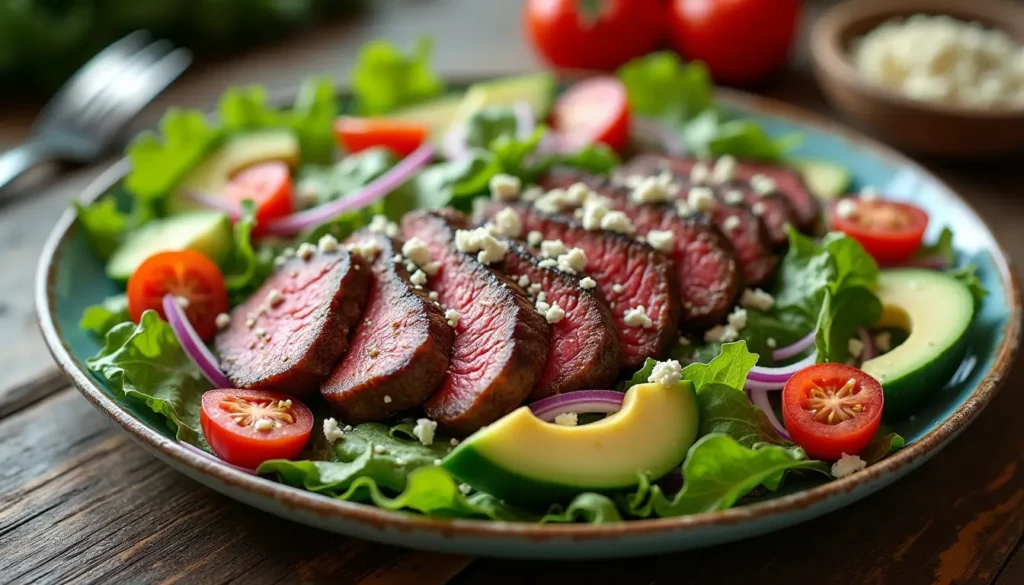
These steak salad recipes deliver restaurant-quality meals that are hearty, satisfying, and packed with flavor—tender, juicy steak perfectly seasoned and sliced over crisp greens, fresh vegetables, and vibrant dressings that tie everything together. Picture a beautifully composed salad with medium-rare steak, crunchy vegetables, creamy avocado, tangy cheese, and a dressing that makes you want to lick the bowl. These aren’t rabbit-food salads; they’re complete, balanced meals that satisfy both your nutritional needs and your taste buds.
As someone who’s spent over 15 years developing recipes that bridge the gap between healthy eating and indulgent flavor—both in professional kitchens and through culinary nutrition consulting—I’ve learned that the secret to exceptional steak salad recipes lies in three elements: properly cooked steak that stays tender and juicy, a thoughtful balance of textures and flavors, and dressings that enhance rather than drown the ingredients. Most home cooks either overcook their steak or treat the salad as an afterthought, but when you master both components, you create something truly special.
In this comprehensive guide, you’ll discover everything needed to create perfect steak salad recipes, including which cuts of beef work best for salads and why, foolproof techniques for cooking steak that stays tender even when sliced thin, how to build balanced salads with complementary flavors and textures, and five distinct variations from classic steakhouse-style to Asian-fusion and Mediterranean. Whether you’re meal-prepping for the week, seeking healthy lunch options, or want an impressive dinner that happens to be nutritious, these steak salad recipes will transform how you think about salads.
Table of Contents
Why These Steak Salad Recipes Work
These steak salad recipes have become weeknight heroes for thousands of home cooks because they deliver on multiple fronts:
- Complete, balanced meals in one bowl: Each recipe provides quality protein from the steak, healthy fats from nuts and avocado or dressing, complex carbs from vegetables, and abundant vitamins and minerals—all the nutrition you need without feeling deprived or hungry shortly after eating.
- Uses affordable, versatile cuts of beef: You don’t need expensive prime ribeye for exceptional steak salads. Flank steak, sirloin, and skirt steak are economical cuts that shine in this application when properly cooked and sliced. They deliver excellent flavor without breaking your budget.
- Quick cooking and assembly: The steak cooks in just 6-10 minutes depending on thickness and method. While it rests, you assemble the salad components. Total time from start to finish is typically 25-30 minutes—faster than most takeout and infinitely healthier.
- Perfect for meal prep: Cook a larger portion of steak at the beginning of the week, and you’ve got quick, healthy lunches or dinners ready to go. The steak keeps for 3-4 days refrigerated, and you can prep salad components in advance, assembling everything fresh when ready to eat.
- Naturally adaptable to dietary needs: These steak salad recipes easily accommodate various eating styles. They’re naturally low-carb and keto-friendly, can be made paleo or Whole30 compliant, and work for gluten-free diets. Just adjust the dressing and toppings to suit your needs.
- Impressive yet approachable: Steak salads feel special enough for entertaining guests or date nights, yet they’re simple enough for casual weeknight dinners. The visual appeal of sliced steak over colorful vegetables creates restaurant-quality presentation with home-cook simplicity.
- Satisfies meat-lovers and health-conscious eaters alike: These recipes bridge the gap between people who love hearty, protein-rich meals and those focused on eating more vegetables. Everyone leaves the table satisfied.
Choosing the Right Steak
The foundation of exceptional steak salad recipes begins with selecting the right cut of beef. Unlike steaks served whole, where thickness and marbling dominate the selection criteria, salad steaks require different considerations.
Best Cuts for Steak Salads
For steak salad recipes, you want cuts that are flavorful, relatively affordable, and have a grain structure that allows for thin slicing across the grain—this ensures tenderness in every bite. Three cuts stand out:
Flank steak is the gold standard for steak salads. This lean cut from the cow’s lower chest/abdomen has pronounced grain, robust beefy flavor, and becomes incredibly tender when sliced thin against the grain. It’s flat and uniform, making it easy to cook evenly and slice consistently. At 8-12 ounces, one flank steak typically serves 2-3 people in salad portions. The relatively low fat content keeps calories reasonable while delivering satisfying protein.
Skirt steak offers even more intense flavor than flank with slightly looser texture. This cut comes from the diaphragm muscles and has a reputation as the most flavorful quick-cooking steak. It’s thinner than flank (often just ½-¾ inch thick), so it cooks extremely quickly—perfect for weeknights. The texture is slightly less uniform than flank, and it can be a bit chewier if not sliced properly, but the flavor payoff is worth it. Skirt steak is traditional for fajitas, and it shines equally in salads.
Sirloin steak (specifically top sirloin) provides a more budget-friendly option that’s still tender and flavorful. It’s leaner than ribeye but more forgiving than flank or skirt. Sirloin works particularly well for people new to cooking steak salads because it’s less finicky about slicing direction and doneness. It costs less per pound than most cuts while delivering quality results.
Avoid heavily marbled cuts like ribeye or New York strip for salads—while delicious when served hot as whole steaks, their abundant fat doesn’t work as well in cold salad applications, where the fat can congeal and create an unpleasant mouthfeel. Similarly, avoid tough cuts like chuck or round unless you’re braising them first; these won’t become tender with quick, high-heat cooking.
For serving sizes, plan on 4-6 ounces of cooked steak per person for a main-course salad. This provides substantial protein (roughly 30-40 grams) without overwhelming the vegetables.
Buying Tips
When selecting steak for your steak salad recipes, look for meat with a bright, cherry-red color that appears moist but not wet or slimy. The surface should have a slight sheen without looking dried out or dull. For flank and skirt steak specifically, examine the grain—you should see clear lines running in one direction; this visual cue will help you slice correctly later.
Check the thickness. For flank steak, look for cuts that are relatively uniform in thickness (about ¾ to 1 inch throughout) to ensure even cooking. Skirt steak naturally varies in thickness from one end to the other; this is normal and acceptable—you’ll simply need to monitor different sections as they cook.
Smell the meat if purchasing from a butcher counter. Fresh beef has a clean, slightly metallic smell. Any sour, ammonia-like, or strong unpleasant odors indicate spoilage. Don’t hesitate to ask your butcher about the beef’s age—well-aged beef (14-21 days) develops concentrated flavor that enhances steak salads.
For packaged steaks, check the sell-by date and examine for excessive liquid in the package, which suggests the meat has been sitting too long. Some liquid is normal, but if the steak is swimming in it, pass.
If you develop a relationship with your butcher, ask them to recommend cuts specifically for slicing—they often have insider knowledge about which current offerings have the best grain structure for your needs.
Substitutions
While flank, skirt, and sirloin are ideal for steak salad recipes, you can substitute other cuts with adjustments. Flat iron steak (from the shoulder) is exceptionally tender with great flavor and works beautifully; cook it to medium-rare and slice thin. Tri-tip (from the bottom sirloin) offers excellent flavor and can be roasted then sliced for salads—this works particularly well for meal prep since you’re cooking a larger piece.
Hanger steak delivers intense flavor similar to skirt but can be harder to find. If you see it, grab it—it’s often called “butcher’s steak” because butchers used to keep it for themselves. London broil (typically top round) is very lean and can work if marinated for several hours and sliced paper-thin, though it won’t be quite as tender as the preferred cuts.
For those avoiding red meat, chicken breast or thigh can substitute, though you lose the “steak salad” character. Grilled shrimp, salmon, or even thick slices of portobello mushroom create different but delicious salad variations using similar preparation methods.
If you’re making steak salads regularly, consider buying larger cuts when they go on sale and freezing individual portions. Flank steak freezes beautifully for up to 6 months when wrapped tightly in plastic wrap and then foil.
Ingredients & Prep
Steak Prep Essentials
Proper preparation ensures your steak cooks evenly and develops maximum flavor for your steak salad recipes. Begin by removing the steak from the refrigerator 20-30 minutes before cooking to bring it to room temperature. This promotes even cooking—cold steak in a hot pan results in an overcooked exterior while the center remains cool.
While the steak tempers, examine it for any excess fat or silver skin (the thin, silvery connective tissue). For flank and skirt steak, trim any thick fat deposits, but leave thin membranes alone—they’ll soften during cooking. If your steak has significant silver skin, trim it by sliding a sharp knife under it at a shallow angle and cutting it away from the meat. Silver skin doesn’t break down during quick cooking and becomes unpleasantly chewy.
Pat the steak completely dry with paper towels on all surfaces. This is crucial—moisture on the surface creates steam during cooking, preventing proper browning and crust development. Dry steak browns beautifully; wet steak steams and turns gray.
Examine the grain of your steak—those visible lines running in one direction. You’ll eventually slice perpendicular to these lines (against the grain), so identifying the grain direction now helps you plan. Some cooks even use a small knife to mark the grain direction before cooking, ensuring they remember which way to slice later.
Simple Marinade for Tender, Flavorful Steak
While excellent steak salad recipes can be made with simple salt-and-pepper seasoning, a quick marinade tenderizes the meat while adding flavor that complements the salad components.
Basic Steak Marinade (for 1-1.5 pounds steak):
- ¼ cup olive oil
- 3 tablespoons soy sauce or Worcestershire sauce
- 2 tablespoons red wine vinegar or balsamic vinegar
- 3 cloves garlic, minced
- 1 tablespoon Dijon mustard
- 1 teaspoon brown sugar or honey
- 1 teaspoon black pepper
- ½ teaspoon salt
- Optional: 1 teaspoon fresh herbs (rosemary, thyme, or oregano)
Whisk all ingredients together in a shallow dish or gallon-sized zip-top bag. Add the steak, turn to coat, and marinate for 15 minutes to 4 hours in the refrigerator. Fifteen minutes provides noticeable flavor; 2-4 hours delivers more pronounced results and additional tenderizing from the acid. Don’t marinate longer than 8 hours, as the acid can over-tenderize the meat’s surface, creating mushy texture.
Remove the steak from the marinade 10 minutes before cooking, let excess drip off, and pat dry with paper towels. This drying step is critical—you want the marinade’s flavors absorbed into the meat, but you need a dry surface for proper searing.
Quick Dry Rub Alternative: If you prefer a dry rub or are short on time, combine 1 teaspoon kosher salt, 1 teaspoon black pepper, 1 teaspoon garlic powder, ½ teaspoon onion powder, and ½ teaspoon smoked paprika. Rub this mixture all over the steak 20-30 minutes before cooking. The salt will draw moisture to the surface initially, then the moisture will be reabsorbed along with the seasonings, flavoring the meat internally.
Building the Perfect Salad Base
While the steak is the star of steak salad recipes, the supporting cast matters enormously. A well-composed salad provides textural variety, nutritional balance, and flavors that complement rather than compete with the beef.
Greens: Use a mix of textures and flavors. Baby spinach provides iron and mild flavor; arugula adds peppery bite; romaine offers satisfying crunch; mixed spring greens contribute variety. Avoid delicate lettuces like butter lettuce that wilt under the weight of toppings. Plan on 2-3 cups of greens per serving.
Vegetables: Include a variety of colors and textures:
- Cherry or grape tomatoes (halved) for juicy sweetness
- Cucumber (sliced or diced) for cool crunch
- Red onion (thinly sliced) for sharp bite—soak in cold water for 10 minutes to mellow the intensity
- Bell peppers (any color, sliced) for sweetness and crunch
- Radishes (sliced thin) for peppery crunch and visual appeal
Rich Components: These add satisfaction and healthy fats:
- Avocado (sliced or diced) for creamy richness
- Cheese (blue cheese, feta, goat cheese, or shaved Parmesan) for salty, tangy notes
- Nuts or seeds (candied walnuts, pecans, almonds, or sunflower seeds) for crunch and richness
Optional Additions:
- Hard-boiled or soft-boiled eggs for extra protein
- Roasted corn for sweetness
- Crispy bacon or pancetta for smoky richness
- Fresh herbs (basil, cilantro, parsley, or mint) for brightness
The key to great steak salad recipes is balance—you want enough variety to create interest without so many components that flavors become muddled. Aim for 5-7 different elements beyond the steak and dressing.
Dressings That Make Steak Salads Sing
The dressing ties everything together in steak salad recipes. Here are three versatile options:
Classic Balsamic Vinaigrette:
- 3 tablespoons balsamic vinegar
- 1 tablespoon Dijon mustard
- 1 clove garlic, minced
- ½ cup olive oil
- 1 teaspoon honey
- Salt and pepper to taste
Creamy Blue Cheese:
- ½ cup sour cream or Greek yogurt
- ¼ cup mayonnaise
- ⅓ cup crumbled blue cheese
- 2 tablespoons lemon juice
- 1 clove garlic, minced
- 2 tablespoons milk (to thin)
- Salt and pepper to taste
Asian-Style Ginger-Soy:
- 3 tablespoons rice vinegar
- 2 tablespoons soy sauce
- 1 tablespoon sesame oil
- 2 tablespoons neutral oil
- 1 tablespoon fresh grated ginger
- 1 clove garlic, minced
- 1 teaspoon honey or brown sugar
- Pinch of red pepper flakes
Whisk ingredients together or shake in a jar. Make dressings ahead and refrigerate for up to a week—the flavors improve as they meld.
Step-by-Step Cooking Instructions
Pre-Cooking Prep
Ensure your steak has been at room temperature for 20-30 minutes and is completely dry. If you marinated it, pat off excess marinade and let it sit for 10 minutes so the surface dries—this is essential for proper searing.
For pan-searing (the most reliable method for steak salad recipes), heat a large cast iron or heavy stainless steel skillet over high heat for 3-4 minutes until very hot—nearly smoking. For grilling, preheat your grill to high heat (450-500°F).
Have everything ready: tongs for flipping, a plate for resting the cooked steak, and a cutting board and sharp knife for slicing. The steak cooks quickly, so you won’t have time to gather supplies once you start.
Cooking Method: Pan-Searing
Add 1 tablespoon of high-heat oil (avocado, grapeseed, or refined vegetable oil) to your screaming-hot skillet and swirl to coat. The oil should shimmer and barely smoke.
Carefully lay the steak in the pan away from you to avoid oil splatters. Don’t move, flip, or touch it for 3-4 minutes for ¾-inch thick steak, or 4-5 minutes for 1-inch thickness. This undisturbed time allows proper crust development—if you peek or move the steak, you interfere with browning.
You’ll hear aggressive sizzling—that’s good. If your kitchen gets smoky, turn on your exhaust fan or open a window, but don’t reduce the heat. After the proper time, the steak should release easily from the pan and have a deep brown crust. If it’s sticking, give it another 30-60 seconds.
Flip the steak using tongs (never a fork, which pierces the meat and releases juices) and cook the second side for 3-4 minutes for medium-rare, or 4-5 minutes for medium. For skirt steak, which is thinner, reduce times to 2-3 minutes per side.
Cooking Method: Grilling
Oil the grill grates well to prevent sticking. Place the steak on the hottest part of the grill and close the lid. Cook for 3-4 minutes, then open the lid, flip the steak, and cook another 3-4 minutes for medium-rare.
Grilling adds smoky flavor that complements steak salad recipes beautifully, especially for outdoor entertaining. The timing is similar to pan-searing, though you may need slight adjustments based on your grill’s heat output.
Doneness Check
The only reliable way to check steak doneness is with an instant-read thermometer inserted horizontally into the center of the thickest part:
- Rare: 120-125°F (cool red center)
- Medium-rare: 130-135°F (warm red center) — RECOMMENDED
- Medium: 135-145°F (warm pink center)
- Medium-well: 145-155°F (slightly pink center)
For steak salad recipes, medium-rare to medium is ideal. The steak continues cooking slightly as it rests and will be sliced thin, so any translucency becomes less noticeable. Rare can seem too underdone when cold in a salad, while anything beyond medium becomes tough and dry.
If you don’t have a thermometer, use the touch test: press the center of the steak—medium-rare feels like the fleshy part of your palm below your thumb when you touch your thumb to your middle finger (slight resistance with some give).
Resting and Slicing
This is the step most home cooks skip, and it’s why their steak salads end up with tough, dry meat. Transfer the cooked steak to a cutting board and tent loosely with aluminum foil. Let rest for 5-7 minutes—longer for thicker steaks, shorter for thin skirt steak.
During resting, the proteins relax and reabsorb juices that were driven to the center during cooking. If you slice immediately, those juices run out onto the cutting board and you’re left with drier meat. A properly rested steak retains its moisture when sliced.
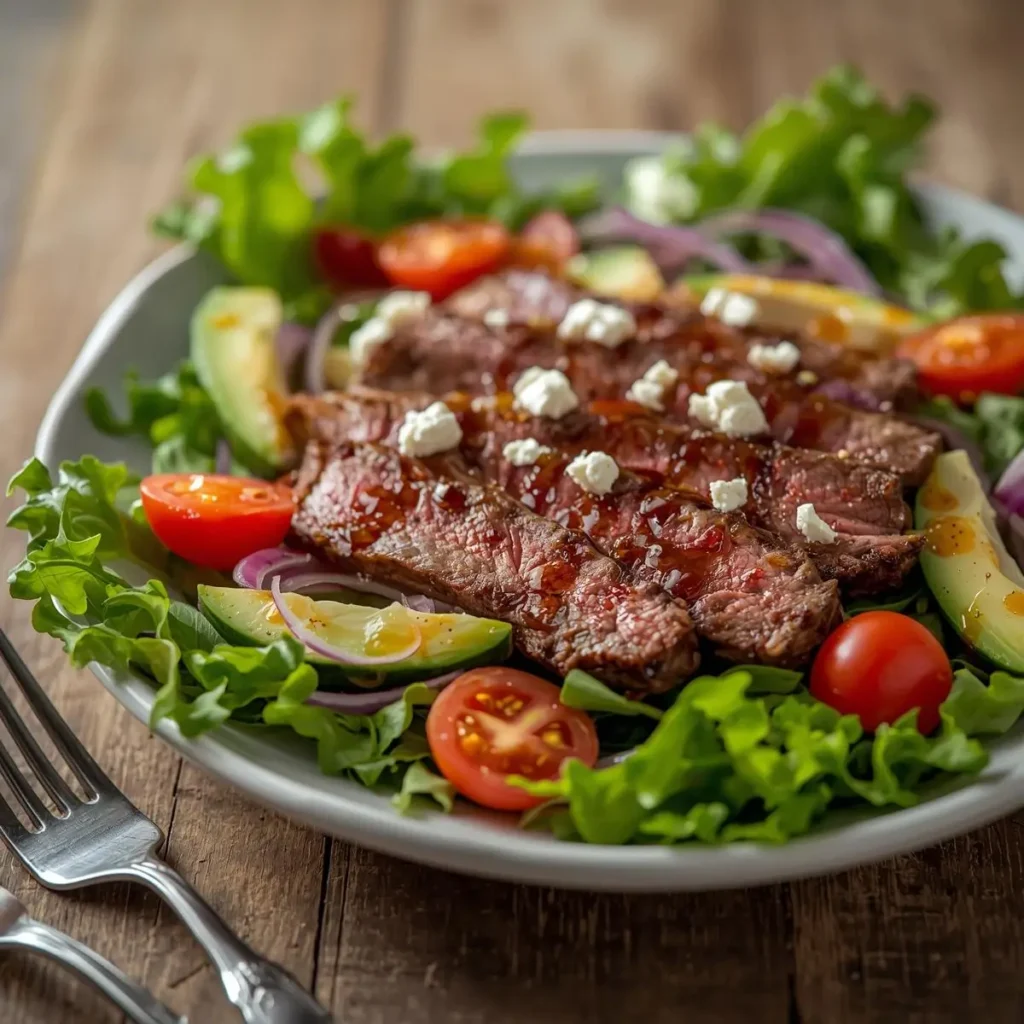
After resting, identify the grain—those visible lines running through the meat. Position your knife perpendicular to these lines (cutting across the grain) and slice the steak into thin strips, about ¼ inch thick. Cutting against the grain shortens the muscle fibers, making each bite tender rather than chewy. This is the single most important technique for tender steak in salads.
If you’re unsure about the grain direction, cut a small test slice. If it’s tough or stringy, you’re cutting with the grain; rotate 90 degrees and try again.
For visual appeal in your steak salad recipes, angle your knife at 45 degrees (bias cut) rather than straight down—this creates wider, more elegant slices.
Pro Tips for Perfect Steak Salads
Avoiding Tough or Dry Steak
The most common failure in steak salad recipes is tough, chewy, or dry meat. Prevent this with these critical techniques:
Don’t overcook: Medium-rare to medium is optimal. Steak continues cooking from residual heat after you remove it from heat, so pull it 5 degrees before your target temperature. Use a thermometer—guessing leads to overcooked disappointment.
Always slice against the grain: This cannot be overstated. Even perfectly cooked steak becomes tough if sliced with the grain. Take a moment to identify the grain direction and slice perpendicular to it. This one technique transforms the texture dramatically.
Let it rest: Those 5-7 minutes of resting allow juices to redistribute. Slicing immediately causes juice loss and drier meat. Be patient.
Slice thin: Quarter-inch slices or thinner work best in salads. Thick chunks are harder to eat in salad form and seem chewier even when properly cooked and sliced against the grain.
Don’t cook cold steak: Room temperature steak cooks more evenly. Cold steak from the fridge requires longer cooking time, increasing the risk of overcooking the exterior while the center reaches temperature.
Tool Recommendations
An instant-read thermometer is indispensable for perfect steak salad recipes. Digital models like the ThermoWorks ThermoPop or Thermapen take the guesswork out of doneness, guaranteeing tender results every time.
A sharp chef’s knife or slicing knife makes cutting against the grain effortless and creates clean slices that don’t shred the meat fibers. Dull knives tear the meat and make ragged cuts that seem tough even when the meat is tender.
Cast iron or heavy stainless steel skillets retain heat better than thin pans, maintaining high temperature when cold steak hits the surface. This ensures proper searing and crust development.
Good quality tongs with scalloped edges provide grip without piercing the meat. Avoid forks, which create holes that leak juices.
A salad spinner dries greens thoroughly, which is essential—wet greens dilute dressings and create watery salads. Crisp, dry greens hold dressings better and provide better texture.
Storage & Meal Prep
Steak salad recipes are ideal for meal prep. Cook a larger portion of steak (2-3 pounds), let it cool completely, slice it, and store in an airtight container in the refrigerator for up to 4 days. The cooked, sliced steak can be served cold or brought to room temperature.
Store salad components separately for best results: greens in one container (with a paper towel to absorb moisture), chopped vegetables in another, and dressing in a jar. Assemble fresh when ready to eat. This keeps greens crisp and prevents sogg
iness.
For grab-and-go lunches, use mason jars with dressing at the bottom, sturdy vegetables next (tomatoes, cucumbers, peppers), then greens, and finally steak on top. When ready to eat, shake to distribute dressing and dump into a bowl.
Cooked steak can be frozen for up to 3 months if wrapped tightly in plastic wrap and then foil, though the texture will be slightly less perfect after thawing. Thaw overnight in the refrigerator before using in salads.
Leftover steak salad (already assembled) doesn’t store well—the greens wilt and become soggy. If you have leftovers, separate the steak and vegetables from the greens, refrigerate, and add to fresh greens the next day.
Flavor Variations
Classic Steakhouse Salad
Channel your favorite steakhouse with this indulgent yet balanced variation. Use romaine lettuce as the base for its sturdy crunch, and top with the classic steakhouse components: halved cherry tomatoes, crispy bacon pieces, blue cheese crumbles, thinly sliced red onion, and avocado slices.
For the steak, use a simple salt-and-pepper seasoning or the dry rub from earlier—this keeps the beef flavor forward. Dress with creamy blue cheese dressing or a tangy balsamic vinaigrette. The combination of rich blue cheese, smoky bacon, creamy avocado, and juicy steak creates the steakhouse experience in salad form.
Add homemade croutons for extra crunch if desired. This variation pairs beautifully with a bold Cabernet Sauvignon for a complete steakhouse-at-home experience.
Asian-Inspired Steak Salad
Transform your steak salad recipes with bright Asian flavors that feel light and refreshing. Marinate the steak in a mixture of soy sauce, sesame oil, fresh grated ginger, garlic, and a touch of brown sugar for at least 30 minutes before cooking.
Build the salad with a mix of baby spinach and shredded Napa cabbage, then add:
- Edamame (shelled)
- Shredded carrots
- Sliced cucumber
- Mandarin orange segments
- Sliced scallions
- Crispy wonton strips or chow mein noodles
- Toasted sesame seeds
Dress with the ginger-soy dressing and add a drizzle of sriracha for heat lovers. This variation is lighter and more refreshing than traditional steak salads, perfect for warm weather dining.
Mediterranean Steak Salad
Bring the flavors of the Mediterranean to your steak salad recipes with this colorful, nutrient-dense variation. Use a bed of mixed greens with fresh arugula for peppery bite, then add:
- Cherry tomatoes
- Cucumber chunks
- Kalamata olives
- Roasted red peppers
- Thinly sliced red onion
- Chickpeas for extra protein and fiber
- Crumbled feta cheese
- Fresh herbs (basil, mint, or parsley)
Season the steak with za’atar, oregano, garlic, and lemon zest before cooking. Dress the salad with a lemon-herb vinaigrette made with fresh lemon juice, olive oil, garlic, oregano, and Dijon mustard.
Serve with warm pita bread on the side for a complete Mediterranean feast that’s healthy, satisfying, and transportive.
Southwestern Steak Salad
Give your steak salad recipes a spicy, Tex-Mex twist perfect for those who love bold flavors. Rub the steak with a blend of chili powder, cumin, smoked paprika, garlic powder, and a pinch of cayenne before cooking.
Build the salad with romaine lettuce and add:
- Black beans (rinsed and drained)
- Roasted corn (or grilled fresh corn cut from the cob)
- Cherry tomatoes
- Diced avocado or guacamole
- Shredded cheddar or pepper jack cheese
- Sliced jalapeños (fresh or pickled)
- Crispy tortilla strips
- Fresh cilantro
Dress with a chipotle-lime dressing: combine Greek yogurt or sour cream, lime juice, adobo sauce from canned chipotles, garlic, and cumin. This creamy, spicy dressing ties together all the Southwestern flavors.
Serve with lime wedges and hot sauce on the side. This variation is hearty, colorful, and perfect for taco night in salad form.
Fall Harvest Steak Salad
Celebrate autumn flavors with this seasonal steak salad recipe that feels cozy yet fresh. Use a mix of baby spinach and arugula as the base, then add:
- Roasted butternut squash cubes
- Sliced apples or pears
- Dried cranberries
- Candied pecans or walnuts
- Crumbled goat cheese or blue cheese
- Thinly sliced red onion
Season the steak with rosemary, thyme, and garlic before cooking. Dress with an apple cider vinaigrette made with apple cider vinegar, maple syrup, Dijon mustard, and olive oil.
The combination of sweet (fruit and cranberries), savory (steak), tangy (cheese and dressing), and crunchy (nuts) creates complex flavor that celebrates fall produce. This variation is perfect for holiday entertaining or cozy autumn dinners.
Serving Suggestions
Steak salad recipes are complete meals in themselves, but you can enhance the experience with thoughtful accompaniments.
Bread: Serve with crusty bread—a baguette, ciabatta, or sourdough—to soak up dressing and juices. Garlic bread adds indulgence for special occasions. For low-carb meals, skip the bread entirely; the steak provides ample satisfaction.
Soup Pairings: For a more substantial meal, start with a light soup. French onion soup pairs beautifully with steakhouse-style salads. Butternut squash soup complements fall harvest variations. Miso soup works with Asian-inspired versions.
Wine Pairings: Despite the presence of greens and vegetables, these are steak-forward salads that pair well with red wine. Pinot Noir offers lighter body with earthy notes that complement without overwhelming. Malbec provides fruit-forward richness. For those who prefer white wine, a crisp Sauvignon Blanc with good acidity cuts through the richness while refreshing the palate.
Beer Pairings: Craft beer lovers should reach for options with enough character to stand up to beef: IPAs offer hoppy bitterness that cuts richness, amber ales provide malty balance, and wheat beers work especially well with Asian-inspired variations.
Non-Alcoholic Options: Sparkling water with lemon or lime provides simple refreshment. Iced green tea complements Asian variations. For something more interesting, try kombucha—its tangy, effervescent quality pairs surprisingly well with steak salads.
Make It a Feast: For entertaining, serve steak salad recipes family-style on a large platter. Cook 2-3 pounds of steak, arrange it over a bed of greens on your largest platter, scatter all the toppings artfully, and let guests help themselves. Provide the dressing on the side so everyone can control their own portions.
FAQs
Can I use frozen steak for salad recipes?
While fresh is always preferred, frozen steak can work if properly thawed. The key is slow, gentle thawing in the refrigerator—plan on 24 hours for most cuts. Never thaw steak at room temperature or in warm water, as this promotes bacterial growth and can affect texture. Place the frozen steak on a plate to catch any liquid and let it thaw in the coldest part of your fridge. Once thawed, pat it very thoroughly dry (frozen steak releases more moisture), then proceed with the recipe as written. The results won’t be quite as perfect as with fresh steak, but proper thawing and careful cooking yield perfectly acceptable steak salad recipes. For best results with frozen steak, marinate it after thawing to help improve texture and add flavor.
How do I prevent my salad from getting soggy?
Soggy salads ruin even the best steak salad recipes. Prevent this with proper preparation: First, wash and thoroughly dry your greens using a salad spinner—wet greens dilute dressing and wilt quickly. Second, dress salads just before serving; if you’re meal-prepping, keep dressing separate and add it when ready to eat. Third, if your salad includes juicy vegetables like tomatoes, pat them dry with paper towels before adding. Fourth, let cooked steak cool to room temperature or chill it before adding to salads—hot steak wilts greens immediately. Finally, use heartier greens like romaine, arugula, or spinach rather than delicate butter lettuce, which wilts at the slightest provocation.
Can I make steak salad recipes ahead for meal prep?
Absolutely! Steak salads are ideal for meal prep with proper technique. Cook your steak, let it cool completely, slice it, and store in an airtight container for up to 4 days. Prep your vegetables and store them separately from greens. Wash and dry greens thoroughly, then store them in a container lined with paper towels to absorb any residual moisture. Make your dressing and store it in a jar. When ready to eat, simply assemble: greens first, then vegetables, then steak, and finally dress just before eating. For grab-and-go convenience, use the mason jar method: dressing at the bottom, sturdy vegetables next, greens above that, and steak on top. When ready to eat, shake to distribute dressing and dump into a bowl. This method keeps everything fresh and prevents sogginess.
What’s the best way to reheat steak for salad?
Here’s a secret: don’t reheat it at all! Steak salad recipes are typically served with room-temperature or cold steak, which is actually preferred. The cool steak contrasts beautifully with the crisp vegetables and creates a refreshing meal, especially in warm weather. Simply remove the steak from the refrigerator 20-30 minutes before assembling your salad, letting it come to room temperature naturally. If you absolutely prefer warm steak, the gentlest reheating method is to let it come to room temperature first, then place the sliced steak in a skillet over medium-low heat for just 30-60 seconds per side—barely enough to take the chill off without further cooking. Alternatively, place slices on a plate and microwave at 50% power for 15-20 seconds. The goal is warming, not cooking, since the steak is already done. Remember that any reheating risks overcooking and drying out the meat, so err on the side of less heat rather than more.
Is steak salad safe during pregnancy?
Yes, steak salad recipes are safe during pregnancy with one important caveat: the steak must be cooked to proper internal temperature. Pregnant women should avoid rare or medium-rare steak and instead cook beef to at least 145°F (medium) followed by a 3-minute rest, as recommended by the USDA and FDA. This temperature eliminates potential risks from toxoplasmosis and other foodborne pathogens that could harm fetal development. When making steak salad during pregnancy, cook your steak to medium or medium-well, let it rest, then slice and serve. The good news is that the thinly sliced format of steak salads makes slightly more well-done meat seem more tender than it would when served as a whole steak, and the dressing and other salad components add moisture. Also ensure all vegetables are thoroughly washed, use pasteurized cheeses (avoid soft unpasteurized varieties like some blue cheeses or feta), and if including eggs, make sure they’re fully cooked. As always, consult your healthcare provider about your specific dietary needs during pregnancy.
How do I make steak salad recipes more filling?
If you find steak salads don’t keep you satisfied, add more substantial components while maintaining balance. First, ensure you’re using adequate steak—6 ounces of cooked meat per serving provides substantial protein. Second, add healthy fats: avocado, nuts, seeds, cheese, and olive oil-based dressings contribute satiety and help absorb fat-soluble vitamins from the vegetables. Third, include fiber-rich additions like chickpeas, black beans, or quinoa—these complex carbs provide sustained energy without heavy feeling. Fourth, add more vegetables for volume: the fiber and water content of vegetables creates physical fullness. Fifth, consider adding a whole grain component on the side: a small portion of crusty bread, a handful of whole grain croutons, or a side of brown rice transforms the salad into an even more complete meal. Finally, make sure you’re eating slowly and mindfully—it takes 20 minutes for satiety signals to reach your brain, so rushing through your salad may leave you feeling unsatisfied even when you’ve eaten adequate nutrition.
Can I use leftover steak from another meal?
Absolutely! Leftover steak from last night’s dinner makes excellent steak salad the next day—this is actually one of the best ways to repurpose cooked steak. Let the leftover steak come to room temperature, then slice it thin against the grain just as you would freshly cooked steak. If the leftover steak is slightly overcooked or on the drier side, don’t worry—the dressing, vegetables, and other moist components of the salad compensate beautifully, and you’d be surprised how tender even well-done steak seems when sliced thin and served in salad form. This is why steak salads appear on steakhouse menus: they’re a clever way to ensure no premium beef goes to waste while providing customers with a delicious, lighter option. Whether it’s leftover ribeye, strip steak, sirloin, or even filet mignon, any cooked steak works in these salad recipes.
Conclusion
These steak salad recipes prove that healthy eating doesn’t mean sacrificing flavor, satisfaction, or the foods you love. By mastering the art of perfectly cooked, properly sliced steak and combining it with fresh vegetables, bold dressings, and thoughtful components, you create meals that are nutritious, delicious, and genuinely crave-worthy. Whether you’re seeking quick weeknight dinners, impressive dishes for entertaining, or meal-prep solutions for healthy lunches, steak salads deliver on all fronts.
The beauty of these recipes lies in their versatility. Start with the foundational techniques—selecting the right cut, cooking to proper doneness, resting, and slicing against the grain—and you can create infinite variations to suit any taste preference, dietary need, or cuisine inspiration. From classic steakhouse-style with blue cheese and bacon to bright Asian-inspired versions with ginger and sesame, from Mediterranean variations loaded with feta and olives to Southwestern salads with black beans and chipotle, the possibilities are limited only by your imagination.
Fire up your skillet or grill and try one of these steak salad recipes tonight! Your taste buds and your body will thank you. There’s something incredibly satisfying about creating a restaurant-quality meal in your own kitchen that’s genuinely good for you—and these steak salads prove you never have to choose between health and indulgence.
Join the thousands of home cooks who’ve discovered that steak salad recipes are the answer to the eternal question: “What should I make for dinner that’s healthy, quick, and actually exciting?” Once you master these techniques, you’ll find yourself coming back to steak salads again and again, experimenting with new flavor combinations and making them your own.
Ready for more delicious, protein-packed recipes? Try our Perfect Grilled Chicken Breast guide for another salad-topping option, explore our Comprehensive Guide to Cooking Beef for deeper knowledge about different cuts and techniques, or check out our 10 Healthy Lunch Ideas for Busy Professionals for more meal-prep inspiration. Your journey to healthier, more flavorful eating starts here!