

Introduction
Tired of rich, heavy potato soups that leave you feeling too full and sluggish? You’re not alone. Traditional potato soup recipes rely on excessive cream, butter, and cheese, creating indulgent comfort food that comes with guilt and that uncomfortable “I ate too much” feeling.
This potato soup recipe is light, healthy, and packed with flavor—perfect for cozy meals without the guilt. No sacrifice required—just smart ingredient choices and proper technique that deliver all the comfort and satisfaction of classic potato soup while keeping it nutritious and figure-friendly.
As a home cook passionate about healthy eating, I’ve perfected this healthy potato soup recipe that balances creaminess and nutrition. It proves you don’t need heavy cream and pounds of cheese to create silky, satisfying soup. With the right potatoes, aromatic vegetables, and a few technique tricks, you can have your comfort food and feel good about it too.
This comprehensive guide covers everything: complete ingredients list with nutritional benefits, time-saving prep tips, step-by-step cooking instructions, techniques for creamy texture without cream, creative variations, and answers to all your FAQs. Let’s create guilt-free comfort in a bowl.
Table of Contents
Why This Potato Soup Recipe Works
This isn’t just another lightened-up recipe that disappoints—it’s been designed to deliver full flavor and satisfaction without the heaviness. Here’s what makes it exceptional:
- Uses fresh, wholesome ingredients for a healthy potato soup recipe – Every component serves a nutritional purpose while contributing to flavor and texture. Fresh vegetables, quality broth, herbs, and naturally creamy potatoes combine to create soup that’s both good for you and genuinely delicious.
- Prep in 15 minutes and cook in under 30 minutes – From chopping vegetables to ladling bowls, this potato soup recipe takes about 45 minutes total. The quick cooking time makes it genuinely weeknight-friendly while preserving nutrients that long cooking can destroy.
- Perfect for weeknight dinners or light lunch bowls – This versatile soup works equally well for family dinner or meal-prepped lunches throughout the week. It’s substantial enough to satisfy without weighing you down, leaving you energized rather than sluggish.
The magic lies in understanding that potatoes themselves are naturally creamy when cooked and partially mashed. By leveraging their inherent texture, building flavor through aromatics, and using just enough dairy (or none at all), you create rich-tasting soup without excessive calories or fat.

Choosing the Right Ingredients for Potato Soup Recipe
Smart ingredient selection maximizes both nutrition and flavor in this healthy approach.
Best Ingredients for This Recipe
Russet or Yukon Gold potatoes for creamy texture form the foundation of this potato soup recipe. Russet potatoes have high starch content that creates naturally creamy consistency when cooked and partially mashed—no heavy cream required. Their fluffy texture breaks down beautifully, releasing starches that thicken the soup organically.
Yukon Gold potatoes offer a slightly different approach—they’re naturally buttery-tasting with golden flesh and creamy texture even without much mashing. Their lower starch content compared to Russets means they hold their shape better, creating chunkier soup that’s still satisfyingly creamy. Both varieties work excellently; choose based on whether you prefer fluffier (Russet) or denser, waxier (Yukon) texture.
Either way, you’re getting excellent nutrition: potatoes provide vitamin C, vitamin B6, potassium, and fiber (especially if you leave skins on). They’re naturally fat-free and relatively low in calories—it’s the additions that make traditional potato soup heavy.
Low-fat milk or broth for lightness replaces heavy cream without sacrificing satisfaction. Low-fat milk (1% or 2%) adds creaminess and protein with significantly fewer calories and saturated fat than cream. For even lighter soup, use unsweetened almond milk or cashew milk, which blend seamlessly.
Vegetable or chicken broth provides savory depth without calories from fat. Choose low-sodium varieties to control salt levels in your potato soup recipe. The broth becomes the flavor foundation, so quality matters—homemade is ideal, but good commercial brands work beautifully.
Fresh herbs for flavor elevate this soup from plain to extraordinary without adding calories. Fresh thyme adds earthy, slightly minty notes that complement potatoes perfectly. Parsley provides bright, fresh flavor and beautiful green color. Chives offer mild onion flavor. Fresh dill creates unexpected, delightful complexity.
Herbs contain antioxidants and anti-inflammatory compounds, adding nutrition along with flavor. Use generous amounts—they’re calorie-free flavor boosters.
Buying Tips
When shopping for your potato soup recipe, choose fresh vegetables and low-sodium broth for healthier results. Select potatoes that are firm without soft spots, sprouts, or green areas (which contain solanine, a toxic compound). They should feel heavy and solid.
For maximum nutrition, buy organic potatoes if possible and leave skins on—potato skins contain significant fiber, potassium, and other nutrients. Just scrub them thoroughly.
Choose bright, crisp celery stalks and firm onions with tight, dry skin. Fresh garlic should be plump and hard, not soft or sprouting.
For broth, compare sodium content on labels—some brands contain 700mg+ per serving, while others offer 140mg or less. Lower sodium gives you better control over final seasoning in your potato soup recipe.
Substitutions
Need to adapt this recipe? Use sweet potatoes for a vitamin boost—they provide more vitamin A, fiber, and antioxidants than regular potatoes while adding subtle sweetness and gorgeous orange color. The cooking time and method remain identical.
Omit dairy entirely for the lightest version—use all broth and rely on potato starches for natural creaminess. This creates vegan-friendly, dairy-free potato soup recipe that’s still satisfying. Add a tablespoon of nutritional yeast for subtle cheese flavor without dairy.
For creaminess without dairy, blend 1/2 cup raw cashews with 1 cup water until smooth, then stir into soup. Coconut milk (light, canned) adds richness with healthy fats. Pureed white beans create protein-rich creaminess.
Red potatoes work well for chunkier texture but won’t create as much natural creaminess. Fingerling potatoes add gourmet touch but cost more—save them for special occasions.
Ingredients & Prep
Potato Soup Recipe Prep Essentials
Clean, efficient preparation ensures healthy, flavorful results.
| Ingredient | Quantity | Purpose | Nutrition Benefit |
|---|---|---|---|
| Russet or Yukon Gold Potatoes | 4 large (about 2.5 lbs) | Creamy base | Vitamin C, potassium, fiber |
| Olive Oil | 2 tablespoons | Sautéing | Heart-healthy fats |
| Yellow Onion | 1 medium | Flavor depth | Antioxidants, vitamin C |
| Garlic | 3-4 cloves | Aromatics | Immune support, flavor |
| Celery | 2-3 stalks | Savory base | Fiber, vitamins |
| Carrots | 2 medium (optional) | Sweetness, color | Vitamin A, beta-carotene |
| Low-Sodium Vegetable or Chicken Broth | 4 cups | Liquid base | Flavor without fat |
| Low-Fat Milk | 1-2 cups | Light creaminess | Protein, calcium |
| Fresh Thyme | 1-2 teaspoons | Herbal notes | Antioxidants |
| Fresh Parsley | 2 tablespoons | Brightness, garnish | Vitamins A, C, K |
| Bay Leaf | 1 | Depth of flavor | Aromatic complexity |
| Salt | To taste | Flavor enhancer | Use minimally |
| Black Pepper | To taste | Subtle heat | Antioxidants |
| Greek Yogurt | 1/4 cup (optional) | Tang and creaminess | Protein, probiotics |
Essential Seasonings for Flavor
| Seasoning | Amount | Purpose | Nutrition Notes |
|---|---|---|---|
| Garlic powder | 1/2 teaspoon | Extra garlic flavor | No added calories |
| Onion powder | 1/2 teaspoon | Depth | Flavor without fat |
| Paprika | 1/2 teaspoon | Color, mild sweetness | Antioxidants |
| Dried thyme | 1/2 teaspoon | Backup for fresh | Works if no fresh available |
| Nutritional yeast | 1-2 tablespoons (optional) | Cheesy flavor, dairy-free | B vitamins, protein |
Flavor Base: Fresh and Light
The foundation of this healthy potato soup recipe starts with properly prepared aromatics. Cook onions, garlic, and celery lightly for a fresh, savory base that provides depth without heaviness.
Aromatic preparation (6-8 minutes): Heat olive oil in large pot over medium heat. Add diced onions and celery, cooking until softened and fragrant but not browned, about 5-6 minutes. Add minced garlic and cook 1-2 minutes more until aromatic.
This gentle sautéing releases natural sugars and aromatics without adding color or bitterness. Unlike traditional methods that brown aromatics in butter, this lighter approach preserves fresh flavors while using heart-healthy olive oil.
The vegetables provide nutritional benefits—onions contain quercetin (anti-inflammatory), garlic offers allicin (immune-boosting), and celery contributes fiber and minerals. Together, they create complex flavor that makes you forget you’re eating “healthy” food.
Prep Instructions
Potato preparation: Wash potatoes thoroughly—if leaving skins on (recommended for nutrients), scrub vigorously to remove all dirt. Dice into 1/2 to 3/4-inch cubes for even, quick cooking. Leaving skins on adds fiber, vitamins, and rustic appearance.
Vegetable prep: Dice onion and celery into small, uniform pieces. Mince garlic finely. If using carrots, peel and dice into small cubes. Chop fresh herbs.
Mise en place: Measure broth and milk, have all seasonings ready. This organization prevents scrambling once cooking begins.
Total prep time: About 15 minutes if working efficiently.
Pantry Staples Checklist
- Olive oil (extra virgin for maximum health benefits)
- Low-sodium vegetable or chicken broth
- Low-fat milk (1% or 2%) or dairy alternative
- Fresh herbs (thyme, parsley)
- Salt and black pepper
- Optional: Greek yogurt for tang, nutritional yeast for cheesy flavor
Step-by-Step Cooking Instructions
Follow these steps for perfect healthy potato soup recipe results.
Pre-Cooking Prep
Gather equipment: You’ll need a large pot (5-6 quart capacity), wooden spoon for stirring, potato masher or immersion blender, sharp knife and cutting board, measuring cups and spoons, and ladle for serving.
Organize ingredients: Line up in order of use: olive oil, aromatics (onion, celery, garlic), potatoes, broth, seasonings, milk, and fresh herbs. Having everything ready makes cooking smooth and stress-free.
Important note: This potato soup recipe relies on natural creaminess from potatoes rather than heavy cream, so proper cooking and partial mashing are crucial for achieving satisfying texture.
Cooking Method: Building Clean Flavors
Step 1 – Sauté aromatics (6-8 minutes): Heat olive oil in large pot over medium heat until shimmering. Add diced onion and celery, cooking and stirring occasionally until softened and fragrant, about 5-6 minutes. They should become translucent without browning.
Add minced garlic and cook 1-2 minutes more until aromatic but not browned. Burnt garlic tastes bitter and destroys the clean flavors you’re building.
Step 2 – Add potatoes and broth (2 minutes): Add diced potatoes to the pot, stirring to coat with aromatic mixture. Pour in broth, ensuring potatoes are fully submerged. Add bay leaf, fresh thyme, salt, and pepper.
Step 3 – Simmer until tender (15-20 minutes): Bring to a boil over medium-high heat, then reduce to medium-low and simmer, stirring occasionally, until potatoes are completely tender when pierced with a fork. They should break apart easily.
During simmering, skim any foam from the surface for cleaner flavor. The potatoes release starches that naturally thicken the broth—this is the magic that creates creaminess without cream.
Blending & Creating Creaminess
This step transforms your potato soup recipe from brothy to creamy without heavy ingredients.
Step 4 – Partial mashing (3-4 minutes): Once potatoes are tender, use a potato masher to break up about 40-50% of the potatoes, leaving the rest chunky. Press down firmly but don’t over-mash—you want rustic, chunky-smooth consistency.
The mashed potatoes release their starches into the broth, creating natural, healthy creaminess. The remaining chunks provide satisfying texture and make each spoonful interesting.
Alternatively, remove 2 cups of soup (mostly potatoes and broth), blend until completely smooth, and return to pot. Or use an immersion blender directly in the pot, pulsing briefly to partially blend without pureeing everything.
Step 5 – Add milk (2-3 minutes): Reduce heat to low. Gradually stir in low-fat milk (start with 1 cup, add more for desired consistency). If using Greek yogurt, stir in 1/4 cup for tang and extra protein.
Heat through gently without boiling—boiling can cause milk to separate or scorch. The soup should be creamy, lightly thickened, and velvety.
Step 6 – Final seasoning: Taste and adjust salt and pepper. Remove bay leaf. Stir in chopped fresh parsley. If using nutritional yeast for cheesy flavor, add now.
Cooking Timeline
| Stage | Heat Level | Time | What’s Happening |
|---|---|---|---|
| Sauté aromatics | Medium | 6-8 min | Releasing natural sugars, building base |
| Simmer potatoes | Medium-low | 15-20 min | Potatoes becoming tender, releasing starch |
| Mash & add dairy | Low | 5-6 min | Creating creamy texture naturally |
| Total cooking time | Variable | 26-34 min | Plus 15 min prep |
Doneness Check
Your potato soup recipe is ready when potatoes are completely tender, soup is lightly thickened, and flavors are blended. Test potatoes with a fork—they should offer zero resistance and break apart easily.
The soup should coat the back of a spoon but remain clearly soup-like, not stew-thick. It should flow smoothly but not run off the spoon immediately like water.
Taste for seasoning. The soup should taste fresh, savory, with balanced saltiness and brightness from herbs. If it tastes flat, add more salt or a squeeze of lemon juice to brighten flavors. Unlike heavy soups that taste rich from fat, this should taste clean and satisfying.
Serving: Light and Fresh
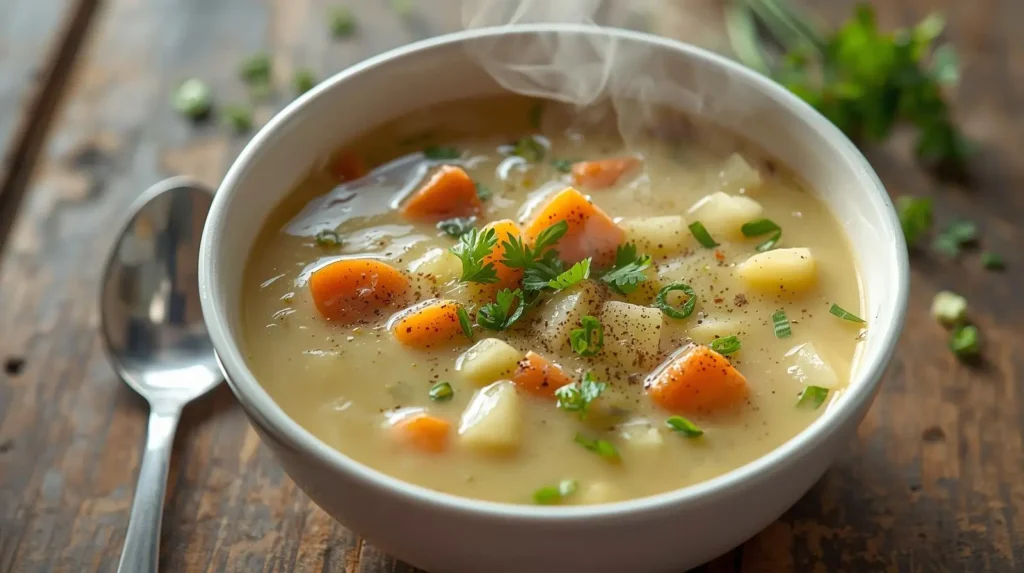
Ladle into bowls while hot. The soup should steam gently and look inviting with visible potato chunks and flecks of herbs.
Healthy topping options:
- Chopped fresh parsley, chives, or dill
- Cracked black pepper
- Small sprinkle of sharp cheddar cheese (2 tablespoons adds flavor without excess)
- Dollop of Greek yogurt for tang and protein
- Drizzle of quality olive oil
- Toasted whole-grain croutons for crunch
- Microgreens for nutrition and elegance
Keep toppings light to maintain the soup’s healthy profile while adding interest and additional nutrients.
Pro Tips for Perfect Potato Soup Recipe
Master these techniques for consistently excellent results.
Avoiding Heavy Texture
Use low-fat milk or broth and mash only part of the potatoes for creamy but light texture—this is the key to healthy potato soup recipe success. Over-mashing creates gluey, paste-like consistency as excessive starch release makes the soup heavy and unpleasant.
Mash gently with downward pressing motions, working around the pot systematically. Stop when you see a mixture of creamy base and visible chunks—about 40-50% blended is ideal.
Keep it light: Don’t be tempted to add excessive dairy “just in case.” Trust that properly cooked and mashed potatoes create natural creaminess. You can always add more liquid, but you can’t remove it once added.
Preserve nutrients: Gentle cooking preserves vitamins that high heat destroys. Avoid vigorous boiling—maintain steady simmer. Don’t overcook vegetables before adding potatoes.
Build flavor without fat: Use quality broth as your base—it provides richness without calories. Add depth through aromatics (onions, garlic, celery) rather than butter or cream. Fresh herbs contribute big flavor with zero calories.
Tool Recommendations
Simple equipment makes this healthy potato soup recipe easy to execute:
- Large pot (5-6 quart capacity): Allows plenty of room for stirring without overflow. Heavy-bottomed pots distribute heat evenly, preventing scorching.
- Potato masher: Classic hand masher gives perfect control over texture. Choose one with comfortable grip and sturdy construction.
- Immersion blender (optional): For smooth, creamy texture if desired. Much easier than transferring hot liquid to a countertop blender.
- Sharp knife and cutting board: Makes prep quick and safe. Keep knife sharp for clean cuts and safety.
- Ladle (6-8 ounce): For neat, spill-free serving.
Storage & Reheating
Store in airtight containers for up to 3-4 days in the refrigerator. Let potato soup recipe cool to room temperature before sealing. Glass containers work well and don’t absorb odors.
The soup will thicken as it sits—this is normal as starches continue absorbing liquid. When reheating, add splash of broth or milk to restore original consistency.
Reheating from refrigerator:
- Stovetop (best method): Transfer to pot over medium-low heat. Add 1/4-1/2 cup broth or milk to thin. Stir frequently until heated through, about 6-8 minutes. Don’t boil.
- Microwave: Transfer portion to microwave-safe bowl, add splash of liquid, cover loosely, heat in 1-2 minute intervals, stirring between.
Freezer storage: This potato soup recipe freezes well for up to 2 months. The texture may change slightly—dairy-based soups can separate or become grainy. For best results, freeze before adding final dairy, then add fresh milk when reheating.
Cool completely, portion into freezer-safe containers, leave 1-inch headspace, seal, label, and freeze. Thaw overnight in refrigerator before reheating.
Flavor Variations
Transform this versatile potato soup recipe while maintaining its healthy profile.
Loaded Healthy Potato Soup
Create an indulgent-tasting version by adding small amounts of cheese, turkey bacon bits, or Greek yogurt for flavor without going overboard.
Smart additions:
- 2-3 tablespoons sharp cheddar cheese per bowl (strong flavor means less needed)
- Turkey bacon (4 slices, cooked crispy and crumbled)—90% less fat than regular bacon
- 2-3 tablespoons Greek yogurt per serving for tang and protein
- Chopped chives or green onions for fresh flavor
- Light sprinkle of reduced-fat cheddar
This variation satisfies loaded baked potato cravings while keeping calories and fat reasonable. The key is using small amounts of flavorful additions rather than drowning the soup in cheese and bacon.
Vegetarian Version
Ensure plant-based nutrition by using vegetable broth and omitting any meat toppings. This potato soup recipe is naturally vegetarian-friendly—just make sure your broth is vegetable-based.
Vegetarian enhancements:
- Roasted garlic cloves (whole bulb roasted, cloves squeezed out)
- Sautéed mushrooms for umami and meaty texture
- Nutritional yeast for cheesy flavor (2-3 tablespoons)
- Fresh or dried herbs (thyme, rosemary, sage)
- Roasted red peppers for sweetness and color
Top with:
- Pumpkin seeds or sunflower seeds for crunch and healthy fats
- Crispy chickpeas for protein and texture
- Fresh herbs
- Avocado slices for healthy fats
Spicy Version
Add exciting warmth by incorporating smoked paprika, cayenne, or red chili flakes for a kick.
Spicy additions:
- 1-2 teaspoons smoked paprika for depth and mild heat
- 1/4-1/2 teaspoon cayenne pepper (adjust to taste)
- 1/2 teaspoon red pepper flakes
- 1-2 jalapeños, seeded and minced
- Dash of hot sauce to taste
Spicy toppings:
- Sliced fresh jalapeños
- Dash of hot sauce
- Sprinkle of cayenne
The heat should complement, not overwhelm, the clean potato flavors. Start conservative and adjust to preference.
Flavor Variation Comparison
| Variation | Key Ingredients | Flavor Profile | Calories per Serving |
|---|---|---|---|
| Classic Healthy | Low-fat milk, herbs, olive oil | Light, creamy, fresh | ~150-180 |
| Loaded | Small amount cheese, Greek yogurt, turkey bacon | Richer, indulgent-feeling | ~220-250 |
| Spicy | Paprika, cayenne, jalapeños | Warm, slightly hot | ~155-185 |
| Vegan | All broth, no dairy, nutritional yeast | Clean, plant-based | ~130-160 |
Serving Suggestions
Complete your healthy meal with complementary accompaniments.
Perfect Healthy Pairings
Whole-grain bread provides fiber and complex carbohydrates that complement this potato soup recipe without adding excessive calories. Choose hearty whole wheat, multigrain, or seeded bread. Toast lightly and enjoy without heavy butter—the bread’s nutty flavor stands beautifully on its own.
Green salad with light vinaigrette adds freshness, crunch, and additional nutrients. Mixed greens, cucumber, tomatoes, and carrots with lemon vinaigrette or balsamic dressing create perfect balance. The raw vegetables contrast with warm, creamy soup while adding vitamins and fiber.
Roasted vegetables round out the meal with additional nutrition and color. Roasted broccoli, Brussels sprouts, carrots, or green beans seasoned with olive oil, salt, and pepper provide satisfying substance. The roasted vegetables’ caramelized edges and slight char add textural interest.
Other healthy sides:
- Cucumber and tomato salad with herbs
- Steamed broccoli with lemon
- Quinoa pilaf for extra protein
- Raw vegetable crudités with hummus
- Apple slices for sweet contrast
- Whole-grain crackers
Beverage Pairings
Iced tea (unsweetened or lightly sweetened) provides refreshing contrast without calories. Green tea offers antioxidants, black tea provides robust flavor, herbal teas (especially mint or chamomile) soothe and refresh.
Light white wine (Pinot Grigio or Sauvignon Blanc) offers elegant pairing for dinner parties. The wine’s acidity cuts through the soup’s creaminess while complementing delicate flavors.
Sparkling water with lemon or cucumber provides zero-calorie refreshment that cleanses your palate. The carbonation creates satisfying contrast to smooth soup.
Other healthy drinks:
- Kombucha for probiotic benefits
- Fresh vegetable juice (carrot, celery, cucumber)
- Herbal tea (hot or iced)
- Unsweetened almond milk for kids
- Lemon water for hydration
FAQs
Can I use sweet potatoes or red potatoes instead of Russet?
Absolutely! Sweet potatoes create beautiful, nutritious variation with gorgeous orange color, subtle sweetness, and significantly more vitamin A and fiber than regular potatoes. Use the same quantity and cooking method. The soup will be slightly sweeter and have thicker consistency. Sweet potatoes pair beautifully with warming spices like cinnamon, nutmeg, or curry powder for interesting flavor profiles. Red potatoes work well too, though they’re waxier and hold their shape better, creating chunkier soup with less natural creaminess. They’re excellent if you prefer distinct potato pieces. You may need to mash more aggressively or add pureed potatoes back to achieve creamy texture with red potatoes.
How do I thicken this soup without cream?
Several healthy methods thicken this potato soup recipe naturally. First, mash more of the cooked potatoes—the released starches provide natural, calorie-free thickening. Second, remove 1-2 cups of soup, blend until completely smooth, and return to pot—this creates creamy texture without any additions. Third, make a cornstarch slurry (1-2 tablespoons cornstarch mixed with equal parts cold water), stir into simmering soup, cook 2-3 minutes. Fourth, add 2-3 tablespoons instant mashed potato flakes that dissolve and thicken instantly. Fifth, blend 1/4 cup raw cashews with 1/2 cup water until smooth, stir in for healthy fat-based creaminess. Sixth, puree 1/2 cup white beans (cannellini or Great Northern) with broth and add—provides protein-rich thickening.
Can I make this potato soup ahead of time?
Yes! This potato soup recipe is perfect for meal prep and actually benefits from resting time as flavors develop. Make completely up to 4 days ahead, cool to room temperature, refrigerate in airtight containers. The soup thickens considerably—add broth or milk when reheating to restore consistency. Reheat gently over medium-low heat, stirring frequently. For meal prep, portion into individual containers with lids for grab-and-go lunches. Add fresh herbs and any toppings when serving rather than storing them in soup. This make-ahead quality makes it ideal for busy weeks—cook once, eat multiple times.
How do I reheat without losing flavor or texture?
Reheat gently to preserve the light, fresh qualities of this potato soup recipe. For stovetop (best method), transfer to pot over medium-low heat, add 1/4-1/2 cup broth or milk to thin (soup thickens when cold), stir frequently for 6-8 minutes until hot throughout. Never boil—high heat can make potatoes gluey and separate dairy. For microwave, transfer portion to bowl, add splash of liquid, cover loosely, heat in 1-minute intervals, stirring between, until hot. Let soup sit at room temperature 15-20 minutes before reheating if possible. Taste and adjust seasoning after reheating—add fresh herbs, pepper, or salt as needed. The soup may need a brightness boost—squeeze of lemon juice or fresh herbs revives flavors.
Can I make this recipe vegan?
Absolutely! This potato soup recipe easily adapts to vegan diets. Use vegetable broth and omit all dairy. Replace milk with unsweetened almond milk, oat milk, or cashew milk—these plant-based milks blend seamlessly without changing flavor significantly. For extra creaminess without dairy, blend 1/2 cup raw cashews with 1 cup water until silky smooth, then stir into soup. Coconut milk (light, canned) adds richness but subtle coconut flavor. Nutritional yeast (2-3 tablespoons) provides cheesy, savory flavor naturally. The soup relies on potato starch for creaminess, so it works beautifully without any dairy. Top with avocado, pumpkin seeds, fresh herbs, and drizzle of quality olive oil. Completely satisfying and plant-based.
How long can I store potato soup in the fridge or freezer?
Refrigerator: 3-4 days in airtight containers. This healthy potato soup recipe stays fresh slightly longer than cream-based versions since it contains less dairy. Let cool completely before sealing. Soup thickens significantly—thin with broth or milk when reheating. Freezer: 2-3 months in freezer-safe containers. Leave 1-inch headspace for expansion, seal tightly, label with date and contents. The texture may change slightly after freezing—dairy can separate or become grainy. For best results, freeze before adding final milk, then add fresh when reheating. Or freeze completely and accept minor texture changes—the flavor remains excellent. Thaw overnight in refrigerator before reheating. Never refreeze previously thawed soup.
Why is my healthy potato soup watery?
Watery soup usually results from insufficient potato mashing or too much liquid. The creamy texture in this potato soup recipe comes from released potato starches, not added cream. If your soup is watery, mash more of the potatoes to release additional starch. Alternatively, remove 1-2 cups of soup, blend until smooth, return to pot for instant thickening. You can also simmer uncovered for 10-15 minutes to reduce through evaporation. If you added too much milk, compensate by adding more potatoes—dice 1-2 additional potatoes, cook in a separate pot until tender, add to soup. For immediate fix, make cornstarch slurry (1 tablespoon cornstarch + 1 tablespoon cold water), stir into simmering soup, cook 2-3 minutes.
Conclusion
This healthy potato soup recipe proves you don’t have to sacrifice flavor, comfort, or satisfaction to eat nutritiously. With just 45 minutes and smart ingredient choices, you can serve bowls of creamy, delicious soup that nourishes your body while warming your soul—no guilt required.
The beauty lies in celebrating potatoes’ natural creaminess rather than masking them with heavy cream. By building flavor through aromatics, herbs, and proper technique, you create soup that’s genuinely satisfying without excessive calories, fat, or sodium.
Try this healthy potato soup recipe tonight for a light, comforting, and flavorful meal! Your body will thank you for the nutrition, and your taste buds will celebrate the delicious, clean flavors. It’s proof that healthy food can absolutely be comfort food.
Join thousands of home cooks who’ve enjoyed this nutritious twist on a classic soup! Share your creations in the comments below, tell us about your favorite healthy variations or toppings, or ask questions—we love connecting with our health-conscious cooking community.
Ready for more healthy comfort food? Try our [Healthy Broccoli Cheddar Soup] for another light but satisfying favorite. Or explore [Healthy Soup Recipes Collection] for more nutritious options. For complete healthy meal planning, check out [Light but Filling Dinners] that keep you satisfied without weighing you down.
Save this potato soup recipe, share it with friends looking for healthier comfort food, and bookmark it for your meal prep rotation. Here’s to nourishing yourself deliciously!
How did you find results our recipes
There are no reviews yet. Be the first one to write one.

