
Introduction
Looking for the perfect balance of sweetness and comfort? Candied yams are the ultimate side dish that everyone loves.
This easy candied yams recipe delivers buttery, caramelized flavor with minimal effort — ideal for holidays or any weeknight craving. The combination of tender yams coated in a glossy brown sugar glaze creates something magical that disappears from the table in minutes.
Tested by home cooks and inspired by chef-approved techniques, this recipe ensures tender, golden yams with perfect glaze every time. Whether you’re preparing Thanksgiving dinner, a Sunday family meal, or simply craving comfort food, this foolproof method delivers consistent, delicious results.
This comprehensive guide covers everything you need to master candied yams. You’ll discover the best ingredients and their precise measurements, learn multiple cooking methods from traditional oven-baking to convenient slow cooker preparation, explore creative flavor variations that keep this classic interesting, and get expert tips from renowned chefs who know how to elevate simple dishes.
Candied yams hold a special place in American cuisine, particularly in Southern and soul food traditions. They’re synonymous with holiday gatherings, but there’s no reason to reserve them for special occasions. This recipe is simple enough for weeknight dinners yet impressive enough for your most important celebrations.
The beauty of candied yams lies in their versatility. Serve them alongside savory roasted meats where their sweetness provides perfect contrast, or present them as a dessert-like side that satisfies sweet cravings without being overwhelming. Kids and adults alike appreciate their familiar, comforting flavors.
Let’s dive into what makes this candied yams recipe so reliably delicious and how you can create restaurant-quality results in your own kitchen.
Table of Contents
Why You’ll Love This Candied Yams Recipe
This candied yams recipe succeeds because it’s quick, simple, and made with pantry staples you likely already have on hand.
Unlike complicated recipes requiring specialty ingredients or advanced techniques, this straightforward approach delivers impressive results without stress. Most ingredients are kitchen basics—brown sugar, butter, cinnamon—that you probably keep stocked regularly.
Rich, buttery, and perfectly sweetened. The glaze combines brown sugar’s molasses-rich sweetness with butter’s luxurious richness, creating a coating that’s indulgent without being cloying. The balance of sweet and savory makes these yams irresistible.
Oven-baked for a caramelized finish. The dry heat of oven-baking allows the sugars to caramelize properly, creating complex flavors and that signature glossy appearance. The yams develop tender interiors while their exteriors become slightly sticky and golden.
Great for Thanksgiving, Sunday dinners, or anytime comfort food. While candied yams are traditional Thanksgiving fare, they’re too delicious to save for once a year. This recipe works beautifully for casual family dinners, potlucks, or whenever you need soul-satisfying side dishes.
Chef Advice from Ina Garten: “The secret to perfect candied yams is balance — not too much sugar, and always a touch of salt to bring out the sweetness.”
The preparation is remarkably forgiving. Unlike temperamental dishes that require precise timing or technique, candied yams tolerate slight variations in cooking time or ingredient amounts. This makes them ideal for less experienced cooks or busy hosts juggling multiple dishes.
The recipe also scales beautifully. Double it for large gatherings or halve it for smaller families. The proportions remain balanced regardless of batch size.
Visual appeal is another advantage. The deep amber glaze and caramelized edges create an attractive dish that looks as good as it tastes. Whether served family-style in a rustic baking dish or plated individually at formal dinners, candied yams always look inviting.
Perhaps most importantly, candied yams make people happy. There’s something about their sweet, buttery comfort that creates positive memories and associations. They’re the kind of dish that guests remember and request for future gatherings.
The natural sweetness of yams means you’re building on an already flavorful foundation rather than trying to transform something bland. This gives you a head start toward delicious results.
Ingredients & Measurements
Quality ingredients in proper proportions create the foundation for exceptional candied yams:
| Ingredient | Quantity | Purpose |
|---|---|---|
| Fresh yams (or sweet potatoes) | 2 lbs | Main ingredient |
| Brown sugar | ¾ cup | Sweetness and caramel flavor |
| Butter | ½ cup (1 stick) | Rich, silky texture |
| Maple syrup or honey | 2 tbsp | Deep, natural sweetness |
| Cinnamon | 1 tsp | Warm spice note |
| Nutmeg | ¼ tsp | Adds depth |
| Salt | ¼ tsp | Enhances flavor |
| Vanilla extract (optional) | 1 tsp | Aromatic touch |
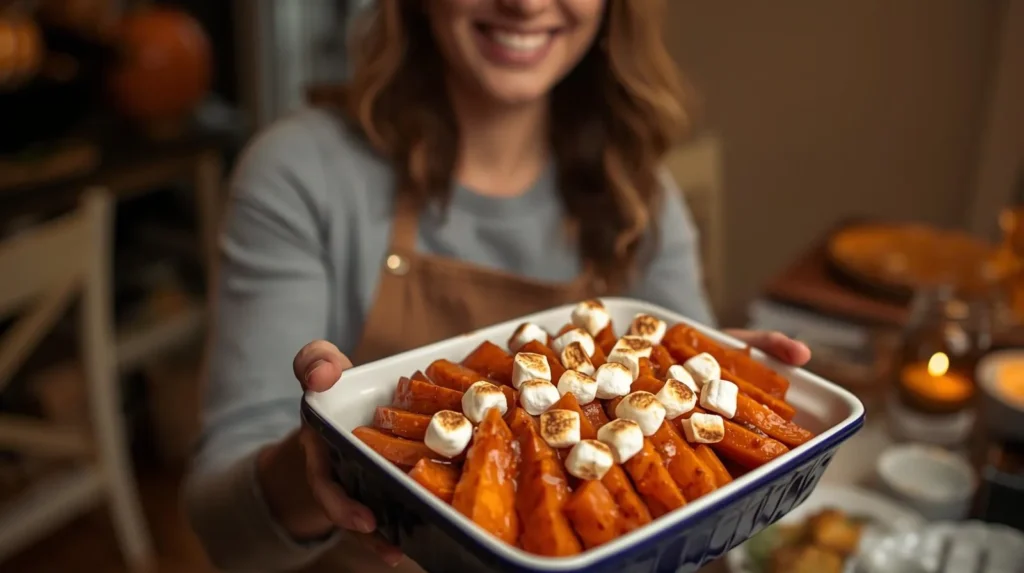
| Mini marshmallows (optional topping) | 1 cup | Classic golden finish |
Chef Tip from Jamie Oliver: “Use real butter, not margarine — it’s what gives the glaze that velvety, rich consistency that coats every yam perfectly.”
Selecting Your Yams
Despite the name, most “candied yams” in American cooking actually use sweet potatoes rather than true yams. True yams are starchy tubers with rough, bark-like skin rarely found in typical U.S. grocery stores. What we call “yams” here are usually orange-fleshed sweet potatoes.
For this recipe, choose medium to large sweet potatoes with deep orange flesh. Look for firm specimens without soft spots, bruises, or sprouting eyes. The skin should be smooth and unblemished.
Garnet and Jewel varieties work beautifully with their vibrant orange color and naturally sweet flavor. Hannah sweet potatoes (which have tan skin and pale flesh) are less sweet and not ideal for candied yams preparations.
Two pounds of yams equals approximately 3-4 medium sweet potatoes. This yields about 6-8 servings depending on portion sizes. For larger gatherings, simply multiply all ingredients proportionally.
Some people prefer using canned yams for convenience. While acceptable in a pinch, fresh yams have superior texture and flavor. Canned versions are already cooked and quite soft, so they become mushy easily. If using canned, reduce cooking time significantly and skip the covered baking step.
Understanding the Sweeteners
Brown sugar is the primary sweetener and provides that characteristic molasses-rich flavor essential to candied yams. Dark brown sugar has more molasses than light brown sugar, creating deeper, more complex flavor. Either works, but dark brown sugar is traditional.
The ¾ cup measurement creates properly sweet yams without being overwhelming. Some recipes use over a cup of sugar, which many find too cloying. This amount strikes the right balance.
Maple syrup or honey adds natural sweetness with its own distinctive character. Real maple syrup (not pancake syrup) contributes earthy, slightly woody notes. Honey provides floral sweetness. Both add depth that plain sugar alone can’t achieve.
Some cooks use all maple syrup and reduce or eliminate brown sugar for more natural sweetness. Others prefer all brown sugar and omit maple syrup entirely. Experiment to find your preference.
The Role of Butter
Butter is crucial—it creates the silky, luxurious glaze that coats yams beautifully. As Jamie Oliver notes, real butter (not margarine) makes a noticeable difference in texture and flavor.
Salted or unsalted butter both work. If using salted butter, you might reduce or omit the added salt in the recipe. Most bakers prefer unsalted butter for better control over seasoning.
The butter melts and combines with sugar to create a caramel-like sauce. As it bakes, the sauce reduces and thickens, coating yams in glossy goodness.
For dairy-free versions, coconut oil works as a substitute, though it imparts subtle coconut flavor. Vegan butter alternatives also work reasonably well.
Spices and Seasonings
Cinnamon is the dominant spice in candied yams, providing that warm, sweet-spicy character we associate with comfort food. One teaspoon is enough to be noticeable without overwhelming.
Nutmeg adds complexity and depth. Its slightly sweet, warm, nutty character complements cinnamon perfectly. A little goes a long way—¼ teaspoon is plenty. Freshly grated nutmeg tastes noticeably better than pre-ground if you have whole nutmeg available.
Salt is the secret ingredient that makes everything else taste better. That ¼ teaspoon enhances sweetness rather than making the dish taste salty. Don’t skip it—salt brings all the flavors into focus.
Vanilla extract is optional but recommended. It adds aromatic depth and rounds out the flavor profile. Use real vanilla extract rather than imitation for best results.
Some recipes include additional spices like ginger, allspice, or cloves. These work well if you enjoy more heavily spiced dishes, but the classic combination of cinnamon and nutmeg is traditional and crowd-pleasing.
Optional Toppings
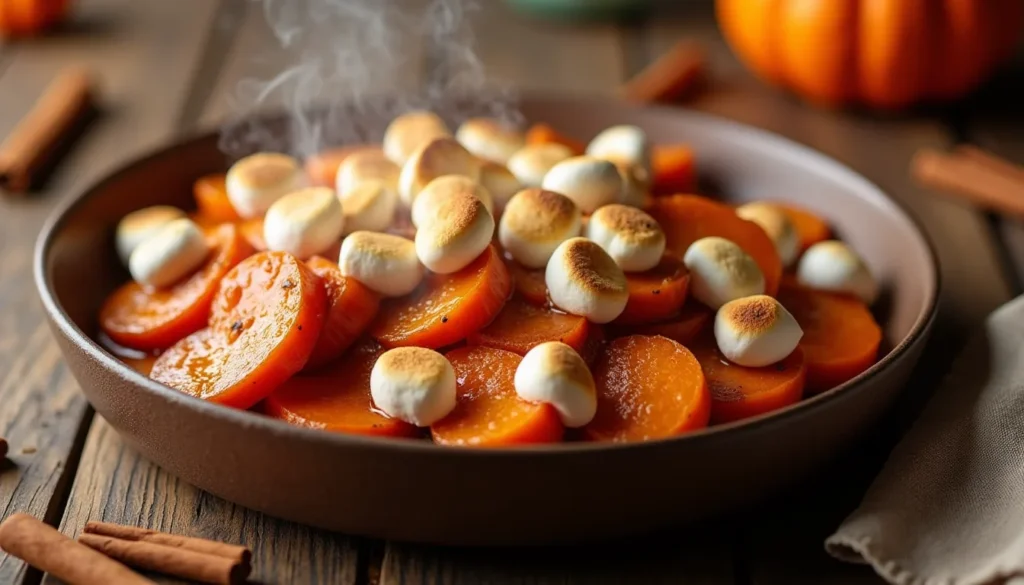
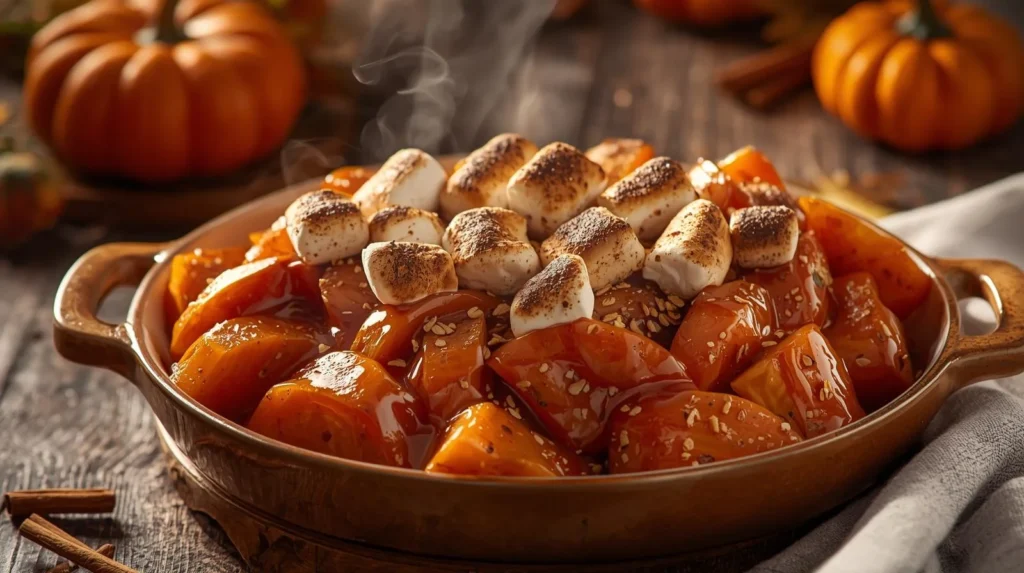
Mini marshmallows are controversial but beloved by many. They create that classic sweet, toasted topping many people remember from childhood. If using marshmallows, add them during the final minutes of baking and broil briefly until golden.
Pecans provide crunchy contrast to soft yams. Chopped pecans can be mixed into the glaze or sprinkled on top. For extra indulgence, make a pecan crumble topping with butter, brown sugar, and nuts.
Coconut flakes add tropical character and textural interest, especially when toasted.
Step-by-Step Instructions
Follow these detailed steps for perfect candied yams every time:
1. Preheat & Prep
Preheat your oven to 375°F (190°C). This moderate temperature allows yams to cook through while the glaze caramelizes without burning.
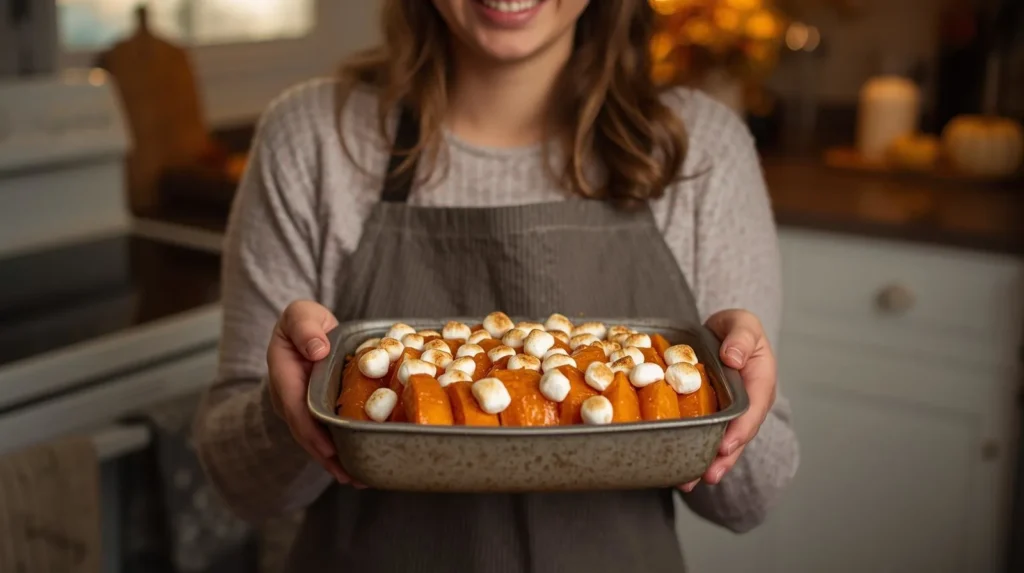
Prepare your baking dish. A 9×13 inch baking dish works perfectly for 2 pounds of yams. Lightly grease with butter or cooking spray to prevent sticking, though the buttery glaze typically prevents this.
Preparing the yams: Scrub yams under running water to remove any dirt. Peel them using a vegetable peeler or paring knife. Sweet potato skins are edible but not ideal for candied yams preparations where you want the glaze to coat flesh directly.
Slice peeled yams into ½-inch thick rounds for even, attractive presentation. Alternatively, cut them into 1-inch chunks for more rustic appearance. Uniform sizing ensures even cooking—all pieces finish at the same time.
Some cooks prefer slicing yams lengthwise into quarters or wedges. This works fine and creates different visual appeal. The key is consistency—all pieces should be roughly the same size.
2. Make the Glaze
In a small saucepan, melt butter over medium heat. Watch carefully and don’t let it brown (unless you want brown butter, which adds nutty depth—an advanced variation).
Once butter is melted, add brown sugar, maple syrup or honey, cinnamon, nutmeg, salt, and vanilla if using. Stir constantly with a whisk or wooden spoon.
Cook for 2-3 minutes, stirring frequently, until the mixture is smooth, glossy, and slightly thickened. The sugar should dissolve completely with no graininess remaining.
The glaze should be pourable but have some body—not as thin as water but not as thick as frosting. If it seems too thick, add a tablespoon of water or more maple syrup.
Remove from heat. The glaze will continue to thicken slightly as it cools, but it will thin again when poured over yams and baked.
3. Combine & Bake
Arrange yam slices or chunks in your prepared baking dish. They can overlap slightly but try to create a relatively even layer. Overcrowding is fine—the yams will shrink slightly as they cook.
Pour the warm glaze evenly over the yams. Use a spoon or spatula to ensure glaze reaches all pieces, especially those on the edges. Toss gently to coat all surfaces.
Cover the baking dish tightly with aluminum foil. This traps steam and helps yams cook through without drying out.
Place in preheated oven and bake for 30 minutes. The covered baking creates a steaming environment that tenderizes yams while beginning the caramelization process.
4. Caramelize
After 30 minutes, carefully remove foil (watch out for hot steam). The yams should be partially tender when pierced with a fork.
Spoon some of the glaze from the bottom of the dish over the top of the yams. This basting ensures even coating and helps develop that glossy appearance.
Return to oven uncovered and bake for another 20-25 minutes. The uncovered baking allows moisture to evaporate and the glaze to reduce and caramelize.
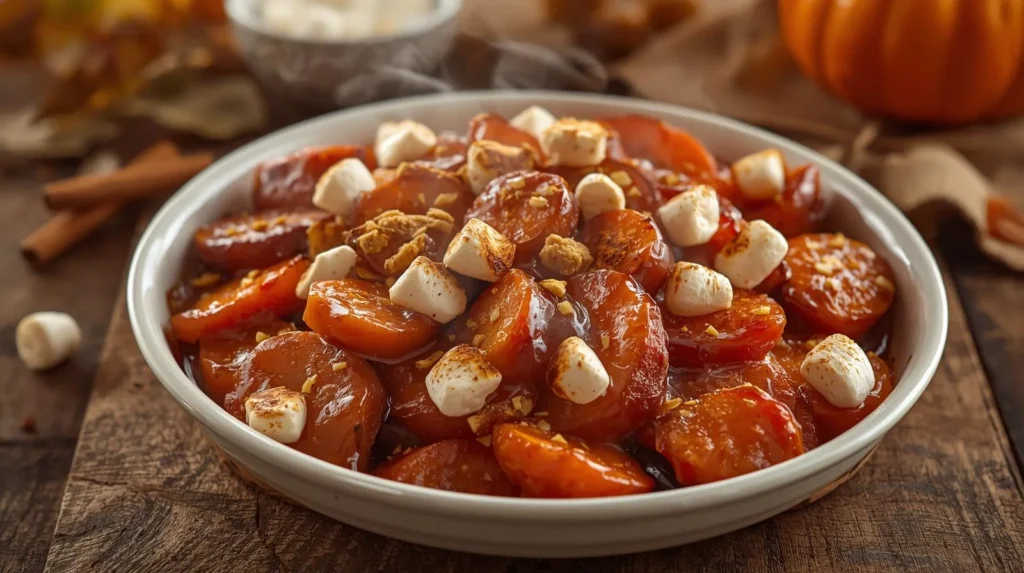
The yams are done when they’re fork-tender and the glaze has thickened into a sticky, glossy coating. The edges should be slightly caramelized and golden brown.
Chef Advice from Gordon Ramsay: “Don’t rush the baking — slow caramelization brings out the natural sweetness of yams and gives that luxurious, sticky finish.”
5. Optional Finish
If adding marshmallows, distribute them evenly over the top of the yams during the final 5 minutes of baking. Return to oven.
For golden, toasted marshmallows, turn on your broiler after adding them. Broil for 2-3 minutes, watching constantly—marshmallows go from perfect to burnt in seconds.
Alternatively, toast marshmallows with a kitchen torch for more control and impressive presentation.
If adding a pecan crumble topping, sprinkle it over yams during the final 10 minutes of baking so it has time to brown and crisp.
Finishing Touches
Let candied yams rest for 5-10 minutes after removing from oven. This allows the glaze to set slightly and makes serving easier.
The glaze will seem thin when hot but thickens as it cools. If it’s still too runny after resting, the yams needed a few more minutes of uncovered baking.
For extra shine and richness, dot the top with small pieces of butter while yams are still hot. The butter melts and creates an even glossier appearance.
Garnish with fresh herbs like thyme for visual contrast, though this is non-traditional. More commonly, add a final sprinkle of cinnamon or chopped pecans.
Cooking Times & Methods For Candied yams
Different cooking methods offer various advantages depending on your situation:
| Method | Temperature | Time | Notes |
|---|---|---|---|
| Oven-Baked (recommended) | 375°F | 50–55 mins | Perfect caramelization |
| Stovetop Simmer | Medium heat | 25–30 mins | Quicker method |
| Slow Cooker | Low | 4–5 hours | Hands-off, easy for holidays |
Oven-Baked Method (Recommended)
Best for: Maximum caramelization, best texture, impressive presentation
Advantages: The dry heat of oven baking creates proper caramelization and reduces glaze to ideal consistency. Yams develop tender interiors with slightly firmer exteriors. This method provides the most control and consistent results.
Disadvantages: Requires oven space (problematic during holiday cooking when ovens are crowded) and active timing.
Temperature: 375°F is ideal. Lower temperatures (325-350°F) work but require longer cooking. Higher temperatures (400°F+) risk burning the glaze before yams cook through.
Total Time: 50-55 minutes including both covered and uncovered baking phases.
Stovetop Simmer Method
Best for: Quick preparation, saving oven space, smaller batches
Technique: Combine sliced yams, glaze ingredients, and ¼ cup water in a large, deep skillet with lid. Bring to boil, reduce to simmer, cover, and cook for 15 minutes. Uncover, increase heat slightly, and continue cooking for 10-15 minutes, stirring occasionally, until yams are tender and glaze has thickened.
Advantages: Faster than oven method and frees up oven for other dishes. Easy to monitor and adjust.
Disadvantages: Less caramelization and harder to achieve that sticky, glossy coating. Requires more attention and stirring.
Total Time: 25-30 minutes
Slow Cooker Method
Best for: Hands-off cooking, holiday prep, keeping yams warm for extended periods
Technique: Place sliced yams in slow cooker. Pour glaze over top. Cook on low for 4-5 hours or high for 2-3 hours until tender. Uncover for the final 30 minutes to thicken glaze if desired.
Advantages: Completely hands-off after setup. Keeps yams warm for serving. Frees up stove and oven space.
Disadvantages: Minimal caramelization and less concentrated glaze. Yams can become quite soft, almost mashed in texture. Requires planning ahead due to long cooking time.
Total Time: 4-5 hours on low, 2-3 hours on high
Instant Pot/Pressure Cooker Method
Best for: Fastest cooking, when you forgot to start dinner
Technique: Place yams, glaze, and ¼ cup water in Instant Pot. Pressure cook on high for 8 minutes with natural release for 5 minutes. For thicker glaze, use sauté function after pressure cooking to reduce liquid.
Advantages: Fastest method for fully cooked yams. Tender results.
Disadvantages: No caramelization. Glaze stays somewhat thin unless you take extra steps to reduce it.
Total Time: About 25 minutes including pressure build-up and release
Air Fryer Method
Best for: Small batches, achieving caramelized edges
Technique: Toss yam chunks with melted glaze. Place in air fryer basket. Cook at 375°F for 15-20 minutes, shaking basket every 5 minutes, until tender and caramelized.
Advantages: Quick cooking with excellent caramelization on edges. Crispy exterior, tender interior.
Disadvantages: Small capacity limits batch size. Yams can dry out if overcooked.
Total Time: 15-20 minutes
Flavor Variations
Transform basic candied yams into creative variations that keep this classic dish interesting:
| Variation | Ingredients | Description |
|---|---|---|
| Classic Southern Style | Brown sugar, butter, cinnamon | Sweet and traditional |
| Orange Maple Glazed | Orange zest, maple syrup | Fresh citrus twist |
| Pecan Crumble Topping | Crushed pecans, brown sugar, butter | Crunchy finish |
| Spiced Rum Yams | Add 1 tbsp dark rum | Rich, adult-friendly flavor |
| Coconut Marshmallow | Coconut flakes, marshmallows | Tropical sweetness |
Chef Tip from Ina Garten: “A touch of citrus — orange or lemon zest — cuts through the sweetness and makes the dish brighter.”
Classic Southern Style
This is the traditional preparation that’s been passed down for generations. It sticks to the basics—brown sugar, butter, cinnamon, and nutmeg—without embellishments.
The beauty of this version lies in its simplicity. The natural sweetness of yams shines through without competing flavors. It’s what most people picture when they think of candied yams.
This version pairs beautifully with traditional holiday meals—turkey, ham, cornbread dressing, and green beans. Its familiar flavors complement without overshadowing.
For extra Southern authenticity, some cooks add a splash of bourbon or whiskey to the glaze for subtle warmth and complexity.
Orange Maple Glazed
Citrus brightness transforms candied yams from one-dimensional sweet to complex and interesting.
Add the zest of one orange to your glaze along with 2 tablespoons of fresh orange juice. Replace some or all of the brown sugar with maple syrup for deeper, more natural sweetness.
The orange cuts through richness and prevents the dish from tasting cloying. The combination of orange and maple creates sophisticated flavor that appeals to adults who might find traditional versions too sweet.
This variation works beautifully with holiday ham or pork roast where citrus naturally complements the meat.
For extra citrus character, add a squeeze of fresh orange juice over the finished yams just before serving.
Pecan Crumble Topping
Crunchy pecans provide textural contrast to soft, creamy yams.
Crumble topping: Mix ½ cup chopped pecans, ¼ cup brown sugar, 2 tablespoons melted butter, and ¼ cup flour. Sprinkle over yams during the final 15 minutes of baking.
The crumble becomes golden and crispy, adding buttery crunch that makes each bite interesting. Pecans’ natural richness complements sweet yams without additional sugar.
For extra decadence, add a tablespoon of bourbon to the crumble mixture or use candied yams pecans.
This variation feels more like a dessert, making it perfect for special occasions when you want to impress.
Spiced Rum Yams
A tablespoon of dark rum adds sophisticated depth without making the dish boozy (alcohol cooks off). Rum’s molasses notes amplify brown sugar’s character.
Add the rum to your glaze along with other ingredients. For more pronounced rum flavor, use up to 2 tablespoons.
This adult-friendly variation pairs especially well with holiday ham or roasted pork. The warm spices and rum create flavors reminiscent of Caribbean cooking.
For non-alcoholic version with similar depth, use rum extract (½ teaspoon) instead.
Coconut Marshmallow
Tropical coconut adds unexpected character that delights adventurous eaters.
Add ½ cup of sweetened shredded coconut to the glaze. Top finished yams with marshmallows and additional coconut flakes, then broil until both are golden and toasted.
The coconut’s natural sweetness and chewy texture create an almost dessert-like dish. This variation is popular with kids and anyone who enjoys tropical flavors.
For even more coconut character, replace regular butter with coconut oil in the glaze.
Additional Creative Variations
Apple Pie Spiced Yams: Add ½ teaspoon of allspice and ¼ teaspoon of cloves for warm, apple pie-like flavor. Top with streusel crumble.
Ginger Molasses Yams: Add 1 tablespoon of molasses and 1 teaspoon of fresh grated ginger for bold, spicy-sweet character.
Brown Butter Sage Yams: Brown the butter before making the glaze and add fresh sage leaves for savory-sweet complexity that’s more sophisticated than traditional versions.
Bourbon Vanilla Yams: Add 2 tablespoons of bourbon and increase vanilla to 2 teaspoons for rich, aromatic flavor.
Chai-Spiced Yams: Add chai spice blend (cardamom, ginger, cloves, cinnamon) for warming, complex spicing.
Serving Suggestions
Candied yams are incredibly versatile and pair beautifully with various main courses:
Perfect with roast turkey, baked ham, or grilled chicken. The sweetness of candied yams provides ideal contrast to savory roasted meats. They’re traditional Thanksgiving sides but work equally well with Sunday pot roast or simple grilled chicken breasts.
Pair with savory dishes to balance sweetness. Candied yams are sweet enough to border on dessert, so they work best alongside salty, savory, or acidic dishes. Green beans, collard greens, cornbread, mac and cheese, and roasted Brussels sprouts all complement candied yams’ sweetness.
Serve as a side or even a light dessert at gatherings. In some families, candied yams (especially with marshmallow topping) serve double duty as both side dish and dessert. They’re sweet enough to satisfy dessert cravings without being overwhelming.
Presentation Tip: Garnish with a drizzle of maple syrup and a sprinkle of chopped pecans before serving for restaurant-quality appearance.
Here’s the approximate nutritional information per serving (based on 8 servings):
| Calories | Protein | Carbs | Fat | Fiber | Sugar |
|---|---|---|---|---|---|
| 260 | 2g | 45g | 10g | 4g | 28g |
Note: Nutritional values vary based on specific ingredients and portion sizes.
Perfect Pairings
Thanksgiving Menu: Candied yams pair with turkey, stuffing, cranberry sauce, green bean casserole, mashed potatoes, and rolls for the quintessential holiday spread.
Sunday Dinner: Serve alongside baked ham, collard greens, cornbread, and black-eyed peas for comforting Southern soul food.
Weeknight Meals: Pair with simple roasted chicken, steamed broccoli, and a fresh salad for balanced weeknight dinner.
Barbecue: Candied yams complement smoked brisket, pulled pork, coleslaw, and baked beans at summer cookouts.
Presentation Ideas
Transfer candied yams to an attractive serving dish rather than serving from the baking dish for more elegant presentation. White or cream-colored dishes make the deep amber color pop.
Garnish just before serving with fresh thyme sprigs, toasted pecans, or a light dusting of cinnamon for visual appeal.
For individual servings, use ramekins or small gratin dishes. This creates upscale presentation perfect for dinner parties.
Serve candied yams in a hollowed-out roasted pumpkin or squash for dramatic, festive presentation during fall holidays.
Serving Temperature
Candied yams taste best served warm rather than piping hot or cold. The warm temperature allows the glaze to stay fluid and glossy while the yams retain their tender texture.
If yams cool too much, they’re still delicious but the glaze firms up considerably. A quick reheat in a moderate oven returns them to ideal serving temperature.
Some people enjoy leftover candied yams cold, straight from the refrigerator. The firm, chilled texture and concentrated sweetness make them almost like candy.
Storage & Reheating
Proper storage ensures your candied yams stay delicious for days:
Refrigerate: Store leftovers in an airtight container for up to 4 days. Allow yams to cool completely before covering and refrigerating to prevent condensation that makes them soggy.
Reheat: Warm in the oven at 325°F for 10–15 minutes until heated through. Cover with foil to prevent drying. Alternatively, microwave individual portions for 1-2 minutes, though this softens texture more than oven reheating.
Freeze: Up to 2 months — thaw overnight in the fridge before reheating. Freezing affects texture slightly (yams become a bit softer and the glaze may separate), but flavors remain good.
Detailed Storage Guidelines
Cool candied yams to room temperature within 2 hours of cooking. Leaving them out longer risks bacterial growth.
Transfer to shallow, airtight containers that allow quick cooling. Deep containers retain heat longer, creating ideal conditions for bacteria.
Pour any remaining glaze from the baking dish over the yams before storing—this keeps them moist and flavorful.
Label containers with the date so you know when they were made. Use within 4 days for best quality and food safety.
Reheating for Best Results
Oven method (recommended): Place yams in an oven-safe dish, cover with foil, and heat at 325°F for 15-20 minutes. Add a tablespoon or two of water, butter, or maple syrup if they seem dry. This method best preserves texture.
Microwave method: Place a portion in a microwave-safe dish, cover with a damp paper towel, and heat in 30-second intervals until warm. Stir between intervals for even heating. This is quickest but can make yams mushy.
Stovetop method: Heat yams gently in a covered skillet over low heat, stirring occasionally and adding liquid if needed. This works well for smaller portions.
Freezing Tips
Allow candied yams to cool completely before freezing. Freeze in freezer-safe containers or heavy-duty freezer bags with as much air removed as possible.
Flat freezer bags take up less space and thaw more quickly than containers. Label clearly with contents and date.
For best results, freeze yams without marshmallow topping. Add fresh marshmallows after reheating.
Frozen candied yams maintain quality for 2 months but remain safe longer. Quality gradually declines after 2 months with texture changes and potential freezer burn.
Thaw frozen yams overnight in the refrigerator rather than at room temperature for food safety. Once thawed, reheat within 24 hours and don’t refreeze.
FAQs
Can I make candied yams ahead of time?
Absolutely! This is one of the best features of candied yams for holiday cooking when oven space and time are precious. Prepare the yams completely through step 3 (arranged in baking dish with glaze), cover tightly with plastic wrap and foil, and refrigerate for up to 24 hours. When ready to serve, remove from refrigerator and let sit at room temperature for 20-30 minutes, then bake as directed (you may need to add 5-10 minutes to the covered baking time since they’re starting cold). Alternatively, bake completely, refrigerate, and reheat covered in a 325°F oven for 20-25 minutes before serving.
What’s the difference between yams and sweet potatoes?
In the U.S., most “yams” are actually sweet potatoes — they work perfectly in this recipe. True yams are starchy tubers with rough, bark-like skin native to Africa and Asia, rarely found in American grocery stores. What we call “yams” are orange-fleshed sweet potatoes, typically the Garnet or Jewel varieties. The names became interchangeable decades ago and the confusion persists. For candied yams, use any orange-fleshed sweet potato regardless of what the store labels them. They’re naturally sweet with creamy texture perfect for this dish. Both names work interchangeably in this recipe.
Can I reduce the sugar?
Absolutely! This recipe is quite sweet as written, so it handles reduction well. Try using half the amount of brown sugar (about 6 tablespoons instead of ¾ cup) for a more subtly sweet version that lets the natural yam flavor shine. You can also reduce or omit the maple syrup. Keep in mind that the glaze will be thinner and less sticky with less sugar, so you might want to increase butter slightly or add a cornstarch slurry (1 teaspoon cornstarch mixed with 1 tablespoon water) to maintain body. Maple syrup alone (without brown sugar) creates naturally sweet yams with less refined sugar. Taste as you go and adjust to your preference.
Can I use canned yams?
Yes, though fresh yams provide better texture and flavor. If using canned yams, drain them well and reduce cooking time dramatically—they’re already fully cooked and just need to heat through and caramelize (about 20-25 minutes total, mostly uncovered). Canned yams are quite soft, so handle gently to prevent them from falling apart. They won’t have the same firm, tender texture as fresh yams, but they’re acceptable for quick preparation. For best results with canned yams, focus on caramelizing the glaze rather than cooking the yams themselves.
Why did my glaze turn out too thin?
Thin glaze usually results from not enough uncovered baking time to allow moisture to evaporate and sugars to concentrate. Return yams to the oven uncovered and bake for another 10-15 minutes, basting occasionally. The glaze should reduce and thicken considerably. Alternatively, pour the excess liquid into a small saucepan, bring to boil, and reduce by half, then pour the thickened glaze back over the yams. If making the recipe again, you can add a teaspoon of cornstarch to the glaze mixture before baking—this helps it thicken more reliably. Remember that glaze thickens as it cools, so what seems thin when hot often reaches perfect consistency after 10 minutes of resting.
Can I make candied yams vegan?
Yes! Replace butter with vegan butter or coconut oil (though coconut oil adds coconut flavor). Use maple syrup instead of honey if your original recipe calls for honey. Skip marshmallows or use vegan marshmallows (available at health food stores and some regular groceries). All other ingredients—yams, sugar, spices—are naturally plant-based. The result is almost indistinguishable from traditional candied yams. Coconut oil creates particularly rich, luxurious glaze. Some vegans use full-fat coconut milk (2-3 tablespoons) in place of some butter for creamy texture without dairy.
How do I prevent yams from turning mushy?
Mushiness comes from overcooking. Check candied yams after the covered baking phase—they should be tender when pierced but still hold their shape. If they’re already very soft at this point, reduce or skip the uncovered baking time. Slice yams consistently so all pieces finish cooking simultaneously.
How did you find results our recipes
There are no reviews yet. Be the first one to write one.

