
Introduction
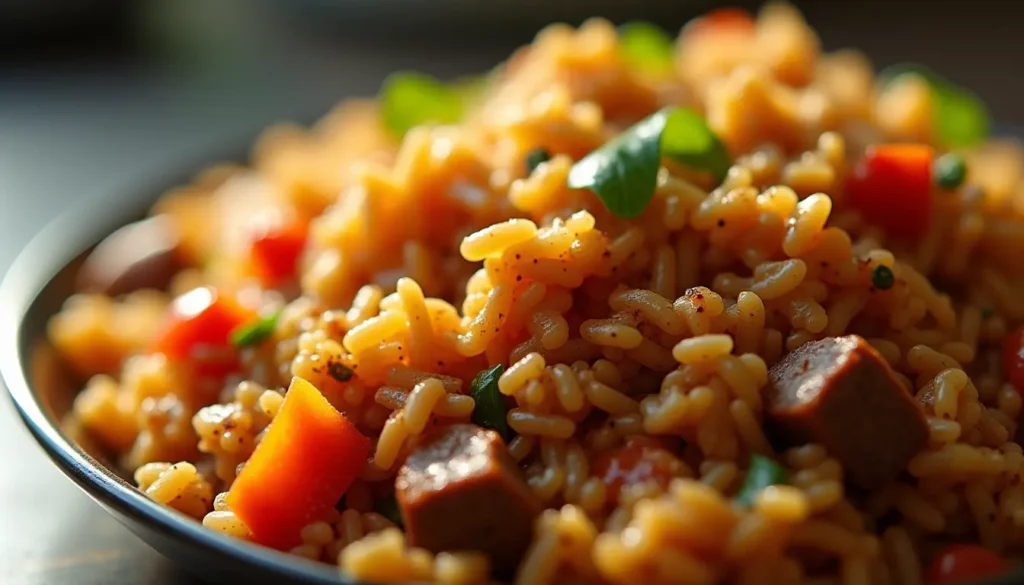
Dirty rice recipe is a Southern classic packed with bold, spicy flavors and hearty ingredients that have made it a Louisiana staple for generations. Traditionally made with rice, ground meat, and a flavorful blend of Cajun spices, this dish delivers comfort in every bite—from the first forkful of tender rice to the last traces of savory meat and vegetables.
What makes dirty rice unique: Unlike plain white rice or even seasoned rice, dirty rice gets its character from being cooked with meat drippings, aromatic vegetables (the holy trinity of Cajun cooking), and bold seasonings that turn simple rice into a meal worth savoring.
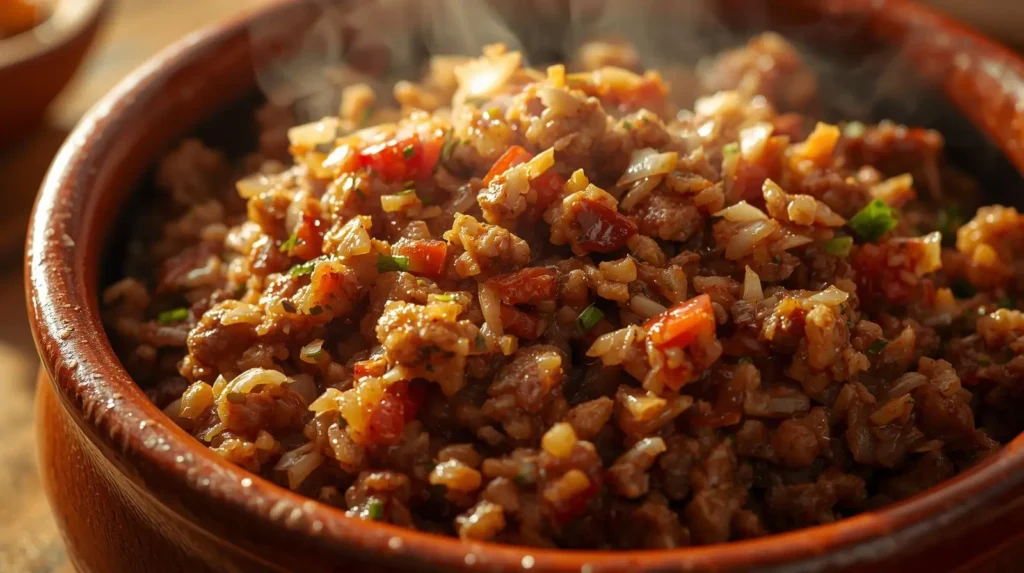
How it got its name: The “dirty” comes from the rice’s distinctive brownish color after cooking with ground meat, chicken livers, and spices. The bits of meat and liver mixed throughout give the rice a speckled, “dirty” appearance that’s far more appetizing than the name suggests.
Perfect balance of Cajun spices and textures: The combination of soft, fluffy rice with crispy meat bits, tender vegetables, and punchy seasonings creates layers of flavor and texture. It’s savory, slightly spicy, deeply satisfying, and endlessly versatile.
Easy steps to recreate this Louisiana favorite: You don’t need to be in New Orleans or have years of Cajun cooking experience. This dirty rice recipe breaks down the process into simple, manageable steps that deliver authentic flavor right in your home kitchen using ingredients from any grocery store.
Table of Contents
Why You’ll Love This Dirty Rice Recipe
This recipe succeeds because it combines authentic Cajun flavors with practical cooking techniques that work for busy home cooks.
Packed with rich Cajun flavor: The holy trinity (onion, celery, bell pepper) forms the aromatic base, while Cajun seasoning, paprika, and garlic create depth. Every grain of rice absorbs these bold flavors during cooking.
Uses simple, affordable ingredients: Ground meat, rice, vegetables, and basic spices—nothing exotic or expensive. Most ingredients are pantry staples you likely already have.
Great as a side dish or complete meal: Serve it alongside grilled chicken or shrimp for a full dinner, or enjoy it as a satisfying main course. It’s substantial enough to stand alone.
Perfect for weeknight dinners or meal prep: Ready in 35 minutes from start to finish. Make a big batch on Sunday and enjoy throughout the week—it actually tastes better the next day as flavors meld.
One-pan convenience: Everything cooks in a single skillet, making cleanup minimal. The meat browns, vegetables sauté, and rice combines all in one place.
Feeds a crowd affordably: One batch serves 6-8 people for a fraction of what takeout would cost. Perfect for potlucks, family gatherings, or feeding hungry teenagers.
Chef Tip from Gordon Ramsay
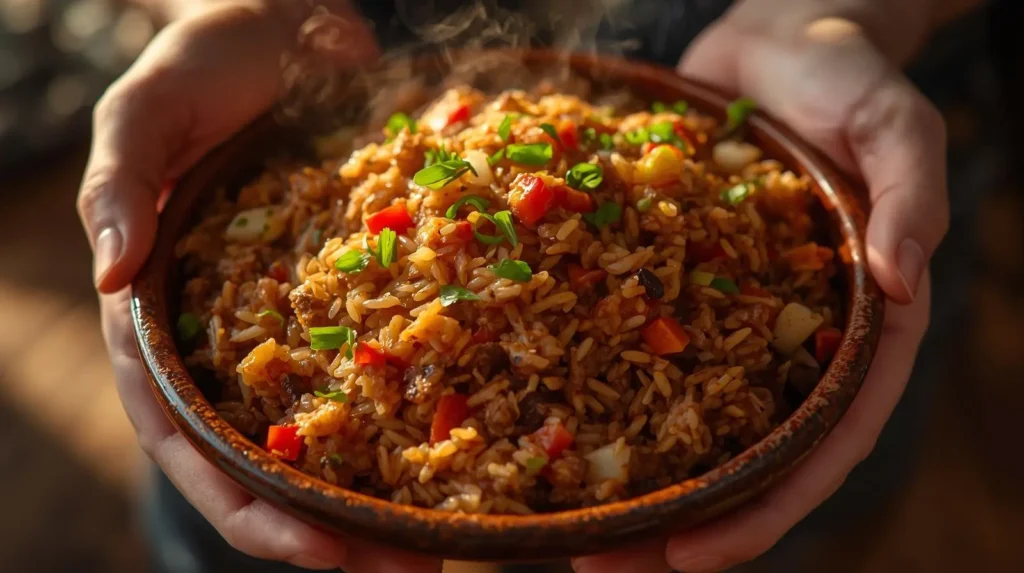
“A great dirty rice starts with patience—let your onions and peppers caramelize to unlock real depth of flavor.”
Gordon Ramsay emphasizes that rushing the vegetable cooking stage produces bland, underdeveloped flavor. Take 8-10 minutes to properly sauté your holy trinity until onions turn translucent and slightly golden, peppers soften, and everything becomes fragrant. This caramelization creates the sweet, complex foundation that makes dirty rice special rather than just seasoned rice with meat thrown in.
Ingredients for Dirty Rice Recipe
Quality ingredients in proper ratios create the authentic flavor profile that defines dirty rice.
| Ingredient | Quantity | Purpose |
|---|---|---|
| Long-grain white rice | 2 cups uncooked (6 cups cooked) | Base of the dish, provides fluffy texture |
| Ground beef or pork sausage | 1 pound | Adds richness, meaty flavor, and protein |
| Chicken livers (optional) | ½ cup chopped | Traditional Cajun ingredient, adds earthy depth |
| Yellow onion (diced) | 1 medium | Part of holy trinity, aromatic foundation |
| Green bell pepper (diced) | 1 medium | Holy trinity component, adds color and crunch |
| Celery (diced) | 2 stalks | Completes holy trinity, provides texture |
| Garlic (minced) | 3-4 cloves | Aromatic depth, essential flavor |
| Cajun seasoning | 1 tablespoon | Signature spice blend with heat |
| Smoked paprika | 1 teaspoon | Smoky undertone, beautiful color |
| Salt | To taste | Enhances all flavors |
| Black pepper | ½ teaspoon | Subtle heat, aromatic notes |
| Chicken or beef broth | 3 cups | Cooking liquid for rice, adds flavor |
| Bay leaves | 2 leaves | Aromatic depth during rice cooking |
| Green onions (sliced) | ¼ cup | Fresh garnish, color contrast |
| Hot sauce (optional) | To taste | Additional heat for spice lovers |
Understanding the Holy Trinity
The foundation of Cajun cooking: Onion, celery, and bell pepper form the aromatic base that defines Louisiana cuisine. This combination appears in gumbo, jambalaya, étouffée, and dirty rice.
Proper ratios: Equal parts of each vegetable (about 1 cup total when diced) creates balanced flavor. Too much onion overpowers; too much celery turns bitter; too much bell pepper tastes vegetal.
Dicing consistency: Cut all three to similar size (about ¼ inch dice) so they cook evenly and distribute throughout the rice.
The Chicken Liver Debate
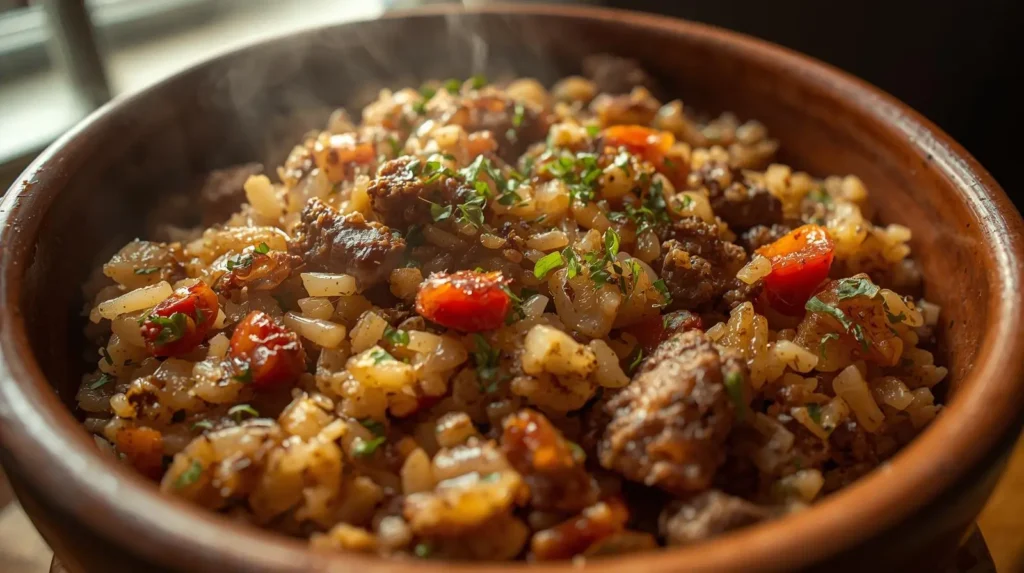
Traditional but optional: Authentic dirty rice includes chicken livers, which add distinctive earthy, mineral flavor and contribute to the “dirty” appearance.
Texture consideration: Livers become tender when cooked properly but can be grainy if overdone. Chop finely so they integrate throughout.
Alternatives: If you don’t like liver, simply omit it or add more ground meat. The dish remains delicious—just slightly less traditional.
Choosing Your Meat
Ground beef (80/20): Classic choice with good flavor and fat content for richness.
Pork sausage: Adds extra seasoning and fat. Choose mild or hot depending on spice preference.
Andouille sausage: Traditional Cajun smoked sausage brings authentic flavor and substantial heat.
Combination: Mix half ground beef and half sausage for depth and complexity.
Lean options: Ground turkey or chicken work but need extra fat (add 2 tablespoons oil) for proper flavor development.
Chef Advice from Jamie Oliver
“Don’t skip the holy trinity—onion, celery, and bell pepper—that’s the heart of Cajun cooking.”
Jamie Oliver highlights that these three vegetables aren’t arbitrary—they’re the non-negotiable foundation of authentic Louisiana cuisine. Together they create a flavor base that’s greater than the sum of parts. Onion provides sweetness, celery adds earthiness, bell pepper brings subtle vegetal notes. Sautéed together with garlic, they form the aromatic backbone that makes dirty rice taste distinctly Cajun rather than just generic rice with meat.
How to Make Dirty Rice Recipe Step-by-Step
Step 1: Cook the Rice
Rinse 2 cups long-grain white rice under cold water until water runs clear. This removes excess starch for fluffier results.
In a medium saucepan, bring 3 cups chicken or beef broth to a boil. Add rinsed rice and 2 bay leaves.
Reduce heat to low, cover tightly, and simmer 15-18 minutes until rice is tender and liquid is absorbed.
Remove from heat and let sit covered for 5 minutes. Fluff with a fork and set aside.
Alternative: Use leftover rice or make rice in a rice cooker while you prepare other ingredients.
Step 2: Sauté the Meat
Heat a large, deep skillet or Dutch oven over medium-high heat.
Add 1 pound ground beef (and chopped chicken livers if using). Break apart with a wooden spoon or spatula.
Cook 5-7 minutes, stirring occasionally, until meat is browned and cooked through. The liver should be tender but not overdone.
If excess fat pools (more than 2 tablespoons), drain most of it, leaving about 2 tablespoons for flavor and to sauté vegetables.
Texture tip: Don’t break meat into tiny crumbles—leave some larger pieces for textural interest and better mouthfeel.
Step 3: Add Vegetables & Seasoning
To the same skillet with cooked meat, add diced onion, bell pepper, and celery (the holy trinity).
Sauté over medium heat for 8-10 minutes, stirring occasionally, until vegetables soften and onions become translucent. Don’t rush this step—proper caramelization builds flavor depth.
Add minced garlic and cook 1-2 minutes until fragrant but not burned.
Stir in Cajun seasoning, smoked paprika, salt, and black pepper. Cook 1 minute to toast spices and release their oils.
Visual cues: Vegetables should be soft and slightly golden. The mixture should smell intensely aromatic and slightly spicy.
Step 4: Combine and Simmer
Add the cooked rice to the skillet with meat and vegetables. Stir thoroughly to combine all ingredients evenly.
If mixture seems dry, add ¼ to ½ cup additional broth to moisten. The rice should be fluffy, not sticky or dry.
Reduce heat to low and let everything simmer together 5-10 minutes. This allows rice to absorb flavors from meat and vegetables.
Stir occasionally to prevent sticking. Taste and adjust seasoning—add more Cajun seasoning, salt, or hot sauce as needed.
Flavor development: This simmering step is when everything comes together. The rice absorbs meat drippings and spice oils, transforming from separate components into unified dirty rice.
Step 5: Serve Hot
Remove from heat and discard bay leaves.
Fluff rice one final time with a fork to separate grains.
Transfer to serving dish and garnish generously with sliced green onions.
Serve immediately while hot with cornbread, grilled chicken, or your favorite Cajun proteins.
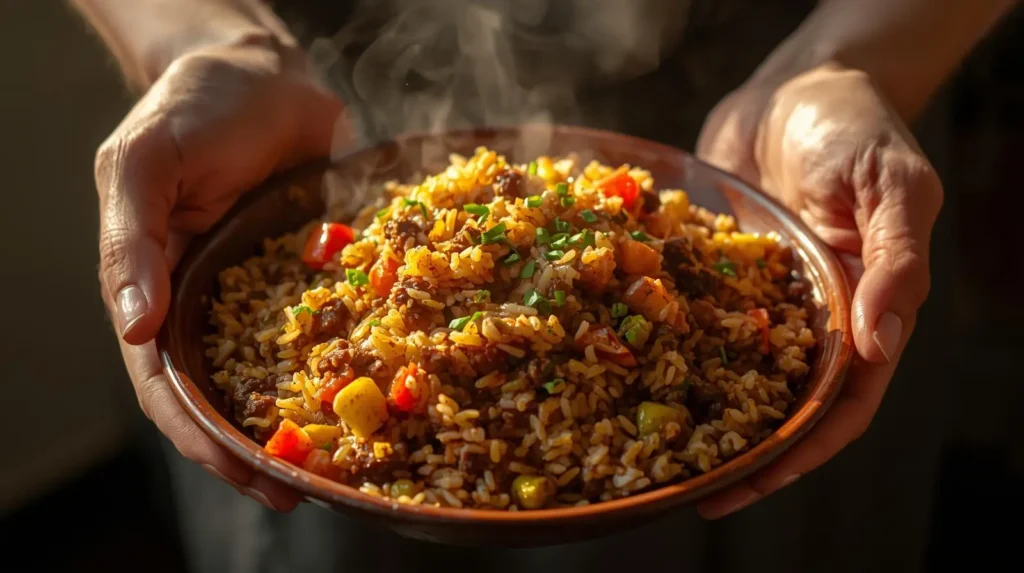
Presentation: Dirty rice looks rustic by nature. Embrace the “dirty” appearance—it’s authentic and appetizing despite the name.
Chef Tip from Ina Garten
“Use a good homemade or low-sodium broth to steam the rice—it infuses extra flavor from the start.”
Ina Garten emphasizes that cooking rice in broth instead of plain water builds flavor from the foundation. Homemade chicken stock adds richness, but quality store-bought works well. Choose low-sodium versions so you control salt levels—especially important when adding Cajun seasoning later. The rice absorbs broth during cooking, so every grain carries savory depth that plain water can’t provide. This simple swap transforms the dish from good to exceptional.
Cooking Time & Serving Guide
| Step | Time Required | Description |
|---|---|---|
| Prep | 10 minutes | Chop vegetables, measure ingredients, gather tools |
| Cook Rice | 18 minutes | Steam rice in broth until tender |
| Brown Meat | 7 minutes | Cook ground meat and liver until done |
| Sauté Vegetables | 10 minutes | Caramelize holy trinity and garlic |
| Combine & Simmer | 8 minutes | Mix rice with meat/vegetables, blend flavors |
| Total Time | 35-40 minutes | Quick and easy Cajun dinner from start to finish |
Active time: About 25 minutes of hands-on cooking and stirring.
Passive time: 10-15 minutes while rice cooks and dirty rice simmers.
Serves: 6-8 as a side dish, 4-6 as a main course.
Make-ahead: Prepare completely, cool, and refrigerate up to 4 days. Reheat with splash of broth to restore moisture.
Dirty Rice Variations
One base recipe adapts to countless flavor profiles and dietary preferences.
| Variation | Key Ingredients | Preparation Notes |
|---|---|---|
| Vegetarian Dirty Rice | Swap meat for chopped mushrooms (portobello or cremini) | Use vegetable broth, add extra Cajun spice, consider plant-based sausage |
| Spicy Andouille Dirty Rice | Replace ground meat with sliced andouille sausage | Brings bold, smoky heat—reduce added spices slightly |
| Seafood Dirty Rice | Add shrimp, crawfish, or crab meat in last 5 minutes | Coastal Louisiana twist, use seafood stock if available |
| Healthy Dirty Rice | Use brown rice and lean ground turkey | More fiber, less fat—add 1 tbsp olive oil for moisture |
| Smokehouse Dirty Rice | Add diced bacon and smoked sausage | Double the smoky flavor, reduce added salt |
| Garden Dirty Rice | Add diced tomatoes, corn, and black beans | More vegetables, Tex-Mex influence |
Creating Custom Variations
Protein swaps: Any ground meat works—lamb for Middle Eastern twist, chorizo for Mexican flair, or mixed seafood for coastal style.
Heat adjustments: Control spice by using mild or hot Cajun seasoning, adding cayenne (¼ teaspoon at a time), or serving hot sauce on the side.
Grain alternatives: Brown rice (needs longer cooking), cauliflower rice (low-carb, add at end), or quinoa (protein boost).
Add-ins: Diced ham, crumbled bacon, roasted red peppers, or fire-roasted tomatoes all complement the base recipe.
Chef Tip from Gordon Ramsay
“Always adjust your seasoning—good Cajun food should tingle your tongue, not burn it off!”
Gordon Ramsay reminds us that Cajun cuisine walks the line between flavorful and fiery. The goal is warmth and complexity, not pain. Taste your dirty rice before serving and adjust. Need more heat? Add cayenne or hot sauce gradually. Too spicy? Stir in more plain rice or serve with cooling sides like coleslaw. The rice should have a pleasant kick that builds with each bite but doesn’t overwhelm—you should still taste the other flavors, not just fire.
Nutritional Information for Dirty Rice Recipe
Approximate nutrition per serving (1 cup, recipe serves 6-8):
| Nutrient | Amount per Serving |
|---|---|
| Calories | 350-380 |
| Protein | 20-24g |
| Total Carbohydrates | 26-30g |
| Dietary Fiber | 2-3g |
| Sugars | 2-3g |
| Total Fat | 15-18g |
| Saturated Fat | 5-7g |
| Cholesterol | 60-80mg |
| Sodium | 650-850mg |
| Iron | 15-20% DV |
| Vitamin A | 8-10% DV |
| Vitamin C | 25-30% DV |
Note: Nutrition varies based on meat choice, added fat, and portion size. These estimates are for educational purposes using 80/20 ground beef.
Health considerations: Dirty rice provides substantial protein and iron. Using brown rice increases fiber. Choosing lean turkey reduces fat and calories. Control sodium by using low-sodium broth and adjusting salt.
Portion awareness: A 1-cup serving is satisfying but not excessive. As a main course, pair with vegetables or salad for balanced nutrition.
Serving Suggestions for Dirty Rice Recipe
As a Side Dish
Protein pairings: Dirty rice complements grilled, blackened, or fried proteins beautifully.
Serve alongside Cajun baked chicken, blackened catfish, fried shrimp, grilled sausages, or barbecued pork chops.
The rice’s boldness stands up to heavily seasoned proteins without competing.
Vegetable sides: Balance the richness with fresh, light vegetables.
Serve with collard greens, green beans, corn on the cob, coleslaw, or simple garden salad with vinaigrette.
Bread accompaniments: Classic Southern sides complete the meal.
Cornbread, hushpuppies, or crusty French bread for soaking up any juices.
As a Main Course
Complete one-dish meal: Add protein directly to dirty rice for satisfying dinner.
Stir in grilled shrimp, sliced andouille sausage, or rotisserie chicken during final simmer.
Top with fried egg for breakfast-for-dinner twist.
Bowl-style serving: Build grain bowls with dirty rice as base.
Layer rice, add protein, top with fresh vegetables, drizzle with hot sauce or ranch, garnish with fresh herbs and cheese.
Stuffed vegetables: Use dirty rice as flavorful filling.
Stuff into bell peppers, hollowed tomatoes, or acorn squash halves. Bake until vegetables are tender.
Garnishes and Toppings
Fresh elements: Brighten the rich, savory rice with fresh additions.
Sliced green onions (traditional), chopped fresh parsley or cilantro, diced tomatoes, or fresh jalapeño slices.
Sauce options: Offer condiments on the side for customization.
Hot sauce (Crystal, Tabasco, or Louisiana), ranch dressing (cooling contrast), or remoulade sauce (traditional Louisiana).
Cheese additions: While not traditional, cheese works surprisingly well.
Sprinkle shredded cheddar, pepper jack, or crumbled queso fresco over hot dirty rice.
Expert Tip from Jamie Oliver
“Leftover dirty rice makes an amazing filling for stuffed peppers—no waste, just flavor.”
Jamie Oliver champions resourcefulness. Cut bell peppers in half lengthwise, remove seeds, fill with leftover dirty rice, top with cheese, and bake at 375°F for 25-30 minutes. The peppers add freshness and the rice provides complete seasoned filling. You can also use dirty rice in burritos, as omelet filling, mixed with scrambled eggs for breakfast, or as base for fried rice. Leftovers transform into entirely new meals rather than repetitive reheats.
Chef Tips for Perfect Dirty Rice Recipe
Essential Techniques
Toast your rice before mixing: For extra nutty flavor, spread cooked rice on baking sheet and toast in 350°F oven for 5-10 minutes before combining with meat and vegetables.
Use homemade Cajun spice mix for authenticity: Combine 2 tablespoons paprika, 1 tablespoon garlic powder, 1 tablespoon onion powder, 1 tablespoon dried oregano, 1 tablespoon dried thyme, 1 teaspoon cayenne, 1 teaspoon black pepper, 1 teaspoon white pepper. Store in jar and use 1 tablespoon per dirty rice recipe.
Add a splash of Worcestershire sauce for umami depth: One tablespoon adds savory complexity that rounds out flavors without being identifiable.
Don’t overcook—you want fluffy, flavorful texture: Overcooked rice becomes mushy. Cook just until tender and let residual heat finish the job during simmering.
Layer your seasonings: Season at multiple stages—when browning meat, when sautéing vegetables, and when combining everything. This builds complex flavor rather than one-dimensional saltiness.
Troubleshooting Common Issues
Rice is mushy: Overcooked or too much liquid. Solution: Use proper rice-to-liquid ratio and don’t simmer too long after combining.
Too dry: Insufficient liquid or overcooked. Solution: Add broth ¼ cup at a time and stir gently until proper consistency returns.
Bland flavor: Insufficient seasoning or didn’t caramelize vegetables properly. Solution: Taste and add more Cajun seasoning, salt, or hot sauce. Next time, take full 8-10 minutes to properly sauté holy trinity.
Too spicy: Overzealous with cayenne or hot seasoning. Solution: Add more plain cooked rice to dilute heat, or serve with cooling sides and dairy-based sauces.
Meat is greasy: Too much fat retained. Solution: Drain excess fat after browning meat, keeping only 2 tablespoons for vegetable sautéing.
Storage and Reheating
Proper Storage
Refrigeration: Cool dirty rice completely (spread on baking sheet for faster cooling), transfer to airtight containers, refrigerate up to 4 days.
Freezing: Portion into meal-sized containers or freezer bags, remove excess air, label with date. Freeze up to 2 months.
Separation during storage: Some liquid may separate—this is normal. Stir when reheating to reincorporate.
Reheating Methods
Stovetop (best for texture): Add dirty rice to pan with 2-3 tablespoons broth or water. Heat over medium-low, stirring occasionally, until warmed through (5-7 minutes).
Microwave (quickest): Place in microwave-safe dish, add 1 tablespoon water per cup of rice, cover with damp paper towel. Heat on 70% power in 2-minute intervals, stirring between, until hot.
Oven (best for large portions): Spread in baking dish, add ¼ cup broth, cover with foil. Bake at 350°F for 20-25 minutes until heated through.
From frozen: Thaw overnight in refrigerator, then reheat using any method above. Or microwave directly from frozen, adding extra time and moisture.
FAQs About Dirty Rice Recipe
Why is it called dirty rice?
The name comes from the rice’s distinctive brownish, speckled appearance after cooking with ground meat, chicken livers, and spices. Bits of meat and liver mixed throughout give the rice a “dirty” look compared to plain white rice. Despite the unappealing name, it’s actually quite appetizing—the “dirty” appearance signals the rich, savory flavors absorbed into every grain. The term has been used in Louisiana cuisine for generations and is affectionate rather than derogatory.
Can I make dirty rice without liver?
Yes, absolutely. While chicken livers are traditional and add distinctive earthy flavor, many modern recipes omit them based on personal preference. The dish remains delicious and authentically Cajun without liver—just use the full pound of ground meat or sausage. If you’ve never tried liver, consider using just ¼ cup finely chopped to test the flavor. Many people who think they dislike liver enjoy it when properly prepared and mixed into dirty rice where it’s not the dominant flavor.
How can I store dirty rice?
Store cooled dirty rice in airtight containers in the refrigerator for up to 4 days. Make sure it cools to room temperature within 2 hours of cooking (spread on sheet pan to speed cooling if needed). For longer storage, freeze in portion-sized containers or freezer bags for up to 2 months. Label with contents and date. Dirty rice reheats well, often tasting even better the next day as flavors continue melding. Add splash of broth when reheating to restore moisture.
What rice is best for dirty rice recipe?
Long-grain white rice is traditional and creates the proper fluffy, separated texture that allows seasonings to coat each grain. Jasmine or basmati can work but have distinctive aromatic flavors that may compete with Cajun spices. Avoid short-grain or sushi rice—they’re too sticky. Brown rice can be used for healthier version but needs longer cooking time (40-45 minutes) and creates chewier texture. Medium-grain rice works in pinch but won’t be quite as fluffy.
Is dirty rice spicy?
Traditional dirty rice has moderate, warm spice level—noticeable heat but not overwhelming. The Cajun seasoning provides gentle warmth rather than fiery burn. You control spice level by adjusting cayenne in homemade seasoning mix or choosing mild vs. hot commercial blends. For mild version, reduce Cajun seasoning to 2 teaspoons. For spicier, add ½ teaspoon cayenne or serve hot sauce on the side. The dish should warm your palate pleasantly without making you reach for milk.
Can I make dirty rice ahead of time?
Yes, dirty rice is excellent for make-ahead meals and actually improves as flavors meld. Prepare completely, cool, and refrigerate up to 2 days before serving. Reheat gently with splash of broth to restore moisture. You can also prep components ahead: cook rice, brown meat and vegetables separately, then combine when ready to serve. This makes entertaining easier and ensures everything stays fresh. For parties, make day before and reheat just before guests arrive.
What’s the difference between dirty rice and jambalaya?
Both are Louisiana rice dishes but differ in preparation and ingredients. Dirty rice starts with cooked rice mixed into sautéed meat and vegetables—the rice is added at the end. Jambalaya cooks raw rice directly in the pot with meat, vegetables, and liquid—everything cooks together from the start. Jambalaya typically includes tomatoes and is more of a complete one-pot meal, while dirty rice is traditionally a side dish (though substantial enough for a main). Both use Cajun holy trinity and seasonings but with different techniques and ratios.
Conclusion
Dirty rice recipe brings authentic Louisiana flavor straight to your kitchen with ingredients you can find at any grocery store and techniques that don’t require professional cooking experience. With the perfect blend of savory spices, tender meat, fluffy rice, and aromatic vegetables (that essential holy trinity), this dish is a comfort food classic that never disappoints whether you’re feeding family on a Tuesday night or entertaining guests for a Cajun-themed dinner party.
The beauty of dirty rice lies in its versatility—stick to traditional ground beef and liver for authentic flavor, swap in andouille sausage for smokehouse appeal, try shrimp for coastal Louisiana vibes, or create vegetarian versions with mushrooms and extra spices. One base technique unlocks countless variations, each bringing something unique while maintaining the soul of Cajun cooking.
Whether you serve it as a hearty side dish alongside grilled proteins or enjoy it as a complete meal loaded with your favorite additions, one bite of properly seasoned dirty rice and you’ll understand why this Southern favorite has stood the test of time in kitchens across Louisiana and beyond. The combination of textures, the warmth of Cajun spices, and the satisfaction of one-pan comfort food makes dirty rice a recipe you’ll return to again and again.
Try this dirty rice recipe this week and discover why generations of cooks have kept this dish in regular rotation. Experiment with the variations, adjust spices to your preference, and don’t forget to garnish with plenty of fresh green onions for that final touch of color and freshness!
Ready for more Southern comfort food? Check out our Cajun Chicken Pasta Recipe for another spice-forward favorite, or explore our Red Beans and Rice Guide for a classic Monday meal that pairs perfectly with dirty rice-making skills you’ve just mastered!
How did you find results our recipes
There are no reviews yet. Be the first one to write one.

