Introduction
Tired of store-bought caesar dressing recipe that’s overly processed, loaded with preservatives, and tastes more like mayonnaise than the bold, tangy dressing you crave? You open the bottle expecting that classic garlicky punch and bright acidity, only to find a bland, one-dimensional cream that barely enhances your salad.
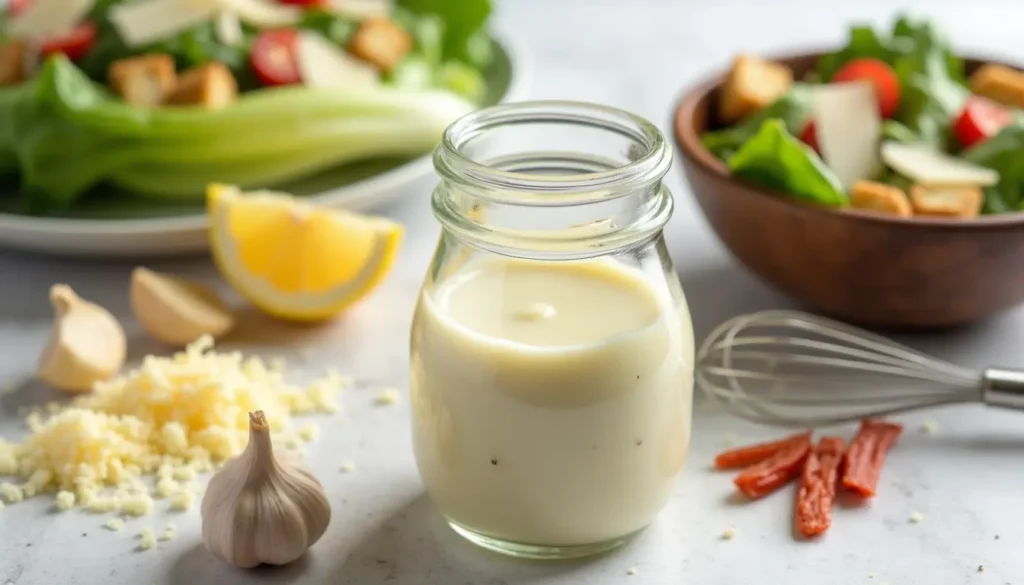
This Caesar dressing recipe is fresh, tangy, and full of authentic flavor—perfect for salads, wraps, sandwiches, or as a dip that actually tastes like it came from a high-end restaurant. Every spoonful delivers that signature combination of sharp garlic, salty Parmesan, zesty lemon, and subtle umami that makes Caesar dressing legendary.
With years of perfecting homemade dressings and testing countless ratios, I’ve created a version that’s simple enough for weeknight cooking yet sophisticated enough to impress dinner guests. This isn’t just mixing ingredients in a bowl—it’s understanding how emulsification works, how to balance bold flavors, and how to create that creamy-yet-light texture that makes homemade dressing infinitely superior to anything in a bottle.
In this guide, you’ll discover the secret ingredient that provides authentic Caesar flavor, learn the simple technique for perfect emulsification, master flavor balancing for your personal taste preferences, and explore variations from creamy to spicy to herb-forward. Let’s make a dressing that transforms every salad.
Table of Contents
Why This Caesar Dressing Recipe Works
This recipe succeeds because it respects traditional Caesar dressing while remaining accessible for home cooks without raw eggs or complicated techniques.
Fresh ingredients create bold, authentic flavor: Real garlic, freshly squeezed lemon juice, genuine Parmesan cheese, and quality olive oil deliver layers of taste that bottled dressings can never replicate. Each component contributes something essential—the bite of garlic, the brightness of citrus, the nuttiness of cheese, the richness of oil.
Quick preparation in under 10 minutes: No cooking required, no specialized equipment necessary. Just whisk or blend ingredients together and you’re done. Perfect for busy weeknights when you need homemade quality without the time investment.
Incredibly versatile beyond salads: While classic Caesar salad is the obvious use, this dressing works as a marinade for chicken, a spread for sandwiches and wraps, a dip for vegetables or breadsticks, and even a sauce for pasta. One recipe, countless applications.
Stores well for meal prep: Make a batch on Sunday and use throughout the week. The flavors actually improve after sitting 24 hours as garlic mellows and components meld together.
Customizable to dietary needs: Easy to make vegetarian by omitting anchovies, or vegan with plant-based substitutions. Adjust garlic, lemon, and salt levels to suit your personal preferences.
The foundation of great Caesar dressing isn’t fancy ingredients or chef techniques—it’s understanding proper emulsification, balancing strong flavors so none dominates, and using fresh components that actually taste like something.

Choosing the Right Ingredients for Caesar Dressing Recipe
The quality of your Caesar dressing depends entirely on selecting the right ingredients and understanding why each one matters.
| Ingredient | Quantity | Purpose |
|---|---|---|
| Extra virgin olive oil | ½ cup | Smooth base, provides richness and body |
| Fresh garlic | 1-2 cloves | Aromatic pungency, signature flavor |
| Anchovy paste | 1 teaspoon | Adds umami and classic Caesar taste |
| Fresh lemon juice | 2 tablespoons | Brightness, acidity, and balance |
| Dijon mustard | 1 teaspoon | Emulsifier and tangy depth |
| Worcestershire sauce | ½ teaspoon | Savory complexity and depth |
| Parmesan cheese (grated) | ¼ cup | Creamy texture and salty tang |
| Salt & black pepper | To taste | Enhances and balances all flavors |
| Mayonnaise (optional) | 2 tablespoons | Extra creaminess and stability |
Olive Oil Selection
Extra virgin olive oil is preferred for its fruity, peppery notes that add complexity. However, some find EVOO too assertive—if that’s you, use half EVOO and half neutral oil like grapeseed or light olive oil.
Avoid: Extra light olive oil has no flavor. Regular olive oil works but tastes flat compared to extra virgin.
The oil forms the base of your dressing, so quality matters. You’re not cooking with it (which would destroy delicate flavors), so invest in something that tastes good raw.
The Anchovy Debate
Anchovy paste provides authentic umami that defines traditional Caesar dressing. It adds savory depth without making the dressing taste fishy—when properly balanced, people won’t identify anchovies, just that “something special” quality.
How much to use: Start with ½ teaspoon if you’re hesitant. The recipe calls for 1 teaspoon, which provides noticeable but not overwhelming anchovy flavor. You can use up to 2 teaspoons if you love anchovies.
Substitutes: Worcestershire sauce contains anchovies and provides similar umami. For vegetarian versions, use extra Worcestershire or add 1 teaspoon miso paste for umami depth.
Where to buy: Anchovy paste comes in tubes near canned fish at grocery stores. One tube lasts months refrigerated.
Fresh vs. Bottled Lemon Juice
Always use fresh lemon juice. The bright, vibrant acidity of freshly squeezed lemons is incomparable to bottled juice, which tastes flat and sometimes bitter.
Two tablespoons equals roughly one medium lemon. Roll the lemon on the counter before cutting to release more juice.
Lime juice can substitute in equal amounts for a slightly different but equally delicious citrus profile.
Parmesan Cheese Quality
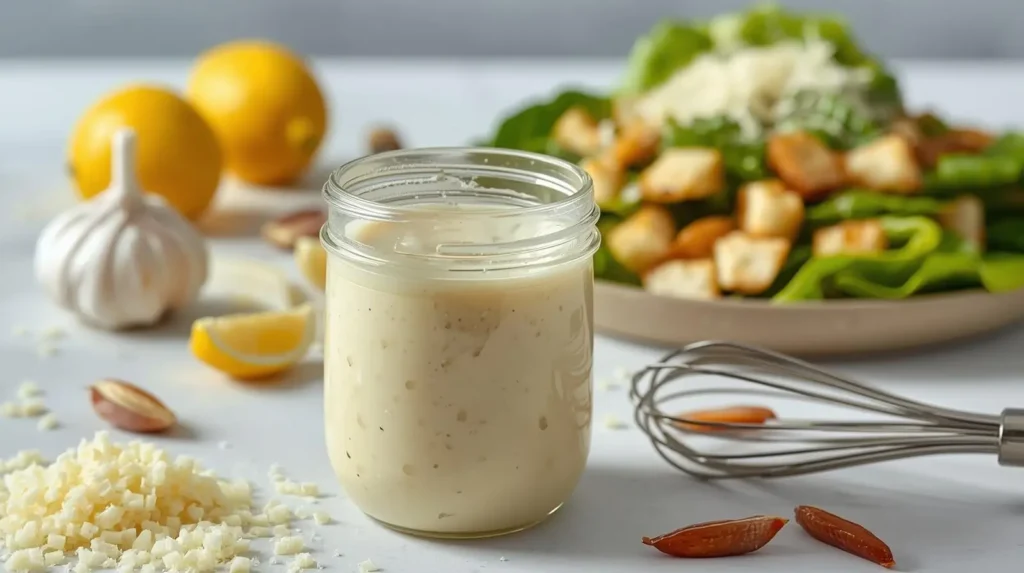
Buy a wedge and grate it yourself. Pre-grated Parmesan contains cellulose (anti-caking agent) that prevents smooth melting and creates grainy texture. Fresh-grated cheese incorporates smoothly into the dressing.
Parmigiano-Reggiano is the real deal—aged Italian cheese with complex, nutty flavor. Domestic Parmesan works fine and costs less, though flavor is milder.
How to grate: Use the small holes on a box grater or a Microplane for fine, fluffy texture that dissolves easily into dressing.
Dijon Mustard as Emulsifier
Dijon mustard serves two purposes: it helps emulsify (bind) oil and lemon juice together, and it adds subtle tangy depth.
Regular yellow mustard can substitute but tastes sharper and less sophisticated. Whole grain mustard works but creates speckled appearance.
The emulsification is what makes dressing creamy rather than separated into oil and vinegar layers.
Optional Creaminess Boosters
Mayonnaise: Two tablespoons makes dressing extra creamy and thick—closer to bottled Caesar texture. Some purists object, but it creates stability and richness.
Greek yogurt: Use 2 tablespoons for tang and creaminess with fewer calories than mayo. Plain, full-fat Greek yogurt works best.
Sour cream: Another option for tang and creaminess. Changes flavor profile slightly but deliciously.
Step-by-Step Instructions for Caesar Dressing Recipe
Prepare Your Ingredients
Gather all ingredients before starting. This French cooking principle called mise en place (everything in its place) makes the process smoother and faster.
Mince garlic: Peel and finely mince 1-2 cloves. For less aggressive garlic flavor, use 1 clove; for bold garlic punch, use 2 cloves. Press through a garlic press for finest texture if you have one.
Grate Parmesan: Grate ¼ cup using the small holes on a box grater. Pack it lightly when measuring—don’t compress too much.
Juice lemon: Roll lemon on counter, cut in half, and squeeze through a strainer to catch seeds. You need 2 tablespoons (about 1 medium lemon).
Measure liquids: Have olive oil, Worcestershire sauce, and anchovy paste measured and ready.
Combine Base Ingredients
In a medium bowl, combine the minced garlic, anchovy paste, Dijon mustard, Worcestershire sauce, and lemon juice. Whisk these together until relatively smooth—the anchovy paste will dissolve into the mixture.
This creates your flavor base. Taste it (yes, it’s strong) and adjust if needed. If it’s too acidic, you’ll balance with oil. If not garlicky enough, add more garlic now.
Season with a pinch of salt and several grinds of black pepper. Remember that Parmesan and anchovies add saltiness, so go light initially.
Emulsify the Dressing
This is where magic happens—transforming separated ingredients into smooth, creamy dressing. The key is adding oil slowly while whisking constantly. Here’s the detailed process that separates gorgeous emulsified dressing from broken, separated oil-and-water mixture: Start whisking your base mixture vigorously in a circular motion, creating a small whirlpool in the center of the bowl. While continuing to whisk with one hand, slowly drizzle olive oil into the mixture with your other hand—we’re talking a thin stream, almost drop by drop for the first few tablespoons.
As the oil incorporates and the mixture begins thickening and lightening in color, you can increase your pour rate slightly, but never dump oil in all at once or the emulsion will break. Continue this whisking and drizzling dance for 2-3 minutes until all the oil is incorporated and you have a thick, creamy, cohesive dressing that coats the back of a spoon and no longer looks like separate oil droplets floating in liquid.
Blender shortcut: Place all ingredients except oil in blender. Blend on low, then slowly drizzle oil through the top opening while blender runs. This creates extremely smooth, thick dressing in 30 seconds.
Immersion blender: Combine everything in a tall container and blend, moving blender up and down until smooth and creamy.
Add Cheese and Final Seasonings
Once emulsified, stir in the grated Parmesan cheese. If using a whisk, it will incorporate smoothly. If using a blender, you can either blend the cheese in (creates very smooth texture) or stir it in by hand (creates more textured, rustic dressing).
Taste the dressing now. This is your opportunity to adjust:
- Too acidic? Add pinch of sugar or more oil
- Not tangy enough? Add more lemon juice
- Needs more umami? Add more anchovy paste or Worcestershire
- Want more garlic? Add more minced garlic
- Needs salt? Add a pinch at a time
Consistency check: The dressing should coat the back of a spoon and slowly drip off. If too thick, thin with water (1 teaspoon at a time) or more olive oil. If too thin, add more Parmesan or a tablespoon of mayo.
Store Properly
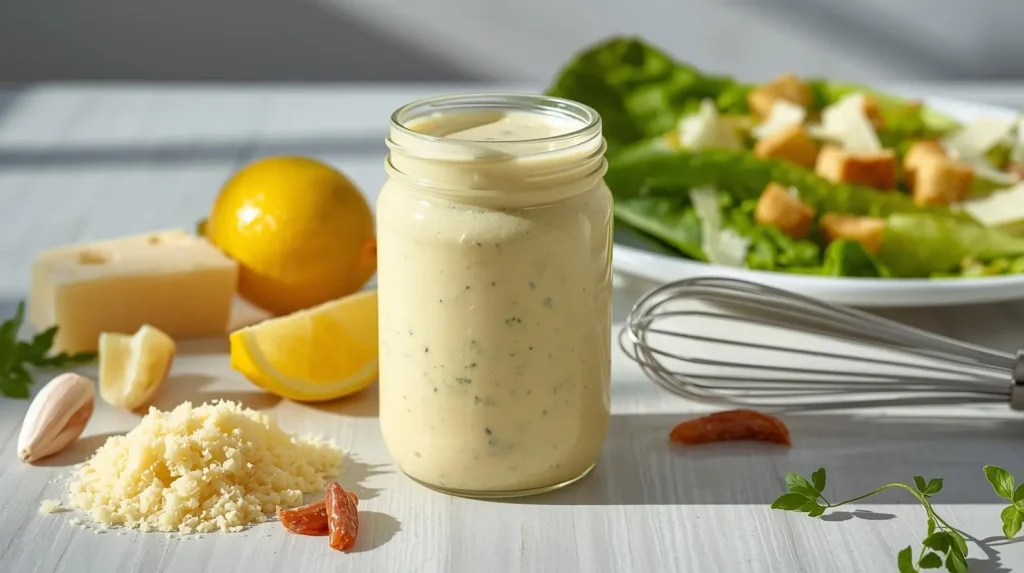
Transfer Caesar dressing to an airtight container or jar with a tight-fitting lid. Glass jars work beautifully—you can see the dressing and they don’t retain odors.
Refrigeration: Store up to 1 week. The oil may solidify slightly when cold—this is normal. Let it sit at room temperature for 10-15 minutes before using, or shake vigorously to re-emulsify.
Before each use: Shake or whisk the dressing as some separation is natural. A quick shake brings it right back together.
Food safety note: Because this contains fresh garlic and lemon juice (both raw), consume within 7 days for best quality and safety.
Pro Tips for Perfect Caesar Dressing Recipe
Balancing Bold Flavors
Caesar dressing is defined by strong, assertive ingredients—garlic, anchovies, Parmesan, lemon. The art is balancing them so no single flavor dominates.
Start conservatively: Use the lower end of ingredient ranges, especially for garlic and anchovies. You can always add more, but you can’t remove excess.
Taste as you go: After initial mixing, taste with a lettuce leaf or crouton. How the dressing tastes on salad differs from how it tastes straight from the bowl.
Adjust in small increments: Add ¼ teaspoon of this, a pinch of that. Small adjustments prevent overcorrection.
Let it rest: Flavors intensify after sitting, especially garlic. If dressing tastes perfect immediately, it might be too garlicky after refrigeration.
Achieving Smooth, Creamy Texture
Slow oil incorporation is crucial for proper emulsification. Rushing creates separated, broken dressing with oil pooling on top.
Room temperature ingredients emulsify more easily than cold ingredients. Take cheese and lemon juice out of fridge 15 minutes early.
Constant whisking or blending provides the mechanical action necessary to break oil into tiny droplets that stay suspended in the liquid.
Adding mayo or Greek yogurt creates more stable emulsion that’s less likely to separate. The proteins and emulsifiers in these ingredients help bind everything.
If dressing breaks (separates into oil and water), start fresh in a clean bowl with 1 tablespoon of the broken dressing. Whisk vigorously while slowly adding the rest of the broken dressing—this often rescues the emulsion.
Make-Ahead Strategy
Flavor development: Caesar dressing improves after 24 hours as flavors meld and mellow. The raw garlic punch softens, the lemon integrates, and everything harmonizes.
Meal prep friendly: Make on Sunday, use all week. This saves time during busy weekdays and ensures you always have quality dressing.
Batch cooking: Double the recipe if you go through dressing quickly. It keeps a week, so making larger batches is efficient.
Separation is normal: If dressing separates after sitting, simply shake or whisk to re-emulsify. This doesn’t indicate spoilage, just natural settling.
Expanding Versatility
As a marinade: Coat chicken breasts or thighs in Caesar dressing and marinate 2-4 hours. The acid tenderizes while flavors penetrate. Grill or bake for Caesar-flavored chicken.
Pasta sauce: Toss hot pasta with Caesar dressing, adding pasta water to thin. Top with grilled chicken and extra Parmesan for Caesar pasta.
Pizza drizzle: Use as finishing drizzle on white pizza or grilled chicken pizza for tangy richness.
Dip: Serve with raw vegetables, chicken tenders, breadsticks, or pita chips for crowd-pleasing appetizer.
Sandwich spread: Spread on bread instead of mayo for sandwiches and wraps with bold flavor.
Flavor Variations for Caesar Dressing Recipe
Extra Creamy Caesar Dressing
For those who prefer thick, rich dressing similar to bottled versions.
Method: Increase mayonnaise to ¼ cup (4 tablespoons) or add 3 tablespoons Greek yogurt. This creates luxuriously thick dressing that clings to every leaf.
Alternative: Add 2 tablespoons sour cream for tang and creaminess. Or use a combination of mayo and Greek yogurt for balance.
Texture tip: Blend all ingredients including cheese for ultra-smooth restaurant-style texture.
This version is perfect for those transitioning from bottled Caesar who want familiar thick consistency.
Spicy Caesar Dressing
Add heat without overwhelming the classic flavor profile.
Options: Add ¼-½ teaspoon cayenne pepper to the base mixture. Or stir in 1 teaspoon hot sauce (Frank’s RedHot or Tabasco). Or include finely minced jalapeño or serrano pepper.
Chipotle version: Add ½ teaspoon adobo sauce from canned chipotles for smoky heat.
Balance: The creaminess and fat from oil temper the heat, creating pleasant warmth rather than overwhelming burn.
Serve this on spicy Caesar salad with blackened chicken or grilled shrimp.
Herb-Infused Caesar Dressing
Fresh herbs add brightness and complexity.
Additions: Stir in 2 tablespoons finely chopped fresh parsley, basil, or chives. Or use a combination of all three.
Italian version: Add 1 tablespoon fresh basil and 1 teaspoon dried Italian seasoning for Mediterranean twist.
Preparation: Mince herbs very finely so they integrate smoothly rather than creating chunky texture.
This variation is beautiful in color and brings garden-fresh flavor to traditional Caesar.
Garlic Lovers’ Caesar
For those who believe more garlic is always better.
Boost garlic: Use 3-4 cloves instead of 1-2. Mince very finely or use garlic press for even distribution.
Roasted garlic option: Roast whole garlic bulb until soft and caramelized (400°F for 40 minutes). Squeeze out cloves and mash into dressing for sweet, mellow garlic flavor without harsh bite.
Balance: Extra garlic needs extra lemon to balance. Add an additional tablespoon of lemon juice.
This version is for true garlic enthusiasts who want bold, assertive flavor.
Light Caesar Dressing
Reduce calories without sacrificing too much flavor.
Substitutions: Use half olive oil, half plain Greek yogurt. This cuts fat significantly while maintaining creaminess. Or replace oil entirely with ½ cup Greek yogurt and 2 tablespoons olive oil for texture.
Boost flavor: When reducing fat, compensate by increasing lemon juice, garlic, and Parmesan slightly so dressing doesn’t taste flat.
Texture: Light versions are thinner. Add extra Parmesan or a teaspoon of cornstarch dissolved in water if you want thicker consistency.
Serving Suggestions for Caesar Dressing Recipe
Classic Caesar Salad
The traditional and most famous application.
Components: Romaine lettuce (chopped or whole leaves), homemade croutons, freshly grated Parmesan, and generous Caesar dressing.
Protein additions: Grilled chicken breast (sliced), grilled shrimp, seared salmon, or seared tofu for vegetarian option.
Crouton recipe: Cube day-old bread, toss with olive oil and garlic powder, bake at 375°F for 10-12 minutes until golden and crispy.
Assembly: Toss lettuce with dressing until evenly coated. Top with croutons and cheese. Serve immediately before croutons get soggy.
As a Versatile Dip
Transform dressing into party-friendly appetizer.
Vegetable crudité: Serve Caesar dressing alongside carrots, celery, bell peppers, cucumbers, cherry tomatoes, and snap peas.
Chicken tenders: Homemade or frozen chicken tenders gain gourmet touch when served with Caesar instead of standard honey mustard.
Breadsticks or garlic knots: Caesar dressing makes excellent dunking sauce for warm bread.
Buffalo chicken dip variation: Mix Caesar dressing with shredded rotisserie chicken and hot sauce, bake until bubbly, serve with chips or crackers.
Wraps and Sandwiches
Caesar dressing elevates everyday lunch items.
Chicken Caesar wrap: Grilled chicken, romaine, Parmesan, and Caesar dressing in large flour tortilla or lavash.
Turkey Caesar sandwich: Replace mayo with Caesar dressing on turkey sandwiches for upgraded flavor.
Burger spread: Use instead of ketchup and mayo on burgers for sophisticated twist.
Grilled vegetable wrap: Roasted vegetables, hummus, and Caesar dressing in whole wheat wrap.
Creative Applications
Caesar pasta salad: Toss cooked pasta (penne, rotini) with Caesar dressing, cherry tomatoes, cucumber, and grilled chicken. Serve cold.
Baked potato topping: Drizzle Caesar over baked potatoes instead of sour cream. Add bacon bits and chives.
Grain bowls: Use as dressing for quinoa or rice bowls with roasted vegetables and protein.
Pizza drizzle: Drizzle over finished pizza, especially white pizza or chicken pizza, for tangy finish.
FAQs About Caesar Dressing Recipe
Can I make Caesar dressing without anchovies?
Yes, absolutely. For vegetarian Caesar dressing, simply omit the anchovy paste. To maintain the umami depth that anchovies provide, compensate by increasing Worcestershire sauce to 1 teaspoon (note: traditional Worcestershire contains anchovies, so use vegetarian Worcestershire if needed) and adding 1 teaspoon white miso paste or ½ teaspoon soy sauce. The dressing will be slightly less complex but still delicious. Some cooks add nutritional yeast for savory, cheesy depth. While different from traditional Caesar, anchovy-free versions are widely accepted and can be just as satisfying.
How long will homemade Caesar dressing last in the fridge?
Properly stored in an airtight container in the refrigerator, homemade Caesar dressing stays fresh for up to 7 days. The fresh garlic and lemon juice mean it won’t last as long as commercial versions with preservatives. After a week, the garlic flavor becomes very strong and the dressing may develop off flavors. Always smell and taste before using—if it smells rancid or tastes off, discard it. For best quality, use within 5 days. The dressing may separate slightly during storage, which is normal—simply shake or whisk before using. If you won’t use it within a week, consider making a half batch.
Can I make vegan Caesar dressing?
Yes, with a few substitutions. Replace Parmesan with nutritional yeast (about 3 tablespoons) for cheesy, nutty flavor. Use vegan mayonnaise or blended silken tofu instead of regular mayo. Omit anchovies and Worcestershire sauce (which contains anchovies), replacing with 1 teaspoon miso paste plus 1 teaspoon soy sauce or tamari for umami depth. Use all other ingredients as listed. The result is creamy, tangy, and flavorful, though the taste differs slightly from traditional Caesar. Many people find well-made vegan Caesar dressing completely satisfying even if they’re not vegan.
What’s the difference between Caesar dressing and Caesar salad dressing?
There is no difference—the terms refer to the same thing. “Caesar dressing” and “Caesar salad dressing” are used interchangeably. The dressing was created specifically for Caesar salad in the 1920s by Caesar Cardini in Tijuana, Mexico, so the dressing and the salad are inherently connected. Some bottles are labeled “Caesar dressing” while others say “Caesar salad dressing,” but the product is identical. Both should contain the classic ingredients: olive oil, lemon juice, garlic, Parmesan, and anchovies (or anchovy paste).
Can I use apple cider vinegar instead of lemon juice?
While you can substitute apple cider vinegar, the flavor profile changes significantly. Lemon juice provides bright, fresh citrus notes that define Caesar dressing. Apple cider vinegar tastes earthier and less vibrant. If you must substitute, use half the amount (1 tablespoon instead of 2) as vinegar is more acidic and intense than lemon juice. White wine vinegar is a closer substitute than apple cider vinegar. For best results, use fresh lemon juice—the difference is noticeable and worth the extra effort. Even bottled lemon juice is preferable to vinegar substitution.
Why is my Caesar dressing bitter?
Bitterness usually comes from extra virgin olive oil, especially if you used an assertive, peppery variety or blended it at high speed (which can make olive oil bitter). Solution: Use half extra virgin olive oil and half neutral oil (light olive oil, grapeseed, or canola). Other causes include too much lemon pith (the white part—strain juice if this happened), old garlic (especially if it has green sprouts), or over-processing in a blender. To fix bitter dressing, add a pinch of sugar to balance flavors, mix in extra mayonnaise or Greek yogurt to mellow intensity, or make another half batch without bitter elements and combine.
Can I freeze Caesar dressing?
Freezing is not recommended. Emulsified dressings separate and become grainy when frozen and thawed. The oil and dairy components don’t freeze and thaw well together—you’ll end up with separated, curdled-looking liquid. Additionally, fresh garlic flavor changes unpleasantly when frozen. Since the dressing only takes 10 minutes to make and lasts a week refrigerated, freezing isn’t necessary. If you have leftover dressing approaching its expiration, use it as a marinade for chicken or toss with pasta and freeze that prepared dish instead.
Conclusion
This Caesar dressing recipe is fresh, flavorful, and incredibly versatile—a must-have for any home cook who wants to elevate salads, sandwiches, and countless other dishes with bold, homemade flavor. You’ve just learned how to create restaurant-quality dressing that costs a fraction of store-bought versions and tastes infinitely better because you control every ingredient, every flavor, every element.
The beauty of homemade Caesar dressing is in its simplicity—no exotic ingredients or complicated techniques required, just quality components whisked together with attention and care. Once you taste the difference that fresh lemon juice, real Parmesan, and proper emulsification make, you’ll never go back to bottled dressing again.
Whip up this Caesar dressing recipe tonight and transform your salads with bold, authentic flavor that makes every meal special. Your taste buds will thank you, your dinner guests will ask for the recipe, and you’ll wonder why you ever bought dressing in a bottle.
Ready to expand your homemade dressing collection? Try our Best Macaroni Salad Recipe for another crowd-pleasing dish, or check out our Easy Coleslaw Recipe to pair perfectly with your new favorite Caesar dressing!
How did you find results our recipes
There are no reviews yet. Be the first one to write one.