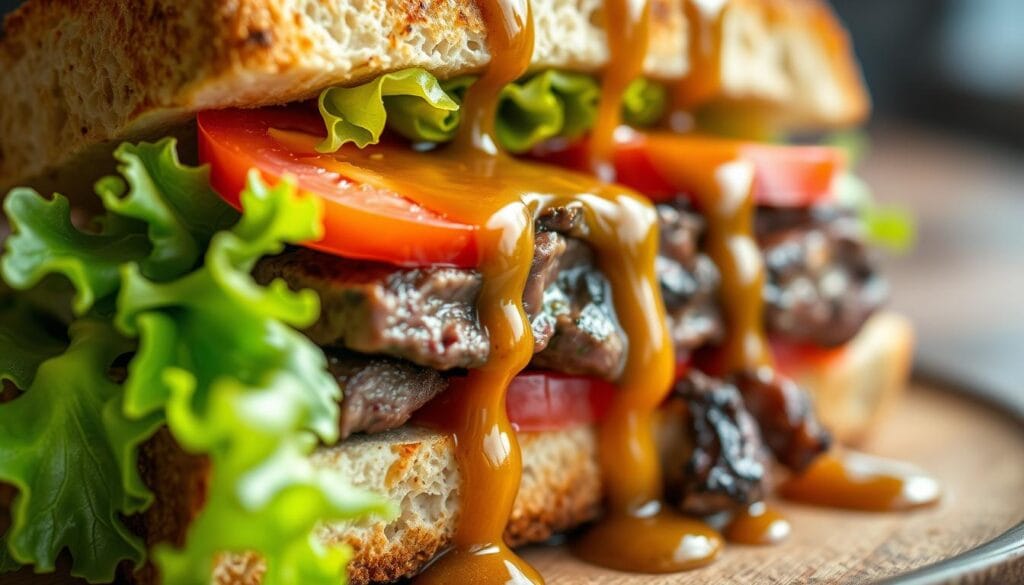

Are you craving a delicious Stir Fry Steak, savory meal that can be prepared in no time? Imagine slicing into a tender piece of beef, cooked to perfection with your favorite vegetables, all in a matter of minutes.
A perfectly cooked stir fry steak can be a game-changer for a quick weeknight dinner or a weekend meal. With a few simple ingredients and some basic cooking skills, you can create a dish that’s not only flavorful but also packed with nutrients.
Whether you’re a busy professional or an avid home cook, this article will guide you through the process of making a mouth-watering beef stir fry that’s ready in minutes.
Table of Contents
The Magic of High-Heat Cooking
Stir-frying is all about high-heat cooking. It makes your food taste better and feel different. Cooking fast at high heat gives your steak and veggies a perfect sear. This keeps their natural flavors and juices inside.
Why Stir Frying Creates Exceptional Flavor
Stir-frying gets its amazing taste from the Maillard reaction. This is when amino acids and sugars in food react to heat. It creates new flavors that are richer and more complex.
The fast cooking also keeps veggies bright and crunchy. This makes your dish look good and taste great.
The Science Behind Quick-Cooking Techniques
Quick-cooking, like stir-frying, uses high heat to cook food fast. This way, everything cooks evenly. You don’t lose moisture or flavor.
| Cooking Technique | Effect on Food | Result |
|---|---|---|
| High-Hat Cooking | Sears the outside, locking in juices | Tender interior, caramelized exterior |
| Rapid Stirring | Distributes heat evenly, prevents burning | Uniformly cooked ingredients, preserved flavors |
Learning to cook with high heat and fast techniques makes stir-fries delicious and pretty. Your meals will be more fun and satisfying.
Selecting the Perfect Beef Cuts for Stir Frying
Choosing the right beef cut is key for a tender and flavorful stir-fry. The right cut can make your dish go from good to great. When stir-frying, the beef cut you pick greatly affects the outcome.
Premium Options: Ribeye, Sirloin, and Tenderloin
Premium beef cuts are tender and full of flavor, perfect for stir-frying. Ribeye is tender and juicy thanks to its marbled fat. Sirloin balances tenderness and flavor well. For the tenderest option, tenderloin is the best, but it needs careful cooking to avoid overcooking.
- Ribeye: Tender with a rich flavor due to its marbled fat content.
- Sirloin: Offers a balance between tenderness and flavor.
- Tenderloin: The most tender cut, ideal for those seeking a melt-in-your-mouth texture.
Economical Choices: Flank, Skirt, and Flat Iron Steak
On a budget? There are affordable beef cuts great for stir-frying. Flank steak has a bold flavor and is best sliced against the grain. Skirt steak adds robust flavor to your stir-fry. Flat iron steak is tender and flavorful, yet affordable.
- Flank steak: Bold flavor, best when sliced against the grain.
- Skirt steak: Robust flavor, great for adding depth to your stir-fry.
- Flat iron steak: Tender and flavorful, a budget-friendly option.
How to Identify Quality Meat for stir Frying
Choosing quality meat is essential for a great stir-fry. Look for cuts with good color, texture, and marbling. The meat should feel firm and have a fresh, beefy smell. Stay away from cuts with too much fat or discoloration.
By picking the right beef cuts and ensuring quality, you can make your stir-fries tender and flavorful.
Essential Equipment for Stir Fry Success
The key to a perfect stir fry is the right equipment. The right tools make cooking smoother and improve your dish’s quality.
Wok vs. Frying Pan: Pros and Cons
Choosing between a wok and a frying pan is important for stir frying. A wok is best because of its shape. It helps stir ingredients quickly. But, a large frying pan works well too, if you don’t have a wok. Make sure the pan is big enough for all your ingredients.
Must-Have Utensils and Tools
Some utensils are essential, whether you use a wok or a frying pan. A long-handled spatula is key for quick stirring. Tongs are great for handling big pieces of food. Also, a cutting board and sharp knives are must-haves for prep work.
Creating an Efficient Stir Fry Workspace
A well-organized workspace is vital for stir frying. Keep your ingredients and tools close to avoid delays. Here’s a simple table to help you set up your workspace:
| Tool/Ingredient | Purpose | Placement |
|---|---|---|
| Wok or Frying Pan | Cooking Vessel | Stovetop |
| Long-handled Spatula | Stirring/Turning | Near Stovetop |
| Cutting Board | Food Preparation | Countertop |
| Sharp Knives | Chopping Ingredients | Near Cutting Board |
With the right tools and a well-organized kitchen, you’ll make delicious stir fries.
Preparation Techniques for Tender Stir Fry Meat
Getting tender stir-fry meat is not just about the cut. It’s also about how you prepare it. To get that perfect tenderness, focus on a few key techniques. These make all the difference in your stir-fry dishes.
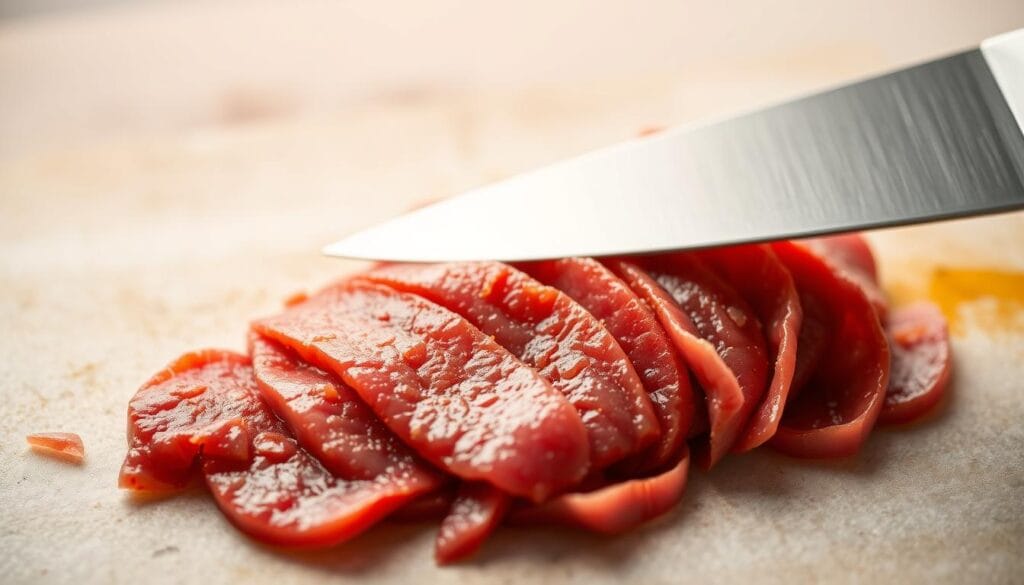
Proper Slicing Methods: Against the Grain
Slicing your meat against the grain is key for tender stir-fry. Cutting against the grain shortens muscle fibers, making meat easier to chew. To do this, find the direction of the fibers and cut in the opposite direction. This simple trick can greatly improve your stir-fry’s texture.
Velveting: The Chinese Restaurant Secret
Velveting is a secret used in many Chinese restaurants. It keeps meat tender and juicy. You marinate the meat in a mix of cornstarch, egg whites, and seasonings before cooking. This creates a protective coating that keeps the meat moist and tender during high-heat cooking.
Tenderizing Options for Tougher Cuts
For tougher cuts of meat, tenderizing is essential. You can pound the meat thin with a meat mallet or use enzymatic tenderizers like papain or bromelain. Another option is marinating in acidic ingredients like vinegar or citrus juice. These help break down proteins and tenderize the meat.
| Tenderizing Method | Description | Best For |
|---|---|---|
| Meat Mallet | Pounding the meat to make it thinner | Thick cuts of meat |
| Enzymatic Tenderizers | Using enzymes to break down proteins | Tough or chewy meat |
| Acidic Marinades | Marinating in acidic ingredients to tenderize | Most types of meat, including tougher cuts |
Flavor-Building Marinades and Seasonings
Turn your steak stir-fry into a masterpiece with simple marinades and seasonings. These ingredients are key to making your stir-fry dishes taste better. They add a savory and aromatic flavor.
Classic Asian-Inspired Marinades
Asian-inspired marinades are common in stir-fry recipes. They mix soy sauce, garlic, ginger, and sometimes sugar or honey. The goal is to get the right flavor balance so the steak tastes great.
- Mix soy sauce, olive oil, minced garlic, and grated ginger for a traditional Asian marinade.
- Add a splash of rice vinegar for a tangy twist.
- Incorporate honey or sugar to balance the savory flavors.
Dry Rubs and Spice Combinations
Dry rubs are a dry alternative to marinades. They use spices and herbs to coat the steak. This method creates a flavorful crust.
Some popular dry rub ingredients include:
- Paprika, garlic powder, and onion powder for a smoky flavor.
- Chili powder and cumin for a spicy kick.
- Dried herbs like thyme and rosemary for an earthy tone.
Quick Flavor Infusion Methods
For those in a hurry, quick flavor infusion methods work well. Using a flavor injector or rubbing the steak with spices and herbs before cooking can greatly enhance flavor.
Here are some quick infusion ideas:
- Rub the steak with a mix of minced garlic and chopped fresh herbs.
- Use a flavor injector to add a burst of marinade directly into the steak.
- Sprinkle a pre-made spice blend over the steak right before stir-frying.
By using these marinades, seasonings, and quick infusion methods, your stir-fry dishes will be both flavorful and memorable.
Ultimate Stir Fry Steak Recipe
Making a great stir fry steak is all about how you prepare and cook it. You can get restaurant-quality results at home with the right steps and ingredients.
Preparation Phase: Setting Up for Success
First, pick the right cut of beef. Premium options like ribeye or sirloin are good, but flank steak is also a budget-friendly choice.
- Cut the steak against the grain into thin strips for tenderness.
- Marinate the steak in soy sauce, garlic, and ginger for at least 30 minutes to add flavor.
The Cooking Process: Timing and Technique
Heat a wok or large frying pan over high heat and add a bit of oil.
- Cook the steak for 3-4 minutes until it’s browned and cooked to your liking.
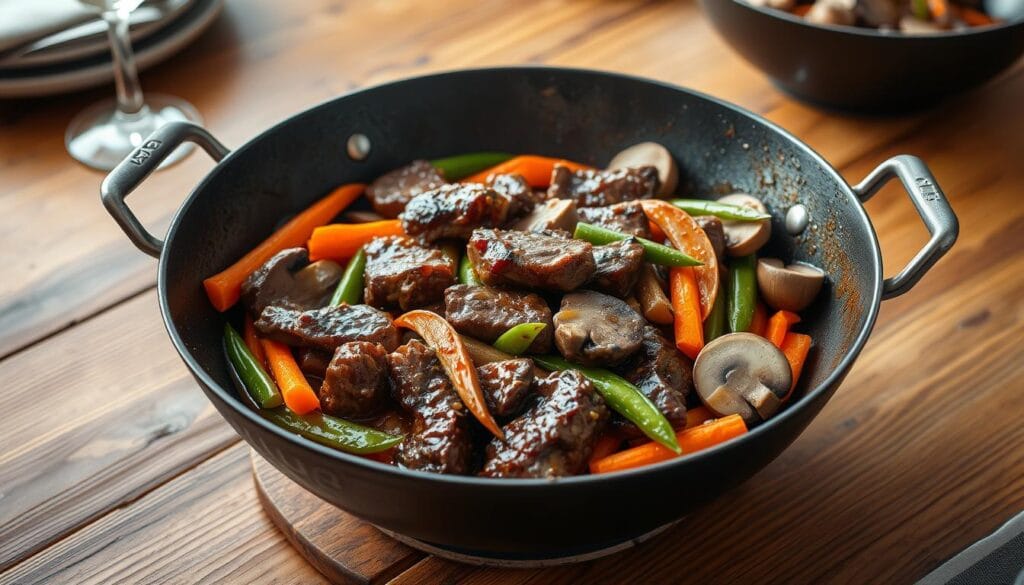
- Take the steak out of the pan and set it aside. Then, add your favorite vegetables (like bell peppers, broccoli, or carrots) and cook until they’re tender-crisp.
Finishing Touches for Restaurant-Quality Results
Put the steak back in the pan and stir in your preferred sauce (like soy sauce, oyster sauce, and hoisin sauce).
- Cook for another minute to mix the flavors well.
- Serve the stir fry steak hot, topped with green onions and sesame seeds if you like.
By following these steps, you can make a restaurant-quality stir fry steak that will wow everyone. The mix of tender steak, crisp veggies, and savory sauce will make this dish a favorite in your kitchen.
Creative Stir Fry Variations and Combinations
Stir fry recipes are full of possibilities. You can mix and match ingredients, seasonings, and sauces. This way, you can make dishes that everyone will love.
Complementary Vegetable Pairings
Choosing the right veggies is key for a great stir fry. Here are some top picks:
- Broccoli and bell peppers: A classic mix that’s crunchy and sweet.
- Carrots and snap peas: They offer a nice contrast in texture and taste.
- Mushrooms and baby corn: They bring an earthy taste and a splash of color.
Global Flavor Profiles to Explore
Stir fry can take on many global flavors. Here are some exciting ones to try:
- Szechuan: It’s known for bold flavors and a spicy kick.
- Thai: It’s a mix of sweet, sour, and spicy.
- Japanese: It uses soy sauce, sake, and mirin for a deep umami taste.
Sauce Formulas for Every Taste Preference
The right sauce can make your stir fry amazing. Here are some favorites:
- Soy sauce and oyster sauce: A savory and umami-rich mix.
- Hoisin and rice vinegar: It’s sweet and tangy.
- Chili garlic sauce: Perfect for those who like it spicy.
Try different veggies, global flavors, and sauces. You’ll find many stir fry variations that you’ll love.
Troubleshooting Common Stir Fry Challenges
Mastering stir-frying can be tough, but knowing common problems helps. Several things can go wrong, affecting your meal’s quality.
Preventing Tough or Overcooked Meat
One big stir fry challenge is tough or overcooked meat. Slice your steak thinly against the grain for quick cooking and tenderness. Watch the cooking time and temperature closely. Use a thermometer to check the meat’s doneness.
Solving Sauce and Seasoning Issues
Sauce issues happen when flavors are off. Taste your sauce before adding it to your stir-fry. Adjust the seasoning as needed. Add more soy sauce, vinegar, or spices for the right flavor. A cornstarch slurry can thicken the sauce.
Fixing Texture and Temperature Problems
Texture problems come from wrong ingredient prep. Cut vegetables evenly for even cooking. Preheat your wok or pan well before adding ingredients. This ensures a quick, even sear, key for a great stir-fry.
By tackling these stir fry challenges, you can make your dishes better. With practice and focus, you’ll make delicious stir-fries at home.
Conclusion
You now know how to make tender, savory stir fry steak quickly. You’ve learned about high-heat cooking, choosing the right beef, and using key tools. You’re ready for stir fry success.
Keep exploring by trying different marinades, seasonings, and veggies. Find your favorite stir fry mix. Don’t hesitate to try new recipes and methods to keep your meals fresh and tasty.
With these tips and a little practice, you’ll soon make stir fry dishes like a pro. So, start cooking and enjoy the delicious flavors of your stir fry steak.
FAQ
What is the best beef cut for stir-fry steak?
How do I achieve tender stir-fry meat?
What is the difference between a wok and a frying pan for stir-frying?
How do I prevent overcooking or tough meat in stir-fry dishes?
What are some classic Asian-inspired marinades for stir-fry steak?
How do I create an efficient stir-fry workspace?
What are some global flavor profiles that can be used in stir-fry dishes?
How do I fix sauce and seasoning issues in stir-fry dishes?
What are some complementary vegetable pairings for stir-fry steak?
How do I achieve restaurant-quality results with stir-fry steak?
How did you find results our recipes
There are no reviews yet. Be the first one to write one.