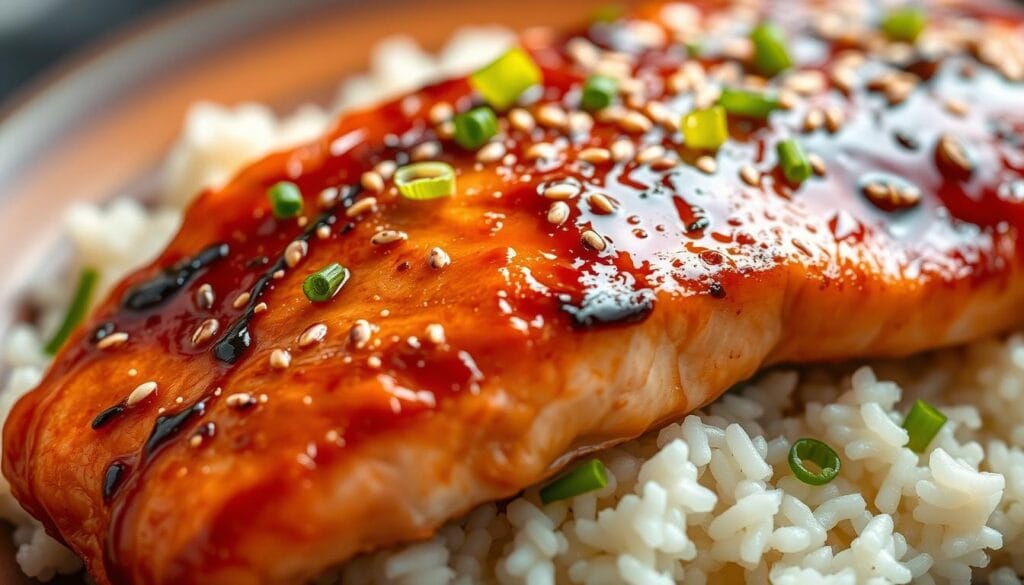
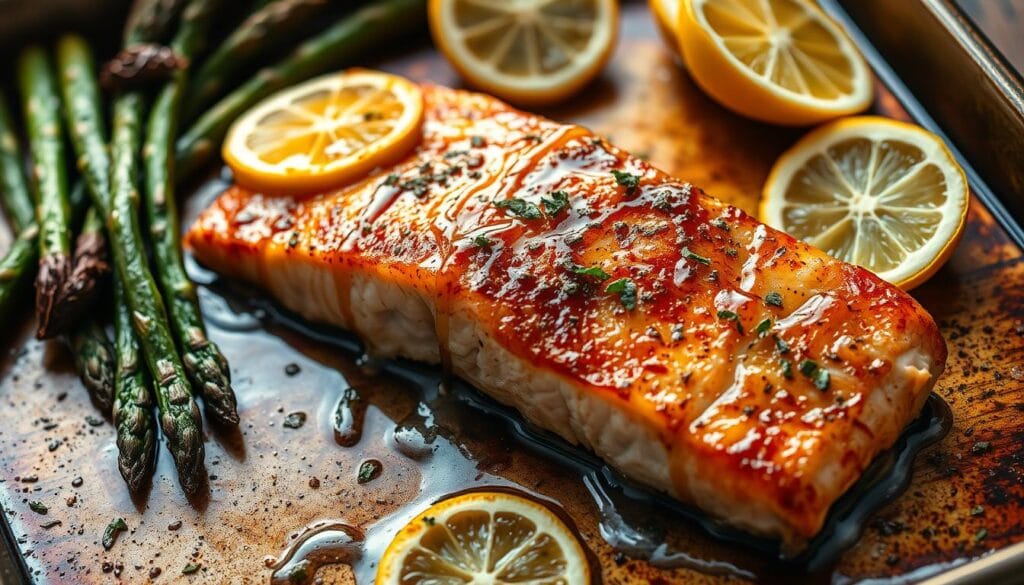
Are you searching for a quick and tasty way to cook salmon? Look no further than broiling. It’s a simple method that highlights the fish’s best qualities.
Cooking salmon is a breeze. With just a few ingredients and basic tools, you can make a dish that will wow everyone. We’ll dive into the details of cooking salmon to perfection with broiling.
Table of Contents
The Benefits of Broiling Salmon
Broiling salmon is a top choice for cooking. It’s simple and healthy. This method keeps the salmon’s flavor and nutrients intact.
Nutritional Advantages of Salmon
Salmon is packed with proteins, omega-3 fatty acids, and vitamins. Broiling salmon keeps these nutrients in, making it a great meal option. Omega-3s are good for your heart and fight inflammation.
Why Broiling is an Excellent Cooking Method
Broiling cooks salmon fast, keeping it juicy and tasty. It uses little oil, which is better for your health. The broiler’s dry heat ensures even cooking without drying out the fish.
Time and Energy Efficiency
Broiling salmon is quick and easy. It takes less time and effort than baking or grilling. It’s perfect for busy days or when you’re short on time.
| Cooking Method | Cooking Time | Nutrient Retention |
|---|---|---|
| Broiling | 8-12 minutes | High |
| Baking | 12-15 minutes | High |
| Grilling | 4-6 minutes per side | Medium |
The table shows broiling salmon is a smart choice. It balances cooking time with nutrient preservation, making it a healthy option.
Selecting the Perfect Salmon for Broiling
Finding the right salmon for broiling is key. With many options, picking the best can be tough. Knowing the differences in salmon types helps make the right choice.
Fresh vs. Frozen Salmon
Deciding between fresh and frozen salmon is a big choice. Fresh salmon is often the top pick, but frozen can be just as good. Frozen salmon is usually frozen right after catching, keeping its taste and texture better.
When picking between fresh and frozen, think about these points:
- Fresh salmon looks better and feels firmer.
- Frozen salmon is cheaper and just as healthy.
- Good frozen salmon keeps its taste and texture.
Different Types of Salmon and Their Flavors
There are many salmon types, each with its own taste. The most common are:
- Chinook (King Salmon): Rich, buttery flavor.
- Sockeye (Red Salmon): Strong, slightly sweet taste.
- Atlantic Salmon: Mild flavor, tender texture.
- Coho (Silver Salmon): Good balance of flavor and texture.
Wild-Caught vs. Farm-Raised
Choosing between wild-caught and farm-raised salmon is also important. Wild-caught salmon is often preferred for its taste and texture. Farm-raised salmon is raised in controlled settings and can be more sustainable.
Here are some key differences:
- Wild-caught salmon tastes more robust.
- Farm-raised salmon is more consistent in quality.
- Wild-caught salmon might be more nutritious.
How to Check for Freshness
Checking for freshness is key, whether you choose fresh or frozen salmon. Here are some tips:
- Look for firm, vibrant flesh.
- Check for a pleasant ocean-like smell.
- Avoid salmon with visible signs of drying or browning.
By following these tips, you can make sure your salmon is fresh and ready for broiling.
Essential Equipment for Broiling Salmon
To get perfectly broiled salmon, you need the right tools. Broiling salmon needs careful attention and the right equipment for a tasty result.
Broiler Pan Options
A broiler pan is key for broiling salmon. It helps cook the salmon evenly and brown it nicely. You can pick a special broiler pan or something else that works just as well.
Alternatives to Specialized Broiler Pans
Don’t have a broiler pan? No worries. A seasoned cast-iron skillet works great. It’s safe for the broiler and gives a nice nonstick surface.
Other Helpful Tools
Along with a broiler pan, other tools can make broiling better.
Instant-Read Thermometers
An instant-read thermometer checks if your salmon is cooked right. It helps avoid undercooking or overcooking.
Fish Spatulas
A fish spatula is perfect for flipping and removing salmon gently. It’s a must-have for anyone serious about cooking.
| Tool | Purpose | Benefit |
|---|---|---|
| Broiler Pan | Even cooking and browning | Professional results |
| Cast-Iron Skillet | Alternative to broiler pan | Versatility in cooking |
| Instant-Read Thermometer | Accurate temperature check | Perfectly cooked salmon |
| Fish Spatula | Gentle flipping and serving | Preserves the fish integrity |
Preparing Your Salmon Before Broiling
Getting your salmon ready right is key to a tasty broiled dish. The steps you take before broiling can greatly affect the taste.
Proper Thawing Techniques
If your salmon is frozen, thawing it correctly is essential. It ensures even cooking and keeps food safe. The best way is to thaw it in the fridge overnight.
If you’re in a hurry, thaw it under cold water. Change the water every 30 minutes.
Removing Bones and Skin (Optional)
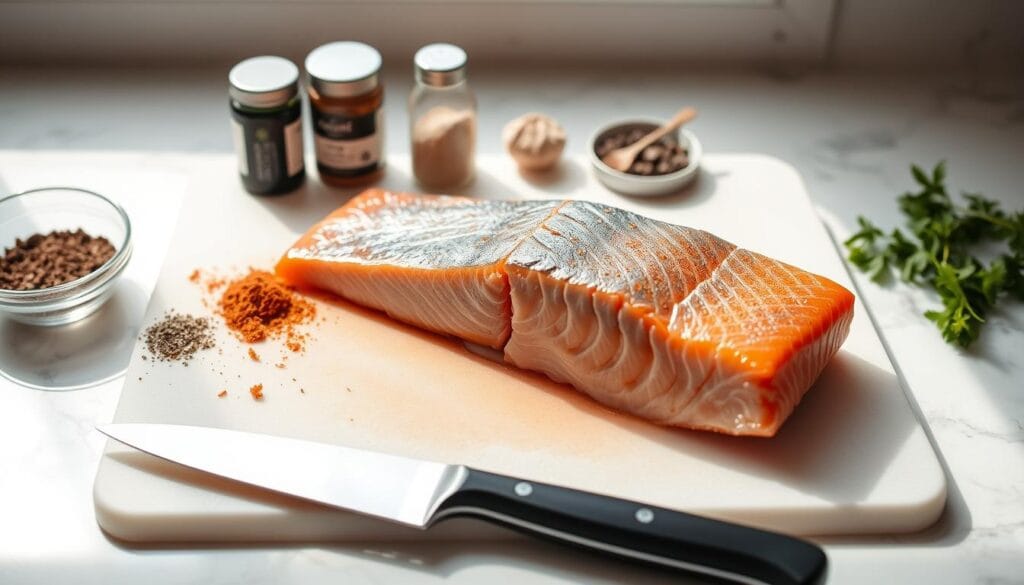
You might choose to remove the bones and skin from your salmon. Removing the skin lets seasonings get deeper into the fish. Leaving it on keeps the fish moist. Use tweezers or a sharp knife to remove bones carefully.
Portioning Your Salmon
Divide your salmon into even sizes for even cooking. Cut it into portions of about 6 ounces each. This size is perfect for broiling and serves one person well.
Patting Dry for Better Results
Pat your salmon dry with paper towels before broiling. This step helps the outside get crispy. It’s a simple trick to make your broiled salmon better.
| Preparation Step | Importance | Tips |
|---|---|---|
| Thawing | High | Refrigerate overnight or thaw under cold running water. |
| Removing Bones/Skin | Optional | Use tweezers for bones; peel off skin or leave it on for moisture. |
| Portioning | High | Cut into 6-ounce portions for even cooking. |
| Patting Dry | High | Use paper towels to remove excess moisture. |
How to Broil Salmon: Step-by-Step Guide
To make delicious broiled salmon, follow these steps carefully. Broiling salmon is easy if you know the basics and pay attention to details.
Setting Up Your Broiler
First, make sure your broiler is hot. Most have a simple switch or temperature control. Set it to high for the best results.
Positioning the Salmon
Put the salmon on a broiler pan, skin side down if it has skin. If not, arrange it for even cooking. Place it on the middle rack for good air flow.
Timing and Temperature Guidelines
The cooking time depends on the salmon’s thickness and how close it is to the broiler. Here are some tips:
Thickness-Based Cooking Times
Cook a 1-inch thick fillet for 8-12 minutes total. For every inch, add 4-6 minutes per side.
Broiler Distance Adjustments
The distance from the broiler affects cooking time. Closer means faster cooking. Adjust the time to avoid overcooking.
| Salmon Thickness | Distance from Broiler | Cooking Time |
|---|---|---|
| 1 inch | 3 inches | 8-10 minutes |
| 1.5 inches | 4 inches | 12-14 minutes |
| 2 inches | 5 inches | 16-18 minutes |
How to Tell When Salmon is Perfectly Cooked
Salmon is done when it flakes easily with a fork. You can also check by cutting into the thickest part. It should be opaque and flaky.
Resting Your Salmon After Broiling
After cooking, take the salmon out and let it rest for a few minutes. This makes it tender and flavorful when you serve it.
Delicious Marinades and Seasonings for Broiled Salmon
Make your broiled salmon taste amazing with tasty marinades and seasonings. The right mix can turn a simple dish into a masterpiece.
Classic Lemon and Herb
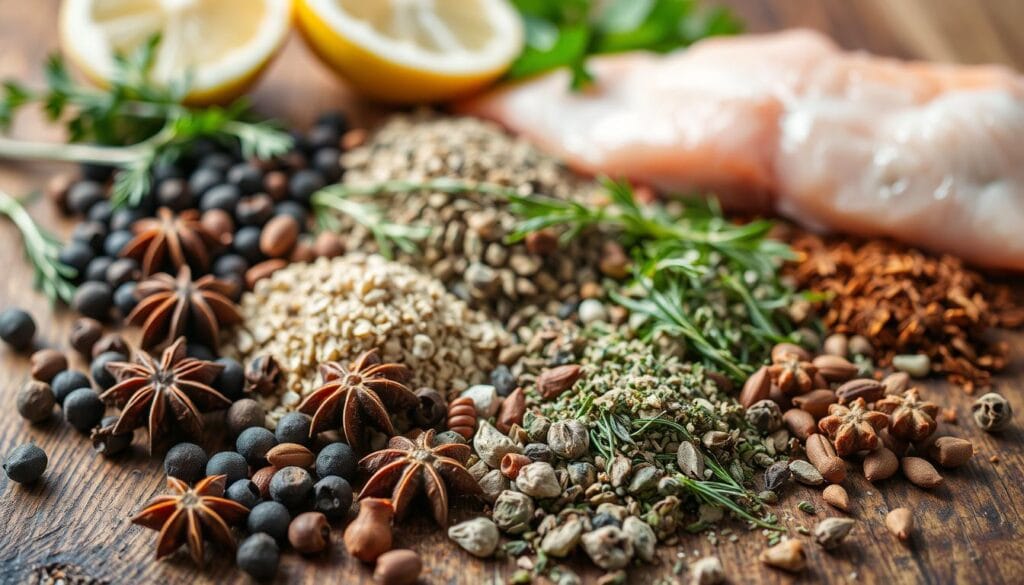
The classic lemon and herb mix is a favorite for good reason. Mix lemon juice, olive oil, garlic, and herbs like parsley or dill. It adds a bright flavor and keeps the salmon moist.
Asian-Inspired Flavors
Try soy sauce, ginger, and sesame oil for an Asian twist. Add honey for sweetness. This mix balances savory and sweet, perfect for salmon.
Mediterranean Seasonings
Mediterranean flavors are bold and aromatic. Mix oregano, thyme, lemon zest, and olive oil. It’s a healthy and flavorful choice for salmon.
Spicy Options
For spice lovers, use chili flakes, lime juice, and cilantro. It adds a bold flavor to your salmon.
Simple Salt and Pepper Approach
For a simple taste, use salt, pepper, and lemon. It lets the salmon’s natural flavors shine.
When to Apply Seasonings
When you add seasonings or marinades matters. Most marinades need 30 minutes to 1 hour before broiling. Dry seasonings can go on just before or during the last few minutes.
- Classic Lemon and Herb: 30 minutes to 1 hour before broiling
- Asian-Inspired Flavors: 1-2 hours before broiling for deeper flavor penetration
- Mediterranean Seasonings: Apply just before broiling for a fresh flavor
- Spicy Options: 30 minutes to 1 hour before broiling
- Simple Salt and Pepper: Apply just before broiling
Try different flavor options and salmon seasonings to find your favorite. Whether you prefer classic or bold, there’s something for everyone.
Complementary Side Dishes for Your Broiled Salmon
Choosing the right side dishes can make your meal even better. It’s important to pick dishes that enhance the salmon’s flavor without taking over.
Vegetable Pairings
Vegetables are a great match for broiled salmon. They add color, texture, and nutrients. Roasted veggies and fresh salads are excellent choices.
Roasted Vegetables
Roasting vegetables brings out their natural sweetness. This sweetness complements the savory salmon. Try roasting asparagus, Brussels sprouts, or bell peppers with olive oil, salt, and pepper.
Fresh Salads
A fresh salad offers a cool contrast to the warm salmon. You can make a simple salad with mixed greens, cherry tomatoes, and a light vinaigrette. Or, get creative with quinoa, avocado, and citrus.
Grain and Starch Options
Grains and starches are also great with broiled salmon. They help make the meal more filling and provide energy.
Rice and Quinoa Dishes
Rice and quinoa are versatile. Try a flavorful pilaf or a simple seasoned rice to go with your salmon.
Potato Preparations
Potatoes are another excellent choice. You can roast, mash, or make a potato salad. Each way offers a different taste and texture that goes well with salmon.
Complete Meal Ideas
To make a complete meal, mix your broiled salmon with various side dishes. Pair it with roasted veggies and quinoa for a nutritious, filling meal.
| Side Dish | Description | Pairing Tip |
|---|---|---|
| Roasted Asparagus | Asparagus roasted with olive oil, salt, and pepper | Pairs well with lemon-herb seasoned salmon |
| Quinoa Salad | Quinoa mixed with vegetables and a citrus vinaigrette | Complements the rich flavor of salmon |
| Garlic Mashed Potatoes | Mashed potatoes with garlic and butter | Provides a comforting contrast to the light salmon |
Troubleshooting Common Broiled Salmon Problems
Broiling salmon is usually simple, but some issues can pop up. These include dryness, sticking, or uneven cooking. With the right knowledge, you can avoid or fix these problems and get a great dish.
Preventing Dryness
To avoid dryness, don’t overcook the salmon. A marinade or sauce can keep it moist. Also, pat the salmon dry before broiling to improve texture and prevent dryness.
- Use a thermometer to ensure the salmon is cooked to the correct internal temperature.
- Don’t overcrowd the broiler pan, as this can lead to uneven cooking and dryness.
Dealing with Sticking Issues
To stop salmon from sticking, clean the broiler pan and brush it with oil. You can also use a non-stick pan or line it with aluminum foil for easy cleanup.
Fixing Uneven Cooking
Uneven cooking happens if the salmon isn’t placed right in the broiler. Make sure it’s in the center and the broiler is preheated evenly.
Managing Smoke While Broiling
Some smoke is okay when broiling, but too much means your broiler or heat is too high. Clean your broiler often and adjust the heat to control smoke.
Handling Leftover Salmon
Leftover salmon needs to be stored right to stay good. Cool it down fast and refrigerate it within two hours.
Proper Storage Methods
Put leftover salmon in an airtight container in the fridge. You can also wrap it tightly in plastic wrap or aluminum foil.
Reheating Without Drying Out
To reheat salmon without drying it, use low heat. Cover it with a lid or foil to keep moisture in. You can reheat it in the oven or on the stovetop.
By using these cooking tips and troubleshooting methods, you can always have perfectly broiled salmon. Whether you’re working with leftovers or starting fresh, these tips will help you get delicious results.
Conclusion
Broiling salmon is easy and tasty. This article showed you how to make a delicious broiled salmon recipe. You learned how to pick the right salmon and cook it perfectly.
Now, you can try different marinades and seasonings to find your favorite. Broiled salmon is great for any meal, whether it’s a quick dinner or a special occasion. Try it with roasted veggies or quinoa for a complete meal.
Mastering broiling salmon means you’re ready to cook amazing dishes. With practice, you’ll get better at making delicious broiled salmon that everyone will love.
FAQ
What is the best type of salmon to use for broiling?
How do I know if my salmon is fresh?
Can I broil salmon with the skin on?
How long does it take to broil salmon?
What are some common marinades and seasonings for broiled salmon?
How do I prevent dryness when broiling salmon?
What are some good side dishes to serve with broiled salmon?
Can I reheat leftover broiled salmon?
How do I store leftover broiled salmon?
How did you find results our recipes
There are no reviews yet. Be the first one to write one.