Table of Contents
Introduction
Tired of spending a fortune on boneless chicken breasts that turn out dry and flavorless? You’re missing out on one of the most underrated cuts in the poultry section. Chicken leg quarters deliver incredibly juicy, fall-off-the-bone meat with rich, deep flavor that puts expensive white meat to shame.
These three foolproof cooking methods will transform your chicken leg quarters into restaurant-quality meals that cost less than half the price of premium cuts. As a professional chef with 12 years of experience perfecting poultry techniques, I’ve discovered that leg quarters are the secret weapon for creating memorable family dinners without breaking the bank.
In this comprehensive guide, you’ll learn how to select the best chicken leg quarters, master three essential cooking techniques, discover pro tips for achieving perfect results every time, and explore flavor variations that will keep your family asking for seconds. Get ready to become the chicken leg quarter champion of your kitchen!
Why This Chicken Recipe Works
Chicken leg quarters are the ultimate combination of affordability, flavor, and foolproof cooking success. Here’s why these methods consistently deliver outstanding results:
- Uses affordable, easy-to-find cuts of chicken – Leg quarters cost 60-70% less than boneless breasts while delivering superior taste and juiciness
- Nearly impossible to overcook – The dark meat and bone protect against drying out, making them perfect for beginners
- Rich, complex flavor profile – Dark meat contains more fat and connective tissue, creating deeper, more satisfying taste than white meat
- Perfect for weeknights or weekend feasts – Quick enough for busy evenings, impressive enough for entertaining guests
- Meal prep champion – Stays moist when reheated, making it ideal for batch cooking and leftovers
- Versatile cooking options – Adapts beautifully to roasting, braising, and grilling with consistent results
Choosing the Right Chicken
The foundation of exceptional chicken leg quarters starts with selecting quality pieces that will reward your cooking efforts.
Best Cuts for These Recipes
Fresh Chicken Leg Quarters: Look for quarters with the drumstick and thigh still connected. This classic cut provides the perfect balance of meat, fat, and bone for optimal flavor and moisture retention. The bone acts as a natural heat conductor, ensuring even cooking throughout.
Skin-On vs. Skinless: Always choose skin-on leg quarters when possible. The skin protects the meat during cooking, renders delicious fat for flavor, and creates that coveted crispy texture when properly prepared. Skinless quarters work but require more careful attention to prevent drying.
Size Considerations: Choose quarters that are roughly the same size for even cooking. Quarters weighing 8-12 ounces each are ideal for individual portions and consistent timing across all three cooking methods.
Buying Tips
Look for chicken leg quarters with plump, firm meat and skin that appears creamy white to pale yellow. Avoid packages with excess liquid, which indicates the chicken may have been previously frozen or stored improperly. The meat should have a fresh, neutral smell without any off odors.
For the best value, buy family packs when leg quarters are on sale and freeze individually wrapped portions for future meals. Choose air-chilled chicken when available, as it retains less water and develops better browning during cooking.
Smart Substitutions
While leg quarters are ideal for these methods, you can substitute whole chicken thighs (increase cooking time slightly) or even duck legs for a more luxurious twist. For budget-conscious cooks, chicken drumsticks work well but may require shorter cooking times due to their smaller size.
Ingredients & Prep
Chicken Prep Essentials
Trimming and Cleaning: Pat chicken leg quarters completely dry with paper towels. Trim any excess skin that hangs beyond the meat, as this can burn during cooking. Remove any visible fat deposits larger than a quarter, but leave most of the skin intact for flavor and moisture.
Seasoning Strategy: Season chicken leg quarters at least 30 minutes before cooking, or up to 24 hours in advance for deeper flavor penetration. The salt will draw moisture out initially, then reabsorb it along with the seasonings, creating a natural brine effect.
Temperature Matters: Remove chicken from refrigerator 20-30 minutes before cooking to bring closer to room temperature. This ensures more even cooking and prevents the outside from overcooking before the inside reaches safe temperature.
Essential Marinades and Rubs
Classic Herb Rub: Combine 2 teaspoons salt, 1 teaspoon black pepper, 1 teaspoon garlic powder, 1 teaspoon onion powder, 1 teaspoon dried thyme, and 1 teaspoon paprika. This blend enhances the natural chicken flavor without overwhelming it.
Quick Buttermilk Marinade: Soak chicken in buttermilk with salt, pepper, and hot sauce for 2-24 hours. The acid tenderizes the meat while adding tangy flavor and ensuring incredibly juicy results.
Mediterranean Marinade: Olive oil, lemon juice, minced garlic, dried oregano, and rosemary create a bright, herbaceous flavor that pairs beautifully with roasted vegetables.
Pantry Staples for Success
Stock these essentials for spontaneous chicken leg quarter meals: olive oil or vegetable oil for cooking, kosher salt for seasoning, black pepper, garlic powder, onion powder, paprika, and dried herbs like thyme or rosemary. Keep lemons on hand for brightness and white wine or chicken broth for deglazing and braising.
Step-by-Step Cooking Instructions
Method 1: Oven Roasting (Perfect for Beginners)
Pre-Cooking Prep: Preheat oven to 425°F. Pat chicken leg quarters dry and season generously with salt, pepper, and your chosen spice blend. Let seasoned chicken sit at room temperature for 20 minutes while oven heats.
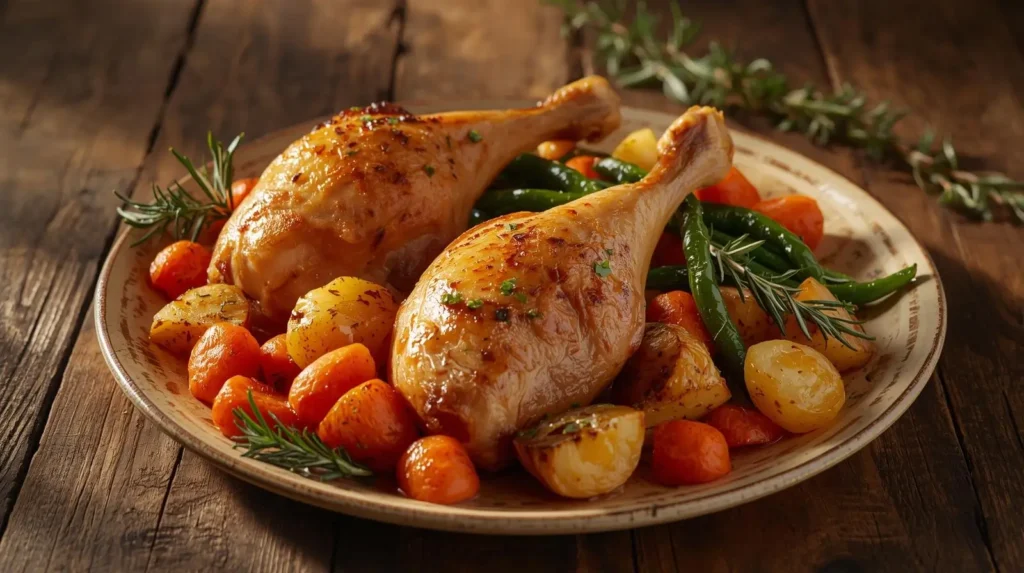
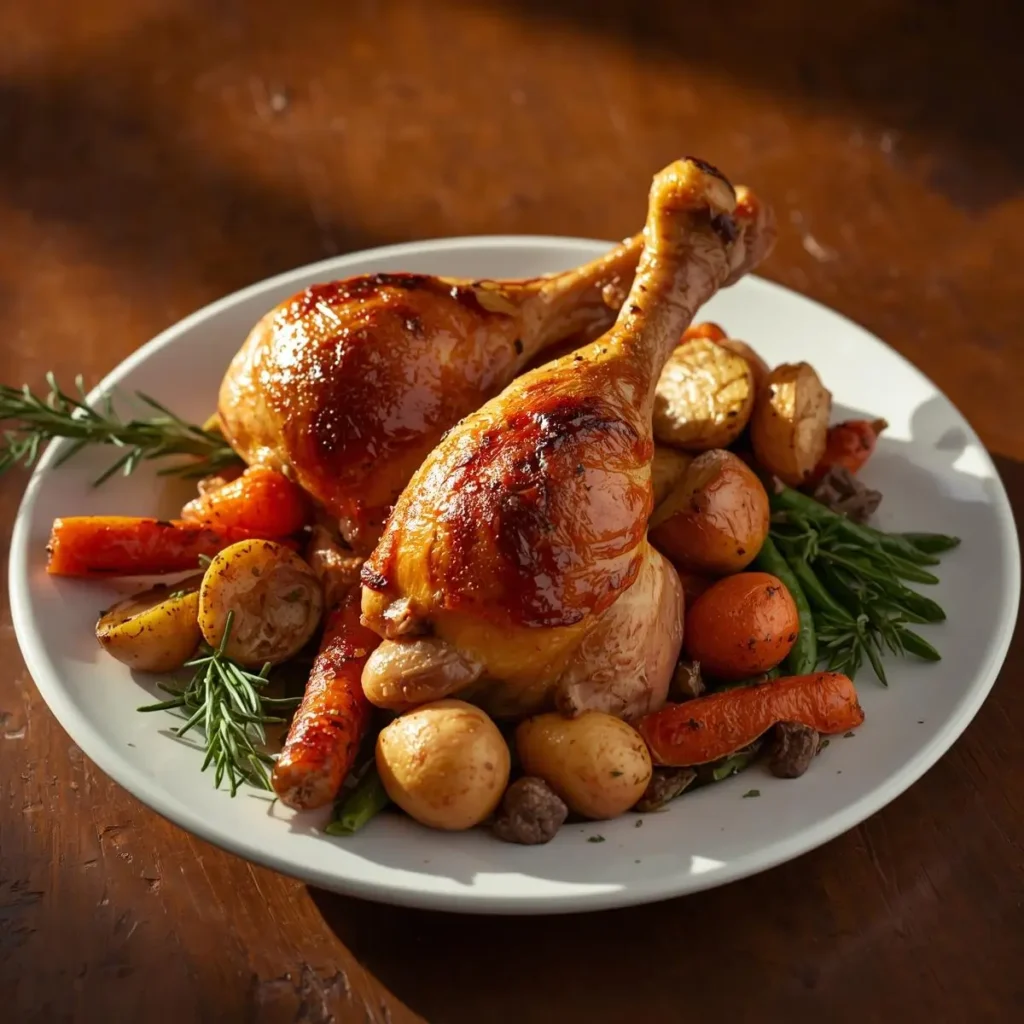
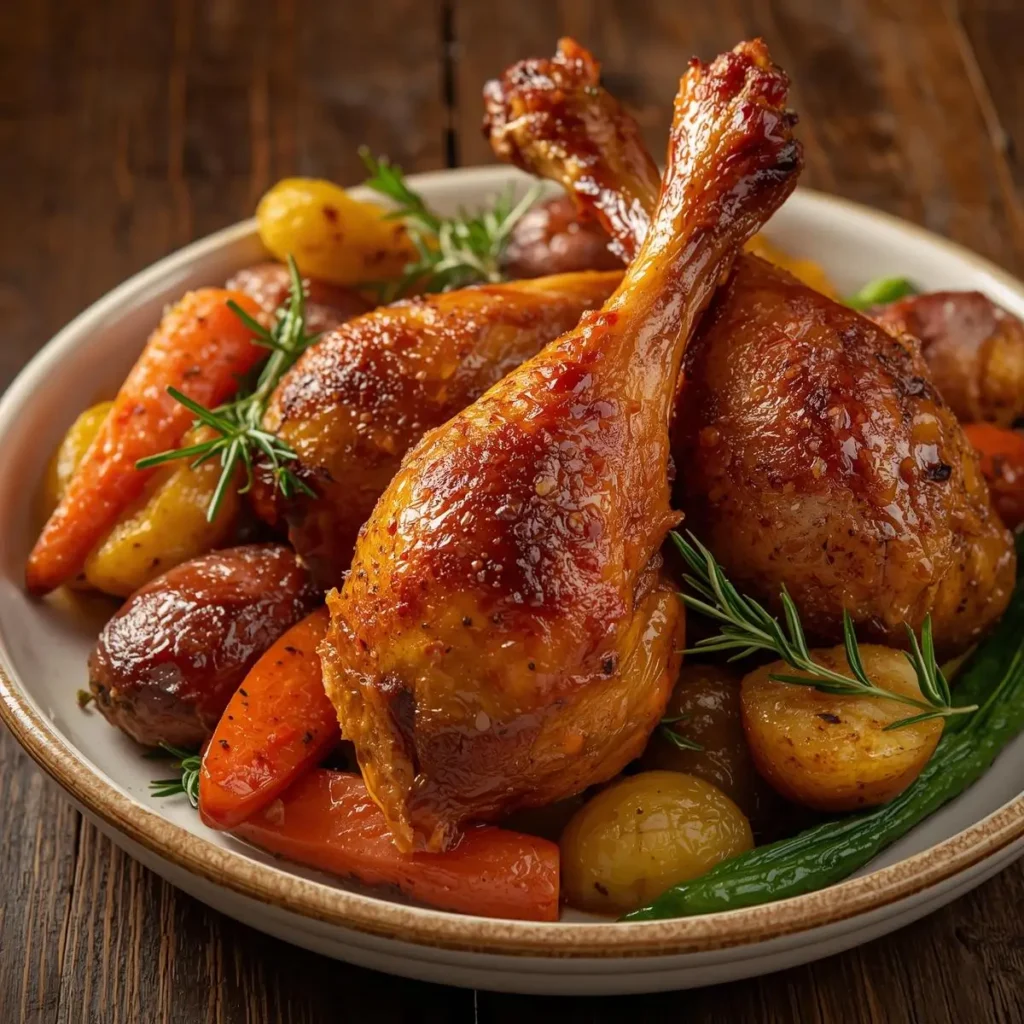
Roasting Technique: Place chicken leg quarters skin-side up on a rimmed baking sheet lined with parchment paper. Roast for 35-45 minutes, depending on size, until skin is golden brown and crispy. No turning required with this method.
Doneness Check: Use an instant-read thermometer inserted into the thickest part of the thigh, avoiding bone. Internal temperature should reach 165°F. Juices should run clear when pierced with a knife.
Resting Period: Let chicken rest 5 minutes after removing from oven. This allows juices to redistribute throughout the meat, ensuring maximum tenderness and preventing them from running out when carved.
Method 2: Braising (For Ultimate Tenderness)
Initial Searing: Heat 2 tablespoons oil in a heavy Dutch oven over medium-high heat. Sear chicken leg quarters skin-side down for 4-5 minutes until golden brown. Flip and sear another 3-4 minutes. Remove and set aside.
Building the Braise: In the same pot, sauté aromatics like onions, carrots, and celery until softened. Add liquid (chicken broth, wine, or combination) to come halfway up the chicken when returned to pot. Add herbs like thyme, bay leaves, or rosemary.
Low and Slow Cooking: Return chicken to pot skin-side up, cover, and transfer to 325°F oven. Braise for 1.5-2 hours until meat is fork-tender and practically falling off the bone. The liquid should be barely simmering.
Finishing Touches: Remove chicken and strain braising liquid. Reduce liquid on stovetop if desired for a more concentrated sauce. Serve chicken with the reduced braising liquid spooned over top.
Method 3: Grilling (For Smoky Flavor)
Grill Setup: Preheat grill to medium heat (300-350°F). For charcoal grills, arrange coals to create indirect heat zones. For gas grills, light one side and leave the other side off for indirect cooking.
Initial Searing: Start chicken leg quarters skin-side down over direct heat for 3-4 minutes to get initial browning and render some fat. Watch for flare-ups and move chicken as needed.
Indirect Cooking: Move chicken to cooler side of grill, skin-side up. Cover and cook for 25-35 minutes, maintaining grill temperature around 325°F. Avoid lifting the lid frequently to maintain consistent temperature.
Final Crisping: During last 5 minutes, move chicken back over direct heat skin-side down to crisp the skin. Watch carefully to prevent burning. Internal temperature should reach 165°F in the thickest part of the thigh.
Pro Tips for Perfect Chicken
Avoiding Tough, Dry Chicken
Don’t Rush the Process: Chicken leg quarters have more connective tissue than breasts, which needs time to break down into gelatin for tenderness. Low, steady heat produces better results than high, fast cooking.
Baste for Extra Moisture: During roasting or grilling, baste chicken with pan drippings, melted butter, or marinade every 15-20 minutes. This adds flavor and helps maintain surface moisture for better browning.
Monitor Temperature Zones: Different parts of the leg quarter cook at different rates. The drumstick often finishes first, so position it toward cooler areas of your grill or oven if possible.
Essential Tool Recommendations
An instant-read thermometer eliminates guesswork and prevents overcooking. A heavy Dutch oven distributes heat evenly for perfect braising. Tongs allow you to turn chicken without piercing and losing juices. A rimmed baking sheet prevents drippings from spilling in your oven.
Storage and Reheating Strategies
Cooked chicken leg quarters keep in the refrigerator for up to 4 days. Store with any accumulated juices to maintain moisture. For reheating, use a 325°F oven and add a splash of broth to the pan to create steam. Cover with foil to prevent surface drying.
Freeze cooked leg quarters for up to 3 months. Separate the meat from bones before freezing for easier portioning. Thaw overnight in refrigerator before reheating gently in covered pan with added liquid.
Flavor Variations
Spicy Heat Variations
Add cayenne pepper, chipotle powder, or hot paprika to your dry rubs for warmth without overwhelming heat. For serious spice lovers, marinate in buttermilk mixed with hot sauce and cayenne. Korean gochujang mixed with soy sauce and rice vinegar creates complex heat with umami depth.
Buffalo-style leg quarters work beautifully: toss cooked chicken in melted butter mixed with hot sauce and serve with cooling ranch or blue cheese dressing.
Keto and Paleo-Friendly Options
Chicken leg quarters naturally fit low-carb lifestyles perfectly. Skip sugary BBQ sauces and focus on herb rubs, olive oil-based marinades, and vegetable sides. Coconut milk makes an excellent braising liquid for paleo cooking, adding richness without dairy.
For keto meal prep, serve alongside roasted low-carb vegetables like broccoli, asparagus, or Brussels sprouts tossed in the rendered chicken fat for extra flavor.
Global Flavor Inspirations
Mediterranean Style: Marinate in olive oil, lemon juice, oregano, and garlic. Serve with roasted vegetables and tzatziki sauce for a Greek-inspired meal.
Mexican Influence: Use cumin, chili powder, lime juice, and cilantro in your rub. Serve with black beans, avocado, and fresh salsa for a south-of-the-border feast.
Asian Fusion: Soy sauce, ginger, garlic, and sesame oil create an umami-rich marinade. Finish with scallions and sesame seeds, served over rice with steamed vegetables.
Serving Suggestions
Perfect Side Dish Pairings
Creamy mashed potatoes or roasted baby potatoes complement the rich flavors of braised chicken leg quarters. For lighter options, try roasted root vegetables, green beans almondine, or a fresh arugula salad with lemon vinaigrette.
Grilled leg quarters pair beautifully with corn on the cob, coleslaw, and baked beans for classic barbecue vibes. For elegant entertaining, serve alongside wild rice pilaf and roasted asparagus.
Wine and Beer Pairings
Rich red wines like Côtes du Rhône or Zinfandel complement the deep flavors of roasted or braised chicken leg quarters. For white wine lovers, choose full-bodied options like Chardonnay or Viognier that can stand up to the robust meat.
Beer pairings work wonderfully too: wheat beers complement spicy preparations, while amber ales pair nicely with herb-crusted versions. For braised preparations, try a light red ale or porter.
Complete Meal Ideas
Transform leftover chicken leg quarters into hearty soups, chicken salad with plenty of fresh herbs, or shredded filling for tacos and quesadillas. The rendered fat makes excellent cooking oil for roasting vegetables or frying potatoes.
FAQs
Can I use frozen chicken leg quarters?
Yes, but thaw completely first for food safety and even cooking. Thaw overnight in the refrigerator, or use the cold water method for quicker results. Never cook from frozen, as the outside will overcook before the inside reaches safe temperature.
Pat thawed chicken extra dry, as previously frozen chicken releases more moisture during cooking. This extra moisture can prevent proper browning and create steam instead of the desired crispy skin.
How do I fix overcooked chicken leg quarters?
While leg quarters are more forgiving than white meat, overcooked dark meat can become stringy. Shred overcooked chicken and use in soups, stews, or casseroles where added liquid helps rehydrate the meat.
For future prevention, invest in an instant-read thermometer and remove chicken from heat as soon as it reaches 165°F internal temperature.
Are chicken leg quarters safe during pregnancy?
Yes, when cooked to proper internal temperature of 165°F. Pregnant women should avoid undercooked poultry, so use a thermometer to ensure safety. Well-cooked chicken leg quarters are actually easier to verify for doneness than boneless cuts because the bone conducts heat evenly.
Why is my chicken skin not crispy?
Moisture is the enemy of crispy skin. Ensure chicken is completely dry before cooking, don’t overcrowd the pan, and use high enough heat initially to render the fat. For braised chicken, remove the lid during the last 15 minutes and increase oven temperature to 425°F to crisp the skin.
Can I remove the skin for healthier cooking?
You can, but you’ll sacrifice flavor, moisture, and the natural protection skin provides during cooking. If you prefer skinless, reduce cooking time slightly and consider using marinades or brines to maintain moisture. Braising works particularly well for skinless leg quarters.
Conclusion
Ready to revolutionize your chicken game? These three proven cooking methods will transform affordable chicken leg quarters into restaurant-quality meals that impress family and friends while keeping your grocery budget happy. Start with the foolproof roasting method tonight, then experiment with braising and grilling as you build confidence.
Join over 10,000 home cooks who’ve discovered the secret of perfect chicken leg quarters! Each method offers unique advantages, so try them all to find your favorite approach for different occasions and seasons.
Looking for more budget-friendly protein inspiration? Try our Ultimate Guide to Cooking Pork Shoulder next, or explore our complete collection of affordable cuts that deliver gourmet results without the premium price tag!
How did you find results our recipes
There are no reviews yet. Be the first one to write one.