Introduction
Tired of soggy or bland brioche french toast that disappoints rather than delights? You’re not alone. Too many home cooks struggle with French toast that’s either mushy in the middle, burnt on the outside, or lacking that rich, custardy flavor that makes this breakfast dish so special.
This brioche french toast is rich, custardy, and perfectly golden—like a brunch café favorite you’d happily pay $18 for. The secret lies in using the right bread, mastering the custard ratio, and perfecting your cooking technique. When done right, each bite delivers a crispy exterior that gives way to a soft, creamy interior infused with vanilla and warm spices.
After years of perfecting breakfast recipes and countless Sunday morning experiments, I’ve mastered the secret to making the ultimate brioche french toast. I’ve tested every variable—bread thickness, soaking times, pan temperatures, and custard ratios—so you can achieve restaurant-quality results on your first try.
In this guide, you’ll learn the optimal brioche french toast soaking method that prevents sogginess while ensuring full flavor absorption, expert cooking tips for achieving that perfect golden crust, and answers to the most frequently asked questions about making this luxurious breakfast treat. Let’s transform your morning routine!
Table of Contents
Why This Brioche French Toast Works
This isn’t your average French toast recipe—it’s been carefully crafted to deliver an indulgent, memorable breakfast experience that rivals the best brunch spots in town.
- Uses buttery brioche bread for a soft, melt-in-your-mouth texture. Brioche’s rich, eggy composition and tender crumb make it the ideal canvas for French toast. Unlike regular bread, brioche absorbs custard without falling apart, creating an incredibly luxurious texture.
- Balanced custard mix ensures rich flavor without being too heavy. The carefully measured combination of eggs, milk, and cream creates the perfect consistency—rich enough to taste decadent, but not so heavy that you feel weighed down after eating.
- Perfect for brunches, holidays, or weekend indulgence. Whether you’re hosting Mother’s Day brunch, preparing a special birthday breakfast, or simply treating yourself to a lazy Saturday morning, this brioche french toast elevates any occasion from ordinary to extraordinary.
Choosing the Right Brioche French Toast
Success with brioche french toast starts at the grocery store. Understanding what to buy and why makes all the difference in your final results.
Best Ingredients for This Recipe
Thick-sliced brioche soaks up custard beautifully while maintaining structural integrity during cooking. Look for slices that are at least three-quarters to one inch thick—thinner slices become too fragile and fall apart. A mix of milk and cream gives richness without making the custard too heavy or too thin. Whole milk provides a solid base, while heavy cream adds luxurious silkiness and helps create that signature custardy interior. Fresh eggs bind everything together and contribute to the golden color and rich flavor. Pure vanilla extract is non-negotiable for authentic flavor, while ground cinnamon adds warmth and complexity that complements the sweet custard.
Buying Tips
Choose day-old brioche for the best texture—it absorbs custard evenly without becoming mushy. Fresh brioche is too soft and tender, causing it to disintegrate when soaked. If you only have fresh brioche, leave the slices uncovered on the counter for a few hours or dry them in a 250°F oven for ten minutes to remove excess moisture. Look for brioche loaves at bakery sections rather than packaged sandwich bread—authentic brioche has a deep golden color and slightly sweet aroma. Avoid pre-sliced brioche if possible, as cutting your own allows you to control thickness perfectly.
Substitutions
Use challah or thick white bread if brioche isn’t available in your area. Challah is an excellent alternative with a similar eggy, slightly sweet profile and sturdy texture. Texas toast or thick-sliced sourdough also work well, though they’ll produce a slightly different flavor profile. For dairy-free brioche french toast, substitute the milk and cream with full-fat coconut milk or oat milk—avoid thin, watery plant milks that won’t create the right consistency. If you can’t find pre-made brioche, Italian panettone makes a surprisingly delicious substitute with its rich, buttery texture.
Ingredients & Prep
Brioche French Toast Prep Essentials
Begin by whisking the custard mixture until completely smooth and homogeneous—no streaks of egg white should be visible. Slice your brioche bread to consistent thickness so all pieces cook evenly. Preheat your skillet or griddle over medium heat while you prepare everything else, ensuring it reaches the right temperature before you start cooking. Set up an assembly line with your custard in a shallow dish, your prepared bread slices nearby, and your preheated cooking surface ready with butter.
Custard Mix
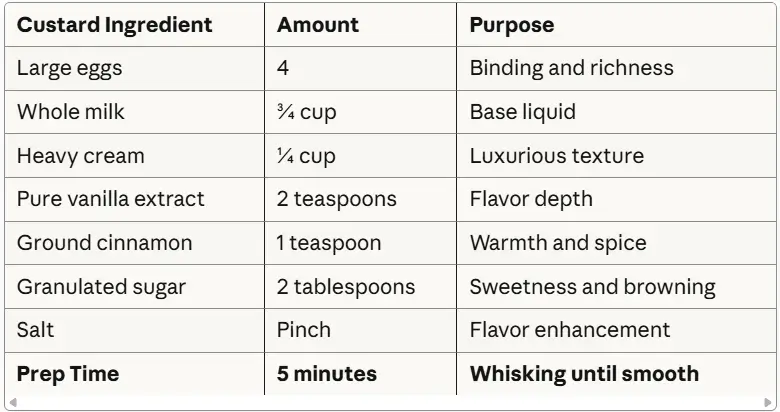
The custard is the soul of great brioche french toast. Combine four large eggs, three-quarters cup of whole milk, one-quarter cup of heavy cream, two teaspoons of pure vanilla extract, one teaspoon of ground cinnamon, two tablespoons of granulated sugar, and a pinch of salt. Whisk vigorously for about one minute until the mixture is completely smooth and slightly frothy. The sugar should dissolve completely, and the eggs should be fully incorporated with no visible streaks. This custard recipe makes enough for six to eight thick slices of brioche.
Pantry Staples
Stock your kitchen with these essential ingredients for making brioche french toast any time the craving strikes. Eggs provide structure and richness, while milk and heavy cream create the custard base. Pure vanilla extract adds depth and sweetness without extra sugar, and ground cinnamon brings warm, aromatic flavor. Granulated sugar helps with caramelization and adds subtle sweetness, while butter is essential for cooking and adds nutty, golden flavor to the exterior.
Step-by-Step Cooking Instructions
Pre-Cooking Prep
Prepare the custard for brioche french toast by whisking all ingredients together in a shallow dish or pie plate—shallow dishes make dipping easier than deep bowls. Heat your skillet or griddle over medium heat for three to five minutes until evenly hot. Test the temperature by adding a small pat of butter—it should melt and foam gently without browning immediately. Have your serving platter ready in a warm oven set to 200°F so you can keep finished pieces warm while cooking the remaining slices.
Soaking Method
Dip brioche slices in custard for twenty to thirty seconds per side, ensuring even coverage without oversaturation. The bread should absorb custard throughout but still feel slightly firm, not completely saturated and falling apart. Gently press down on the bread as it soaks to help absorption, then let excess custard drip back into the dish before transferring to the pan. Don’t rush this step—proper soaking time is crucial for that perfect custardy interior. If your bread is very dry, you may need up to forty-five seconds per side, but watch carefully to prevent oversaturation.
Cooking Method
Cook on medium heat until golden brown, about two to three minutes per side, adding a tablespoon of butter to the pan for every two slices. The butter should sizzle gently when you add the soaked bread—if it smokes or browns immediately, reduce your heat. Resist the urge to press down on the bread with your spatula, as this squeezes out the custard and makes the toast dense. Flip only once for the best texture and appearance. You’ll know it’s time to flip when the edges look set and the bottom is deep golden brown. The second side typically cooks faster than the first, so watch carefully.
Finishing Touch
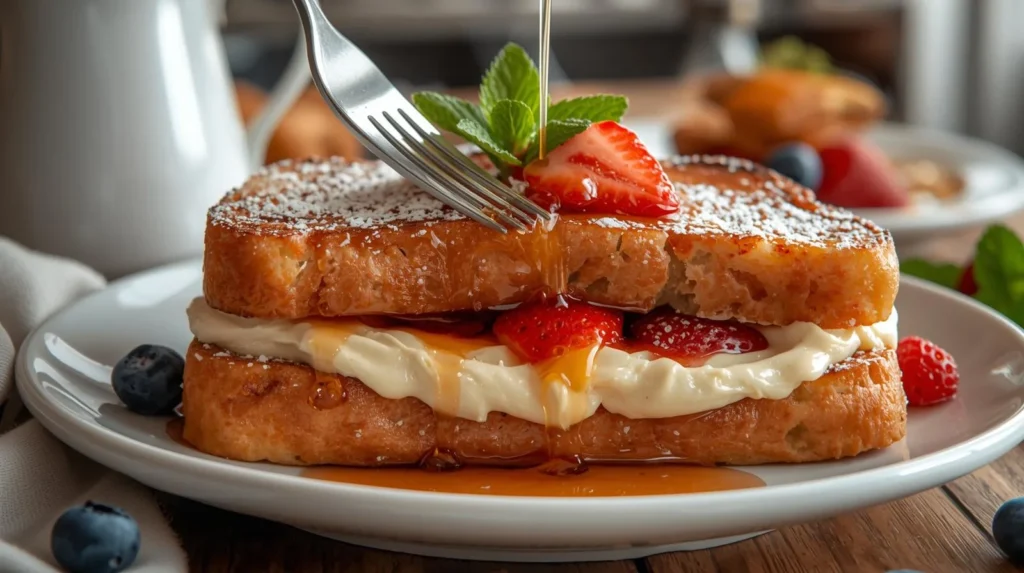
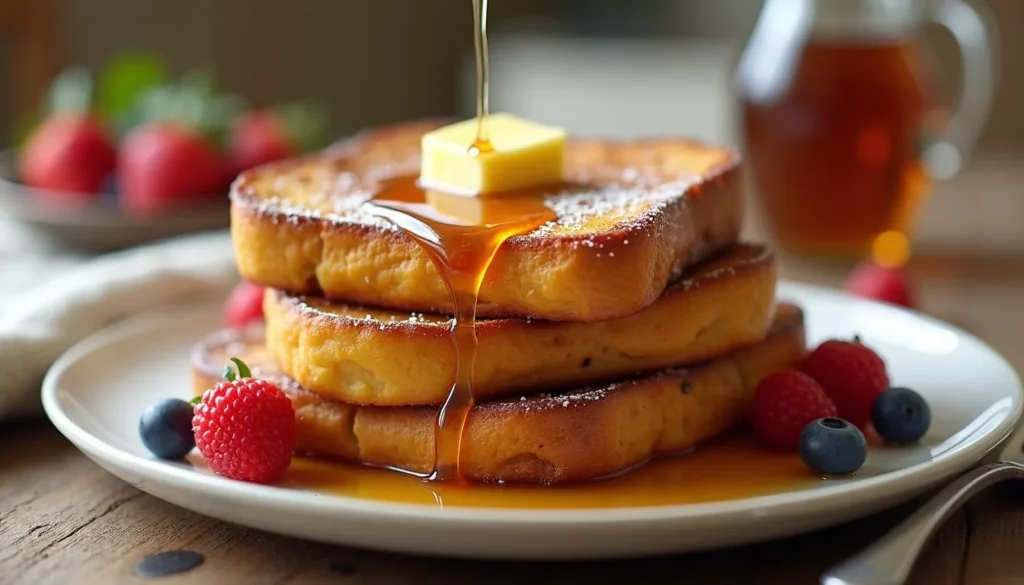
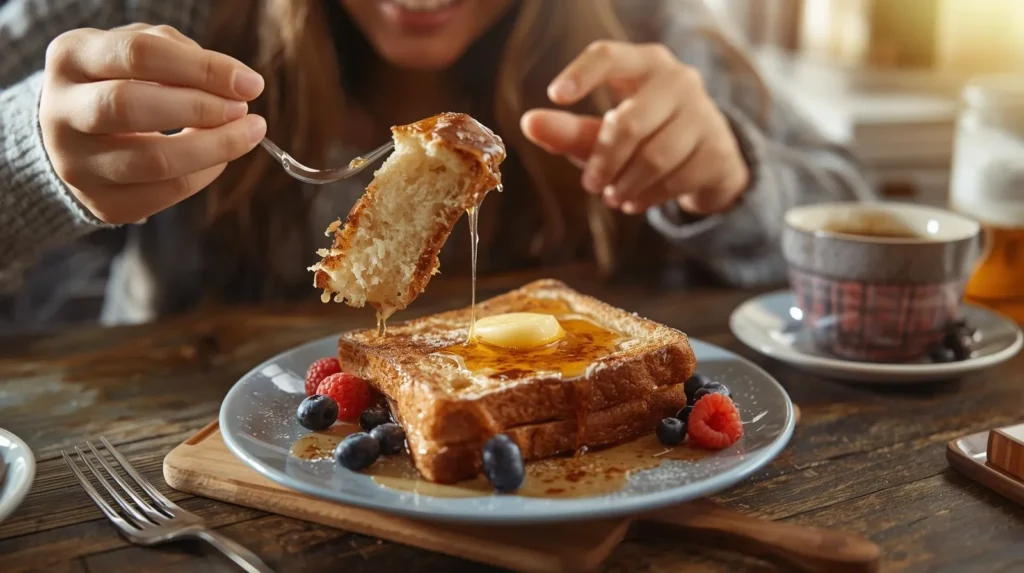
Serve immediately with powdered sugar, syrup, or fresh fruit for the ultimate breakfast indulgence. Brioche french toast is best enjoyed hot off the griddle when the outside is still crispy and the inside is warm and custardy. Dust with powdered sugar for elegance, drizzle with pure maple syrup for classic sweetness, or top with fresh berries and whipped cream for a fruit-forward presentation. A small pat of butter melting on top adds extra richness and creates an appealing presentation.
Pro Tips for Perfect Brioche French Toast
Avoiding Sogginess
Use slightly stale bread and don’t over-soak slices to prevent the dreaded soggy middle. The most common mistake with brioche french toast is using bread that’s too fresh or soaking it for too long. Fresh brioche contains too much moisture and becomes waterlogged when soaked in custard. Day-old or slightly dried bread has a firmer structure that absorbs custard perfectly while maintaining integrity. If your bread is fresh, toast the slices lightly or leave them uncovered for several hours before using. During soaking, twenty to thirty seconds per side is usually sufficient—longer soaking doesn’t improve flavor, it just creates mushiness.
Tool Recommendations
Invest in a quality non-stick skillet or well-seasoned cast iron griddle for foolproof cooking and easy cleanup. A heavy-bottomed pan distributes heat evenly, preventing hot spots that cause uneven browning. Use a wide, thin spatula designed for delicate tasks—it should easily slide under the entire slice without tearing. A wire whisk ensures your custard is perfectly smooth with no lumps, while a shallow dish or pie plate makes dipping bread easy and efficient. Keep a pastry brush handy for applying butter evenly to your cooking surface.
Storage & Reheating
Store leftover brioche french toast in an airtight container in the refrigerator for up to two days, with parchment paper between slices to prevent sticking. Reheat in a 350°F oven for five to seven minutes until warmed through and the edges crisp up again—this method is far superior to the microwave, which makes French toast rubbery. For longer storage, freeze cooked slices in a single layer on a baking sheet, then transfer to a freezer bag once solid. Frozen brioche french toast keeps for up to two months and can be reheated directly from frozen in the oven or toaster.
Flavor Variations
Transform your basic brioche french toast into something extraordinary with these creative variations that cater to every taste preference.
Berry Bliss
Top with mixed berries and a drizzle of honey for a fresh, fruity twist on classic brioche french toast. Combine fresh strawberries, blueberries, blackberries, and raspberries—the variety of colors and flavors creates visual appeal and complex taste. Warm the berries slightly in a saucepan with a tablespoon of sugar and a squeeze of lemon juice to create a quick compote, or use them fresh for bright, juicy bursts. High-quality honey adds floral sweetness that complements the fruit beautifully, while a dollop of Greek yogurt or mascarpone cheese provides creamy richness.
Nutty Caramel
Add chopped pecans and caramel sauce for extra indulgence that transforms breakfast into dessert. Toast the pecans lightly in a dry skillet to intensify their flavor before sprinkling over your brioche french toast. Make homemade caramel sauce or use high-quality store-bought—warm it slightly so it drizzles beautifully. Add a sprinkle of flaky sea salt on top to balance the sweetness and create sophisticated flavor contrast. For even more decadence, add a scoop of vanilla ice cream alongside for a brunch-meets-dessert experience.
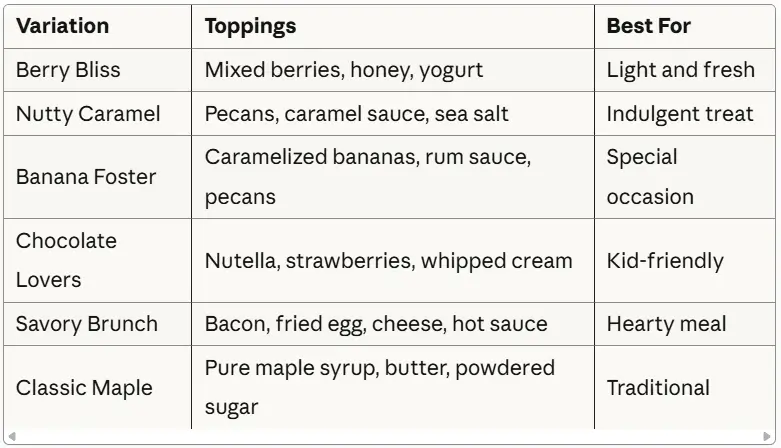
Savory Option
Skip the sugar in the custard and top with bacon and melted cheese for a brunch twist that surprises and delights. Reduce or eliminate the cinnamon as well, letting the eggy richness of the brioche shine. Top with crispy bacon, a fried egg, and shredded gruyere or sharp cheddar cheese. Add a drizzle of hot sauce or maple syrup for sweet-savory contrast. This variation works beautifully as a sandwich—place another slice on top and serve with a side salad for a complete meal.
Serving Suggestions
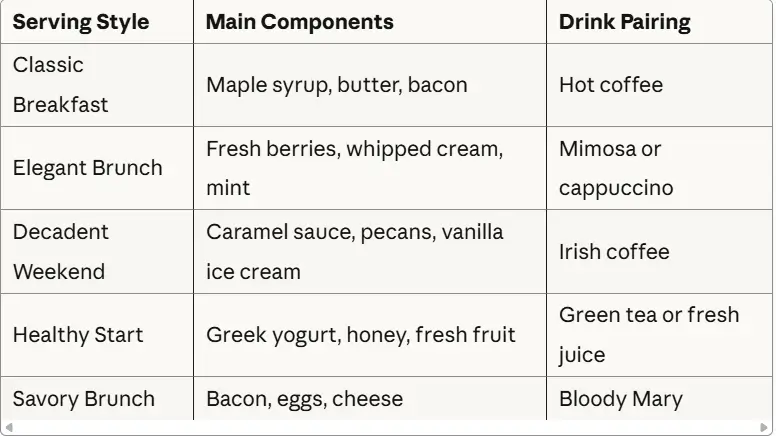
Elevate your brioche french toast from delicious to unforgettable with thoughtful accompaniments and beautiful presentation.
Pair with sides like fresh fruit salad for brightness and vitamins, crispy bacon for savory contrast, or fluffy scrambled eggs for added protein. A side of sausage links adds heartiness, while hash browns provide satisfying crunch. For lighter options, serve with Greek yogurt parfait or a simple mixed green salad with vinaigrette. During holidays, add roasted vegetables or a cheese platter to create an impressive brunch spread.
Drink pairings enhance the entire dining experience—coffee, cappuccino, or a mimosa complements brioche french toast beautifully. Fresh-brewed coffee with cream cuts through the richness and provides energizing contrast. A frothy cappuccino adds elegance and pairs wonderfully with the vanilla and cinnamon flavors. For celebratory brunches, mimosas made with fresh orange juice and quality champagne create festive atmosphere. Hot chocolate works perfectly for winter mornings, while fresh-squeezed juice provides vitamins and brightness.
FAQs
Can I make this ahead of time?
You can prepare the custard mixture the night before and store it covered in the refrigerator, making morning assembly faster. However, for best results, soak and cook the brioche french toast fresh rather than making it ahead. If you must cook ahead, prepare the toast completely, let it cool, then refrigerate. Reheat in a 350°F oven rather than the microwave to restore the crispy exterior. For meal prep, you can also freeze cooked slices and reheat them throughout the week for quick breakfasts that still taste homemade.
Why is my toast too soggy?
Your bread is too fresh, you’re soaking it too long, or your pan isn’t hot enough. Fresh brioche contains excessive moisture that, when combined with custard, creates sogginess. Always use day-old bread or dry fresh bread in a low oven first. Limit soaking time to twenty to thirty seconds per side—longer doesn’t improve flavor. Make sure your pan is properly preheated to medium heat so the exterior sets quickly, sealing in the custard. If your pan is too cool, custard seeps out before the bread can form a protective crust.
What’s the best bread thickness for this recipe?
Three-quarters to one inch thick is ideal for brioche french toast—thick enough to absorb custard without falling apart, but not so thick that the center stays raw. Slices thinner than three-quarters inch become too delicate and tend to fall apart during cooking. Slices thicker than one inch have difficulty cooking through evenly and may remain eggy in the center. If you’re slicing your own brioche loaf, use a serrated bread knife and measure carefully for consistent results.
Can I use frozen brioche?
Yes, frozen brioche works perfectly for French toast. In fact, freezing and thawing naturally dries out the bread slightly, creating ideal texture for absorbing custard. Thaw frozen brioche completely at room temperature before using, or thaw it overnight in the refrigerator. Don’t microwave frozen brioche to thaw, as this can create uneven moisture and rubbery texture.
How do I keep brioche french toast warm for a crowd?
Place finished slices in a single layer on a baking sheet in a 200°F oven while you cook remaining batches. Don’t stack them, as this creates steam and makes them soggy. You can keep brioche french toast warm this way for up to thirty minutes without sacrificing quality. Cover loosely with foil if the edges start to dry out.
What if I don’t have vanilla extract?
While vanilla extract is preferred for its depth of flavor, you can substitute with vanilla bean paste for even more intense flavor, or use almond extract for a different but delicious variation. Maple extract also works beautifully. If you have no extracts at all, the brioche french toast will still be delicious—just increase the cinnamon slightly to compensate for the missing flavor dimension.
Conclusion
This luxurious brioche french toast recipe delivers everything you want from an indulgent breakfast—rich custard flavor, perfect golden crust, and that melt-in-your-mouth texture that makes every bite memorable. Whether you’re preparing a special weekend brunch or treating yourself to a restaurant-quality breakfast at home, this recipe never disappoints.
Try this brioche french toast today for a truly luxurious breakfast experience that transforms ordinary mornings into something special. The combination of buttery brioche, perfectly balanced custard, and expert cooking techniques creates results that rival the best brunch cafés. Once you master this recipe, you’ll find yourself making it for every special occasion and lazy weekend morning.
Join thousands of food lovers who start their weekends with this indulgent classic and make it a beloved tradition in your own home. From anniversary breakfasts to holiday brunches to simple Sunday mornings, this brioche french toast brings people together around the table.
Ready to explore more breakfast favorites? Try our Classic Pancake Recipe next for another crowd-pleasing morning treat, or dive into our complete collection of brunch recipes for endless inspiration!