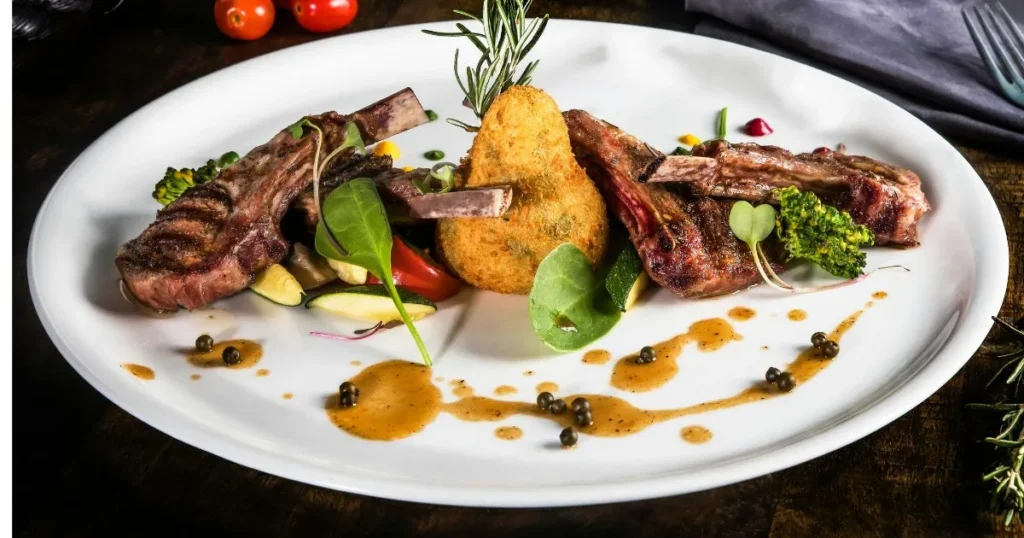

Imagine biting into tender, fall-off-the-bone beef ribs full of bold flavors. This beef ribs recipe is a game-changer for your next Sunday dinner or cookout. It’s a deliciously easy dish that’s sure to impress.
The simple preparation and versatile serving options make it perfect for any occasion. Whether it’s a casual gathering or a special event, the flavors are rich and satisfying. You’ll find yourself wanting more.
Table of Contents
Understanding Beef Spare Ribs
: Cuts and Types
To get the best beef ribs, knowing the different cuts and types is key. Beef ribs are a favorite dish, and their quality changes a lot based on the cut and type. Knowing these differences helps you choose better at the store or butcher.
Back Ribs vs. Short Ribs
Beef ribs are mainly divided into back ribs and short ribs. Back ribs are leaner and come from the top of the rib cage. They are more curved and have less meat than short ribs.
Short ribs, on the other hand, are meatier and from the lower rib cage. They are cut into smaller pieces and are known for their rich flavor and tender texture when cooked right.
- Back ribs are great for those who prefer a leaner cut.
- Short ribs are best for slow-cooking methods.
Bone-In vs. Boneless Options
Choosing between bone-in or boneless beef ribs is also important. Bone-in ribs keep more flavor because the bone keeps the meat moist. Boneless ribs are easier to eat but might lack some flavor and texture. Yet, they are more convenient for some recipes.
- Bone-in ribs offer more flavor and texture.
- Boneless ribs are more convenient but may lack flavor.
Essential Equipment for Perfect Beef
To make mouthwatering beef ribs, you need the right tools. You’ll need a cooking device, temperature control, and extra accessories. These tools make cooking easier and more efficient.
Smokers, Grills, and Oven Options
You can cook beef ribs in several ways: smokers, grills, or ovens. Smokers give a smoky flavor, grills offer a charred outside and tender inside. Ovens are good for indoor cooking, providing steady heat.
“The low and slow method is key to tender ribs,” BBQ fans say. Smokers are great for this. For Texas-style beef short ribs, slow cooking makes them tender and flavorful. Make sure your cooking device can keep a steady temperature.
Temperature Control Tools
Keeping the right temperature is key for perfect beef ribs. A thermometer is essential to check the ribs’ and the cooking device’s temperature. This ensures your ribs are safe to eat and tender.
Must-Have Accessories
Along with a cooking device and thermometer, you’ll need a rib rack, aluminum foil, and a sharp knife. These tools help you cook evenly and achieve professional results.
Just like a great homemade street tacos recipe needs fresh ingredients and the right seasoning, perfect beef ribs need the right equipment and technique. With the right tools and methods, you’ll make delicious beef ribs that will wow everyone.
Selecting the Best Beef Rib at the Store
Finding tender beef ribs starts at the grocery store. Standing at the meat counter, it’s hard to pick the right ones. Knowing what to look for is key.
Quality Indicators to Look For
When picking beef ribs, look for certain signs. First, check the meat’s grade. Choice or Prime grade beef short ribs are common in stores. Prime grade is usually found at butcher shops. The grade shows how marbled the meat is, which affects tenderness and taste.
Also, check the meat’s color and feel. Fresh ribs should be a deep red and feel firm. Ribs that look dull or feel soft are likely old.
Organic vs. Conventional Options
Deciding between organic and conventional ribs is another choice. Organic beef ribs are from cows not given antibiotics, hormones, or pesticides. This might appeal to those wanting a natural choice. Yet, conventional ribs are often cheaper and can be just as tasty.
Choosing between organic and conventional ribs depends on what you prefer and can afford. Both can make delicious ribs if cooked right.
The Best Beef Rib Recipe for Guaranteed Success
Looking for a beef ribs recipe that’s sure to impress? You’ve found it. This recipe has the perfect mix of flavors and techniques. It makes tender, delicious beef ribs every time.
Ingredients List
To make this tasty beef ribs recipe, you’ll need a few ingredients. You’ll need beef ribs, spices, brown sugar, ketchup, molasses, apple cider vinegar, and hot sauce. These ingredients blend together to create a rich flavor that goes great with the beef ribs.
Preparation Steps
Getting the beef ribs tender is all about preparation. First, heat your oven to the right temperature. Then, rub the beef ribs with spices, making sure they’re all coated.
Next, mix the remaining ingredients to make the sauce. Put the ribs in a baking dish and cover them with the sauce.
Cooking Instructions
Cook the ribs in the oven, covered, for a few hours until they’re tender. Check if they’re done by gently pulling on the meat. If it comes off easily, they’re ready.
After cooking, let the ribs rest before serving. This lets the juices spread, making the ribs even more tender and tasty.
By following these steps and using the right ingredients, you’ll make a beef ribs recipe that’s as good as any restaurant. The secret is patience and paying close attention to detail, so the ribs turn out perfectly.
Creating the Perfect Beef Rib Rub
A well-balanced rub is key to bringing out the full flavor of beef ribs. The right mix of spices can make your BBQ experience better. It makes your beef ribs tender and full of flavor.
Essential Spices and Their Roles
The spice rub for beef ribs includes a mix of spices. These spices add flavor and complement the meat’s richness. Essential spices are:
- Cumin: Adds warmth and earthiness.
- Paprika: Provides a smoky sweetness.
- Garlic Powder: Enhances the savory flavor.
- Onion Powder: Adds a subtle depth.
- Chili Powder: Brings a touch of heat.
- Smoked Sea Salt: Adds a smoky saltiness.
- Black Pepper: Provides a sharp contrast.
Each spice is important for a balanced flavor. For example, cumin and chili powder give ribs a distinctive BBQ flavor. Garlic and onion powder make the taste savory.
Balancing Flavors for Maximum Impact
It’s important to balance the flavors in your rub. You want all spices to work together well. Taste as you go and adjust the seasoning.
‘Harmony in flavors is what makes a great rub.’
This means balancing cumin’s earthiness with paprika’s brightness and chili powder’s heat.
By choosing and balancing your spices, you can make a rub that enhances the beef ribs. It takes them to a new flavor level.
Smoking Techniques for Tender Ribs Beef
Getting tender beef ribs takes a good smoking process. This includes picking the right wood, keeping the temperature right, and using the wrap method well. Knowing these steps is key to a great dish.
Wood Selection Guide
The wood you choose can change the taste of your beef ribs a lot. Hickory gives a strong, bacon-like flavor. Applewood adds a sweeter, fruitier taste. You can also try mesquite and cherry for different flavors. Think about how strong you want the flavor to be and whether you like a bold or light smoke taste.
Temperature Management
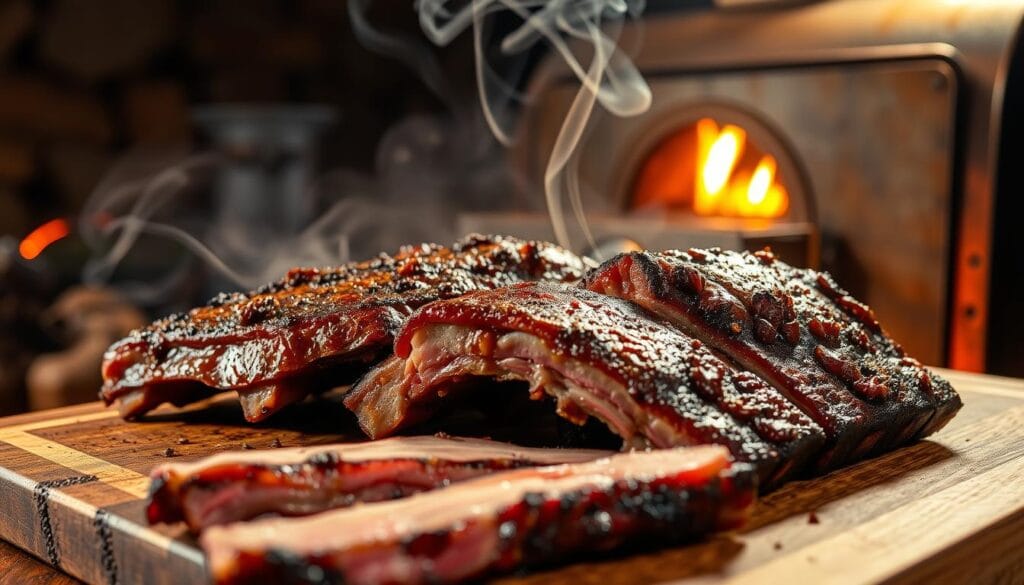
Keeping the right temperature is very important when smoking beef ribs. You want it between 225°F and 250°F. This slow cooking makes the ribs tender and flavorful. Use a thermometer to check the temperature and adjust it if needed.
The Wrap Method Explained
The wrap method involves wrapping your beef ribs in foil while smoking. This is usually done after a few hours, when they have a good bark. It helps make the ribs tender and juicy.
Knowing When Your Ribs Are Done
Figuring out when your beef ribs are done can be tricky. But there are a few ways to check. The bend test is one, where you bend the ribs and look for cracks. If they crack a lot, they’re probably done. You can also use a meat thermometer, aiming for 200°F. And don’t forget to use your instincts and check if the meat is tender with a fork or knife.
Oven-Baked Beef Ribs Recipe Alternative
You can make delicious beef ribs at home in your oven. This is great if you don’t have a smoker or grill, or if it’s too cold outside. Oven-baked ribs are tender and full of flavor, just like the ones smoked or grilled.
Adapting the Recipe for Indoor Cooking
To bake beef ribs in the oven, start by preheating it to 275°F (135°C). This low heat helps cook the ribs slowly. Season the ribs with your favorite rub or marinade.
Put the ribs on a baking sheet covered with foil, bone-side down. Then, cover them with another sheet of foil to keep moisture in. This helps the ribs cook evenly.
Low and slow is the secret to tender ribs. Cook them for 2-3 hours, or until the meat starts to pull away from the bone. Baste the ribs with BBQ sauce for the last 30 minutes to add extra flavor.
Achieving Smokiness Without a Smoker
To add a smoky taste to your ribs, try a few tricks. Use liquid smoke to brush the ribs during the last hour of cooking. It captures the essence of smoke in a liquid form.
Another way is to add smoked paprika to your rub or marinade. This spice gives a deep, smoky flavor without needing a smoker.
For even more flavor, use wood chips in your oven. Put wood chips, like hickory or applewood, in a foil packet with holes. Place it in the oven with your ribs. The heat will make the wood smolder, adding a smoky aroma to your ribs.
Sauces and Glazes That Complement Beef Ribs
The right sauce or glaze can turn your beef ribs into a masterpiece. Sauces and glazes add flavor that goes well with the meaty taste of beef ribs. This makes them even more tempting.
Classic BBQ Sauce Options
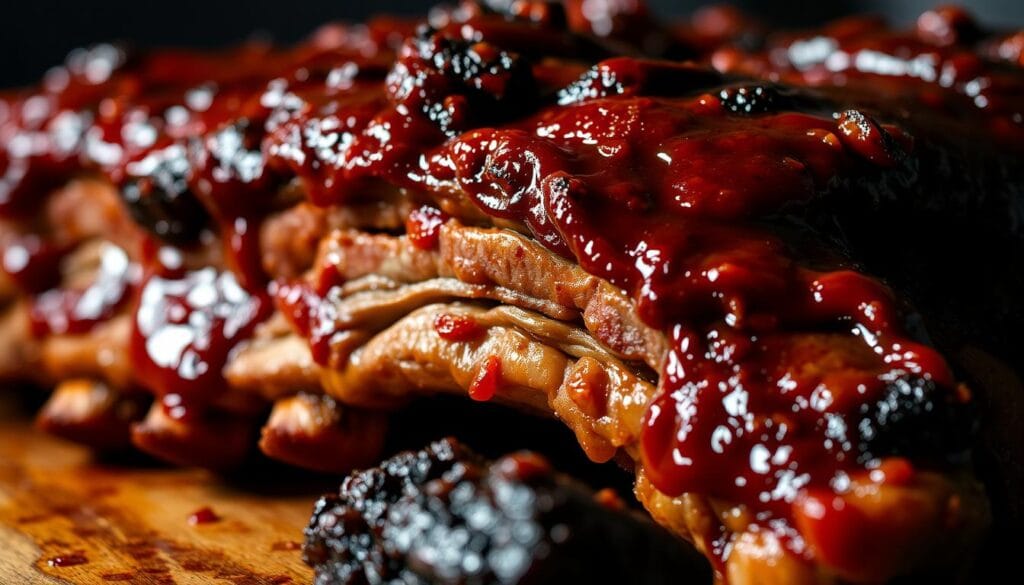
Classic BBQ sauce is a must for beef ribs. You can buy it or make your own. Use ketchup, molasses, apple cider vinegar, and hot sauce. This sweet and tangy sauce is loved by all and goes great with the smoky ribs.
International Flavor Inspirations
Want to try something new? International flavors can add exciting twists. Try a Korean gochujang glaze or a Mexican mole sauce. Even flavors from street taco fillings or street taco toppings can be used to make unique glazes.
When and How to Apply Sauces
When to put on sauce is key. It’s best to apply it in the last 10-15 minutes to avoid burning. You can also use a dry rub first, then a sauce or glaze later. Trying different times and ways can help you find the best mix.
Troubleshooting Common Beef Ribs Problems
Even with a great beef ribs recipe, issues like toughness or dryness can arise, but there are solutions. Several factors can affect the final outcome, from the cut of meat to the cooking technique. Understanding how to troubleshoot common problems will help you achieve tender, flavorful ribs every time.
Dealing with Tough Ribs
If your ribs are tough, it may be due to overcooking or undercooking. Overcooking can make the ribs dry and tough, while undercooking can leave them chewy and unpleasant. To avoid this, ensure you’re cooking the ribs at the right temperature and for the appropriate amount of time. Using a meat thermometer can help you achieve the perfect doneness.
A common technique for tenderizing ribs is the “wrap method,” where you wrap the ribs in foil during cooking to retain moisture. This method can help tenderize the meat, making it fall-off-the-bone delicious.
Fixing Flavor and Moisture Issues
Flavor and moisture issues can also impact your beef ribs. If your ribs are lacking flavor, consider enriching your rub or sauce. Adding a layer of flavor during the cooking process, such as through injection or mopping, can also help.
To keep your ribs moist, maintaining a consistent cooking temperature is key. You can also use a water pan in your smoker to add moisture to the cooking environment. Here’s a simple table to help you identify and fix common issues:
| Issue | Cause | Solution |
|---|---|---|
| Tough Ribs | Overcooking or Undercooking | Use a meat thermometer; adjust cooking time |
| Dry Ribs | Lack of Moisture | Use the wrap method; add a water pan |
| Flavorless Ribs | Insufficient Seasoning | Enhance your rub or sauce; use injection or mopping |
By addressing these common issues, you can significantly improve your beef ribs, making them a hit at any gathering. For more inspiration on complementary dishes, you might explore authentic street tacos to pair with your ribs.
Side Dishes That Pair Perfectly With Beef Ribs
Choosing the right side dishes can make your beef ribs meal even better. You want to pick items that enhance the ribs’ smoky taste without taking over.
Traditional BBQ Accompaniments
Classic BBQ sides are loved for a good reason. Coleslaw, baked beans, and cornbread are favorites that go great with beef ribs. Coleslaw adds a nice crunch, while baked beans offer a sweet and smoky taste. Cornbread is perfect for soaking up all the juices from your ribs.
Unexpected Pairings That Work
Want to try something different? Some unexpected sides go well with beef ribs. For example, easy street tacos can add a fun twist to your BBQ. Or, a fresh salad or roasted veggies can offer a nice contrast to the ribs’ richness. You could also serve your ribs with best street tacos recipe variations, like grilled corn or Mexican street corn salad, for extra flavor and texture.
Conclusion: Mastering the Art of Beef Ribs
With practice and patience, you can master the art of cooking beef ribs. It’s like perfecting a recipe for homemade street tacos or traditional street tacos. The key is understanding the different cuts and types of beef ribs.
Using the right equipment is also important to achieve tender, flavorful results. By following the steps outlined in this article, you’ve learned how to select the best beef ribs.
You’ve also learned how to create a perfect rub and cook them to perfection. This includes using various methods, like smoking and oven-baking.
As you continue to experiment with different sauces and glazes, you’ll find that pairing beef ribs with the right side dishes can elevate your dining experience. Now, it’s your turn to put these tips into practice and become a master of beef ribs.
FAQ
What is the best type of beef ribs to use for a recipe?
How do I choose the right beef ribs at the store?
What is the ideal temperature for cooking beef ribs?
How do I achieve tender beef ribs?
What are some common mistakes to avoid when cooking beef ribs?
Can I make beef ribs without a smoker?
What are some popular sauces and glazes for beef ribs?
How do I store leftover beef ribs?
What are some side dishes that pair well with beef ribs?
How can I make my beef ribs more flavorful?
How did you find results our recipes
There are no reviews yet. Be the first one to write one.