🎂 Introduction
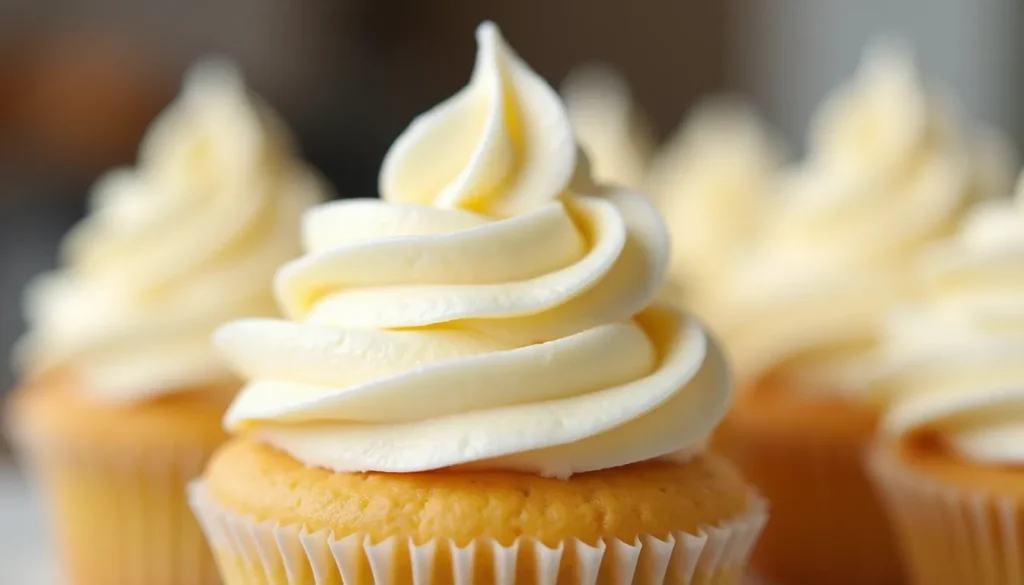
There’s something truly magical about making your own frosting from scratch—the way the butter transforms into silky clouds, how the sweetness balances perfectly with just a hint of vanilla, and that moment when you swipe a spoonful and realize you’ve created bakery-quality perfection in your own kitchen. This American Buttercream Recipe is your gateway to frosting mastery, whether you’re decorating an elaborate birthday cake, piping elegant swirls on cupcakes, or simply spreading sweetness on sugar cookies.
Unlike its European cousins that require double boilers, candy thermometers, and perfectly timed egg whites, this American Buttercream Recipe embraces simplicity without sacrificing results. You need just four basic ingredients and about ten minutes to create the most versatile, delicious frosting you’ll ever taste. It’s stable enough for intricate piping, smooth enough for flawless cake coverage, and forgiving enough for beginners—yet sophisticated enough that professional bakers rely on it daily. 🧁
The beauty of American buttercream lies in its pure, straightforward nature. No cooking, no complicated techniques, no stress. Just butter, sugar, cream, and vanilla whipped into sweet perfection. Whether you’re a nervous first-time baker or a seasoned pro looking for reliability, this recipe delivers every single time. ✨
🍦 Fun Fact
American buttercream rose to popularity in the early 20th century when home refrigeration became common and everyday bakers needed frosting that was both delicious and practical. While European buttercreams (Swiss, Italian, French) were preferred in professional bakeries, they required cooking sugar syrups to precise temperatures—tricky without reliable equipment and potentially dangerous with open flames.
American buttercream solved everything. It required no cooking, used readily available ingredients, held up beautifully at room temperature for short periods (crucial before air conditioning), and tasted wonderfully sweet—perfectly matching American palates. By the 1950s, this simple buttercream had become synonymous with birthday cakes, wedding celebrations, and holiday cookies across the United States. 🎂
Interestingly, what makes American buttercream “American” isn’t just its origin—it’s the unapologetically sweet profile that Americans love, while European versions tend toward less sweetness and more buttery flavor. Neither is better; they’re simply different expressions of frosting philosophy!
Table of Contents
💛 Why You’ll Love It
This American Buttercream Recipe delivers everything you want in a frosting and more:
🧈 Incredibly Creamy and Rich Texture – Smooth as silk with a luxurious mouthfeel that melts on your tongue, providing that signature bakery-quality experience.
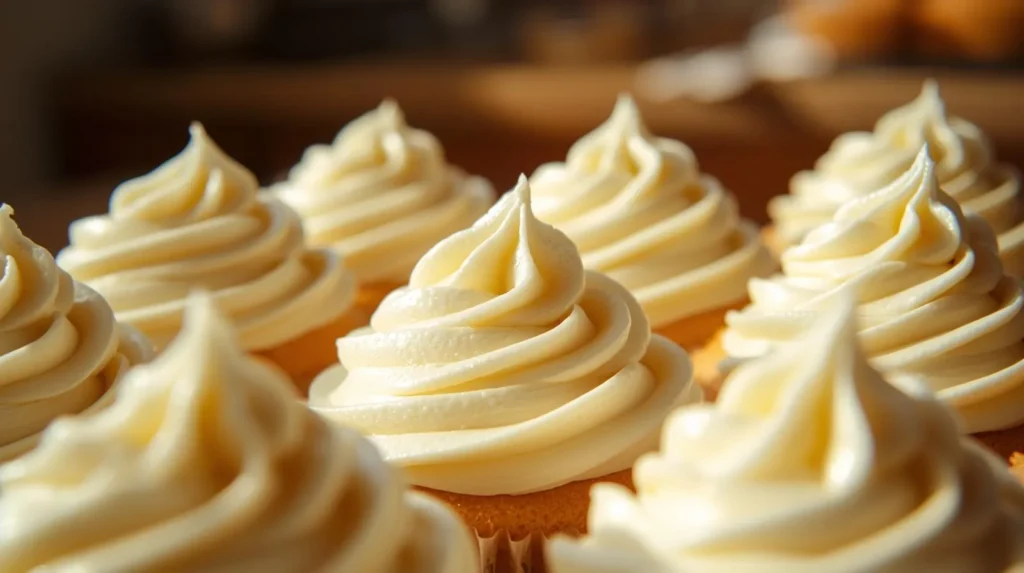
🍰 Perfect for Frosting Cakes and Cupcakes – Spreads beautifully with an offset spatula, pipes like a dream through any tip, and holds its shape flawlessly for hours.
✨ Customizable with Endless Flavors – The neutral base welcomes any flavor addition you can imagine—from classic vanilla to exotic rose water.
⏱️ Whips Up in Just Minutes – No cooking, no waiting, no complicated steps. From butter to beautiful frosting in ten minutes flat.
🎨 Holds Color Brilliantly – Whether you’re creating pastel perfection or vibrant rainbow swirls, gel food coloring incorporates easily and stays true.
🪄 Beginner-Friendly Yet Professional – Simple enough for your first cake, reliable enough for wedding cakes and special orders.
💰 Budget-Friendly – Uses pantry staples you likely already have, making it far more economical than store-bought frosting.
🌡️ Stable and Forgiving – Holds up well at room temperature during parties, doesn’t weep or separate, and can be easily adjusted if needed.
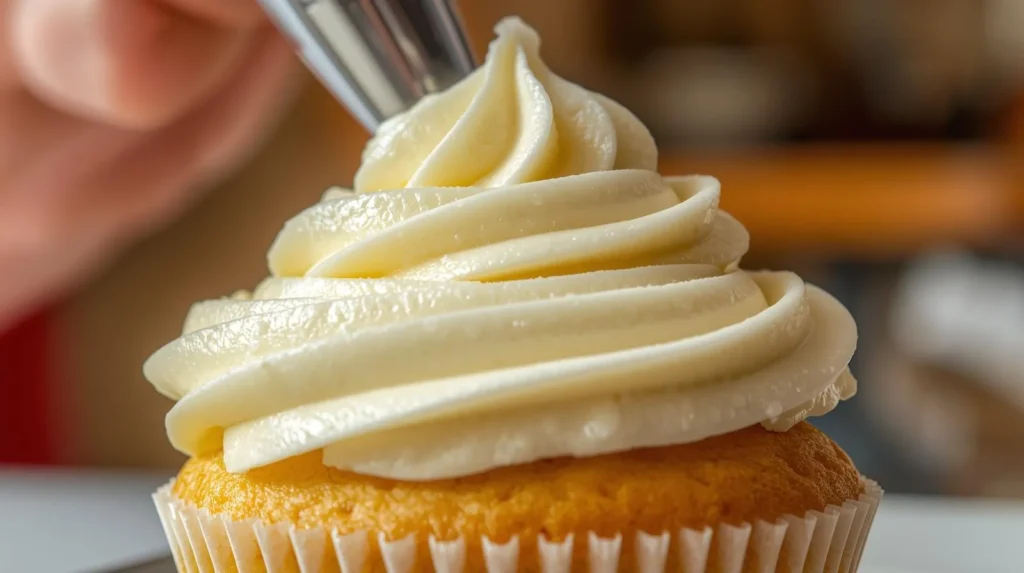
📊 Quick Overview Table
| Prep Time | Total Time | Servings | Difficulty | Best For |
|---|---|---|---|---|
| 10 minutes | 10 minutes | Frosts 12-16 cupcakes or one 8-inch layer cake | Easy | Cakes, Cupcakes, Cookies, Piping |
Note: Double the recipe for a 9-inch two-layer cake with generous frosting between layers and on top
🧂 Ingredients & Purpose
Essential Ingredients
| Ingredient | Amount | Purpose |
|---|---|---|
| Unsalted Butter (softened) | 1 cup (2 sticks / 226g) | Creates the creamy, rich base; provides structure and mouthfeel |
| Powdered Sugar (sifted) | 4 cups (480g) | Provides sweetness, body, and smooth texture without graininess |
| Pure Vanilla Extract | 1-2 teaspoons | Classic flavor that enhances sweetness and adds aromatic depth |
| Heavy Cream or Milk | 2-4 tablespoons | Adjusts consistency; cream creates richer flavor, milk makes lighter texture |
| Fine Salt | Small pinch | Balances sweetness and enhances all other flavors |
Optional Enhancement Ingredients
| Optional Ingredient | Amount | What It Does |
|---|---|---|
| Vanilla Bean Paste | 1 teaspoon | Adds vanilla bean specks and more intense vanilla flavor |
| Clear Vanilla Extract | 1-2 teaspoons | Keeps frosting pure white for wedding cakes |
| Butter Extract | ½ teaspoon | Amplifies buttery richness |
| Almond Extract | ¼ teaspoon | Adds subtle nutty complexity |
| Cream Cheese | 4 oz | Creates tangier, creamier hybrid frosting |
Ingredient Quality Matters
Butter: Use high-quality, European-style butter (82% butterfat) for the richest flavor and silkiest texture. Generic butter works fine, but premium butter creates noticeably superior results. Always use unsalted so you control the salt level.
Powdered Sugar: Also called confectioners’ sugar or icing sugar, this finely ground sugar dissolves instantly, creating smooth frosting without graininess. Some brands contain cornstarch (fine) or tapioca starch (also fine). Always sift if clumpy!
Vanilla: Pure vanilla extract costs more but tastes infinitely better than imitation. For pure white frosting, use clear vanilla extract, which has the same flavor without the brown tint.
Cream vs. Milk: Heavy cream (36-40% fat) creates the richest, most stable frosting. Whole milk creates lighter texture. Half-and-half splits the difference. Don’t use skim milk—the fat content matters for both flavor and texture. 🧈
👩🍳 Step-by-Step Instructions for Perfect American Buttercream Recipe
Step 1 – Prepare Your Butter Properly 🧈
The single most critical factor in perfect American Buttercream Recipe success is butter temperature. Your butter should be softened to about 65-68°F—cool room temperature. When you press it with your finger, it should leave an indent without your finger sinking in completely.
Too Cold: If your butter is too firm, it won’t cream properly. You’ll end up with lumpy frosting no matter how long you beat it. The powdered sugar won’t incorporate smoothly, and you’ll see butter chunks throughout.
Too Warm: If your butter is too soft (greasy or shiny), it won’t hold air when beaten. Your frosting will be dense, may separate, and won’t hold its shape when piped.
Perfect Softening Method: Remove butter from the refrigerator 30-60 minutes before making frosting (timing depends on your kitchen temperature). Cut each stick into tablespoon-sized pieces to speed softening. Never microwave butter for frosting—it creates unevenly soft spots and can partially melt edges.
Place your softened butter in the bowl of a stand mixer fitted with the paddle attachment (or use a large bowl with a hand mixer). Before you start beating, make sure your butter is at that perfect temperature—this single step determines your frosting’s success! ✨
Step 2 – Beat the Butter Until Light and Fluffy 🪄
Start your mixer on low speed for 15-20 seconds to break up the butter without splattering. Then increase to medium-high speed and beat for 3-4 full minutes. Don’t skip this time—it matters!
During this beating process, you’re incorporating thousands of tiny air bubbles into the butter. These air pockets are what create that light, fluffy, cloud-like texture in your final American Buttercream Recipe. Under-beaten butter creates dense, heavy frosting.
What to Look For: After 3-4 minutes, your butter should be:
- Significantly paler in color (nearly white instead of yellow)
- Increased in volume (looks fluffy and airy)
- Smooth and creamy with no lumps
- Leaving trails when you lift the beater
Stop the mixer occasionally to scrape down the bowl sides and bottom with a silicone spatula. Butter loves to cling to the bowl, and unincorporated butter creates texture problems later. 🎂
Chef’s Secret: Professional bakers often beat butter for even longer—up to 8 minutes! The extra time creates incredibly light, mousse-like frosting. If you have the patience, the results are stunning.
Step 3 – Gradually Add Powdered Sugar 🍚
With the mixer on low speed, add your powdered sugar in stages—about one cup at a time. This gradual addition prevents the notorious “powdered sugar explosion” that coats your kitchen (and you!) in a fine white dust.
After adding each cup, let the mixer run on low for 15-20 seconds until the sugar is mostly incorporated, then stop and scrape down the bowl. Repeat until all four cups are added.
Why Sifting Matters: Powdered sugar clumps easily, especially in humid environments. Even if it looks smooth in the bag, sift it! Just two minutes of sifting prevents lumpy frosting and saves you frustration later. Hold a fine-mesh sieve over your mixing bowl and sift directly in, or sift into a separate bowl first.
Once all the sugar is added, increase mixer speed to medium and beat for 2-3 minutes. This incorporates the sugar completely, develops the frosting’s structure, and creates that signature smooth texture.
Texture Check: At this point, your frosting will look very thick, almost paste-like. This is perfect—you’ll adjust the consistency next. The mixture should be smooth, creamy, and free of any sugar grains when you rub a small amount between your fingers. 🧁
Step 4 – Add Vanilla and Adjust Consistency 🍦
With the mixer running on low speed, pour in your vanilla extract. Increase to medium speed and beat for 30 seconds until fully incorporated. You’ll immediately notice the intoxicating aroma!
Now comes the fun part—adjusting consistency for your specific use. This American Buttercream Recipe can be modified from stiff (for roses and structured piping) to soft (for smooth spreading).
For Stiff Frosting (intricate piping, flowers, basketweave): Add just 1-2 tablespoons of heavy cream. Beat until combined. The frosting should hold very stiff peaks when you lift the beater.
For Medium Frosting (general piping, cupcake swirls, simple decorating): Add 2-3 tablespoons of heavy cream. This is the most versatile consistency—holds shape but spreads smoothly.
For Soft Frosting (cake covering, smooth finishes, filling between layers): Add 3-4 tablespoons of heavy cream. The frosting should be spreadable like mayonnaise, leaving smooth trails without separating.
Add cream one tablespoon at a time, beating for 15-20 seconds after each addition, until you achieve your desired consistency. You can always add more liquid, but you can’t remove it (well, you can add more powdered sugar, but that throws off your butter-to-sugar ratio). 💛
Step 5 – Incorporate Air and Add Salt ✨
Here’s where good frosting becomes extraordinary frosting. Increase your mixer to medium-high speed and beat for a full 2-3 minutes. This step incorporates additional air, making your American Buttercream Recipe incredibly light and fluffy.
During this final beating, add a small pinch of fine salt (about ⅛ teaspoon or less). The salt is optional but highly recommended—it balances the sweetness and makes all the flavors more pronounced. With salt, american buttercream recipe tastes complex and sophisticated. Without it, it can taste one-dimensionally sweet.
Watch the Transformation: You’ll see the frosting become visibly paler and fluffier. It should look like whipped clouds—smooth, glossy, and holding soft peaks when you lift the beater.
Stop and scrape down the bowl one final time, then beat on low for 30 seconds to remove any large air bubbles (these create holes when piping).
Taste Test: This is your frosting—taste it! Too sweet? Add another tiny pinch of salt or a drop of lemon juice. Not sweet enough? Beat in 2-4 more tablespoons of powdered sugar. Vanilla too subtle? Add another ½ teaspoon. Make it exactly how YOU like it! 🎨
Step 6 – Use Immediately or Store Properly 🧺
Your American Buttercream Recipe is now ready to use! If using immediately, keep it at room temperature—cold frosting is stiff and difficult to work with.
For Piping: Transfer to a piping bag fitted with your chosen tip. Fill the bag only two-thirds full for best control. Twist the top to secure and push frosting down toward the tip.
For Spreading: Use an offset spatula for smoothest results. Dip the spatula in hot water, dry it, then spread—the warmth helps create ultra-smooth finishes.
If Making Ahead: Transfer to an airtight container, press plastic wrap directly onto the surface (to prevent crusting), cover with the lid, and refrigerate for up to one week or freeze for up to three months.
Bringing Back to Life: Refrigerated or frozen frosting becomes very firm. Bring to room temperature (this takes 1-2 hours), then re-whip with your mixer for 2-3 minutes. It will return to perfect fluffy consistency! Don’t skip the re-whipping—this step is crucial for proper texture. 🪄
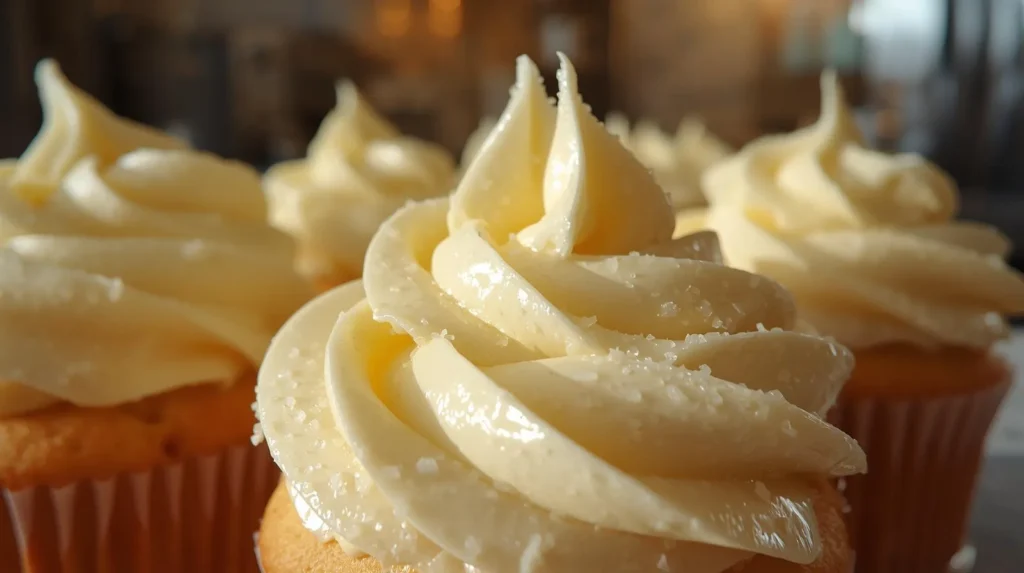
🎨 Flavor Variations to Transform Your Buttercream
| Flavor | Add-In | Amount | Result | Perfect For |
|---|---|---|---|---|
| Chocolate | Cocoa powder (Dutch-process preferred) | ½ cup | Deep, rich chocolate flavor | Chocolate cakes, brownie frosting |
| Strawberry | Strawberry puree (reduced) | ¼ cup | Fruity, pink, fresh berry taste | Valentine’s cupcakes, spring cakes |
| Coffee/Mocha | Instant espresso powder | 1-2 tablespoons | Bold coffee flavor, sophisticated | Tiramisu cakes, chocolate pairings |
| Lemon | Fresh lemon zest + juice | Zest of 2 lemons + 1 tbsp juice | Bright, tangy, citrusy | Summer cakes, lemon cupcakes |
| Cream Cheese | Softened cream cheese | 4 oz (half block) | Tangy, rich, less sweet | Carrot cake, red velvet, cinnamon rolls |
| Peanut Butter | Creamy peanut butter | ½ cup | Nutty, rich, slightly savory | Chocolate cupcakes, banana cake |
| Salted Caramel | Caramel sauce + sea salt | ¼ cup sauce + ½ tsp salt | Sweet-salty decadence | Apple cakes, vanilla cupcakes |
| Nutella | Nutella spread | ½ cup | Chocolate-hazelnut heaven | Anything chocolate |
| Mint | Peppermint extract | ½-1 teaspoon | Cool, refreshing mint | Chocolate cakes, holiday treats |
| Almond | Almond extract | 1 teaspoon (replace vanilla) | Subtle nutty sweetness | Wedding cakes, cherry cake |
| Maple | Pure maple syrup | ¼ cup | Warm, autumn flavor | Spice cakes, bacon cupcakes |
| Brown Butter | Browned butter (cooled) | Use instead of regular butter | Nutty, toasted, complex | Sophisticated adult cakes |
| Coconut | Coconut extract | 1 teaspoon | Tropical, sweet coconut | Pineapple cake, tropical themes |
| Orange | Orange zest + juice | Zest of 2 oranges + 1 tbsp juice | Bright citrus punch | Chocolate orange combo, citrus cakes |
How to Adapt for Fruit Flavors
When adding fruit purees to your American Buttercream Recipe, you must reduce them first. Fresh fruit contains too much water, which makes frosting soupy and causes it to separate.
Reduction Method:
- Puree fresh or frozen fruit in a blender until smooth
- Strain through fine-mesh sieve to remove seeds
- Simmer in a small saucepan over medium heat
- Stir frequently until reduced by half (thick, jam-like consistency)
- Cool completely before adding to american buttercream recipe
Start with 2 tablespoons of reduced puree, beat it in, then add more gradually. You may need to add extra powdered sugar (2-4 tablespoons) to compensate for the added liquid and maintain proper consistency. 🍓
Chocolate american buttercream recipe Pro Tips
For chocolate American Buttercream Recipe, use Dutch-process cocoa powder—it has a smoother, less acidic flavor than natural cocoa. Sift the cocoa powder with the powdered sugar before adding to prevent lumps.
You may need to add extra cream (up to 2 additional tablespoons) because cocoa powder absorbs moisture. Add the cocoa with the powdered sugar in Step 3, not at the end.
For ultra-rich chocolate frosting, melt 4 oz of good-quality chocolate, cool to room temperature (still pourable), then beat into finished buttercream. This creates “ganache-style” american buttercream recipe that’s incredibly decadent! 🍫
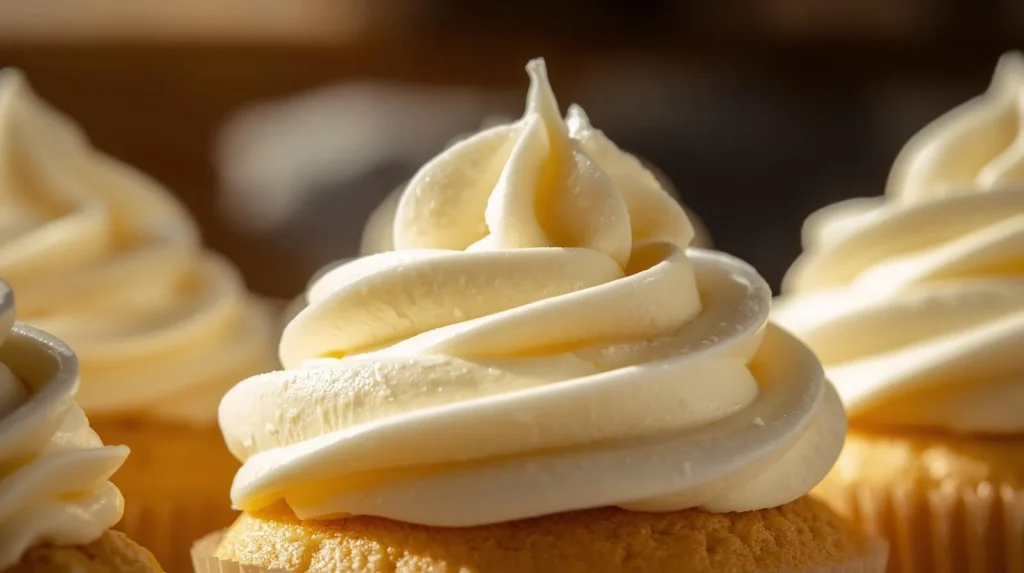
🧁 Expert Chef Advice from Baking Professionals
Chef Duff Goldman (Charm City Cakes, Food Network star): “Always whip your buttercream on medium speed for longer than you think—that extra air gives it the perfect light texture! I beat mine for a full 5-7 minutes. The difference between okay buttercream and extraordinary buttercream is usually just more mixing time. Also, use the best butter you can afford. The flavor difference is night and day.”
Christina Tosi (Milk Bar founder): “Don’t be afraid of salt! A proper pinch of salt makes buttercream taste less one-dimensionally sweet and more complex. I also love adding a tiny bit of citric acid or lemon juice—the acidity balances the richness and makes everything pop.” 🎂
Rosanna Pansino (YouTube baking star): “For the prettiest colors, always use gel food coloring, never liquid. Liquid coloring can make your buttercream soupy, but gel gives you vibrant colors without changing consistency. Add color gradually—it’s easier to darken than lighten! And remember, colors deepen as they sit, so go slightly lighter than your target shade.”
Sally McKenney (Sally’s Baking Addiction): “Room temperature butter is non-negotiable. I know it’s tempting to microwave it when you forget to set it out, but don’t! Microwaved butter has hot and cold spots that create texture problems. Plan ahead, or cut your butter into small pieces to speed softening naturally.”
Erin Gardner (Erin Bakes): “When you think your american buttercream recipe is mixed enough—mix it more! I promise you won’t overmix American buttercream. That extra beating time incorporates more air and creates that bakery-quality fluffiness everyone loves.” ✨
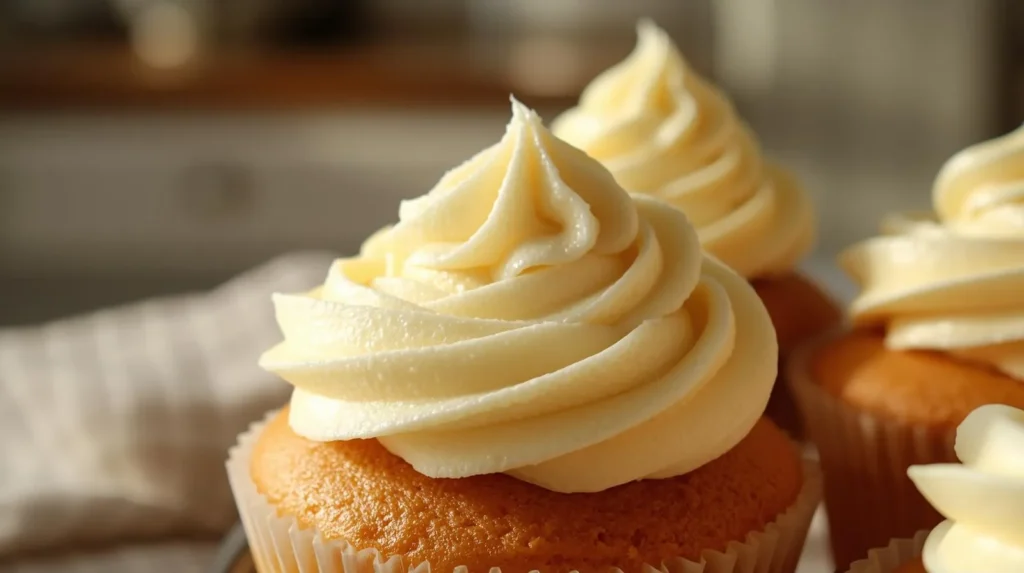
🧺 Storage & Reuse Tips
Proper Storage Methods
| Storage Method | Duration | Best Practices | Notes |
|---|---|---|---|
| Room Temperature | 1-2 days | Cover tightly; keep away from heat/sun | Ideal for serving and decorating |
| Refrigerator | Up to 1 week | Airtight container; plastic wrap on surface | Prevents crusting and absorbing odors |
| Freezer | Up to 3 months | Airtight container or freezer bag; label with date | Thaw in fridge overnight before use |
How to Bring Buttercream Back to Life
The Biggest Mistake: Using cold american buttercream recipe straight from the fridge. Cold butter is stiff, difficult to spread, tears cake layers, and won’t pipe smoothly.
Proper Rewarming Method:
- Remove from refrigerator 1-2 hours before needed (more time for large quantities)
- Let sit at room temperature until it reaches 65-68°F
- Transfer to mixer bowl and beat on medium speed for 2-3 minutes
- The frosting will transform from stiff and dense to light and fluffy
Quick Warming Trick: If you’re in a hurry, place the bowl over (not in) a pan of warm water for 30 seconds, stir, and repeat until slightly softened. Then whip with mixer. Never microwave american buttercream recipe —it melts unevenly and separates. 🪄
Refreezing and Reusing
american buttercream recipe that’s been thawed once can be refrozen, but the quality decreases slightly with each freeze-thaw cycle. For best results, freeze in smaller portions so you only thaw what you need.
Leftover Frosting Uses:
- Spread on graham crackers for a quick treat
- Sandwich between cookies
- Swirl into coffee for a sweet latte
- Frost brownies or bar cookies
- Fill donut holes
- Pipe into cream puffs or eclairs
- Create frosting shots (yes, really!)
🔧 Troubleshooting Your American Buttercream Recipe
| Problem | Cause | How to Fix It | Prevention |
|---|---|---|---|
| Too Sweet | Too much sugar or lack of salt | Add pinch of salt or ½ tsp lemon juice; taste and adjust | Use high-quality butter for better flavor balance |
| Too Thick | Insufficient liquid | Add heavy cream 1 tablespoon at a time, beating between additions | Start with 2-3 tbsp cream in original recipe |
| Too Thin/Soupy | Too much liquid or warm butter | Add ¼ cup powdered sugar; or refrigerate 10 mins and re-whip | Ensure butter is 65-68°F, not warmer |
| Grainy Texture | Sugar not dissolved or cold butter | Beat longer on medium-high; or add 1 tbsp cream and beat | Sift powdered sugar; ensure butter is fully softened |
| Separated/Curdled | Temperature issues (too warm/cold) | If too warm: refrigerate 10 mins then re-beat; if too cold: warm gently then re-beat | Maintain proper butter temperature throughout |
| Air Bubbles | Mixing on too-high speed | Beat on low-medium speed; tap bowl on counter; smooth with spatula | Don’t whip too vigorously during final stage |
| Yellow Color (when you want white) | Regular vanilla extract | Use clear vanilla extract; reduce vanilla amount | Plan ahead and buy clear vanilla for white frosting |
| Won’t Hold Shape | Too soft or under-beaten | Add ¼ cup powdered sugar; beat on high 3-4 minutes | Beat butter longer initially; use less cream |
| Butter Chunks | Butter wasn’t softened enough | Keep beating! Or remove, soften more, return, and beat | Soften butter to proper temperature before starting |
| Tastes Greasy | Butter ratio too high or butter too warm | Add 1-2 tbsp cream and ½ cup more powdered sugar | Use exact measurements; check butter temperature |
Special Case: Separated american buttercream recipe
Sometimes american buttercream recipe separates—it looks curdled, broken, or has a cottage-cheese appearance. This is temperature-related and completely fixable! 🧈
If Too Cold: Warm the bowl gently (warm the outside with your hands or hold over warm water briefly), then beat on high speed for 2-3 minutes. It will come back together.
If Too Warm: Refrigerate for 10-15 minutes until it firms up slightly, then beat on high speed. It will smooth out.
Nuclear Option: If it still won’t cooperate, add 2-3 tablespoons of soft butter and beat on high for 3-4 minutes. This almost always saves it.
Don’t panic if your american buttercream recipe breaks—it’s one of the most fixable problems in baking! Just adjust the temperature and keep beating. 💛
❓ Frequently Asked Questions About American Buttercream Recipe
Can I use salted butter instead?
You can, but it’s not ideal. Salted butter contains varying amounts of salt depending on the brand—anywhere from ⅛ to ¼ teaspoon per stick. This makes it difficult to control the saltiness of your finished American Buttercream Recipe.
If you only have salted butter available, use it but omit the pinch of salt called for in the recipe. Taste your finished frosting—if it’s too salty, you can try to balance it by adding more powdered sugar and cream, but this changes your ratios and may not fully fix the problem.
For consistent, professional results, always use unsalted butter for baking. This lets you control exactly how much salt is in your frosting. 🧈
How do I make it pure white?
Standard American Buttercream Recipe has a slight ivory or cream color due to the natural yellow tones in butter and the brown tint in vanilla extract. For pure white frosting:
Use Clear Vanilla Extract: Regular vanilla extract is brown; clear vanilla (also called white or colorless vanilla) has the same flavor without the tint. Available at craft stores and online.
Consider Butter Flavor Extract: Some bakers use butter extract instead of or in addition to vanilla for pure white frosting.
High-Fat Butter: European-style butter is more yellow; standard American butter produces lighter frosting.
Add Whitener: Professional bakers sometimes add a drop of violet food coloring or use specialty whitening agents, but these aren’t necessary for home baking.
Patience: Even with colored butter and regular vanilla, extensive beating incorporates air and lightens the color significantly. That 5-7 minute beating time really helps! ✨
Can I pipe this frosting for cupcakes?
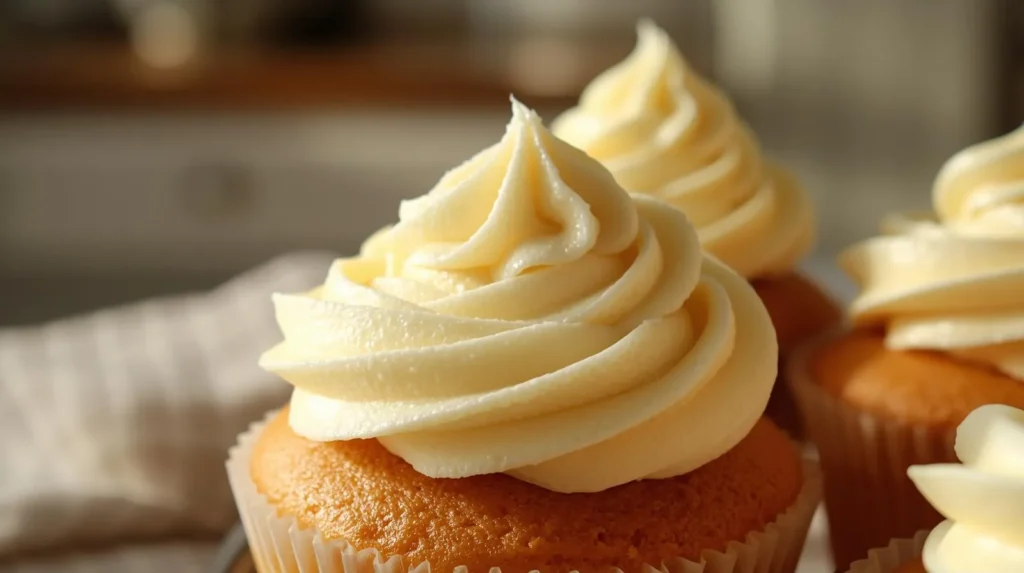
Absolutely! This American Buttercream Recipe is ideal for piping. It holds its shape beautifully, creates clean lines, and works with any piping tip you choose.
For Best Piping Results:
- Use medium consistency (2-3 tablespoons cream)
- Make sure frosting is room temperature (cold frosting is stiff; warm is too soft)
- Use a piping bag with a coupler so you can change tips easily
- Fill the bag only two-thirds full for best control
- Twist the top and push frosting down before piping
Popular Piping Tips for Cupcakes:
- 1M or 2D: Classic swirl, easy and impressive
- Star tips (various sizes): Rosettes, stars, shells
- Round tips: Dots, pearls, writing
- Petal tips: Roses, flowers, ruffles
Piping Temperature: If your frosting becomes too soft while piping (especially in warm weather), refrigerate for 10-15 minutes to firm up, then continue. 🧁
How long does Aamerican buttercream recipe last?
On the Cake (frosted cake or cupcakes):
- Room temperature: 2-3 days (in cool, dry conditions)
- Refrigerated: 5-7 days (covered to prevent drying)
In the Container (unfrosted):
- Room temperature: 1-2 days (in airtight container)
- Refrigerated: Up to 1 week (airtight container)
- Frozen: Up to 3 months (airtight container or freezer bag)
Important Note: These timelines assume your American Buttercream Recipe contains only butter, sugar, vanilla, and cream—all shelf-stable ingredients. If you add perishable ingredients (fruit purees, cream cheese), refrigeration is mandatory and reduces shelf life to 3-5 days.
Always use your judgment—if frosting smells off, tastes rancid (old butter), or shows any discoloration or mold, discard it. 🎂
Why is my american buttercream recipe grainy?
Graininess in American Buttercream Recipe has several possible causes:
Undissolved Sugar: The most common culprit. Powdered sugar must be completely dissolved through mixing. Solution: Beat longer on medium-high speed. The grains will eventually dissolve.
Clumpy Sugar: Powdered sugar develops lumps easily. Solution: Always sift powdered sugar before adding to butter. Even smooth-looking sugar can have tiny lumps.
Cold Butter: When butter is too cold, it can’t cream properly and sugar can’t dissolve smoothly. Solution: Ensure butter is fully softened to 65-68°F before starting.
Insufficient Liquid: Too-stiff frosting prevents sugar from dissolving fully. Solution: Add an extra tablespoon of cream and beat thoroughly.
Quick Fix: If your finished american buttercream recipe is grainy, add 1-2 tablespoons of heavy cream and beat on medium-high speed for 3-4 minutes. The combination of extra liquid and extended beating usually solves the problem. If still grainy after 5 minutes of beating, you may need to strain the frosting through a fine-mesh sieve (tedious but effective). 🪄
Can I reduce the sugar?
Sugar in American Buttercream Recipe isn’t just for sweetness—it provides structure and body. Significantly reducing sugar creates frosting that’s too soft, greasy-tasting, and won’t hold its shape.
That said, you have some flexibility:
Slight Reduction: You can reduce sugar to 3½ cups instead of 4 cups. This creates slightly less-sweet frosting that still has proper structure. You’ll need less cream to achieve the right consistency.
Can’t Reduce More: Going below 3½ cups sugar creates problems. The butter-to-sugar ratio gets too butter-heavy, resulting in greasy, unstable frosting.
Alternatives for Less Sweetness:
- Add a generous pinch of salt to balance sweetness
- Add ½ teaspoon lemon juice for tartness that cuts sweetness
- Try Swiss or Italian american buttercream recipe instead—these use less sugar and taste less sweet
- Add cream cheese (4 oz) for tangy flavor that balances sweetness
Remember: American buttercream is traditionally sweet—that’s its defining characteristic. If you prefer less-sweet frosting, you might prefer European-style american buttercream recipe or cream cheese frosting instead. 💛
What’s the difference between American, Swiss, and Italian buttercream?
Great question! All three are american buttercream recipe frostings but use different methods:
american buttercream recipe (this recipe):
- Method: Beat butter + powdered sugar + cream
- Pros: Easiest, fastest, most stable, no cooking required
- Cons: Sweetest, simplest flavor, can taste “sugary”
- Best for: Home bakers, hot weather, intricate piping
Swiss Meringue american buttercream recipe :
- Method: Heat egg whites + sugar over double boiler, whip, add butter
- Pros: Less sweet, silky smooth, sophisticated flavor
- Cons: Requires cooking, temperature-sensitive, less stable in heat
- Best for: Elegant cakes, filling pastries, butter flavor lovers
Italian Meringue american buttercream recipe:
- Method: Pour hot sugar syrup into whipped egg whites, cool, add butter
- Pros: Very stable, not too sweet, light texture
- Cons: Most difficult, requires candy thermometer, technique-dependent
- Best for: Professional bakers, wedding cakes, advanced decorators
Which to Choose: For beginners, celebrations, hot weather, or when you need reliable results, this American Buttercream Recipe wins every time. It’s foolproof, delicious, and perfect for almost any application! 🎨
How did you find results our recipes
There are no reviews yet. Be the first one to write one.