
Introduction
Tired of bland, one-dimensional pizza dough that lacks character and depth? You maintain a sourdough starter but haven’t discovered its true potential beyond sandwich loaves and boules.
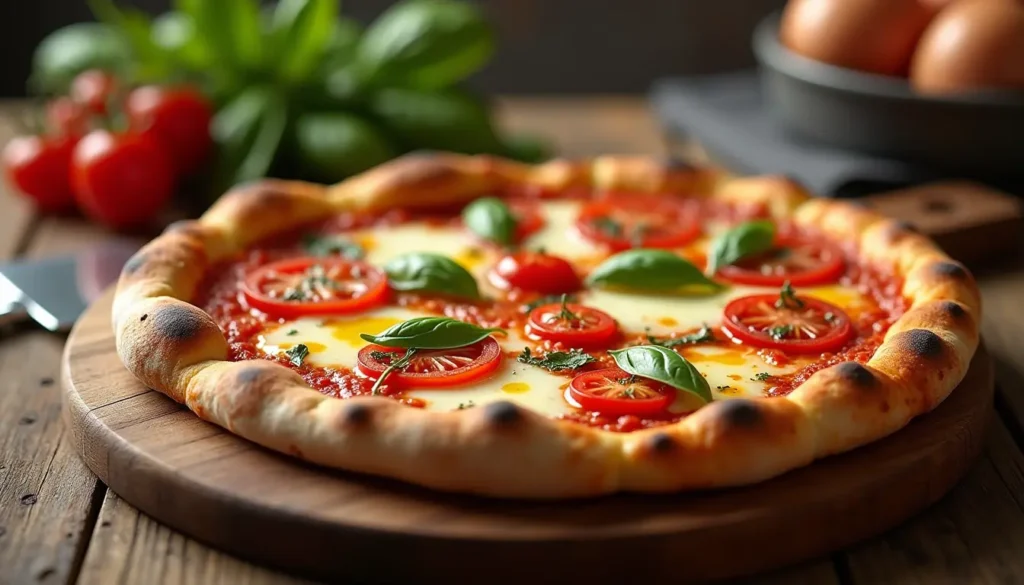
This sourdough pizza dough recipe delivers a flavorful, chewy crust with complex tangy notes and incredible texture that transforms ordinary pizza night into an artisan experience. The natural fermentation creates air pockets, enhances digestibility, and develops flavors that commercial yeast simply cannot achieve.
As a home baker who’s maintained a sourdough starter for over 10 years and made hundreds of pizzas, I’ve refined this method to be both authentic and practical. This isn’t just another pizza dough—it’s the perfect way to showcase your sourdough starter while creating restaurant-quality pizza at home.
In this guide, you’ll discover how to use sourdough starter as natural leavening for pizza, learn proper fermentation timing for optimal flavor and texture, master the techniques for shaping and baking sourdough pizza, and get expert tips for working with sourdough’s unique properties. Let’s elevate your pizza game with sourdough.
Table of Contents
Why This Sourdough Pizza Dough Recipe Works
Sourdough brings unique characteristics to sourdough pizza dough recipe that commercial yeast cannot replicate, combining traditional techniques with practical home baking.
- Uses simple, pantry-staple ingredients: Just five basic ingredients—flour, water, sourdough starter, salt, and olive oil—create complex, delicious results
- Natural fermentation develops deep flavor: The long, slow rise allows enzymes and wild yeasts to create tangy, nuanced taste with subtle complexity
- Creates superior texture and digestibility: Fermentation breaks down gluten and starches, making the dough easier to digest while developing that perfect chewy-crispy texture
- More forgiving than commercial yeast dough: Sourdough’s flexible timeline means you can’t really “miss” the perfect moment—it has a much wider window of readiness
- Perfect for artisan-style pizza at home: Produces those characteristic irregular air bubbles, slightly charred edges, and authentic pizzeria texture
- Makes excellent use of sourdough discard: If using unfed starter, this recipe prevents waste while creating something delicious

Choosing the Right Ingredients for Sourdough Pizza Dough Recipe
The quality and type of ingredients significantly impact your sourdough pizza dough flavor, texture, and fermentation success.
Best Sourdough Starter for Pizza
Active, recently fed starter (100% hydration): Use starter that’s been fed 4-8 hours before mixing dough, when it’s bubbly, doubled in size, and at peak activity. This provides maximum leavening power and consistent results.
What is 100% hydration?: This means equal weights of flour and water (e.g., 100g flour + 100g water). Most sourdough starters are maintained at this ratio, which works perfectly for sourdough pizza dough recipe.
Mature starter (2+ weeks old): While you can use younger starters, mature starters with established microbial communities provide more consistent fermentation and better flavor development.
Starter strength matters: If your starter doubles within 4-6 hours at room temperature after feeding, it’s strong enough for pizza. Weak starters may need commercial yeast support (see substitutions).
Using sourdough discard: You can use unfed sourdough discard (the portion removed before feeding), but add ½ teaspoon commercial yeast to ensure proper rise. The sourdough still contributes flavor.
Flour Selection for Sourdough Pizza
Bread flour (12-14% protein): Ideal for sourdough pizza dough. High protein content develops strong gluten structure that creates chewy texture and supports the long fermentation.
All-purpose flour (10-12% protein): Works well and creates slightly softer, more tender crust. Good choice if you prefer less chew or can’t find bread flour.
Type 00 flour (Italian pizza flour): Finely milled and creates authentic Neapolitan-style crust with tender crumb and crispy exterior. More expensive but worth trying for special occasions.
Whole wheat flour: Replace up to 30% of white flour with whole wheat for nutty flavor and nutrition. Higher percentages create denser, heavier crust.
Mixing flours: Combine bread flour and all-purpose (50/50) for balanced texture, or add 10-20% whole wheat for complexity without heaviness.
Water, Salt, and Oil Essentials
Water quality: Use filtered or bottled water if your tap water is heavily chlorinated—chlorine can inhibit sourdough fermentation. Water temperature should be room temperature (68-75°F).
Salt type: Fine sea salt or table salt works best—it dissolves easily and distributes evenly. Kosher salt works but measure by weight (it’s less dense by volume).
Olive oil: Extra virgin olive oil adds flavor and tenderness. Use good quality but not your most expensive bottle—heat diminishes subtle flavor notes.
Hydration level: This recipe uses 65-70% hydration (water as percentage of flour weight), creating sourdough pizza dough that’s manageable for beginners while still producing open crumb structure.
Ingredient Substitutions
Bread flour → All-purpose: Direct 1:1 substitution. Reduce kneading time slightly as lower protein develops gluten faster.
Active starter → Sourdough discard + yeast: Use same amount of discard plus ½ teaspoon instant yeast. Maintains sourdough flavor with commercial yeast reliability.
Olive oil → Other oils: Avocado, grapeseed, or vegetable oil work but lack olive oil’s distinctive flavor.
Water → Milk: Creates richer, softer crust but reduces browning. Use same amount.
White flour → Gluten-free: Requires completely different recipe with xanthan gum and adjusted hydration. This recipe cannot be directly converted.
Ingredients & Prep for Sourdough Pizza Dough Recipe
Essential Ingredients
| Ingredient | Amount | Baker’s % | Purpose |
|---|---|---|---|
| Bread flour or all-purpose | 500g (4 cups) | 100% | Provides structure and chewiness |
| Water (room temperature) | 325g (1⅓ cups) | 65% | Hydrates flour and activates gluten |
| Active sourdough starter | 150g (½ cup) | 30% | Natural leavening and flavor |
| Fine sea salt | 10g (2 tsp) | 2% | Enhances flavor and strengthens gluten |
| Extra virgin olive oil | 25g (2 Tbsp) | 5% | Adds flavor and tenderness |
This recipe makes: Two 12-14 inch pizzas or three 10-inch personal pizzas
Baker’s percentages explained: Professional bakers use these ratios where flour is always 100% and other ingredients are calculated as percentages of flour weight. This makes scaling recipes easy.
Sourdough Pizza Dough Recipe Prep Essentials
Equipment needed:
- Large mixing bowl (glass or ceramic preferred)
- Kitchen scale (highly recommended for accuracy)
- Bench scraper or dough scraper
- Clean kitchen towel or plastic wrap
- Pizza stone, baking steel, or heavy baking sheet
- Pizza peel or inverted baking sheet
- Instant-read thermometer (optional but helpful)
Workspace preparation:
- Clear counter space for kneading and shaping
- Have flour nearby for dusting
- Oil or lightly flour a large bowl for bulk fermentation
- Ensure work area is at comfortable room temperature (68-75°F)
Timing considerations:
| Method | Total Time | Active Time | Best For |
|---|---|---|---|
| Quick same-day | 6-8 hours | 30 minutes | When you want pizza tonight |
| Standard overnight | 12-18 hours | 30 minutes | Best flavor and texture |
| Extended cold ferment | 24-72 hours | 30 minutes | Maximum flavor, most flexible |
Pantry Staples for Sourdough Pizza
Keep these basics stocked for spontaneous sourdough pizza dough nights:
- Bread flour or all-purpose flour (stored airtight)
- Active sourdough starter (maintained regularly)
- Fine sea salt or table salt
- Extra virgin olive oil
- Quality pizza sauce or canned crushed tomatoes
- Low-moisture mozzarella cheese
- Your favorite pizza toppings
- Cornmeal or semolina (for dusting peel)
Step-by-Step Instructions for Sourdough Pizza Dough Recipe
Pre-Cooking Prep sourdough pizza dough (10 Minutes)
Step 1: Feed your sourdough starter 4-8 hours before you plan to mix dough. It should be bubbly, doubled in volume, and at peak activity. Test by dropping a spoonful in water—if it floats, it’s ready.
Step 2: Gather and measure all ingredients. For best results, weigh ingredients rather than using volume measurements.
Step 3: Ensure water is room temperature (68-75°F). Cold water slows fermentation; hot water can damage sourdough cultures.
Step 4: Prepare workspace and ensure room temperature is moderate (68-75°F ideal). Very cold rooms slow fermentation dramatically; very warm rooms speed it up.
Mixing the Sourdough Pizza Dough (15 Minutes)
Step 1 – Autolyse (optional but recommended): Mix flour and water together in a large bowl until no dry flour remains. Cover and let rest 30-60 minutes. This hydrates flour and jump-starts gluten development, making kneading easier.
Step 2 – Add starter: Add active sourdough starter to the flour-water mixture (or to flour and water if skipping autolyse). Mix with hands or wooden spoon until starter is fully incorporated.
Step 3 – Add salt and oil: Sprinkle salt over sourdough pizza dough recipe, add olive oil, and mix thoroughly. The dough will be shaggy and sticky—this is normal.
Step 4 – Initial mixing: Continue mixing in bowl for 3-5 minutes until dough becomes cohesive. It should pull away from bowl sides but remain slightly sticky.
Stand mixer method: Use dough hook on low speed for 2 minutes to combine, then medium-low for 5-7 minutes until smooth and elastic.
Kneading Sourdough Pizza Dough (8-10 Minutes)
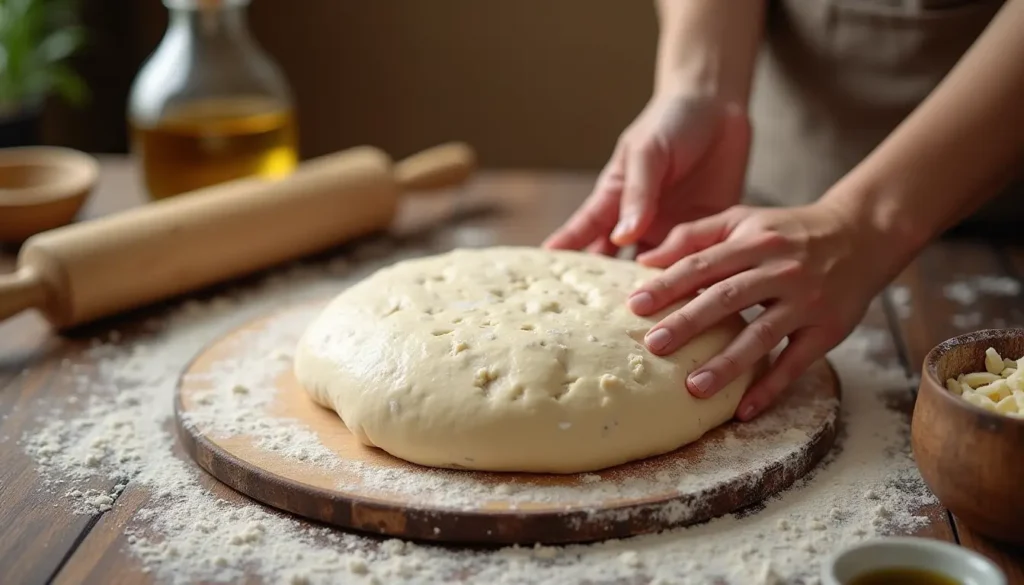
Step 1: Turn sourdough pizza dough recipe onto lightly floured surface. Wet your hands to prevent sticking if needed.
Step 2: Use the push-fold-turn method: push dough away with heel of hand, fold it back over itself, rotate 90 degrees, and repeat.
Step 3: Knead for 8-10 minutes until dough becomes smooth, elastic, and supple. Add minimal flour—the dough should be slightly tacky but not stick to your hands.
Alternative – Stretch and fold method (gentler, preserves open crumb):
- After initial mixing, leave dough in bowl
- Every 30 minutes for 2 hours, perform stretch and folds: grab one side of dough, stretch it up, and fold over center
- Rotate bowl 90 degrees and repeat all four sides
- This develops gluten without traditional kneading
Windowpane test: Stretch a small piece of dough between fingers. If it forms a thin, translucent membrane without tearing, gluten is adequately developed.
Bulk Fermentation for Sourdough Pizza Dough (6-72 Hours)
This is where sourdough magic happens—wild yeasts and bacteria work together to develop flavor and texture.
Step 1: Shape sourdough pizza dough into a smooth ball and place in lightly oiled bowl. Turn once to coat all sides with oil.
Step 2: Cover tightly with plastic wrap or damp kitchen towel to prevent drying.
Step 3: Choose your fermentation method:
Same-day fermentation (6-8 hours at 72-75°F):
- Let dough rise at warm room temperature
- Dough should double in size and feel puffy
- Best for when you want pizza tonight
- Flavor will be good but not as complex
Overnight fermentation (12-18 hours):
- First 2-3 hours at room temperature, then refrigerate
- Or refrigerate immediately for slower rise
- This is the sweet spot for flavor and convenience
- Remove from fridge 1 hour before shaping
Extended cold fermentation (24-72 hours):
- Refrigerate after initial mix or brief room temperature rise
- Develops maximum flavor complexity
- Most flexible timing—use when convenient within window
- Brings to room temperature 1-2 hours before shaping
Visual cues: sourdough pizza dough recipe should be visibly puffier (may not fully double like commercial yeast dough), have a domed top, and feel airy when gently pressed. Small bubbles may be visible through container sides.
Dividing and Pre-Shaping (10 Minutes)
Step 1: Remove sourdough pizza dough recipe from refrigerator if cold-fermented. Let rest at room temperature 1-2 hours until slightly puffy and relaxed.
Step 2: Turn sourdough pizza dough recipe onto lightly floured surface. Press gently to release large air bubbles (but preserve smaller ones).
Step 3: Divide sourdough pizza dough recipe into portions using bench scraper:
- 2 portions for large pizzas (250g each)
- 3 portions for personal pizzas (165g each)
Step 4: Shape each portion into a tight ball:
- Cup hands around dough
- Rotate on unfloured surface, creating tension on dough surface
- The tension helps create structure for final shaping
Step 5: Place dough balls on lightly floured surface or plate, cover with damp towel, and rest 30-60 minutes. This relaxation period makes stretching easier.
Shaping Sourdough Pizza Dough (5 Minutes Per Pizza)
Step 1: Preheat oven to 500-550°F (as high as your oven goes) with pizza stone or baking steel on middle rack. Preheat for 45-60 minutes—proper preheating is crucial.
Step 2: Generously flour work surface or use cornmeal for non-stick properties.
Step 3: Place one dough ball on floured surface. Press gently with fingertips, starting from center and working outward, leaving ½-inch border for crust.
Step 4 – Hand stretching method:
- Pick up dough and drape over knuckles
- Let gravity stretch dough, rotating as you work around edge
- Keep stretching until desired diameter (12-14 inches)
- Maintain thicker rim—this creates classic crust
Rolling method: Use lightly floured rolling pin if stretching is difficult. Roll from center outward, rotating dough frequently. This creates more compact crumb but is easier for beginners.
Step 5: Transfer shaped dough to parchment paper or cornmeal-dusted pizza peel.
Topping and Baking Sourdough Pizza (10-15 Minutes)
Step 1: Work quickly once dough is shaped—add toppings within 5-10 minutes to prevent sticking.
Step 2: Add sauce sparingly—use ⅓-½ cup maximum per pizza. Spread leaving ½-inch border.
Step 3: Add cheese and toppings. Don’t overload or crust will be soggy and cook unevenly.
Step 4: Transfer to preheated oven:
- If using parchment, slide pizza (on parchment) onto stone
- If using peel, use quick jerking motion to slide pizza onto stone
- If using baking sheet, place sheet in oven
Step 5: Bake 8-12 minutes (thin crust) or 12-15 minutes (thicker crust) until:
- Crust is golden brown with dark spots
- Cheese is bubbling and browning
- Bottom is golden to deep golden (lift edge to check)
Step 6: Remove from oven and let rest 2-3 minutes before slicing. This allows cheese to set slightly.
Doneness Indicators for sourdough pizza dough recipe
Visual cues: Crust edges should be golden to deep brown with leopard-spotting (dark brown/black spots characteristic of high-heat pizza). Cheese should be fully melted with light browning.
Texture test: Crust should feel firm when tapped, with slight crispy exterior. When you pick up a slice, it should support itself without drooping excessively.
Bottom check: Most important indicator—lift pizza with spatula. Bottom should be golden brown with dark spots, never pale or soggy.
Internal temperature: While rarely measured for pizza, fully cooked sourdough pizza crust reaches about 200-210°F internally.
Pro Tips for Perfect Sourdough Pizza Dough Recipe
Avoiding Dense or Tough sourdough pizza dough
Ensure adequate fermentation: Under-fermented dough produces dense, gummy texture. Look for visual puffiness and airy feel before proceeding.
Don’t over-knead: While commercial yeast sourdough pizza dough recipe tolerates extensive kneading, sourdough benefits from gentler handling. Use stretch-and-fold method or knead just until smooth.
Proper shaping technique: Aggressive rolling or pressing removes the air bubbles created during fermentation. Stretch gently and preserve those precious bubbles.
Temperature control: Very cold dough is stiff and difficult to stretch. Always bring refrigerated sourdough pizza dough recipe to room temperature (1-2 hours) before shaping.
Starter strength: Weak starter produces flat, dense dough. Ensure your starter passes the float test before using.
Avoid adding too much flour: During shaping, use minimal flour. Sticky dough creates lighter pizza than heavily floured dough.
Essential Tool Recommendations
Pizza stone or baking steel: Essential for crispy bottom crust. Stone provides steady, even heat. Baking steel conducts heat even better. Preheat minimum 45 minutes.
Kitchen scale: Measuring by weight ensures consistency. Digital scales cost $15-25 and transform baking accuracy.
Bench scraper: Makes dividing dough clean and easy. Also useful for scraping work surfaces and handling sticky dough.
Pizza peel: Wooden or metal paddle for transferring pizza to hot stone. Not essential—parchment paper or inverted baking sheet works.
Oven thermometer: Most ovens run 25-50°F off calibration. Accurate temperature is crucial for pizza.
Proofing container: Clear container with volume markings helps track fermentation progress visually.
Storage and Make-Ahead Strategy
Refrigerator storage (bulk dough):
- After bulk fermentation, store in airtight container up to 3 days
- Dough continues slow fermentation, developing more complex flavor
- Bring to room temperature before dividing and shaping
Refrigerator storage (shaped balls):
- After dividing and pre-shaping, place balls in oiled container
- Refrigerate up to 24 hours
- Bring to room temperature 1-2 hours before final shaping
- This is convenient for entertaining—prep ahead, shape when ready
Freezer storage:
- After bulk fermentation, divide and shape into balls
- Wrap each ball tightly in plastic wrap, then place in freezer bag
- Freeze up to 3 months
- Thaw overnight in refrigerator, then bring to room temperature before shaping
- Texture may be slightly less open than fresh sourdough pizza dough recipe
Par-baked crusts:
- Shape dough, dock with fork, and bake plain at 450°F for 5-7 minutes
- Cool completely, wrap well, and freeze
- Top frozen and bake—no thawing needed
- Texture differs from fresh but very convenient
Leftover baked pizza:
- Store in airtight container in refrigerator 3-4 days
- Reheat in 375°F oven for 10 minutes for best texture
- Avoid microwave—creates soggy crust
Flavor Variations for Sourdough Pizza Dough Recipe
Herb-Infused Sourdough Pizza Dough
Add dried herbs during mixing for aromatic crust:
Italian blend: 2 teaspoons dried oregano, 1 teaspoon dried basil, 1 teaspoon garlic powder, ½ teaspoon dried thyme
Garlic and rosemary: 2 teaspoons garlic powder, 1 tablespoon fresh rosemary (finely minced) or 1 teaspoon dried
Everything bagel: 2 tablespoons everything bagel seasoning added to dough or sprinkled on crust before baking
Black pepper and parmesan: 1 teaspoon cracked black pepper, 2 tablespoons grated parmesan mixed into dough
Add herbs to flour before mixing with water for even distribution throughout dough.
Whole Wheat Sourdough Pizza Dough
Replace portion of white flour with whole wheat for heartier flavor:
30% whole wheat: Use 350g bread flour + 150g whole wheat flour. Increase water by 15-20g (340-345g total) as whole wheat absorbs more liquid.
50% whole wheat: Use 250g each bread and whole wheat flour. Increase water to 350-360g. Expect denser, chewier crust with pronounced nutty flavor.
Starter adjustment: Maintain your starter with whole wheat flour for even deeper flavor, or use white flour starter as usual.
Gluten-Free Sourdough Pizza (Advanced)
Converting to gluten-free requires completely different approach:
Use gluten-free sourdough starter: Maintained with gluten-free flour blend Different flour blend: Commercial pizza-specific gluten-free blend Add binders: 2 teaspoons xanthan gum or psyllium husk powder Adjust hydration: Usually requires less water—start with 50% hydration Skip traditional kneading: Mix until combined, then shape immediately Different texture: Won’t achieve same chew and air pockets as wheat-based dough
Note: Gluten-free sourdough pizza requires specialized recipe and experience. This conversion is not beginner-friendly.
Regional Pizza Styles with Sourdough
Neapolitan-style (thin, chewy, charred edges):
- Use Type 00 flour if available
- Stretch very thin (10-12 inches from 250g dough)
- Bake at maximum temperature (550°F+) for 6-8 minutes
- Minimal toppings—San Marzano tomatoes, fresh mozzarella, basil
New York-style (thin but foldable):
- Use bread flour for structure
- Add 1 tablespoon sugar for subtle sweetness
- Stretch to 14-16 inches
- Bake at 500°F for 10-12 minutes
Detroit-style (thick, rectangular, crispy edges):
- Press dough into oiled rectangular pan
- Let rise 30 minutes in pan
- Add cheese to edges for crispy, caramelized rim
- Bake 15-18 minutes at 475°F
Sourdough focaccia-style (thick, airy, olive oil-rich):
- Increase oil to 50g
- Press into oiled pan and let rise 1-2 hours
- Dimple surface with fingertips
- Drizzle with more oil and coarse salt before baking
Serving Suggestions for Sourdough Pizza
Classic Pizza Topping Combinations
Traditional Margherita: Crushed San Marzano tomatoes (not cooked), fresh mozzarella, fresh basil leaves (add after baking), sea salt, olive oil drizzle
Pepperoni and cheese: Simple pizza sauce, low-moisture mozzarella, quality pepperoni. The sourdough crust shines here.
White pizza: Olive oil and minced garlic base (no red sauce), ricotta, mozzarella, parmesan, fresh arugula (add after baking)
Mushroom and truffle: Sautéed mixed mushrooms, mozzarella, fontina, fresh thyme, truffle oil drizzle after baking
Prosciutto and arugula: Pizza sauce, mozzarella, thin-sliced prosciutto (add after baking), fresh arugula, shaved parmesan, balsamic glaze
Burrata and tomato: Pizza sauce, fresh cherry tomatoes, burrata (add after baking), fresh basil, olive oil
Sausage and pepper: Pizza sauce, Italian sausage (cooked), roasted bell peppers, mozzarella, fresh oregano
Side Dishes and Accompaniments
Salads: Caesar salad, Italian chopped salad, arugula with lemon and parmesan, or caprese salad
Appetizers: Marinated olives, antipasto platter, bruschetta, or garlic knots (made from leftover dough)
Vegetables: Roasted vegetables, grilled asparagus, or broccolini with lemon
Soup: Minestrone, tomato soup, or Italian wedding soup pairs beautifully with sourdough pizza
Beverage Pairings
Red wine: Chianti, Barbera, Sangiovese, or Montepulciano—medium-bodied reds complement tomato sauce and cheese
White wine: Pinot Grigio, Vermentino, or Soave for lighter pizzas or white sauce variations
Beer: Italian pilsners, wheat beers, or pale ales. Avoid heavy, bitter IPAs that overwhelm delicate sourdough flavor.
Sparkling: Prosecco or Lambrusco (slightly sparkling red wine)—traditional Italian pairings
Non-alcoholic: Italian sodas, sparkling water with lemon, lemonade, or iced tea
FAQs About Sourdough Pizza Dough Recipe
Can I use sourdough discard instead of active starter?
Yes, but with adjustments. sourdough pizza dough recipe discard (unfed starter) still provides flavor but has weak leavening power. To compensate, add ½ teaspoon instant yeast to the recipe. The dough will rise more reliably while maintaining sourdough’s tangy flavor. This is an excellent way to use discard without waste. However, for best results and authentic sourdough pizza, active starter produces superior texture and more complex flavor.
How long should I ferment sourdough pizza dough?
Minimum 6-8 hours at room temperature for same-day pizza, though overnight (12-18 hours) produces better flavor. For optimal results, refrigerate after initial mixing and cold-ferment 24-48 hours—this creates the most complex flavor and best texture. Maximum cold fermentation is 72 hours before quality declines. The beauty of sourdough is flexibility—it won’t overproof as dramatically as commercial yeast, so timing isn’t as critical.
My sourdough pizza dough recipe didn’t rise much. What happened?
Several factors cause poor rise: weak or inactive starter (test with float test before using), insufficient fermentation time (sourdough rises slower than commercial yeast), cold environment (aim for 72-75°F during bulk fermentation), or too much salt added too early (salt inhibits yeast). If your starter is weak, feed it twice daily for 3-5 days to strengthen before making pizza. Consider adding ½ teaspoon commercial yeast as insurance until your starter is more robust.
Can I freeze sourdough pizza dough recipe?
Absolutely! Freeze after bulk fermentation or after dividing into balls. Wrap each portion tightly in plastic wrap, then place in freezer bag. Freeze up to 3 months. To use, thaw overnight in refrigerator, then bring to room temperature (1-2 hours) before shaping. The texture may be slightly less open than fresh dough, but results are still excellent. Frozen dough is perfect for spontaneous pizza nights.
Should I use a stiff or liquid sourdough starter for pizza?
Standard 100% hydration starter (equal parts flour and water by weight) works best and is most common. Stiff starter (60-70% hydration) can be used but requires adjusting water in the recipe—add 50-75g more water to compensate. Liquid starter (higher hydration) also works but reduces water slightly. For simplicity and consistency, use 100% hydration starter that doubles within 4-8 hours after feeding.
Why is my sourdough pizza crust tough instead of chewy?
Tough crust results from over-kneading (especially with stand mixer), adding too much flour during shaping, rolling instead of hand-stretching (compresses air bubbles), insufficient fermentation (gluten remains tight), or baking at too low temperature. Sourdough benefits from gentle handling—use stretch-and-fold method rather than aggressive kneading. Also ensure oven is fully preheated to 500°F+ with pizza stone heated 45-60 minutes.
Can I make sourdough pizza dough in a stand mixer?
Yes, it works well. Use dough hook attachment on low speed for 2 minutes to combine ingredients, then increase to medium-low and mix 5-7 minutes until smooth and elastic. Watch carefully—over-mixing develops gluten excessively, creating tough dough. Sourdough benefits from gentler development than commercial yeast dough. Many bakers prefer hand mixing and stretch-and-fold method for superior texture, but stand mixer is convenient and effective when used carefully.
How is sourdough pizza different from regular sourdough pizza dough?
Sourdough pizza has complex, tangy flavor from wild yeast and bacteria fermentation, while commercial yeast produces cleaner, more neutral taste. Sourdough creates more irregular, artisan-looking air bubbles and slightly more tender, digestible crust due to enzymatic breakdown during long fermentation. It also has more flexible timing—you can’t easily overproof it like commercial yeast dough. However, sourdough requires active starter maintenance and longer preparation time (minimum 6-8 hours vs. 1-2 hours for yeast dough).
Conclusion
You now have everything you need to create authentic, delicious sourdough pizza with complex flavor and incredible texture that puts commercial yeast versions to shame. No more wasting your precious sourdough starter on mediocre baked goods—this is its true calling.
Stop settling for one-dimensional sourdough pizza dough and start showcasing your sourdough starter’s potential tonight. This recipe transforms simple ingredients and patient fermentation into artisan-quality pizza that rivals the best pizzerias.
Join thousands of sourdough enthusiasts who’ve discovered that pizza might be the perfect vehicle for sourdough’s tangy, complex flavor. Your maintained starter finally has a purpose beyond weekly bread baking!
Ready to expand your sourdough repertoire? Try our Classic Sourdough Bread Recipe to master the basics, or check out our Sourdough Discard Recipes Guide for creative ways to use every bit of your starter!
How did you find results our recipes
There are no reviews yet. Be the first one to write one.

