
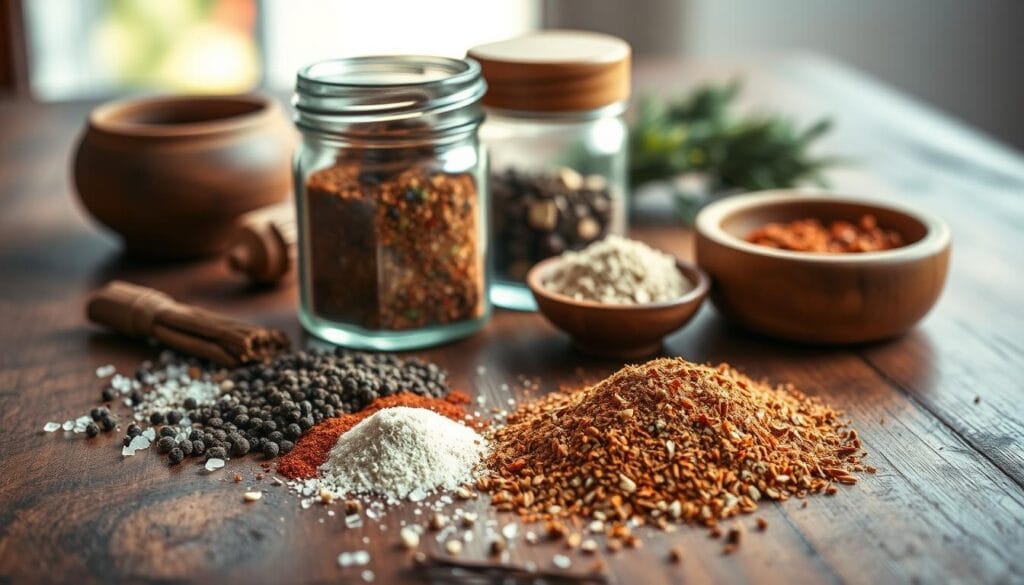
Are you tired of bland steaks? Steak Seasoning Recipe Elevate your grilling game with a homemade dry rub that’s easy to make and packed with flavor.
Our blend combines the brightness of coriander and dill with the depth of onion powder, garlic powder, and salt. This creates a perfect balance of flavors that enhance the steak’s natural taste without overpowering it.
By using this homemade blend, you’ll be able to achieve juicy steaks with a rich, savory flavor. The best part? This dry rub is easy to make and can be stored in your pantry for months.
Table of Contents
The Secret to Perfect Steaks
To make your grilled steak truly great, mastering steak seasoning is key. A well-made seasoning blend can really bring out your steak’s natural flavors.
Why Seasoning Makes All the Difference
Seasoning does more than add flavor; it enhances your dining experience. A quality seasoning blend tenderizes the meat and deepens its flavor. It creates a tasty crust that matches the juicy inside of your steak.
- Enhances natural flavors
- Tenderizes the meat
- Creates a flavorful crust
The Science Behind Flavor Development
Flavor development in grilled steak involves the Maillard reaction. This is a chemical reaction between amino acids and sugars that happens when cooking. It’s what gives the steak its flavor and color. A good seasoning blend can boost this reaction, making the flavor more complex and enjoyable.
Essential Ingredients for the Best Steak Seasoning Recipe
To make the perfect steak seasoning, you need to know the key ingredients. A good mix enhances the steak’s natural taste without being too strong.
Base Spices Every Steak Seasoning Needs
The base spices are the heart of any steak seasoning. They give the seasoning its core flavor.
Salt and Pepper: The Foundation
Salt and pepper are the base of any steak seasoning. They boost the steak’s natural taste and set the stage for other flavors.
Garlic and Onion: Aromatic Essentials
Garlic and onion powders add a rich flavor and aroma. They’re key to a savory taste experience.
Herbs and Other Basics
Herbs like thyme, rosemary, and parsley add depth. Spices like black peppercorns, coriander seeds, and dried dill also enhance the flavor.
Optional Flavor Enhancers
You can add optional ingredients to customize your seasoning. These let you tailor the flavor to your liking.
Adding Heat with Peppers
For a spicy kick, try Aleppo pepper or red pepper flakes. They add a fiery touch to your steak.
Umami Boosters
Umami enhancers like certain Italian herb blends add a rich, savory taste. They make your steak even more flavorful.
Sweet Elements
Adding a bit of sweetness can balance the flavors. A small amount of sugar or sweet paprika can do the trick.
| Ingredient | Function | Example |
|---|---|---|
| Salt and Pepper | Foundation | Flaky sea salt, black peppercorns |
| Aromatics | Depth of Flavor | Garlic powder, onion powder |
| Herbs | Complexity | Dried thyme, rosemary |
| Heat | Spice Level | Aleppo pepper, red pepper flakes |
Equipment You’ll Need
To make your own steak seasoning, you need a few basic tools. The right equipment helps keep your seasoning fresh and flavorful. It ensures your seasoning stays good for a long time.
Measuring and Mixing Tools
You’ll need measuring cups and spoons to get the right amounts of each ingredient. A mixing bowl is also key for combining the spices. For a finer mix, use a mortar and pestle or a spice grinder.
Storage Containers
After making your seasoning, you’ll need a good container to store it. Airtight containers, like glass jars with tight lids, work best. Make sure the container is clean and dry before you fill it with your seasoning.
Step-by-Step Steak Seasoning Recipe
Now that you have your ingredients, it’s time to make your steak seasoning. Just follow these easy steps. You’ll need to measure, mix, and store the blend to keep it fresh.
Measuring Your Ingredients
Measuring your ingredients right is key for a balanced flavor. Use a digital scale or measuring spoons. For example, if your recipe needs 2 tablespoons of paprika, measure it exactly.
Mixing Technique
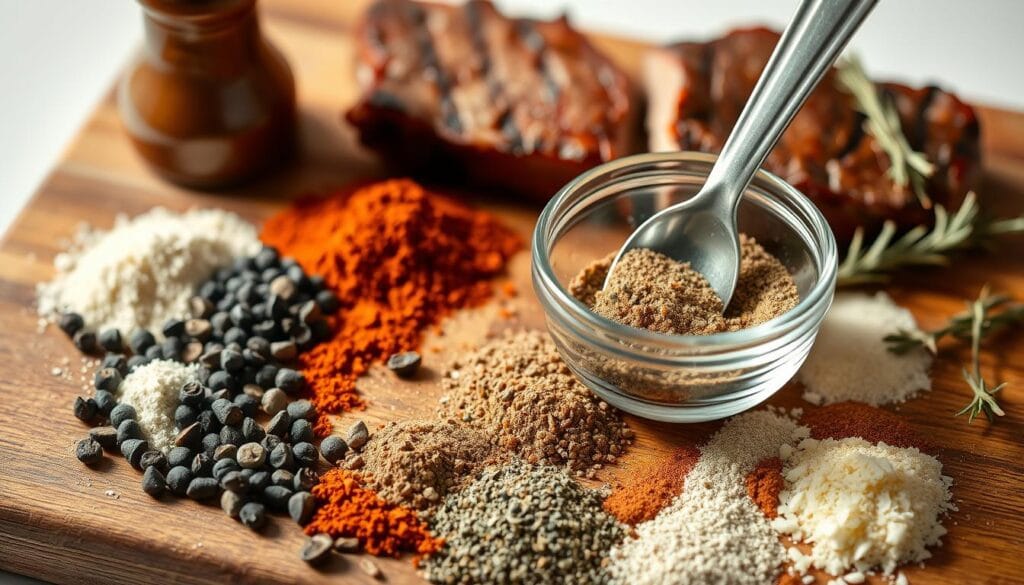
After measuring, it’s time to mix. In a bowl, combine all your ingredients. Use a spoon or whisk to mix until everything is well combined. Make sure the mix is even and there are no lumps.
Storage Tips for Maximum Freshness
Once mixed, store your seasoning in an airtight container. Glass jars or spice containers work great. Keep it away from sunlight and heat to keep the spices strong. This way, your seasoning will stay flavorful longer.
| Storage Method | Benefits |
|---|---|
| Airtight Containers | Preserves freshness, prevents moisture entry |
| Cool, Dark Place | Protects from heat and light damage |
By following these steps, you can make a tasty steak seasoning. Remember, the quality of your ingredients and how you store them are key to a great seasoning.
How to Apply Seasoning for Maximum Flavor
The secret to a perfectly seasoned steak is in the timing and method of application. To get the most flavor, you must know when and how to add your seasoning.
Timing: When to Season Your Steak
Timing is key when seasoning your steak. You have two main options: dry brining or seasoning just before cooking.
Dry Brining Method
Dry brining means you put seasoning on the steak and let it sit before cooking. This method lets the seasonings soak deeper into the meat. This makes your steak taste more flavorful.
Just-Before-Cooking Application
Seasoning your steak right before cooking is quicker and works well. It’s perfect for those in a hurry or who like a lighter flavor.
Application Methods
How you apply seasoning greatly affects the taste. You can rub, sprinkle, or use an oil-based method.
Rub vs. Sprinkle Techniques
Rubbing seasoning into the steak ensures even flavor distribution. Sprinkling gives a lighter taste and can be mixed with other methods.
Oil-Based Applications
Using oil with your seasoning makes a paste. Brush this paste on the steak. It helps the seasoning stick and boosts the flavor.
Knowing the different timing and application methods helps you choose the best way for your steak. Whether you prefer dry brining or seasoning just before cooking, the right method will make your steak taste amazing.
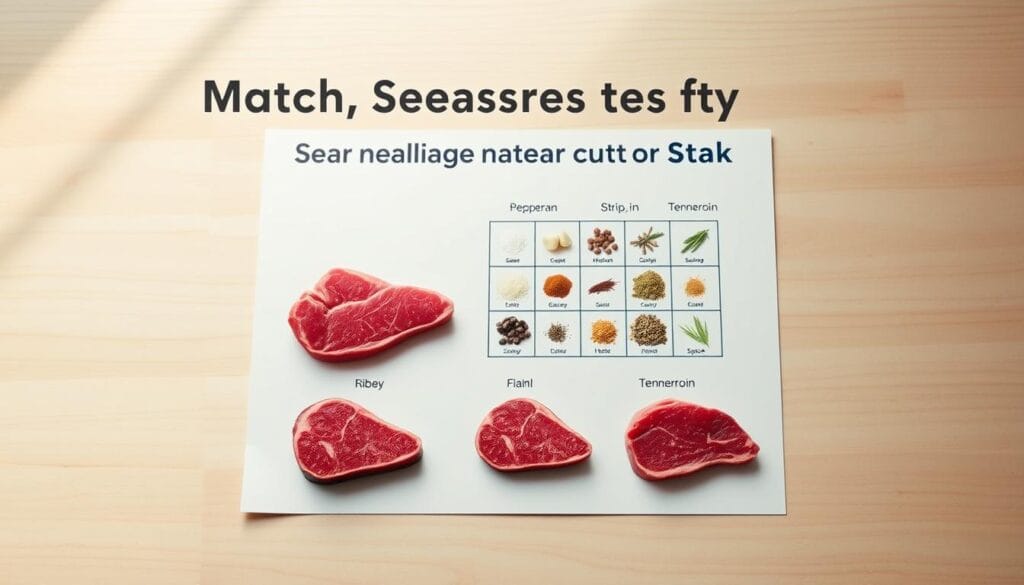
Matching Seasonings to Different Cuts of Steak
Understanding the needs of each steak cut is key to perfect seasoning. Each cut has its own unique traits. These traits need specific seasoning to bring out their best flavors.
Ribeye and Strip Steaks
Ribeye and strip steaks are known for their rich taste and tender feel. They’re perfect for bold seasonings. Try a mix of garlic powder, paprika, and black pepper to boost their flavor.
For more depth, add herbs like thyme or rosemary to your seasoning mix.
Filet Mignon
Filet mignon is leaner, so it needs gentle seasoning. A light sprinkle of salt, pepper, and a bit of garlic is enough. For a touch of class, add dried herbs like parsley or chives.
Tougher Cuts: Flank and Skirt Steak
Flank and skirt steaks are tougher. They benefit from marinating, which adds flavor and tenderizes. Use a marinade with vinegar or citrus, spices, and herbs to improve their taste and texture.
Here’s a comparison of seasoning approaches for different steaks:
| Steak Cut | Recommended Seasoning | Additional Tips |
|---|---|---|
| Ribeye/Strip | Bold: garlic powder, paprika, black pepper | Add herbs like thyme or rosemary |
| Filet Mignon | Delicate: salt, pepper, hint of garlic | Sprinkle with dried herbs like parsley |
| Flank/Skirt | Marinade: acidic ingredients, spices, herbs | Marinating tenderizes and adds flavor |
Regional Variations of Steak Seasoning
Steak seasoning from different regions can make your grilling better. Each place has its own special flavors that make steaks taste amazing.
American Steakhouse Style
The American steakhouse style is all about bold tastes. It usually has black pepper, garlic powder, and paprika. This mix is great for grilled steaks.
To make American-style seasoning, mix:
- 2 tablespoons black pepper
- 1 tablespoon garlic powder
- 1 tablespoon paprika
- 1 teaspoon salt
This blend is perfect for ribeye and strip steaks.
Mediterranean Influences
Mediterranean seasonings use herbs like oregano, thyme, and rosemary. They also add lemon zest and garlic. This taste is great for those who like bright, aromatic flavors.
A Mediterranean seasoning mix is:
- 2 tablespoons dried oregano
- 1 tablespoon dried thyme
- 1 tablespoon lemon zest
- 2 cloves garlic, minced
This seasoning is best for lean cuts like filet mignon.
Latin American Steak Seasonings
Latin American seasonings are bold and vibrant. They often include cumin, chili powder, and cilantro. This style is perfect for those who like spicy and complex flavors.
To make a Latin American seasoning, mix:
- 2 tablespoons cumin
- 1 tablespoon chili powder
- 1 tablespoon cilantro, chopped
- 1 teaspoon lime zest
Trying these regional seasonings can help you find the perfect one for your taste. It will make your grilling even better.
Homemade vs. Store-Bought Steak Seasonings
Making your own steak seasoning at home can change the game for steak lovers. It lets you customize flavors that store-bought options can’t. Several factors come into play when choosing between homemade and store-bought.
Let’s look at the main differences. Your choice impacts the taste of your steak, your budget, and your health.
Cost Comparison
Homemade steak seasoning is usually cheaper. Buying spices in bulk lets you make many batches for the price of one. The Bureau of Labor Statistics shows that buying in bulk lowers the cost per unit.
| Item | Cost per Unit | Bulk Cost |
|---|---|---|
| Garlic Powder | $2.50 | $1.50 (bulk) |
| Paprika | $3.00 | $2.00 (bulk) |
Health Benefits of DIY Seasonings
By making your own seasoning, you control what goes into it. You avoid additives and preservatives found in some store-bought blends. Consumer Reports points out that many commercial blends have hidden sodium and preservatives.
“The beauty of homemade seasoning is that you can tailor it to your dietary needs and preferences.”
Flavor Freshness Factors
Homemade seasonings taste fresher because you make them in small batches. Store-bought seasonings, while easy, may lose potency over time. Science Daily notes the importance of freshness in spice blends.
Customizing Your Steak Seasoning
To make your steak seasoning truly yours, think about customizing it. It’s all about finding the right mix of flavors you love.
Adjusting Heat Levels
If you like a bit of heat, you can tweak the seasoning. Add more cayenne pepper or red pepper flakes for spice. Or, cut down on these to make it milder. Celebrity chef Bobby Flay says, “The right seasoning can make or break a dish,” and balance is key.
“and it’s all about balance – too much heat can overpower the other flavors.”
Herb and Spice Substitutions
You can also change up your steak seasoning by swapping herbs and spices. Swap paprika for garlic powder or onion powder if you prefer. Julia Child said, “The only time to eat diet food is while you’re waiting for the steak to cook.”
With these simple tweaks, you can make a seasoning that’s just right for you. Whether you want a spicy kick or something more subtle, customizing your seasoning can elevate your grilling game.
Troubleshooting Common Seasoning Mistakes
The secret to a perfectly seasoned steak is avoiding common mistakes. When seasoning steaks, errors can be fixed easily but are costly if not caught.
Two big issues are over-seasoning and flavor imbalances. Knowing how to fix these can make your steak taste much better.
Over-Seasoning Solutions
Over-seasoning can hide the steak’s natural taste. To fix this, add more oil or butter to the steak. If the steak is already cooked, serve it with something mild like a salad or creamy sauce.
Tip: Begin with a small amount of seasoning and taste as you go. This way, you can avoid over-seasoning.
Fixing Flavor Imbalances
Flavor imbalances happen when seasoning doesn’t match the steak’s taste. To fix this, find the strongest flavor in your seasoning and balance it. For example, if it’s too salty, add sweetness or acidity.
Experimentation is key to finding the right balance. Don’t hesitate to try new seasoning combinations and adjust to your liking.
Conclusion
Mastering a simple steak seasoning recipe can greatly improve your grilled steaks’ flavor. The secret is to balance flavors and season correctly.
Creating your own steak seasoning lets you tailor the taste to your liking. This ensures your grilled steaks are always a hit. The steak seasoning recipe shared earlier is a great starting point. You can tweak it to fit your steak type and taste preferences.
Whether you’re grilling a tender filet mignon or a hearty ribeye, the right seasoning matters a lot. Following the tips in this article will help you add depth to your steak’s flavor. This will make your grilled steak a memorable dish, highlighting the best of your steak seasoning and grilled steak.
FAQ
What is the best way to store homemade steak seasoning?
Can I use steak seasoning on other types of meat?
How do I adjust the heat level of my steak seasoning?
What are some common mistakes to avoid when using steak seasoning?
Can I make steak seasoning ahead of time?
How do I choose the right steak seasoning for my street tacos recipe?
What’s the difference between homemade and store-bought steak seasonings?
Can I customize my steak seasoning for different cuts of steak?
How do I apply steak seasoning for maximum flavor?
How did you find results our recipes
There are no reviews yet. Be the first one to write one.