

Introduction
Craving a breakfast that’s comforting, crispy, and full of flavor? This sourdough French toast recipe combines tangy, hearty bread with a creamy vanilla custard for the perfect balance of texture and taste.
Unlike standard white bread, sourdough holds its shape beautifully and absorbs the egg mixture just right — creating a golden, slightly crisp edge with a soft, pillowy center. The natural tanginess of sourdough adds an extra dimension of flavor that you simply can’t get from regular sandwich bread, making every bite more interesting and satisfying.
This recipe is ideal for busy mornings, cozy brunches, or when you just want something special without extra effort. It’s one of those dishes that looks and tastes impressive but comes together so easily that you’ll find yourself making it again and again.
In this guide, you’ll discover the best ingredients, step-by-step cooking method, pro chef tips, and fun variations that make this sourdough French toast recipe a true breakfast favorite. Let’s dive into why sourdough is the secret ingredient that takes French toast from good to absolutely incredible.
Table of Contents
Why You’ll Love This Sourdough French Toast Recipe
🍞 Perfect balance of crispy and soft textures — the crusty exterior of sourdough creates amazing caramelization while the interior stays tender and custardy.
🥚 Uses simple pantry staples — eggs, milk, and butter are all you need to create something extraordinary from everyday ingredients.
🕒 Ready in under 20 minutes — this quick recipe fits perfectly into busy mornings without sacrificing quality or flavor.
🍯 Slightly tangy flavor adds depth to every bite — sourdough’s natural fermentation creates complex flavors that enhance the sweetness of the custard.
👨🍳 Foolproof even for beginner cooks — if you can crack an egg and flip bread in a pan, you can master this dish.
Whether you’re making brunch for two or feeding a crowd, this sourdough French toast recipe brings a restaurant-quality dish straight to your table. The combination of artisan bread and classic French toast technique creates something truly special.

Ingredients You’ll Need
Core Ingredients
| Ingredient | Amount |
|---|---|
| Sourdough bread (thick slices) | 6–8 slices |
| Large eggs | 4 |
| Whole milk | ¾ cup |
| Heavy cream | ¼ cup |
| Vanilla extract | 1½ tsp |
| Ground cinnamon | ½ tsp |
| Sugar | 1 tbsp |
| Butter | 2 tbsp (for frying) |
| Pinch of salt | — |
| Maple syrup | For serving |
| Fresh berries | Optional garnish |
Ingredient Tips
Use day-old sourdough — it absorbs the custard mixture without falling apart or becoming mushy. Fresh sourdough can be too soft and dense, while slightly stale bread has the perfect texture for this sourdough French toast recipe.
Whole milk or a mix of milk and cream creates richness that makes each bite luxurious and satisfying. The fat content is important for achieving that creamy, custardy interior we’re after.
For extra flavor, add a pinch of nutmeg or orange zest to the custard mixture. These aromatics complement the tangy sourdough beautifully and add a sophisticated touch.
Don’t skip the salt — it enhances all the sweet flavors and balances the tanginess of the sourdough perfectly. Even just a small pinch makes a noticeable difference in the final result.
Step-by-Step Instructions
Step 1 – Prepare the Batter
In a large mixing bowl, whisk together eggs, milk, cream, sugar, cinnamon, vanilla, and a pinch of salt until completely smooth. This smooth custard base gives your sourdough French toast recipe its signature texture and beautiful golden color.
Make sure there are no streaks of egg white remaining — a uniform mixture ensures even flavor distribution and consistent results. The custard should be silky and well-incorporated, with the sugar fully dissolved.
Step 2 – Soak the Sourdough
Pour the custard mixture into a shallow dish that’s wide enough to accommodate your bread slices comfortably. Lay the sourdough slices in the custard and let them soak for 30 seconds per side.
You want the bread to be fully coated and saturated but not soggy or falling apart. Sourdough’s sturdy crumb structure means it can handle the custard beautifully, but over-soaking will still cause problems. Press gently on the bread with a fork to help it absorb evenly.
The denser texture of sourdough compared to regular bread means it needs adequate soaking time to absorb the custard all the way through. You should see the golden liquid penetrating the bread’s open crumb structure.
Step 3 – Cook to Golden Perfection
Heat a large skillet or griddle over medium heat and melt butter, swirling to coat the entire cooking surface evenly. The butter should sizzle gently but not brown immediately.
Cook the soaked bread slices for 2–3 minutes per side, or until golden brown and slightly crisp around the edges. You’re looking for that perfect caramelization — deep golden color with darker brown spots where the sugars have caramelized.
Don’t rush this step by using high heat. Medium temperature allows the custard to cook through while creating that irresistible crispy exterior. The aroma of buttery, vanilla-scented sourdough French toast filling your kitchen is absolutely heavenly.
Step 4 – Serve and Enjoy
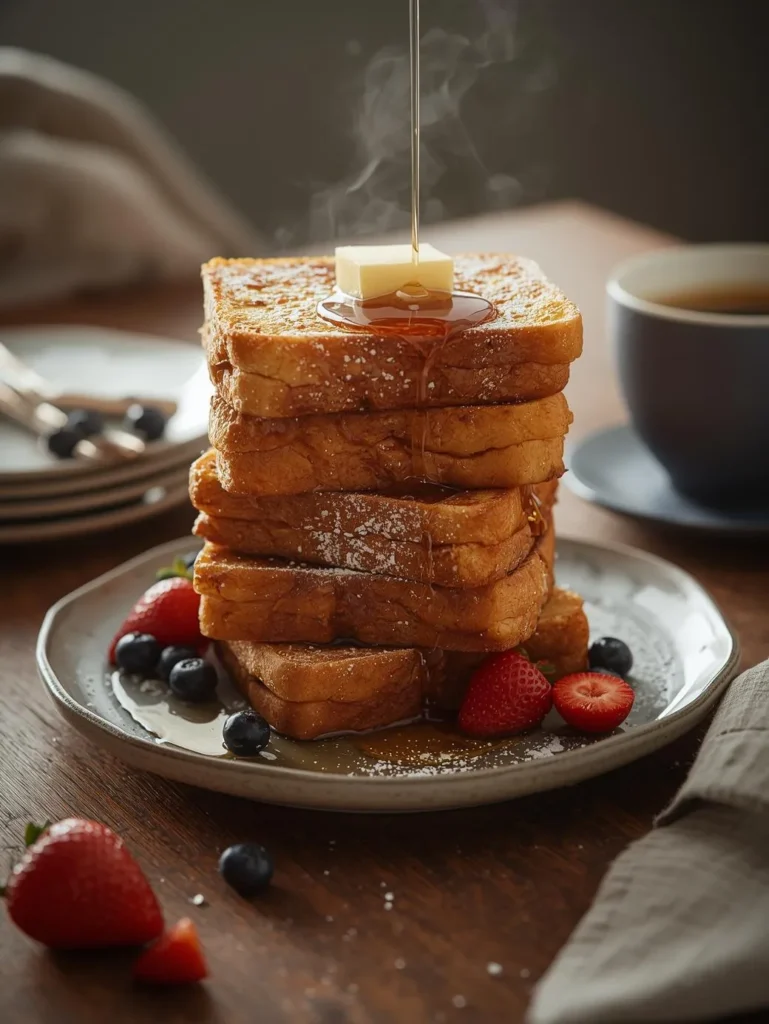
Plate the slices immediately while they’re at their peak. Top with a pat of butter that melts into every nook and cranny, drizzle with warm maple syrup, and add a handful of fresh berries for the ultimate breakfast experience.
The contrast between the crispy, caramelized exterior and the soft, custardy interior is most pronounced when the French toast is piping hot. That first bite where you taste the tangy sourdough mingling with sweet vanilla custard is pure breakfast magic.
Pro Tips for the Perfect Sourdough French Toast
Choose the right bread: Rustic sourdough with a sturdy crumb and open texture works best for this sourdough French toast recipe. Avoid sourdough that’s too dense or tightly crumbed — you want that artisan bakery-style loaf with irregular holes.
Temperature matters: Medium heat gives you a golden crust without burning the exterior before the inside cooks through. If your pan is too hot, the outside will darken too quickly while the center remains undercooked and eggy.
Batch cook smartly: Keep finished slices warm in a 200°F oven on a wire rack while cooking the rest. This prevents the bottom from getting soggy and ensures everyone eats together with hot French toast.
Add flair: A dash of almond extract adds a bakery-style aroma that makes your sourdough French toast recipe taste like it came from a fancy brunch café. Just ¼ teaspoon is enough to add complexity without overwhelming the other flavors.
Use clarified butter or ghee if you’re cooking multiple batches. Regular butter can burn and create bitter flavors, while clarified butter has a higher smoke point and maintains that beautiful buttery taste throughout.
These pro tips ensure your sourdough French toast recipe turns out flawless every time — crisp outside, soft inside, and bursting with flavor. Master these techniques and you’ll be making restaurant-quality French toast in your own kitchen.

Flavor Variations
Cinnamon Swirl Sourdough French Toast
Whisk ½ tsp extra cinnamon and a sprinkle of brown sugar into the custard for a warm, spiced version that’s perfect for autumn mornings. The extra cinnamon creates layers of spice that complement the sourdough’s tanginess beautifully.
Nutty Crunch Version
Press crushed pecans, almonds, or walnuts onto one side of the soaked bread before frying for added crunch and nutty flavor. The nuts toast as the French toast cooks, creating an incredible texture contrast and a sophisticated presentation.
Savory Sourdough French Toast
Skip the sugar and vanilla, then add fresh herbs like thyme or chives and shredded Gruyère or sharp cheddar cheese for a brunch twist that pairs perfectly with bacon, smoked salmon, or poached eggs. This savory version of the sourdough French toast recipe is surprisingly addictive.
Stuffed Berry Delight
Layer sweetened cream cheese and strawberry or raspberry jam between two slices of sourdough, press together gently, then dip and fry for a decadent dessert-style French toast. The filling melts slightly during cooking, creating pockets of creamy, fruity goodness.
Lemon Ricotta Version
Add lemon zest to the custard and top the finished French toast with dollops of fresh ricotta cheese and a drizzle of honey. The brightness of lemon cuts through the richness perfectly.
Serving Suggestions
Pair this sourdough French toast recipe with complementary sides and toppings:
Fresh fruit or berry compote adds natural sweetness and bright acidity that balances the rich, eggy French toast. Strawberries, blueberries, and raspberries are classic choices.
Crispy bacon or breakfast sausage provides savory contrast and protein to make this a more substantial meal. The salty, smoky flavors pair beautifully with the sweet custard-soaked bread.
Whipped cream and caramel drizzle turn this breakfast into an over-the-top indulgence perfect for special occasions. Add a sprinkle of flaky sea salt on the caramel for extra sophistication.
Hot coffee, latte, or freshly squeezed orange juice are ideal beverage pairings. The bitterness of coffee or tartness of citrus balances the sweetness perfectly.
It’s a showstopper for breakfast buffets, family brunches, or weekend mornings when you crave something truly special. The rustic appearance of the sourdough makes it look artisanal and impressive even though it’s incredibly easy to make.
Storage & Reheating
Store leftovers in an airtight container for up to 3 days in the refrigerator. Make sure the French toast is completely cooled before storing to prevent condensation that causes sogginess.
Freeze individual slices between sheets of parchment paper for up to 2 months. This makes for incredible quick breakfasts when you can pop a slice directly from the freezer into the toaster.
Reheat in a toaster oven or on a skillet to keep the texture crisp and restore that just-cooked quality. Oven reheating at 350°F for 5-7 minutes works beautifully for multiple slices.
Avoid microwaving too long — it can make the bread rubbery and tough instead of fluffy and tender. If you must use the microwave, heat in short 20-second bursts and check frequently.
The beauty of this sourdough French toast recipe is that it reheats exceptionally well compared to French toast made with softer breads. The sturdy structure of sourdough means leftovers are still delicious.
FAQs
Q: Can I make this sourdough French toast recipe dairy-free?
A: Absolutely! Substitute your favorite plant-based milk (almond, oat, or coconut work great) and vegan butter for a delicious dairy-free version that’s just as satisfying. The sourdough’s natural flavor carries the dish beautifully even without dairy richness.
Q: Why use sourdough instead of white bread?
A: Sourdough adds a mild, pleasant tang and has a sturdy texture that prevents sogginess while enhancing flavor depth. The natural fermentation process creates complex flavors that elevate this simple dish into something special. Plus, the chewy, crusty exterior of sourdough creates better caramelization.
Q: Can I prepare it ahead of time?
A: You can mix the custard the night before and refrigerate it in a covered bowl or jar. Dip and cook the sourdough slices the next morning for a quick start to your day. Some people even soak the bread and refrigerate it overnight for an even easier morning routine.
Q: What toppings go best with sourdough French toast?
A: Maple syrup, fresh fruit, nut butter, powdered sugar, honey, or whipped cream all work beautifully. Keep it simple with just butter and syrup, or go all out with multiple toppings for a special brunch spread. The tangy sourdough pairs well with both simple and elaborate toppings.
Q: Can I use sourdough discard for this recipe?
A: This recipe uses actual sourdough bread loaves, not starter or discard. However, you could use bread made from sourdough discard recipes for an excellent result.
Q: My sourdough French toast turned out too tangy. What happened?
A: Some sourdough breads are more sour than others depending on fermentation time and starter culture. Choose a milder sourdough or increase the sugar in the custard slightly to balance the tanginess.
Conclusion
This sourdough French toast recipe brings together simplicity, flavor, and texture in every single bite. The tangy sourdough perfectly balances the creamy vanilla custard, giving you a breakfast that’s both comforting and impressive enough to serve to guests.
Whether you serve it sweet with maple syrup and berries or savory with herbs and cheese, this dish is guaranteed to become a weekend favorite in your household. Warm, buttery, and beautifully golden with that signature crispy-yet-tender texture — it’s truly breakfast perfection.
The beauty of using sourdough is that you’re taking an already incredible bread and transforming it into something even more special. Once you try this sourdough French toast recipe, you’ll understand why it’s become such a beloved breakfast staple. Enjoy every delicious, tangy, custardy bite!
How did you find results our recipes
There are no reviews yet. Be the first one to write one.