
Introduction
Tired of carbonara that turns out scrambled, gluey, or drowning in heavy cream? You’re not alone. Carbonara is deceptively simple, yet countless home cooks struggle with achieving that silky, luxurious sauce that clings perfectly to every strand of pasta. Too often, attempts result in dry, clumpy eggs or an overly thick, cream-laden dish that bears no resemblance to authentic Roman carbonara.
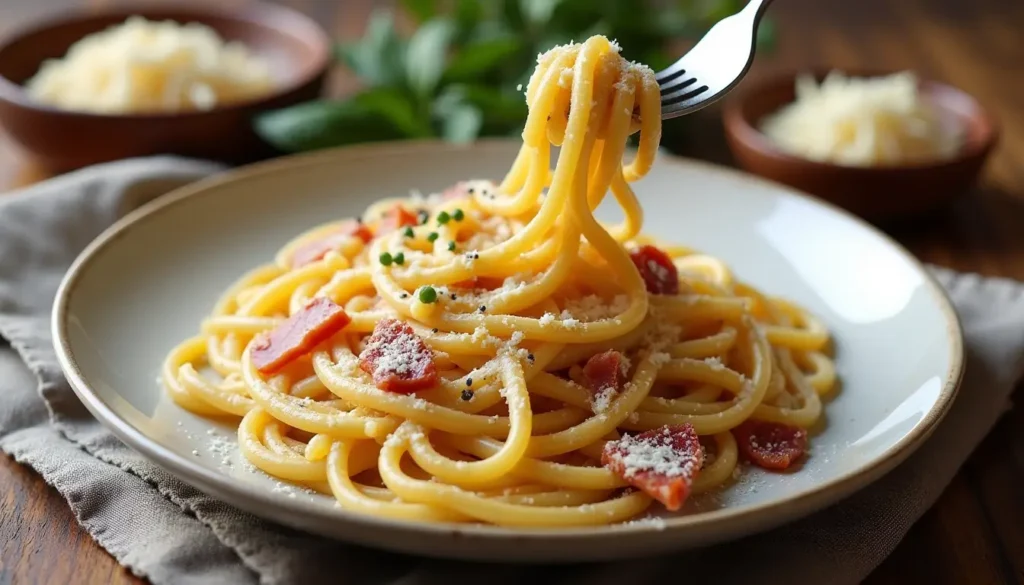
This authentic carbonara recipe gives you silky, creamy pasta with rich pancetta flavor—just like in Italy—without a drop of cream. The secret lies in technique, timing, and respecting the traditional ingredients that have made this dish a beloved classic for generations. When executed properly, carbonara delivers intense savory flavor from cured , sharp tang from aged cheese, and velvety texture from perfectly emulsified eggs.
After studying traditional Roman techniques and consulting with Italian chefs, I’ve perfected this carbonara recipe for foolproof results every time. I’ve tested countless ratios of eggs to cheese, experimented with different pasta shapes, and refined the timing until the method became absolutely reliable. This recipe has transformed nervous cooks into confident Italian cuisine enthusiasts.
In this comprehensive guide, you’ll discover the essential carbonara recipe ingredients that create authentic flavor, a detailed step-by-step method that prevents common mistakes, and answers to frequently asked questions about mastering this iconic pasta dish. Let’s bring the flavors of Rome to your kitchen!
Table of Contents
Why This Carbonara Recipe Works
This recipe honors centuries of Roman culinary tradition while being accessible to home cooks of any skill level.
- Follows the true Roman method—no cream needed! Authentic carbonara achieves its signature creaminess through the careful emulsification of eggs, cheese, and starchy pasta water—never heavy cream. This traditional technique creates lighter, more refined sauce that allows the quality of each ingredient to shine. The absence of cream means you actually taste the sweet pork, sharp cheese, and peppery bite that define great carbonara.
- Uses simple, high-quality ingredients for authentic flavor. With only six core ingredients—pasta, guanciale or pancetta, eggs, Pecorino Romano, black pepper, and pasta water—there’s nowhere to hide. Quality matters enormously. Each component plays a crucial role, and using the best you can afford makes a dramatic difference in the final dish.
- Ready in just twenty minutes with minimal cleanup. Despite its reputation for being tricky, carbonara comes together faster than ordering takeout. The entire cooking process happens in one pot and one pan, with the sauce forming directly on the pasta rather than in a separate vessel. Perfect for busy weeknights when you want something special without spending hours in the kitchen.
Choosing the Right Ingredients for Carbonara Recipe
Success with carbonara begins at the market, where selecting authentic, high-quality ingredients sets the foundation for excellence.
Best Pasta Choice
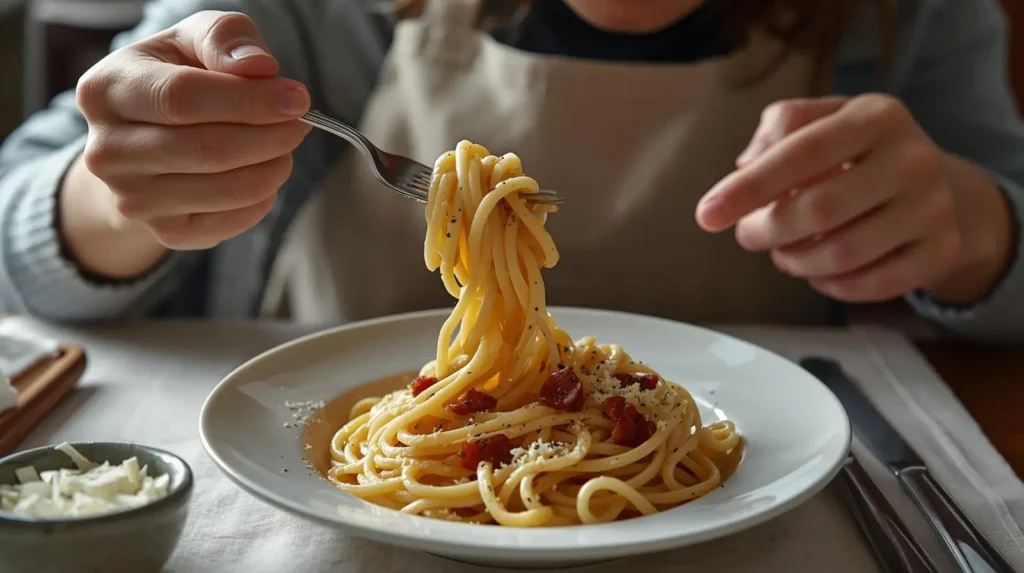
Use spaghetti, rigatoni, or bucatini for the perfect sauce coating that captures every bit of creamy, eggy goodness. Spaghetti is the most traditional choice, offering ideal surface area for sauce adherence. Rigatoni’s ridges and hollow center trap sauce beautifully, making it excellent for heartier appetites. Bucatini, a thick spaghetti with a hollow center, is favored in Rome for how it captures sauce both inside and out.
Whatever shape you choose, use high-quality bronze-cut pasta if possible—its rough surface grabs sauce better than smooth, Teflon-extruded varieties. Fresh pasta works but isn’t traditional, and its delicate texture can become mushy with the hot egg mixture.
Cheese Selection
Pecorino Romano adds sharpness and authentic Italian character, while Parmesan brings balance and subtle sweetness. Traditional Roman carbonara uses only Pecorino Romano, a hard sheep’s milk cheese with intense, salty, slightly funky flavor.
Many recipes use a combination of Pecorino and Parmigiano-Reggiano (Parmesan) to temper Pecorino’s boldness—a ratio of two-thirds Pecorino to one-third Parmesan works beautifully. Always buy cheese in blocks and grate it yourself; pre-grated varieties contain anti-caking agents that prevent smooth melting. Use a fine microplane or the smallest holes on your box grater for optimal texture.
Eggs & Pancetta
Use fresh egg yolks and quality pancetta or guanciale for depth of flavor and luxurious texture. Egg yolks create the silky sauce base—most recipes use whole eggs plus extra yolks for richness. Room-temperature eggs emulsify more easily than cold ones.
Guanciale, cured pork jowl, is the traditional choice with deep, complex flavor and perfect fat content. Pancetta, cured pork belly, is more widely available and makes an excellent substitute. Avoid American bacon, which is smoked and has a different flavor profile that overwhelms the dish. Look for thick-cut pancetta or guanciale from Italian markets or specialty grocers.
Ingredients & Prep
Carbonara Recipe Essentials
Gather these six simple ingredients that form the backbone of authentic carbonara. For four servings, you’ll need one pound of spaghetti or your chosen pasta shape, six ounces of pancetta or guanciale cut into quarter-inch cubes or thin strips, four large egg yolks plus two whole eggs (room temperature),
one and a half cups of freshly grated Pecorino Romano (or one cup Pecorino plus half cup Parmesan), two teaspoons of freshly cracked black pepper, and kosher salt for pasta water. The simplicity of this ingredient list belies the complexity of flavor you’ll achieve.
| Essential Ingredient | Amount (serves 4) | Purpose | Notes |
|---|---|---|---|
| Spaghetti or pasta | 1 lb (450g) | Base | Bronze-cut preferred |
| Pancetta/Guanciale | 6 oz (170g) | Flavor and fat | Cut into ¼-inch pieces |
| Large egg yolks | 4 | Creamy sauce | Room temperature |
| Whole eggs | 2 | Sauce body | Room temperature |
| Pecorino Romano | 1½ cups grated | Sharp, salty flavor | Freshly grated |
| Black pepper | 2 tsp (coarsely ground) | Spice and tradition | Freshly cracked |
| Pasta water | 1 cup (reserved) | Emulsification | Starchy and salty |
| Prep Time | 10 minutes | — | Have everything ready |
| Cook Time | 15 minutes | — | Timing is crucial |
Egg Mixture
Whisk egg yolks, whole eggs, and grated cheese until smooth and creamy for a sauce base that will transform into silky perfection. In a medium bowl, combine four egg yolks and two whole eggs.
Whisk vigorously for thirty seconds until uniform and slightly frothy. Add the grated Pecorino Romano (and Parmesan if using) along with one teaspoon of freshly cracked black pepper. Whisk again until completely smooth with no lumps of cheese—this takes about one minute of steady whisking. The mixture should be thick, pale yellow, and creamy. Set aside at room temperature while you cook the pasta and pancetta.
Pantry Staples
Keep these essential components on hand for carbonara cravings any night of the week. Extra virgin olive oil for the initial pancetta cooking if needed—though properly fatty pancetta often requires none. Freshly ground black pepper is absolutely essential—pre-ground pepper lacks the aromatic punch that makes carbonara distinctive.
Use a pepper mill set to coarse grind for best results. Kosher salt or sea salt for pasta water—you’ll need enough to make it taste like seawater. Some recipes call for a splash of dry white wine to deglaze the pancetta pan, adding subtle acidity and depth.
Step-by-Step Cooking Instructions
Boil the Pasta
Bring a large pot of water to a rolling boil—use at least six quarts for one pound of pasta. Add enough salt to make the water taste like the sea, approximately two tablespoons. This is your only opportunity to season the pasta itself, so don’t be shy. Add the pasta and stir immediately to prevent sticking. Cook according to package directions minus one to two minutes—you want it quite al dente since it will continue cooking when combined with the hot pancetta and sauce.
Set a timer! Before draining, scoop out at least one cup of the starchy pasta cooking water and set aside. This cloudy, salty liquid is crucial for creating perfect sauce consistency.
Cook the Pancetta
While pasta boils, add pancetta or guanciale to a large, cold skillet—starting cold allows fat to render slowly for maximum crispiness. Heat over medium, letting the meat slowly release its fat, stirring occasionally, for eight to ten minutes until golden and crispy with most fat rendered. If your pancetta is lean, add a tablespoon of olive oil to start.
You want crispy edges but not dried-out, brittle pieces. The fat should be clear and fragrant. If desired, add a splash of white wine and let it sizzle and evaporate. Turn off the heat once pancetta is perfect—timing this to finish just as your pasta is ready is ideal but not critical.
Combine Sauce and Pasta
This is the crucial moment where technique determines success or scrambled-egg failure. Drain the pasta and immediately add it to the skillet with the pancetta. Toss vigorously for thirty seconds to coat every strand with the rendered fat. Remove the skillet completely from heat—this is essential to prevent scrambling.
Working quickly, pour the egg and cheese mixture over the hot pasta. Using tongs or a wooden spoon, toss continuously and vigorously for one to two minutes. The residual heat from the pasta and pan will gently cook the eggs, creating a creamy, coating sauce. The motion is important—constant movement prevents hot spots from scrambling the eggs.
Adjust Consistency
Add reserved pasta water gradually, a few tablespoons at a time, tossing constantly until you achieve silky, creamy consistency that coats the pasta in a glossy sauce. Start with a quarter cup, toss, and assess. The sauce should be fluid enough to coat every strand but thick enough to cling rather than pooling at the bottom of the bowl.
You may need anywhere from quarter to three-quarters cup of pasta water total—it depends on how much fat rendered from your pancetta, how al dente your pasta is, and the ambient temperature. Don’t add it all at once; you can always add more but can’t take it away. The sauce will thicken as it sits, so err slightly on the looser side.
| Cooking Step | Duration | Key Action | Critical Point |
|---|---|---|---|
| Boil pasta | 8-10 min | Cook al dente | Reserve pasta water! |
| Cook pancetta | 8-10 min | Render fat, crisp up | Watch for burning |
| Combine pasta & pancetta | 30 sec | Toss in fat | Off heat afterward |
| Add egg mixture | 1-2 min | Toss vigorously off heat | Prevent scrambling |
| Adjust with pasta water | 1-2 min | Add gradually | Achieve silky texture |
| Total Time | 20 min | Serve immediately | Best when fresh |
Pro Tips for Perfect Carbonara Recipe
Avoid Scrambled Eggs
Remove the skillet completely from heat before adding the egg mixture—this single step prevents the most common carbonara disaster. The residual heat from the just-drained pasta and the warm pan is sufficient to gently cook the eggs into a creamy sauce. If you keep the pan on the burner, even on low heat, you risk scrambling.
The eggs should cook from the ambient temperature, not direct heat. If you’re nervous about temperature, you can transfer the pasta and pancetta to a warm serving bowl before adding eggs—this provides even more control. Work quickly but don’t panic; the pasta retains heat for several minutes.
Perfect Sauce Texture
Use starchy pasta water strategically to achieve silky creaminess that defines great carbonara. The starch in pasta water acts as an emulsifier, helping fat and water bind into smooth sauce rather than separating. Add it gradually while tossing—never dump it all in at once. The sauce should look glossy and fluid, coating each strand of pasta in a thin, even layer. If the sauce seems too thick or clumpy, add more pasta water a splash at a time. If it’s too loose, let it sit for thirty seconds—the residual heat will thicken it slightly, and the pasta will continue absorbing moisture.
Serving & Storage
Serve carbonara immediately—this dish is best eaten fresh and doesn’t reheat well. Plate it in warmed pasta bowls to keep it hot longer. Top with additional freshly grated Pecorino Romano and a generous grinding of black pepper. The combination of hot pasta, rich sauce, and sharp cheese creates magic that diminishes significantly as it cools.
If you must store leftovers, refrigerate in an airtight container for up to two days. Reheat gently in a skillet with a splash of water or cream (yes, cream for reheating leftovers is acceptable), stirring constantly over low heat. The texture won’t match fresh carbonara, but it’s still delicious.
Flavor Variations
While purists insist carbonara should never be altered, these variations offer delicious new perspectives while honoring the technique.
Classic Roman Style
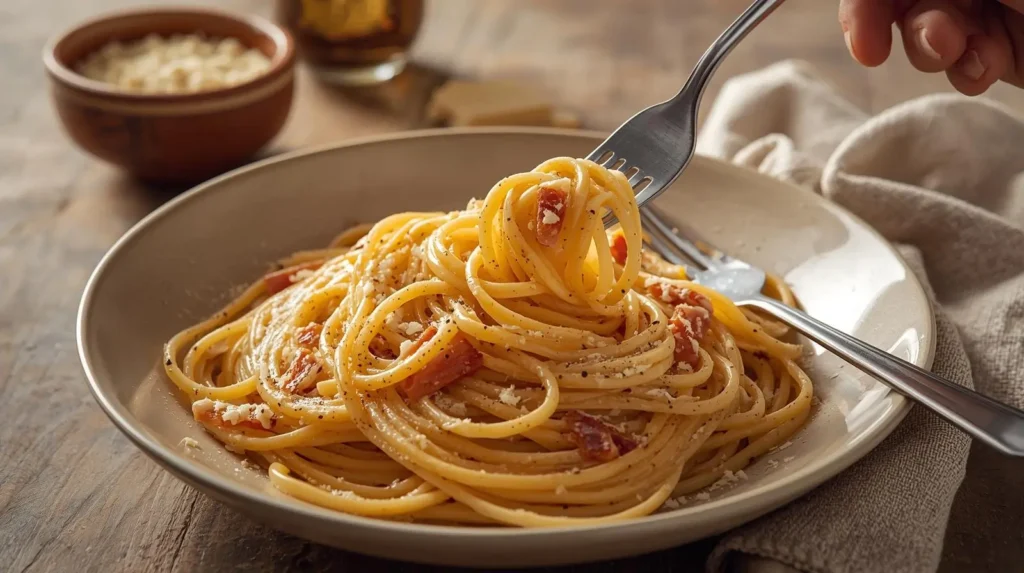
Use guanciale and Pecorino Romano only for the most authentic version exactly as served in Rome. Guanciale’s higher fat content and distinctive flavor create unparalleled richness. Use exclusively Pecorino Romano rather than mixing with Parmesan—this delivers bold, assertive flavor that Romans prefer. Increase the black pepper to one tablespoon for true “cacio e pepe” influence. This version is for purists who want to experience carbonara exactly as intended by its creators. The flavor is more intense, saltier, and more complex than Americanized versions.
Mushroom Carbonara
Add sautéed mushrooms for earthy flavor that complements the pork beautifully without overwhelming the dish. Slice eight ounces of cremini or shiitake mushrooms and sauté them in the pancetta fat after removing the crispy pork, cooking until golden and all moisture evaporates. Return the pancetta to the pan before adding pasta.
The umami from mushrooms enhances the savory depth, creating a more complex flavor profile. This variation works particularly well in fall and winter when rich, earthy flavors feel most appropriate.
Light Version
Use egg whites and reduced cheese for fewer calories while maintaining the essential technique and spirit of carbonara. Replace two of the whole eggs with four egg whites, keeping two yolks for richness and color. Reduce cheese to one cup total. Use turkey bacon instead of pancetta for leaner protein—though this changes the flavor significantly.
Add extra pasta water to compensate for reduced fat content. While not traditional, this version allows those watching calories or fat intake to enjoy carbonara more frequently. The texture won’t be as luxurious, but the fundamental flavors remain.
| Variation | Key Modifications | Flavor Profile | Best For |
|---|---|---|---|
| Classic Roman | Guanciale, Pecorino only | Bold, salty, authentic | Purists |
| Mushroom | Add sautéed mushrooms | Earthy, umami-rich | Fall/winter |
| Light | Egg whites, less cheese | Lighter but still tasty | Health-conscious |
| Pea & Prosciutto | Add peas, use prosciutto | Sweet, spring-like | Spring meals |
| Spicy | Add red pepper flakes | Heat and spice | Spice lovers |
| Seafood | Shrimp or scallops | Briny, elegant | Special occasions |
Serving Suggestions
Complete your carbonara experience with complementary sides and beverages that honor Italian dining traditions.
Pair with sides that provide textural and flavor contrast without competing with carbonara’s richness. A simple arugula salad dressed with lemon juice and olive oil cuts through the richness while adding peppery freshness. Classic Caesar salad offers familiar comfort with its own creamy dressing.
Garlic bread provides satisfying crunch and the universal appeal of butter and garlic. Roasted vegetables like asparagus, broccolini, or Brussels sprouts add color and nutrition. Keep sides light and simple—carbonara is rich enough to be the star.
Drink pairings enhance the meal while cleansing the palate between bites. A crisp white wine like Pinot Grigio or Vermentino provides acidity that cuts through fat and refreshes the palate. Frascati, a wine from the hills near Rome, is the traditional pairing. Light red wines like Chianti or Valpolicella work beautifully if you prefer red. Sparkling water with lemon provides zero-calorie refreshment. For beer lovers, a light lager complements rather than overwhelms. Avoid heavy, tannic reds that clash with the creamy sauce.
FAQs
Can I use cream in carbonara?
Authentic Roman carbonara never includes cream—the creamy texture comes from eggs, cheese, and pasta water emulsified together through technique. Adding cream is the most common Americanization that actually diminishes the dish by masking the pure flavors of egg, cheese, and pork. Cream creates heavy, thick sauce rather than the light, silky coating that defines great carbonara. That said, if you prefer a cream-based pasta, make it and call it something else—perhaps “pasta alla panna with pancetta”—just don’t call it carbonara. Purists will notice immediately.
What’s the best cheese for authentic carbonara?
Pecorino Romano is the traditional and best choice for authentic carbonara, providing sharp, salty, slightly funky flavor that defines the dish. Made from sheep’s milk, Pecorino has more pronounced flavor than cow’s milk Parmesan. Many recipes use a blend of Pecorino and Parmigiano-Reggiano (two-thirds Pecorino, one-third Parmesan) to balance intensity.
Never use pre-grated cheese from a canister—it contains cellulose that prevents smooth melting. Buy Pecorino Romano by the wedge, preferably imported from Italy (look for “Pecorino Romano DOP” on the label), and grate it yourself on the finest holes of your grater.
How do I reheat carbonara without ruining it?
Carbonara doesn’t reheat perfectly, but you can salvage leftovers with proper technique. Place cold carbonara in a skillet with two to three tablespoons of water, cream, or milk. Heat over the lowest possible setting, stirring constantly and gently, until just warmed through. Don’t let it boil or the eggs will scramble. You can also reheat very gently in the microwave at fifty percent power in thirty-second intervals, stirring between each. The texture won’t match fresh carbonara—the sauce may separate slightly or become drier—but it’s still tasty. Some people prefer to add a splash of cream when reheating to restore creaminess.
Can I make carbonara ahead of time?
Carbonara is best served immediately and doesn’t hold well, making it unsuitable for true advance preparation. However, you can prep components ahead: cook and crisp the pancetta, store refrigerated; whisk the egg and cheese mixture, cover and refrigerate; grate cheese ahead; measure ingredients. When ready to serve, boil fresh pasta and assemble. The final combining steps must happen just before serving. If you’re cooking for guests, have everything prepped and ready, then cook the pasta and assemble while guests are seated—it only takes fifteen minutes from start to finish.
What if my sauce is too thick or too thin?
If your carbonara sauce is too thick and clumpy, add pasta water a tablespoon at a time while tossing vigorously until it reaches proper consistency. The starchy water will loosen the sauce and help it coat pasta smoothly. If it’s too thin and watery, let it sit for thirty seconds to one minute—the pasta will absorb excess liquid, and residual heat will thicken the sauce slightly. You can also add a bit more grated cheese, which will thicken as it melts. Temperature affects consistency dramatically—carbonara thickens as it cools, so serve it on the looser side knowing it will tighten up.
Can I use bacon instead of pancetta?
While not traditional, thick-cut, unsmoked bacon can substitute for pancetta in a pinch, though the flavor will differ. American bacon is smoked, which adds a distinct flavor not present in authentic carbonara. Italian pancetta is cured but not smoked, with cleaner, purer pork flavor. If using bacon, choose the highest quality thick-cut variety you can find, preferably from a butcher. Avoid thin-sliced bacon, which becomes too crispy and can burn. The dish will be delicious but won’t taste quite like traditional carbonara—think of it as “carbonara-style pasta with bacon.”
Conclusion
This authentic carbonara recipe brings the soul of Roman cuisine to your kitchen with technique-focused simplicity that respects centuries of tradition. By understanding the role of each ingredient and mastering the critical timing, you can create restaurant-quality carbonara that rivals anything you’d find in Italy.
Whip up this authentic carbonara recipe and bring a taste of Italy to your table tonight—no reservations required, no expensive restaurant bill, just pure Italian comfort food perfection. Whether you’re cooking for a special occasion or a simple Tuesday dinner, carbonara delivers impressive results that make you look like a culinary genius. The combination of silky sauce, crispy pork, sharp cheese, and al dente pasta creates magic in every bite.
Loved by thousands of home cooks who’ve mastered restaurant-quality carbonara with this recipe, this method transforms nervous beginners into confident Italian cooks! From first-time attempts to hundredth iterations, this recipe delivers consistent excellence. Share it with friends, teach it to your children, and make it part of your regular rotation—carbonara is the kind of recipe that becomes a signature dish.
Next, try our Homemade Alfredo Sauce Recipe for another Italian favorite that’s easier than you think, or explore our Cacio e Pepe Guide to master carbonara’s simpler cousin. For more Italian classics, check out our Complete Italian Pasta Guide for recipes, techniques, and tips that will expand your repertoire and deepen your love of Italian cuisine!
How did you find results our recipes
There are no reviews yet. Be the first one to write one.

