
Introduction
Tired of dry, overcooked salmon that flakes apart into disappointment? You’re not alone. Cooking salmon perfectly while keeping it moist and flavorful can feel like a culinary tightrope walk. But what if I told you that a rich, restaurant-quality creamy salmon recipe could be on your dinner table in just 30 minutes?
This creamy salmon recipe delivers tender, succulent fish enveloped in a luscious sauce that will have your family asking for seconds. As someone who’s spent over a decade perfecting seafood dishes in professional kitchens, I’ve cracked the code to foolproof salmon that stays moist every single time. The secret? A combination of proper heat control, quality ingredients, and a velvety cream sauce that does double duty—adding flavor while protecting the delicate fish from drying out.
In this comprehensive guide, you’ll discover everything you need to master the creamy salmon recipe, including expert tips for selecting the freshest salmon, seven versatile variations to keep weeknight dinners exciting, and the foolproof cooking techniques that guarantee perfect results. Whether you’re a busy parent seeking quick dinner solutions or a home cook looking to expand your seafood repertoire, this recipe will become your new weeknight hero.
Table of Contents
Why This Recipe Works
This salmon recipe has earned its place as a weeknight staple in thousands of kitchens, and for good reason. Here’s what makes it absolutely irresistible:
- Ready in 30 minutes or less: From refrigerator to dinner table, this recipe respects your time without sacrificing flavor or quality. Perfect for those hectic weeknights when takeout feels tempting.
- Uses affordable, readily available ingredients: No exotic spices or specialty store runs required. Everything you need is likely already in your pantry and at your local grocery store.
- Foolproof technique prevents overcooking: The cream sauce creates a protective barrier that keeps salmon moist while adding incredible richness. Even cooking novices will nail this recipe on the first try.
- Infinitely versatile: This base recipe adapts beautifully to seven different flavor profiles, from Italian-inspired sun-dried tomato to zesty lemon-dill. You’ll never get bored.
- Restaurant-quality results at home: Impress dinner guests or simply treat yourself to an elevated meal that rivals anything you’d pay premium prices for at a seafood restaurant.
- One-pan convenience: Less cleanup means more time enjoying your meal. The entire dish comes together in a single skillet, making post-dinner cleanup a breeze.
Choosing the Right Salmon
Selecting quality salmon is the foundation of any great creamy salmon recipe. The type of salmon you choose directly impacts flavor, texture, and cooking time.
Best Cuts for This Recipe
For this creamy salmon recipe, you want salmon fillets with the skin removed, preferably center-cut portions that cook evenly. Wild-caught salmon offers a firmer texture and more pronounced flavor, making it ideal for cream-based dishes where the fish needs to hold its shape. King salmon (also called Chinook) provides the richest, most buttery flavor and highest fat content, which pairs beautifully with cream sauces. Sockeye salmon delivers a more robust, distinctive taste with deep red flesh that makes for stunning presentation. If you’re on a budget, farmed Atlantic salmon works perfectly well—its milder flavor and tender texture actually make it more approachable for family dinners, and it readily absorbs the flavors of your chosen cream sauce.
Aim for fillets that are approximately 6 ounces each and about 1 to 1.5 inches thick. This size cooks evenly in the recommended time while providing generous portions. Avoid thin tail pieces, which tend to overcook quickly and can become dry even in a protective cream sauce.
Buying Tips
When shopping for meal, your eyes and nose are your best tools. Look for flesh that appears moist and slightly translucent with consistent color throughout—whether that’s the deep red of sockeye or the lighter pink of Atlantic salmon. The surface should look freshly cut, not dried out or dull. Press the flesh gently with your finger; it should spring back immediately rather than leaving an indentation. Fresh salmon has a mild, ocean-fresh scent—never fishy, sour, or ammonia-like. If buying from a fish counter, don’t hesitate to ask when the salmon arrived and request to smell it before purchasing.
Check for pin bones by running your fingers along the fillet. Quality fishmongers remove these, but occasionally a few remain. You can easily extract them at home with clean tweezers or needle-nose pliers. If purchasing frozen salmon, look for individually wrapped fillets with minimal ice crystals in the packaging, which indicates the fish hasn’t been thawed and refrozen.
Substitutions
While this is specifically a creamy salmoon recipe, the cooking technique and sauce adapt beautifully to other seafood. Thick, firm-fleshed fish like halibut, cod, or sea bass work wonderfully—just adjust cooking time based on thickness. Arctic char, salmon’s close cousin, provides nearly identical results with a slightly milder flavor. For a more budget-friendly option, try steelhead trout, which closely resembles salmon in texture and taste while often costing significantly less. Large shrimp or scallops can also star in this cream sauce, though they’ll require shorter cooking times of just 3-4 minutes per side.
Ingredients & Prep
Salmon Prep Essentials
Proper preparation ensures your salmon cooks evenly and absorbs maximum flavor from the cream sauce. Start by patting the salmon fillets completely dry with paper towels—this crucial step removes excess moisture that would otherwise prevent proper browning and create a watery sauce. If your fillets still have skin, you can either leave it on for easier flipping (then remove before serving) or ask your fishmonger to remove it. Check for pin bones by running your fingers along the centerline of each fillet, removing any you find with tweezers.
Season the recipe generously with salt and freshly ground black pepper on both sides about 15 minutes before cooking. This brief salting period enhances flavor without drawing out too much moisture. Bring the salmon to room temperature during this time—cold fish straight from the refrigerator will cook unevenly, with an overdone exterior and undercooked center.
Cream Sauce Base Ingredients
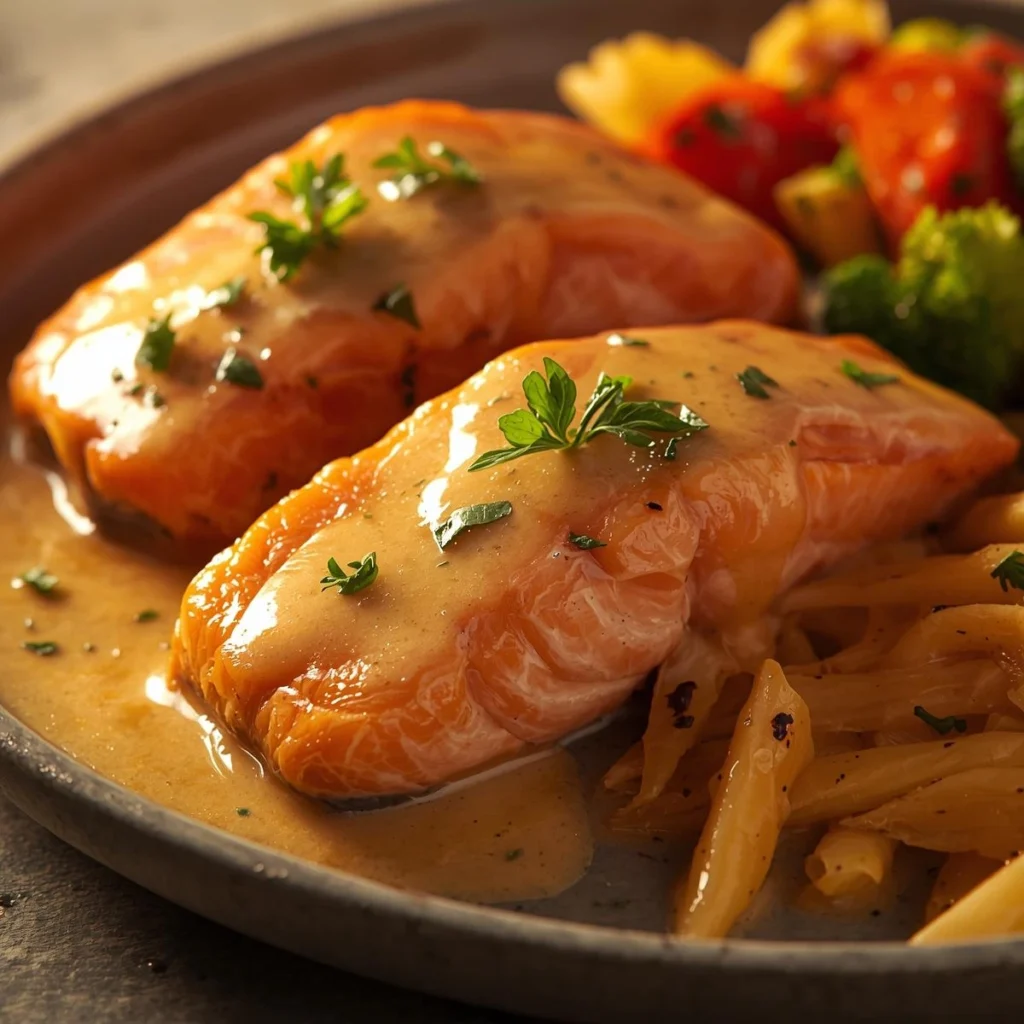
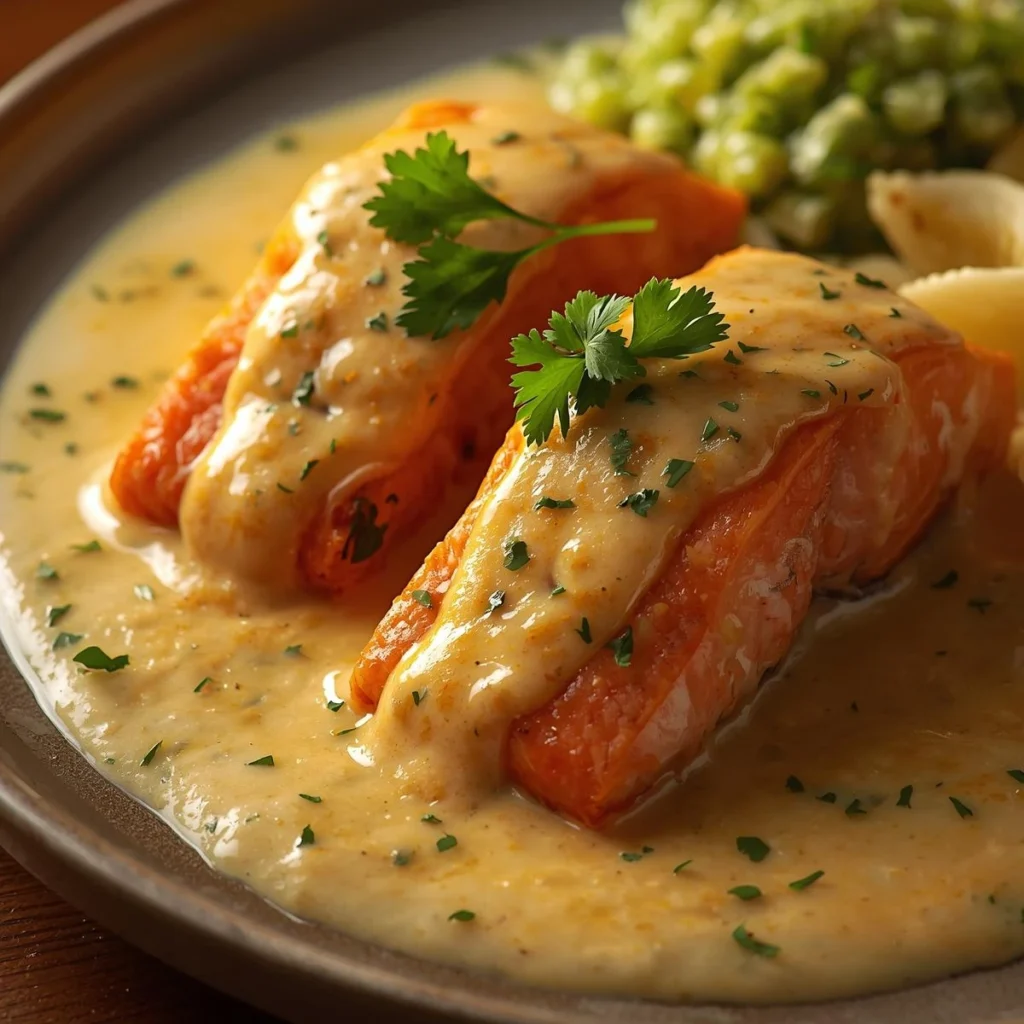
The foundation of your creamy salmon recipe starts with these essential components:
For the Sauce:
- 2 tablespoons butter (or olive oil for a lighter version)
- 3 cloves garlic, minced
- 1 cup heavy cream (or half-and-half for reduced calories)
- ½ cup chicken or vegetable broth
- ¼ cup dry white wine (optional, adds depth)
- 2 tablespoons fresh lemon juice
- ½ teaspoon Dijon mustard
- Salt and pepper to taste
- Fresh herbs (dill, parsley, or chives) for garnish
For the Salmon:
- 4 salmon fillets (6 ounces each, skin removed)
- 2 tablespoons olive oil for searing
- 1 teaspoon salt
- ½ teaspoon black pepper
Pantry Staples and Flavor Builders
Keep these ingredients on hand to customize your creamy salmon recipe to your mood. Capers add briny brightness that cuts through richness. Sun-dried tomatoes provide sweet-tart complexity. Spinach or kale can be wilted directly into the sauce for added nutrition. Parmesan cheese contributes nutty, salty depth when stirred into the cream. Shallots offer a more delicate flavor than regular onions. Fresh ginger and soy sauce create an Asian-inspired fusion. Smoked paprika brings subtle smokiness without overwhelming the delicate fish.
Step-by-Step Cooking Instructions
Pre-Cooking Prep
Remove salmon from the refrigerator 15-20 minutes before cooking to bring it to room temperature. Pat each fillet thoroughly dry with paper towels—this is critical for achieving a beautiful golden crust. Season both sides generously with salt and freshly ground black pepper. Gather all your cream sauce ingredients and measure them out before you begin cooking, as the process moves quickly once you start. Have a plate ready and tented with foil for resting the salmon after searing.
Cooking Method
Heat a large skillet (preferably stainless steel or non-stick) over medium-high heat. Add 2 tablespoons of olive oil and let it heat until shimmering but not smoking. Carefully place the salmon fillets in the pan, leaving space between each piece to ensure proper browning. Cook undisturbed for 4-5 minutes until a golden crust forms on the bottom—resist the temptation to move or flip the fish prematurely, as this prevents proper browning.
Flip carefully using a thin spatula, then cook for an additional 3-4 minutes on the second side. The exact time depends on thickness, but the salmon should reach an internal temperature of 125°F for medium-rare (still slightly translucent in the center) or 135°F for medium (opaque throughout but still moist). Transfer the cooked salmon to your prepared plate and tent loosely with foil while you make the sauce.
Reduce heat to medium and add butter to the same skillet. Once melted and foaming, add minced garlic and sauté for 30-60 seconds until fragrant but not browned. Pour in the white wine if using, scraping up any browned bits from the bottom of the pan with a wooden spoon—these flavor deposits are liquid gold for your sauce. Let the wine reduce by half, about 2 minutes.
Add the heavy cream, broth, lemon juice, and Dijon mustard. Stir to combine and bring to a gentle simmer. Cook for 3-4 minutes, stirring occasionally, until the sauce thickens enough to coat the back of a spoon. Taste and adjust seasoning with salt and pepper. If the sauce becomes too thick, thin it with a splash of broth or pasta water. If it’s too thin, simmer for another minute or two.
Return the salmon fillets to the skillet, spooning the cream sauce over the top. Let them warm through for 1-2 minutes, but don’t cook them further or they’ll dry out. The residual heat and cream bath are sufficient to keep them perfectly moist.
Doneness Check
The most reliable way to check salmon doneness is with an instant-read thermometer inserted into the thickest part of the fillet. For the creamiest texture, aim for 120-125°F, which yields salmon that’s medium-rare with a translucent center. At 130-135°F, you’ll have medium salmon that’s opaque throughout but still incredibly moist—this is the sweet spot for most home cooks. Beyond 140°F, salmon begins to dry out, though the protective cream sauce helps mitigate this.
Visual cues also help: properly cooked salmon flakes easily when prodded gently with a fork but still holds together. The color should transition from translucent to opaque, and you might see a bit of white albumin (the protein that coagulates during cooking) on the surface, which is completely normal and harmless.
Resting
Let the salmon rest for 2-3 minutes after removing it from heat. This brief rest allows the proteins to relax and reabsorb juices, ensuring maximum moisture in every bite. During this time, you can finish your sauce, plate your sides, or simply garnish with fresh herbs. Even this short rest makes a noticeable difference in the final texture.
Pro Tips for Perfect Creamy Salmon
Avoiding Tough or Dry Salmon
The cardinal sin of salmon cooking is overcooking, which transforms tender, flaky fish into dry, chalky disappointment. Combat this by removing salmon from heat when it’s slightly underdone—carryover cooking will bring it to perfect doneness as it rests. Don’t overcrowd your pan, as this causes the temperature to drop and creates steam instead of a proper sear. Cook in batches if necessary. Basting the salmon with the cream sauce during the final minute of cooking adds an extra layer of moisture protection and flavor.
Start with room-temperature fish rather than cold fillets straight from the refrigerator. Cold fish in a hot pan creates uneven cooking with an overcooked exterior and raw center. If you’re doubling the recipe, use two pans simultaneously rather than crowding one large pan. The cream sauce acts as insurance against overcooking, but respecting proper temperatures and timing remains essential.
Tool Recommendations
A reliable instant-read thermometer is your best investment for perfect salmon every time—it eliminates all guesswork about doneness. Look for digital models that read in 2-3 seconds like the ThermoWorks ThermoPop or Thermapen. A high-quality non-stick or stainless steel skillet with a heavy bottom distributes heat evenly and prevents hot spots that can overcook portions of your salmon. A fish spatula with a thin, flexible blade makes flipping delicate fillets foolproof without breaking them apart.
While not essential, a splatter screen saves you from cream sauce splatters during cooking. Good-quality tongs help maneuver salmon safely. If you make this creamy salmon recipe frequently, consider a carbon steel pan that develops natural non-stick properties while delivering excellent heat control.
Storage & Reheating
Store leftover creamy salmon in an airtight container in the refrigerator for up to 3 days. Keep the salmon and sauce together—the cream prevents the fish from drying out during storage. To reheat, use gentle heat to preserve texture. The microwave works in a pinch (use 50% power in 30-second intervals), but the oven yields better results. Place salmon and sauce in an oven-safe dish, cover with foil, and reheat at 275°F for 10-12 minutes until just warmed through.
Alternatively, reheat gently in a skillet over medium-low heat with a splash of cream or broth to refresh the sauce. Avoid high heat, which will overcook the salmon further. Frozen cooked salmon works best when thawed overnight in the refrigerator and reheated gently, though the texture will be slightly less tender than freshly cooked fish. For best results, freeze the sauce separately and cook fresh salmon when ready to serve.
Flavor Variations
Classic Lemon-Dill Creamy Salmon
This timeless combination celebrates the natural affinity between salmon and bright, herbaceous flavors. Add 3 tablespoons of freshly chopped dill to your cream sauce along with an extra tablespoon of lemon juice and a teaspoon of lemon zest. The dill’s anise-like notes complement the richness of both the cream and the salmon’s natural oils, while the citrus cuts through the richness. Garnish with fresh dill fronds and lemon wheels for restaurant-worthy presentation. This variation pairs beautifully with roasted asparagus and baby potatoes.
Sun-Dried Tomato and Basil Cream
Transport your dinner to the Italian coast with this Mediterranean-inspired twist. Add ⅓ cup of chopped sun-dried tomatoes (oil-packed, drained) to the garlic along with a pinch of red pepper flakes. Stir in 2 tablespoons of fresh basil ribbons just before serving, reserving some for garnish. The tomatoes contribute sweet-tart intensity that balances the cream’s richness, while basil adds aromatic freshness. A tablespoon of capers and a handful of baby spinach wilted into the sauce takes this variation to the next level. Serve with crusty bread to soak up every drop of the incredible sauce.
Tuscan Creamy Salmon
Inspired by Tuscan chicken dishes, this hearty variation adds substance and nutrition to your creamy salmon recipe. Sauté 3 cups of fresh spinach with the garlic until wilted, then proceed with the cream sauce. Add ⅓ cup of sun-dried tomatoes and ¼ cup of grated Parmesan cheese to the finished sauce. The earthy spinach, tangy tomatoes, and nutty Parmesan create a complex flavor profile that rivals any Italian restaurant. This robust sauce also works beautifully tossed with pasta—cook penne or fettuccine separately and combine everything for a complete one-dish meal.
Cajun Spiced Cream
For those who crave heat and bold flavors, this Louisiana-inspired version delivers excitement without overwhelming the delicate salmon. Coat salmon fillets with 1 tablespoon of Cajun or Creole seasoning before searing (reduce the additional salt accordingly). Add ½ teaspoon each of smoked paprika and cayenne pepper to the cream sauce along with a diced red bell pepper sautéed with the garlic. A splash of hot sauce at the end adjusts the heat to your preference. This spicy, smoky variation pairs perfectly with creamy grits or rice pilaf to temper the heat.
Honey-Mustard Cream
Sweet and tangy with sophisticated depth, this variation appeals to both adults and children. Whisk 2 tablespoons of whole-grain mustard and 1 tablespoon of honey into the cream sauce. The honey’s sweetness balances the mustard’s sharpness while complementing the salmon’s natural richness. Add a tablespoon of apple cider vinegar for extra brightness. This sauce works particularly well with roasted Brussels sprouts and sweet potato wedges for a complete autumn-inspired meal.
Asian-Fusion Ginger-Miso Cream
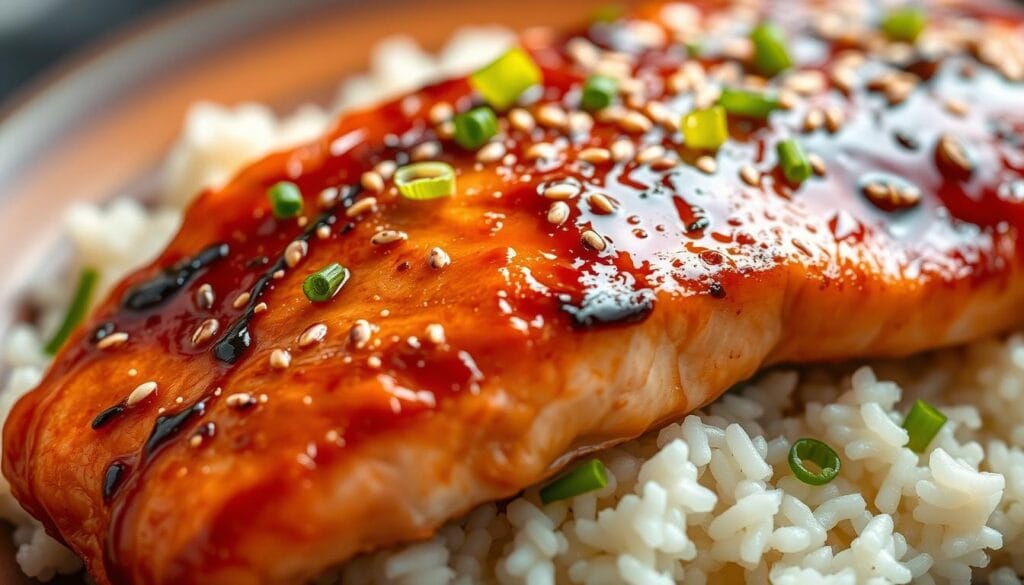
East meets West in this innovative fusion that reimagines the creamy salmon recipe through an Asian lens. Replace half the heavy cream with coconut cream and add 1 tablespoon of white miso paste, 1 tablespoon of fresh grated ginger, and 1 teaspoon of sesame oil. Garnish with sliced green onions, sesame seeds, and a drizzle of sriracha mayo. The umami-rich miso deepens the sauce while ginger provides aromatic warmth that cuts through the coconut’s richness. Serve over jasmine rice or alongside stir-fried bok choy for a complete fusion meal.
Pesto Cream
For basil lovers, this vibrant green sauce delivers maximum flavor with minimal effort. Stir 3 tablespoons of prepared basil pesto into the finished cream sauce. The pesto’s garlic, basil, Parmesan, and pine nuts create instant complexity, transforming the neutral cream into something extraordinary. This version comes together in record time since the pesto is already seasoned. Cherry tomatoes halved and warmed in the sauce add pops of sweetness and color. Serve with orzo pasta or crusty focaccia for an Italian feast.
Serving Suggestions
The creamy salmon recipe‘s versatility shines when paired with complementary sides that balance richness while adding textural variety and nutritional completeness.
Classic Accompaniments: Creamy mashed potatoes or garlic mashed cauliflower provide comforting richness that harmonizes with the sauce. Light, fluffy rice pilaf or herbed couscous soak up the delicious cream. Roasted or steamed asparagus, green beans, or broccolini add vibrant color and healthy crunch. A simple arugula salad dressed with lemon vinaigrette cuts through the richness with peppery brightness.
Carbohydrate Options: Buttered egg noodles or fettuccine turn this into a complete one-dish meal—simply toss the pasta with the salmon and extra sauce. Crusty sourdough or garlic bread is essential for mopping up every drop of cream. Creamy polenta or risotto provides luxurious comfort food appeal. For a lighter option, try zucchini noodles or cauliflower rice, which absorb the sauce while keeping the meal low-carb.
Vegetable Pairings: Roasted Brussels sprouts with balsamic glaze add caramelized sweetness. Sautéed spinach or Swiss chard provide iron-rich nutrition. Grilled or roasted Mediterranean vegetables (zucchini, bell peppers, eggplant) bring summer vibes to your plate. Honey-roasted carrots or maple-glazed root vegetables add natural sweetness that complements the savory sauce.
Wine & Beverage Pairings: The cream sauce’s richness calls for wines with good acidity to refresh the palate. A crisp Chardonnay, particularly one with minimal oak, complements the butter and cream while standing up to the salmon’s richness. Pinot Grigio or Sauvignon Blanc offer lighter, more refreshing alternatives with citrus notes that echo the lemon in the sauce. For rosé lovers, a dry Provençal style bridges white and red wine characteristics beautifully. If you prefer beer, reach for a crisp pilsner or a wheat beer with citrus notes. Sparkling water with fresh lemon provides a non-alcoholic option that cleanses the palate between bites.
FAQs
Can I use frozen salmon for this recipe?
Yes, frozen salmon works perfectly well for this creamy salmon recipe, but proper thawing is essential. Never thaw salmon at room temperature or in warm water, as this promotes bacterial growth and creates a mushy texture. Instead, thaw frozen fillets overnight in the refrigerator on a plate to catch any liquid. For faster thawing, seal the salmon in a plastic bag and submerge it in cold water, changing the water every 30 minutes until thawed (usually 1-2 hours). Pat the thawed salmon thoroughly dry before seasoning and cooking, as frozen fish releases more moisture than fresh. While fresh salmon provides slightly better texture, properly handled frozen salmon delivers excellent results at a fraction of the cost.
How do I fix overcooked salmon?
If your salmon has crossed into the dry zone, all is not lost. The cream sauce itself provides some salvation—generously spoon extra sauce over the overcooked fillets and let them sit for a few minutes to absorb moisture. You can also flake the overcooked salmon and fold it into the cream sauce with cooked pasta, essentially transforming it into a different dish where the sauce rehydrates the fish. For future cooking, invest in an instant-read thermometer and remove salmon from heat at 125-130°F, remembering that carryover cooking will add another 5 degrees. The cream sauce in this recipe provides more forgiveness than dry-heat methods, but temperature awareness remains your best defense against overcooking.
Can I make this recipe dairy-free?
Absolutely! Several substitutions create delicious dairy-free versions of this creamy salmon recipe. Replace heavy cream with full-fat coconut cream for rich, luxurious results with a subtle tropical note that complements salmon beautifully. Cashew cream (raw cashews blended with water until silky smooth) provides neutral-flavored richness. Oat cream or almond-based cooking cream also work, though they’re slightly thinner—reduce them a bit longer for proper consistency. Replace butter with olive oil or vegan butter. The dairy-free version tastes remarkably similar to the original, with just a hint of whatever alternative you’ve chosen. Add nutritional yeast for a Parmesan-like umami boost if desired.
Is this recipe safe during pregnancy?
Salmon is generally considered one of the safest and most beneficial fish choices during pregnancy due to its low mercury content and high omega-3 fatty acids, which support fetal brain development. However, pregnant women should ensure salmon is cooked to an internal temperature of 145°F (fully opaque throughout with no translucent center) to eliminate any potential parasites or bacteria. The medium-rare temperatures mentioned earlier in this recipe aren’t recommended during pregnancy. If using wine in the sauce, remember that alcohol doesn’t fully cook off—about 40% remains after 15 minutes of simmering. For complete peace of mind, omit the wine and use extra broth instead. As always, consult your healthcare provider about your specific dietary needs during pregnancy.
Can I prepare this recipe in advance?
While this creamy salmon recipe comes together quickly enough for weeknight cooking, you can prep components ahead to save time. Season the salmon fillets and store them covered in the refrigerator for up to 8 hours before cooking. Pre-measure all sauce ingredients and keep them in small containers until ready to use. However, don’t cook the salmon in advance—seafood is best enjoyed fresh, and reheated salmon never quite matches the texture of just-cooked fish. If you must prepare ahead completely, consider making just the cream sauce, refrigerating it, then reheating it gently while you cook fresh salmon. This gives you most of the convenience without sacrificing the salmon’s delicate texture.
What’s the best way to scale this recipe for a crowd?
This creamy salmon recipe scales beautifully for entertaining. For more than four servings, cook the salmon in batches rather than overcrowding your pan, keeping finished fillets warm in a 200°F oven while you cook the rest. Alternatively, transfer seared salmon to a baking dish, make a double or triple batch of cream sauce, pour it over all the fillets, and finish everything in a 350°F oven for 10-12 minutes. This method handles larger quantities efficiently while keeping everything at the perfect temperature. Make sure your sauce has enough volume—err on the side of extra sauce rather than too little, as guests love spooning the delicious cream over their sides.
Can I use this sauce with other proteins?
The versatile cream sauce in this recipe enhances virtually any protein. Chicken breasts or thighs work wonderfully—pound them to even thickness and adjust cooking time to reach 165°F internal temperature. Thick pork chops benefit from the same technique, cooking to 145°F. Shrimp and scallops need just 2-3 minutes per side in the hot pan before you make the sauce. Even firm white fish like halibut, cod, or sea bass adapt perfectly to this method. For vegetarians, try thick slices of cauliflower steak or hearty portobello mushroom caps. The cooking technique and cream sauce remain essentially the same—only the protein-specific temperatures and times change.
Conclusion
This creamy salmon recipe delivers everything you need from a weeknight dinner: speed, simplicity, and sensational flavor that makes you forget you’re eating healthy. In just 30 minutes, you can transform simple salmon fillets into an elegant meal that rivals your favorite seafood restaurant. The foolproof technique ensures perfectly cooked, moist salmon every time, while the luscious cream sauce provides both protection against overcooking and incredible richness that makes this dish crave-worthy.
With seven versatile variations at your fingertips, you’ll never run out of ways to reinvent this recipe. From classic lemon-dill to adventurous Asian-fusion ginger-miso, there’s a flavor profile for every mood and occasion. The best part? Each variation follows the same simple technique, so once you master the base recipe, you can improvise with confidence.
Fire up your stove tonight and experience why thousands of home cooks have made this their go-to salmon recipe. Your family will thank you, and you’ll wonder why you ever ordered expensive seafood takeout. Don’t forget to share your results and favorite variations—home cooks everywhere are discovering that restaurant-quality meals are well within reach on any weeknight.
Ready for more seafood inspiration? Try our Garlic Butter Shrimp Scampi for another quick, elegant dinner, or explore our Complete Guide to Grilled Fish for summer entertaining. For those who love one-pan meals, our Baked Cod with Mediterranean Vegetables delivers similar convenience with bold, bright flavors. Your journey to seafood mastery starts here!
How did you find results our recipes
There are no reviews yet. Be the first one to write one.