Introduction
Tired of “healthy” ground beef recipes that taste like cardboard and leave you raiding the pantry an hour later? You’re not alone. Most healthy recipes sacrifice flavor for nutrition, forcing you to choose between eating well and enjoying your food.
These healthy ground beef recipes prove you don’t have to compromise. You’ll get satisfying, protein-packed meals with fresh vegetables, smart ingredient swaps, and bold seasonings that deliver serious flavor while keeping calories, carbs, and unhealthy fats in check.
As a nutritionist and home cook who’s developed over 300 healthier versions of family favorites, I’ve cracked the code on making ground beef dishes that are both nutritious and crave-worthy. These aren’t diet recipes—they’re sustainable, delicious meals your whole family will request on repeat.
In this guide, you’ll discover how to select the leanest ground beef without sacrificing taste, learn smart substitutions that cut calories while boosting nutrition, master cooking techniques that maximize flavor with minimal added fat, and get complete meal ideas with nutritional breakdowns. Let’s make healthy eating something you actually look forward to.
Table of Contents
Why These Healthy Ground Beef Recipe Work
These recipes strike the perfect balance between nutrition and satisfaction, making healthy eating feel effortless rather than restrictive.
- Uses lean ground beef with smart fat management: Extra-lean ground beef (93/7 or 95/5) dramatically reduces saturated fat and calories while still delivering rich beef flavor when cooked correctly
- Packed with vegetables for volume and nutrition: Adding colorful vegetables bulks up portions, adds fiber and micronutrients, and keeps you satisfied longer without extra calories
- Quick prep and cooking time: Most recipes are ready in 30 minutes or less, making healthy eating convenient even on busy weeknights
- High protein content keeps you full: Each serving delivers 25-35g of protein, helping control appetite and maintain muscle mass while managing weight
- Naturally low-carb and adaptable: These recipes work for keto, paleo, Whole30, and general low-carb lifestyles with minimal modifications
- Family-friendly flavors: Bold seasonings and familiar comfort-food formats mean even picky eaters won’t realize they’re eating “healthy” food
Choosing the Right Healthy Ground Beef Recipe
The foundation of any healthy ground beef recipe starts with selecting the right meat at the grocery store.
Best Lean Ground Beef Options
For Healthy Ground Beef Recipe, you want to minimize saturated fat while maximizing protein. Here’s your guide to the healthiest options:
93/7 ground beef (93% lean, 7% fat): This is the sweet spot for most healthy recipes. It has enough fat to stay moist and flavorful during cooking but significantly less than regular ground beef. A 4-ounce cooked portion contains approximately 170 calories, 24g protein, and 8g fat (3g saturated). Perfect for burgers, meatballs, tacos, and skillets.
95/5 ground beef (95% lean, 5% fat): The leanest option at most grocery stores. A 4-ounce cooked portion has about 155 calories, 25g protein, and 5g fat (2.5g saturated). Best for recipes with added moisture (sauces, broths, vegetables) or dishes where you’ll add healthy fats like olive oil or avocado.
Ground sirloin (typically 90/10): While not as lean as the above, ground sirloin offers excellent beefy flavor and is still a healthier choice than regular ground beef. Use when you want a bit more richness without going overboard.
Grass-fed ground beef: Generally leaner than conventional beef and contains more omega-3 fatty acids and conjugated linoleic acid (CLA). While more expensive, it’s worth considering if your budget allows. Available in various lean percentages—look for 90/10 or leaner.
Buying Tips for Quality Lean Beef
Look for ground beef with a bright red color—avoid packages with gray or brown patches, which indicate age or oxidation. The packaging should be intact with no tears or excessive liquid.
Check the “use by” or “sell by” date and choose the freshest available. Lean ground beef has less fat to preserve it, so using it within 1-2 days of purchase is important, or freeze immediately.
Ask your butcher to grind beef fresh from a specific lean cut like sirloin or round. Freshly ground beef has better texture and you can control the lean percentage. Some butchers will even trim visible fat before grinding for an even leaner result.
For the healthiest option, choose grass-fed, organic ground beef when possible. While pricier, it contains fewer antibiotics and hormones and better fatty acid profiles.
Healthy Protein Substitutions
Ground turkey breast (99% lean): The leanest ground poultry option with only about 120 calories and 1g fat per 4-ounce serving. Extremely versatile but needs extra seasoning and moisture. Excellent in Italian dishes, Asian stir-fries, and lettuce wraps.
Ground chicken breast: Similar to turkey breast in nutrition (around 130 calories, 2g fat per serving). Works beautifully in Mediterranean, Mexican, and Asian-inspired recipes.
93/7 ground turkey: A middle ground that’s leaner than most ground beef but more flavorful than turkey breast. Great for beginners transitioning to leaner proteins.
Bison or buffalo: Naturally leaner than beef with a rich, slightly sweet flavor. Contains more iron and B vitamins. Excellent in burgers and Bolognese sauce.
50/50 blend: Mix lean ground beef with ground turkey or mushrooms (finely chopped) to reduce calories and boost nutrition while maintaining familiar beef flavor.
Ingredients & Prep for Healthy Ground Beef Recipes
Smart Prep Techniques for Lean Beef
Lean ground beef requires slightly different handling than regular Healthy Ground Beef Recipe to ensure it stays moist and flavorful:
Don’t overmix or overwork: Lean beef becomes tough more easily. When forming patties or mixing meatballs, handle gently and mix just until combined.
Add moisture-rich ingredients: Since lean beef has less fat, incorporate ingredients that add moisture—finely grated vegetables (zucchini, mushrooms, onions), egg whites, or a splash of broth.
Season generously: Lean meat needs more aggressive seasoning. Use fresh garlic, herbs, spices, and umami boosters like Worcestershire sauce or soy sauce.
Cook at proper temperatures: High heat can dry out lean beef quickly. Medium to medium-high heat works best for browning without toughening.
Don’t drain lean beef: With 93/7 or leaner, there’s minimal fat to drain. What little fat renders during cooking adds necessary moisture and flavor.
Healthy Flavor Boosters and Seasonings
Build bold flavor without relying on excess fat, salt, or sugar:
Fresh herbs: Cilantro, parsley, basil, oregano, thyme, and rosemary add flavor intensity with zero calories. Add toward the end of cooking to preserve their bright taste.
Aromatic vegetables: Onions, garlic, ginger, shallots, celery, and peppers create flavorful foundations. Sauté these before or with your ground beef.
Spices and spice blends: Cumin, smoked paprika, chili powder, coriander, turmeric, oregano, and curry powder deliver complex flavor profiles without calories or sodium.
Citrus juice and zest: Lemon, lime, and orange add brightness and depth. The acidity also helps tenderize lean beef.
Low-sodium sauces: Coconut aminos, low-sodium soy sauce, fish sauce (in small amounts), and balsamic vinegar add umami without excessive sodium.
Heat elements: Fresh chilies, red pepper flakes, hot sauce, or sriracha boost flavor perception, making food taste more satisfying.
Pantry Staples for Healthy Cooking
Keep these nutrient-dense ingredients on hand:
- Extra virgin olive oil or avocado oil (healthy fats)
- Low-sodium broths (beef, chicken, vegetable)
- Canned diced tomatoes (no salt added)
- Tomato paste (umami powerhouse)
- Quinoa, brown rice, or cauliflower rice
- Canned beans (black, kidney, white beans)
- Dried lentils
- Whole grain pasta or chickpea pasta
- Nuts and seeds (for topping and texture)
- Apple cider vinegar or red wine vinegar
Step-by-Step Cooking Instructions
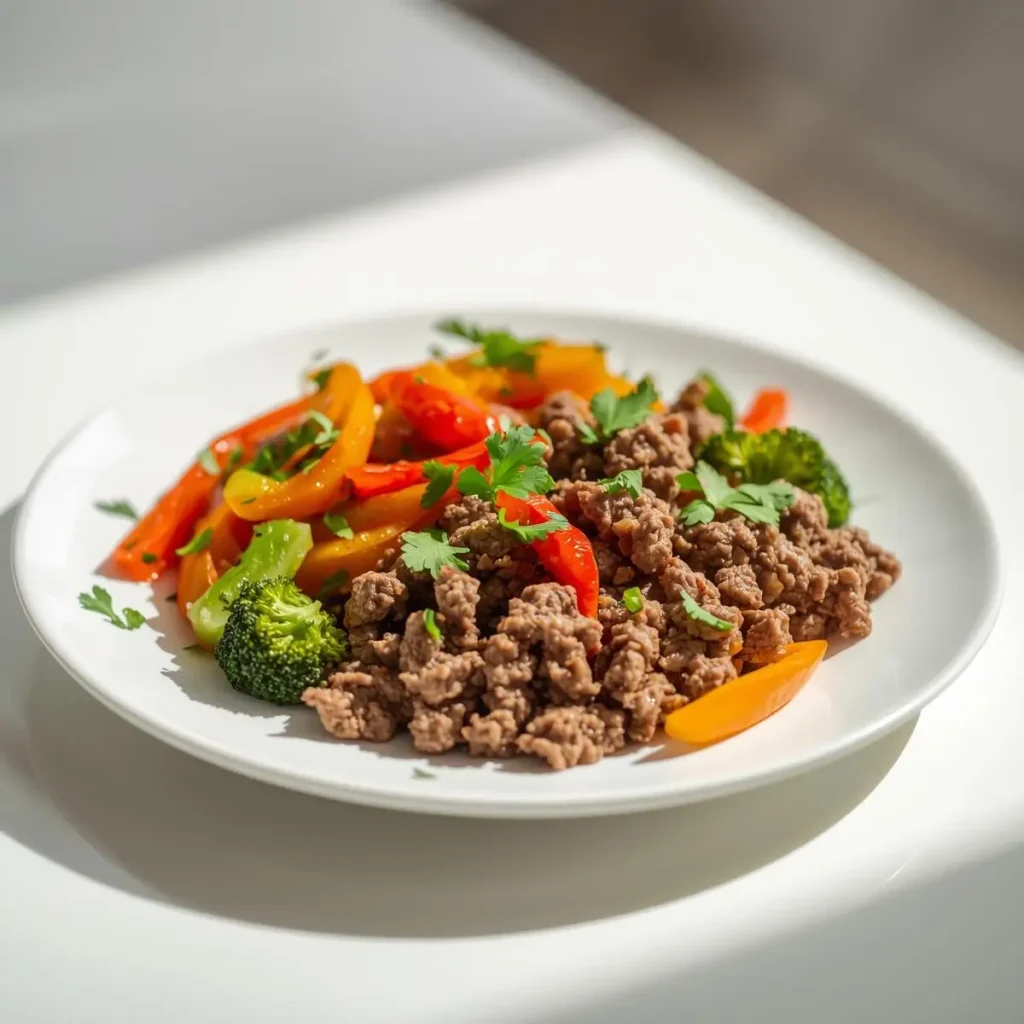
Method 1: Perfect Healthy Ground Beef Recipe
Step 1 – Prep your ingredients: Dice all vegetables before you start cooking. For lean ground beef, having everything ready prevents overcooking while you prep.
Step 2 – Use minimal healthy fat: Heat 1 teaspoon olive oil or avocado oil in a large non-stick or cast-iron skillet over medium-high heat. You need far less oil with lean beef than recipes suggest.
Step 3 – Brown the beef properly: Add ground beef and break into large chunks. Let sit undisturbed for 2-3 minutes to develop a caramelized crust (this adds flavor without fat). Break into smaller pieces and cook until no pink remains, about 6-8 minutes total.
Step 4 – Build your flavor base: Push beef to the side of the pan. Add diced onions, peppers, and garlic to the cleared space. Sauté until softened, about 3 minutes, then mix with the beef.
Step 5 – Add vegetables and seasonings: Stir in your chosen vegetables (zucchini, spinach, tomatoes, mushrooms, etc.) and seasonings. Cook until vegetables are tender and flavors meld, 3-5 minutes.
Step 6 – Add liquid if needed: If the mixture seems dry, add 1/4 cup low-sodium broth or water. This keeps lean beef moist and creates a light sauce.
Step 7 – Finish with fresh elements: Remove from heat and stir in fresh herbs, a squeeze of citrus, or a drizzle of high-quality olive oil for finishing richness.
Method 2: Healthy Ground Beef Recipe Dishes
For meatballs, meatloaf, or stuffed vegetables:
Step 1: Preheat oven to 375°F and line a baking sheet with parchment paper or lightly coat with cooking spray.
Step 2: Mix lean ground beef with binders (1 egg or 2 egg whites per pound of beef), vegetables (grated zucchini, finely minced mushrooms), and seasonings. The vegetables add moisture that lean beef lacks.
Step 3: Form into meatballs or shape into a loaf. For meatballs, aim for golf ball size (about 2 tablespoons each) for even cooking.
Step 4: Bake until internal temperature reaches 160°F—about 20-25 minutes for meatballs, 45-50 minutes for meatloaf. Use a meat thermometer to avoid overcooking.
Step 5: Let rest 5 minutes before serving. This allows juices to redistribute, keeping lean beef moist.
Method 3: One-Pot Healthy Ground Beef Recipe
For complete meals with vegetables and grains:
Step 1: Brown lean ground beef in a large pot or deep skillet as described above.
Step 2: Add aromatics and cook until fragrant, about 2 minutes.
Step 3: Add chopped vegetables of choice (bell peppers, zucchini, cauliflower, greens).
Step 4: Pour in low-sodium broth (2 cups), add uncooked quinoa or brown rice (1 cup), and stir to combine.
Step 5: Bring to a boil, reduce to simmer, cover, and cook for 15-20 minutes until grains are tender and liquid is absorbed.
Step 6: Stir in leafy greens (spinach, kale) in the last 2 minutes of cooking until wilted.
Doneness and Safety
Healthy Ground Beef Recipe must reach an internal temperature of 160°F for food safety. For lean ground beef, this is especially important to verify with a meat thermometer, as visual cues can be misleading—lean beef may look cooked on the outside while still being undercooked inside.
Resting for Optimal Moisture
While skillet ground beef doesn’t need resting, formed items like burgers, meatballs, and meatloaf benefit from a 5-minute rest after cooking. This is crucial for lean beef, which has less fat to keep it moist—resting allows the proteins to relax and reabsorb juices.
Pro Tips for Perfect Healthy Ground Beef Recipe
Keeping Lean Beef Moist and Flavorful
Add hidden vegetables: Finely grated zucchini, mushrooms, or carrots add moisture to lean beef without changing the texture. Squeeze out excess liquid first to prevent mushiness.
Use egg whites as binders: When making meatballs or burgers, egg whites add protein and moisture without the fat and calories of whole eggs.
Don’t press burgers on the grill: This squeezes out precious moisture that lean beef can’t afford to lose.
Cook with vegetables: Adding water-rich vegetables like tomatoes, peppers, and zucchini creates steam that keeps lean beef tender.
Finish with a healthy fat: A small drizzle of quality olive oil or a few slices of avocado at serving adds perceived richness without cooking in excess fat.
Use cooking spray instead of oil: When searing, a light coating of cooking spray often provides enough fat for lean beef without adding tablespoons of oil.
Essential Healthy Cooking Tools
Non-stick skillet or well-seasoned cast iron: Allows you to use minimal oil while preventing sticking. Non-stick is ideal for lean proteins.
Meat thermometer: Absolutely essential for lean beef. Overcooking by even a few degrees can dry it out dramatically.
Vegetable spiralizer or grater: Makes incorporating moisture-rich vegetables into ground beef easy and appealing.
Food scale: For portion control and accurate nutritional tracking, weighing cooked meat ensures consistency.
Silicone baking mats: Allows fat-free baking without food sticking.
Healthy Storage and Meal Prep
Batch cooking: Brown 2-3 pounds of lean ground beef at once with basic seasonings. Portion into 1-cup servings (about 4 ounces cooked) and refrigerate for 3-4 days or freeze for 2-3 months.
Proper containers: Use glass meal prep containers for refrigerator storage—they’re non-reactive and microwave-safe. For freezing, use freezer bags with air removed.
Reheating without drying: Add a tablespoon of broth or water when reheating lean ground beef to restore moisture. Microwave in 30-second intervals, stirring between, or reheat gently on the stovetop.
Freeze in portions: Divide cooked ground beef into meal-sized portions before freezing. This prevents the need to thaw more than you need.
Label everything: Include the date, contents, and any seasonings used so you know what you’re working with months later.
Healthy Flavor Variations
Mediterranean Ground Beef Bowl
Season lean Healthy Ground Beef Recipe with oregano, garlic, and lemon zest. Serve over cauliflower rice or quinoa with cucumber, tomatoes, red onion, kalamata olives, and a dollop of Greek yogurt. Approximately 320 calories, 28g protein per serving.
Asian-Inspired Lettuce Wraps
Cook ground beef with ginger, garlic, coconut aminos, and rice vinegar. Add water chestnuts and scallions. Serve in butter lettuce leaves with shredded carrots and cucumber. Top with sesame seeds. Approximately 250 calories, 26g protein per serving.
Italian Zucchini Noodle Bolognese
Simmer lean ground beef with crushed tomatoes, onions, carrots, celery, garlic, and Italian herbs. Serve over spiralized zucchini noodles and top with fresh basil and a sprinkle of parmesan. Approximately 280 calories, 29g protein per serving.
Mexican Cauliflower Rice Bowl
Season beef with cumin, chili powder, and smoked paprika. Serve over cilantro-lime cauliflower rice with black beans, pico de gallo, avocado slices, and lime wedges. Approximately 340 calories, 30g protein per serving.
Greek-Style Stuffed Bell Peppers
Mix lean ground beef with quinoa, diced tomatoes, spinach, oregano, and crumbled feta. Stuff into bell pepper halves and bake. Approximately 290 calories, 27g protein per serving.
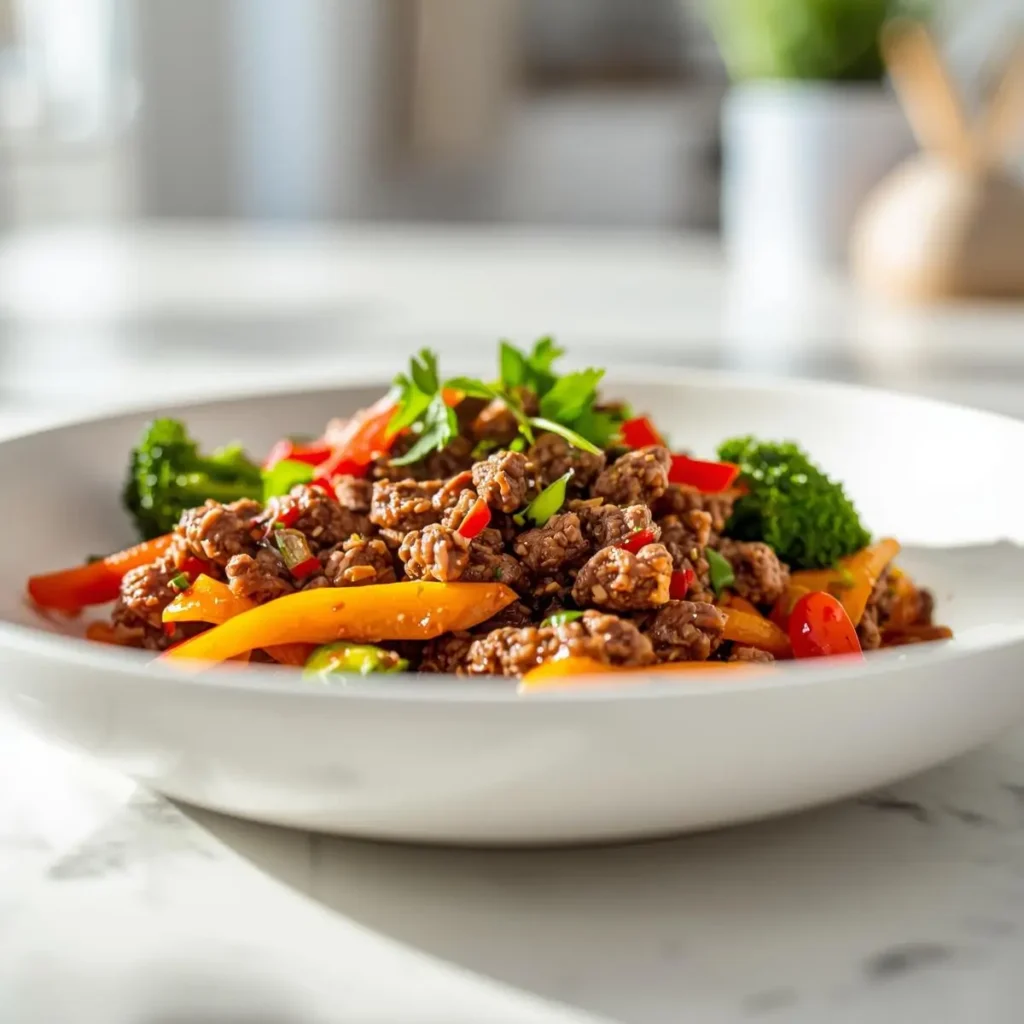
Korean Beef and Vegetable Stir-Fry
Cook ground beef with ginger, garlic, low-sodium soy sauce, and a touch of honey or stevia. Add broccoli, snap peas, and carrots. Serve over cauliflower rice with sesame seeds and sliced scallions. Approximately 305 calories, 28g protein per serving.
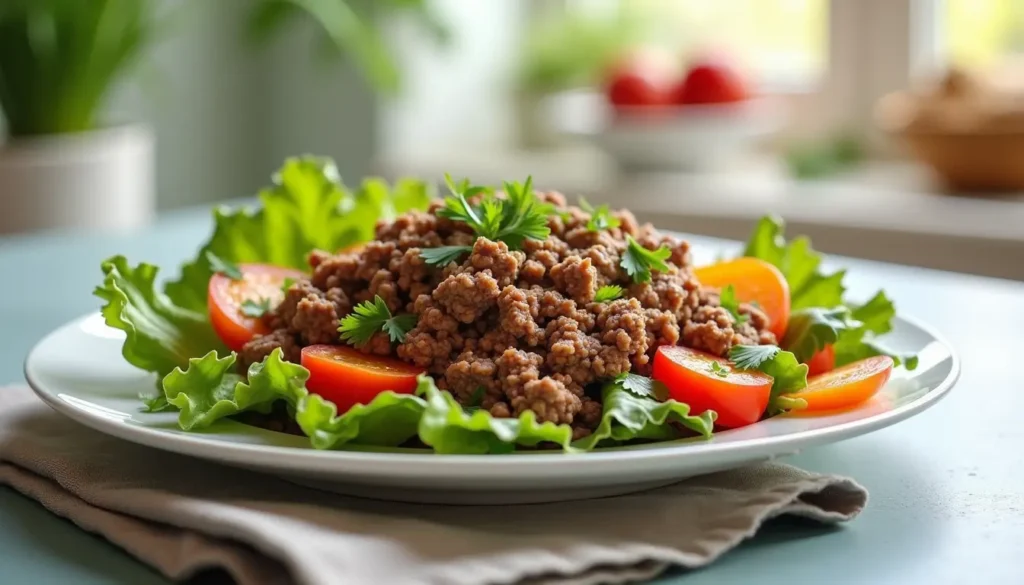
Keto/Low-Carb Taco Salad
Season ground beef with taco spices. Serve over romaine lettuce with cheese, sour cream, guacamole, salsa, and crushed pork rinds instead of tortilla chips. Approximately 380 calories, 32g protein, 6g net carbs per serving.
Paleo Beef and Sweet Potato Hash
Brown ground beef with onions and bell peppers. Add diced sweet potatoes and cook until tender. Season with smoked paprika and cumin. Top with a fried egg. Approximately 350 calories, 29g protein per serving.
Whole30 Compliant Beef and Veggie Skillet
Cook ground beef with compliant seasonings. Add zucchini, yellow squash, bell peppers, and tomatoes. Finish with fresh herbs. Approximately 260 calories, 27g protein per serving.
Serving Suggestions
Pair your healthy ground beef recipes with nutrient-dense sides that complement without adding excessive calories:
Low-carb vegetable sides: Roasted broccoli, cauliflower, Brussels sprouts, green beans, asparagus, or a large mixed green salad with vinaigrette.
Healthy grain options: Quinoa, brown rice, farro, or wild rice (1/2 cup cooked adds about 100-110 calories and extra fiber).
Spiralized vegetables: Zucchini noodles, sweet potato noodles, or butternut squash noodles provide volume and nutrients with minimal calories.
Cauliflower alternatives: Cauliflower rice, mashed cauliflower, or cauliflower pizza crust keep meals low-carb while feeling substantial.
Fresh elements: Side salads with lemon vinaigrette, sliced tomatoes with basil, cucumber salad, or fresh fruit.
Probiotic-rich additions: A side of sauerkraut, kimchi, or pickled vegetables adds tang, crunch, and gut-healthy bacteria.
Healthy Beverage Pairings
Water with fresh fruit or herbs: Infused with cucumber, lemon, berries, or mint for zero-calorie refreshment.
Unsweetened iced tea: Green tea or herbal teas provide antioxidants without calories.
Sparkling water: With a squeeze of lime or splash of 100% fruit juice for fizzy satisfaction.
Light beer (if including alcohol): Lower-calorie options around 90-100 calories per 12 oz.
Wine in moderation: A 5 oz glass of red wine contains approximately 125 calories and offers potential heart-healthy benefits.
FAQs
Is lean ground beef really healthy?
Yes! Lean ground beef (93/7 or leaner) is an excellent source of complete protein, iron, zinc, and B vitamins, particularly B12. A 4-ounce serving of 93/7 ground beef provides about 170 calories and 24g protein while keeping saturated fat relatively low. When paired with vegetables and prepared without excess added fats, it’s absolutely part of a healthy diet.
Can I use frozen lean ground beef?
Yes, but always thaw completely before cooking. Thaw in the refrigerator (24 hours for 1 pound) or use your microwave’s defrost setting. Frozen ground beef releases excess moisture when cooked, which can prevent proper browning and affect texture. Pat thawed beef dry before cooking for best results.
How do I keep lean ground beef from being dry?
Use these techniques: Don’t overcook (stop at 160°F), add moisture-rich vegetables during cooking, use cooking methods with liquid (like simmering in sauce), add a small amount of broth if the mixture looks dry, don’t press on burgers while cooking, let formed items rest 5 minutes after cooking, and finish with a small amount of healthy fat like olive oil or avocado.
What’s the healthiest way to cook ground beef?
The healthiest methods allow excess fat to drain away while minimizing added fats: grilling on a rack, baking on a wire rack over a sheet pan, broiling with drainage, or pan-cooking in a non-stick skillet with minimal oil. Avoid deep-frying or cooking in excessive butter or oil.
Can pregnant women eat these healthy ground beef recipes?
Yes, as long as the ground beef reaches a safe internal temperature of 160°F. Ground beef is an excellent source of iron and protein during pregnancy. Use a meat thermometer to ensure thorough cooking, and avoid any pink areas. The vegetables and nutrients in these recipes provide additional benefits during pregnancy.
How many calories are in lean ground beef?
Calories depend on the fat percentage: 95/5 ground beef has approximately 155 calories per 4-ounce cooked serving, 93/7 ground beef has approximately 170 calories per 4-ounce cooked serving, and 90/10 ground beef has approximately 200 calories per 4-ounce cooked serving. For comparison, 80/20 ground beef has about 290 calories per 4-ounce serving.
Is grass-fed ground beef healthier than conventional?
Grass-fed beef contains more omega-3 fatty acids, conjugated linoleic acid (CLA), and certain vitamins and antioxidants compared to conventional beef. It’s also typically leaner. However, both types provide excellent protein and nutrients. Choose grass-fed if your budget allows, but conventional lean ground beef is still a healthy choice.
Can I meal prep with healthy ground beef recipes?
Absolutely! Healthy ground beef recipes are ideal for meal prep. Cook your recipes on Sunday and portion into individual containers. Most recipes keep 4-5 days refrigerated or 2-3 months frozen. The vegetables and seasonings actually develop more flavor as they sit. Reheat gently with a splash of broth to maintain moisture.
Conclusion
You no longer have to choose between eating healthy and enjoying your meals. These healthy ground beef recipes prove that nutritious food can be satisfying, delicious, and something your whole family looks forward to eating.
Stop sacrificing flavor for health and start making these protein-packed, veggie-loaded dinners that support your wellness goals without feeling like you’re on a restrictive diet. Your body and taste buds will thank you!
Join thousands of health-conscious home cooks who’ve discovered that lean ground beef is the secret weapon for sustainable healthy eating. Pick a recipe from this guide and transform your dinner routine tonight—you’ll be amazed at how good healthy food can taste!
Ready to continue your healthy eating journey? Check out our Complete Guide to Meal Prep for Weight Loss for time-saving strategies, or explore our 30 High-Protein Dinner Recipes for more nutritious inspiration!
How did you find results our recipes
There are no reviews yet. Be the first one to write one.